Why “Self-Closure” is the Only Real Closure You Will Get from a Narcissist
Real closure from a narcissist is something you will never receive. I learned this truth the hard way after spending twelve painful years with a partner who exhibited severe traits of both Narcissistic Personality Disorder and Borderline Personality Disorder. By the time it finally ended, I was completely devastated, cut off from my closest friends, devoid of hobbies, and convinced that my life would remain entirely miserable.
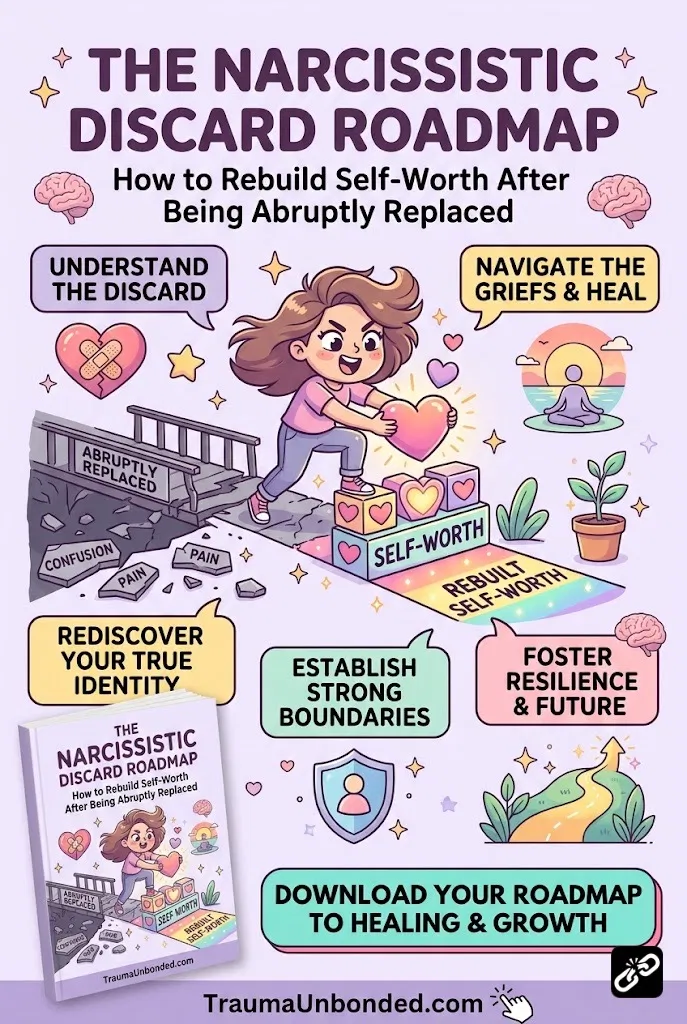
I spent months begging for answers, hoping for just one honest conversation that could soothe the agonizing confusion in my chest. If you are currently picking up the pieces of your own shattered life, you might feel like you cannot move forward without them admitting to what they did. If you are struggling with this excruciating phase of the breakup, reading the Narcissistic Discard Roadmap can help you start putting yourself back together.
Let us be honest with ourselves. Are they ever going to sit down, look you in the eyes, and sincerely apologize for the wreckage they caused?
Why Seeking Closure from a Narcissist is a Trap
Seeking closure from a narcissist is a trap because they deliberately withhold explanations and apologies to maintain control, keep you emotionally attached, and avoid taking accountability for their behavior. True resolution must be generated internally through self-closure rather than waiting for validation from an abusive partner.

During my decade-long relationship, I experienced countless cycles of silent treatments and sudden discards. Every single time things fell apart, I felt a desperate need to understand what had gone wrong. I thought that if I could just explain my perspective clearly enough, they would finally understand and offer a logical explanation.
But a person with NPD or strong narcissistic traits does not view closure the same way you do. To them, leaving you without answers is a conscious power play. It guarantees that you remain mentally tethered to them, constantly analyzing past conversations and trying to solve a puzzle that has no solution.
If you are struggling to make sense of this sudden ending, consult this narcissistic relationship closure guide to learn how to navigate the post-breakup fog.
The Silent Power of Withholding Answers
Why do they do it? Why do they seem to enjoy leaving you in a state of absolute emotional ruin?
When a toxic partner refuses to talk to you or walks away without a word, they are using silence as a weapon. In the field of psychology, studies published by authors on Psychology Today point out that withholding closure is a classic tactic used by emotionally abusive individuals to keep their former partners stuck in a state of chronic rumination.
For years, I believed that if I just waited long enough, my ex would show a glimmer of empathy. Instead, the silence only stretched longer, leaving me to battle intense anxiety and depression. I did not realize that by waiting for their permission to heal, I was handing them the keys to my mental health.
Why do they choose silence over a clean break? In my own journey, I realized that keeping me in limbo was their way of staying in control. As long as I was seeking answers, I was still focused on them, feeding their ego even after the relationship had physically ended.
When you ask a manipulative ex for answers, they will often use DARVO (Deny, Attack, and Reverse Victim and Offender). They will twist your pain into proof that you were the abusive one, leaving you feeling even more confused than before.
Waiting for a toxic person to validate your pain only keeps you trapped in their web. To break this cycle, rebuild your confidence, and find your footing after an abrupt discard, you need a structured plan that walks you through the recovery process step-by-step.
The Reality of Self-Closure
Self-closure means deciding that the abuse itself was the only explanation you will ever need. It is the moment you stop asking “why did they do this?” and start asking “how do I take care of myself today?”
When I finally accepted that my ex would never change, the heavy fog in my mind began to lift. I stopped looking at my phone, hoping for a text, and began working with a trauma-informed therapist. I had to learn to manage the severe trauma bond withdrawal symptoms that made me feel like an addict craving a dangerous drug.
To achieve self-closure, you must actively rewrite the narrative of your relationship on your own terms. Here are the core actions that helped me return to my original, cheerful self:
- Embrace Radical No-Contact: Do not just block their phone number. Block their social media, their family members, and any mutual friends who act as messengers. If you are struggling with the temptation to reach out, utilizing a radical no-contact guide can give you the blueprint you need to stay strong.
- Grieve the Illusion: Accept that the person you fell in love with during the early “love-bombing” phase was a fictional character. You are not mourning a healthy relationship; you are mourning the dream of what you hoped they would be.
- Reclaim Your Physical Space: When I was isolated, my living space felt like a monument to my misery. Rearrange your furniture, throw away old letters, and start introducing small daily routines that belong solely to you.
- Focus on Somatic Healing: Emotional trauma is stored deep within your nervous system. Simple practices like daily walks, deep breathing exercises, or even gentle yoga can help release the constant state of high alert your body has adapted to.
Rebuilding Your Identity After the Discard
How do you find your original self when you have spent years walking on eggshells?
During the final years of my relationship, I forgot what it felt like to have personal interests. My entire existence revolved around predicting my partner’s emotional storms and managing their volatile mood swings.
When you start practicing self-closure, you reclaim your mental energy. You can use that energy to rebuild your isolated life. I started small, picking up simple books, taking short drives alone, and eventually reconnecting with the friends I had been forced to abandon.
Remember, healing is not a linear process. There will be days when the grief feels heavy, and you find yourself mentally arguing with your ex in the shower. When those moments arise, meet yourself with deep compassion rather than frustration. You are rewiring years of psychological conditioning, and that takes time.
You do not need their permission, their confession, or their apology to heal. By choosing self-closure, you take the power back and place it firmly in your own hands. If you are ready to stop waiting for answers that will never come and want to start rebuilding your self-worth from the ground up, download the Narcissistic Discard Roadmap today and begin your journey back to peace.

Meet Your Guide
Helen Brooks
After surviving a 12-year NPD/BPD relationship, I dedicated over a decade to studying trauma bonding and nervous system recovery. My mission is to help you break free from the fog and reclaim your authentic self.
Ready to break the trauma bond and reclaim your life?