Cutting Off Toxic Family: How to Safely Cut Ties for Good
Cutting off toxic family members is often the only way to preserve your mental health when boundaries are no longer enough. If you are searching for how to safely cut ties for good, you likely feel a heavy mix of guilt, fear, and a desperate need for peace. I understand that weight because I carried it for over a decade while stuck in a high-conflict relationship that mirrored the same dysfunction I grew up with. For twelve years, I was a shell of myself, isolated and convinced that my misery was my own fault. It was only through deep therapy and learning about the mechanics of trauma bonds that I realized I could not heal in the same environment that was breaking me.
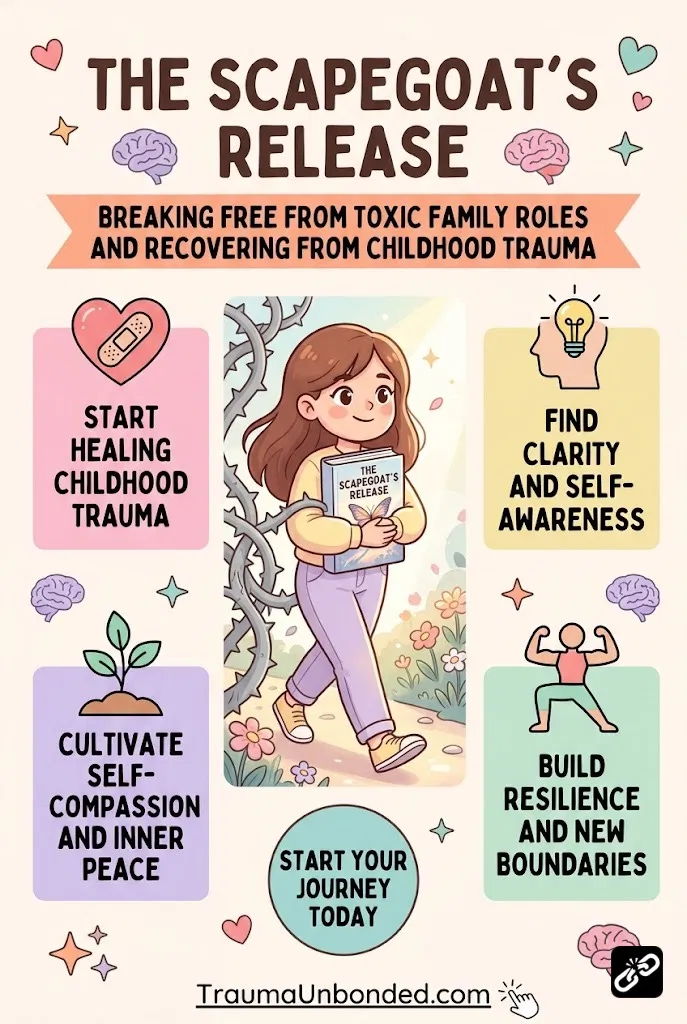
Choosing toxic family estrangement is not an act of malice, it is an act of self-preservation. When you grow up with parents or siblings who use gaslighting or emotional manipulation, your brain becomes wired for hypervigilance. You learn to walk on eggshells just to avoid the next explosion or guilt trip. Breaking that cycle requires more than just a temporary break. It requires a strategic move toward toxic family estrangement freedom to protect your future. If you are ready to reclaim your life, you need to understand that the path to peace is paved with firm, unwavering boundaries. You can find more support for this transition in The Scapegoat’s Release – Breaking Free from Toxic Family Roles, which helps you navigate the specific pain of leaving these dynamics behind.
The journey to recovery involves unlearning the codependency that kept you tethered to people who do not respect your worth. I remember the day I finally stopped trying to explain myself. I realized that if they wanted to understand, they would have listened the first thousand times. Are you tired of repeating the same arguments? Are you ready to stop being the person who fixes everything at the cost of your own sanity? Taking the step to go no contact is how you start returning to your original, cheerful self.
Recognizing the Cycle of Family Dysfunction
Before you can leave, you must see the situation for what it truly is. In my experience, toxic family members often use a tactic called gaslighting. This is when someone denies your reality so consistently that you start to doubt your own memory. They might say, “That never happened,” or “You are too sensitive.” In my twelve-year struggle, this felt like being trapped in a house with no floor. I never knew if I was standing on solid ground or if the rug would be pulled out from under me again.
Another common dynamic is the use of intermittent reinforcement. This is a psychological loop where the person is occasionally kind or loving, just enough to keep you hoping for change. This creates a biochemical addiction in your brain. You stay because you are waiting for the “good” version of them to return. When you decide to stop fixing toxic family dynamics, you are choosing to break this addiction. You are finally admitting that the “good” moments do not justify the years of emotional erosion.
Do you find yourself making excuses for their behavior because of their own past trauma? While their pain might be real, it does not give them a license to bleed on you. You are not a rehabilitation center for people who refuse to do their own work. Learning to stop fixing toxic family members is the first step toward your own emotional independence. It is okay to walk away from a burning building, even if people you love are still inside choosing to stay.
How to Prepare for the Final Break
Safety is the most vital part of this process. If you are planning on cutting ties with parents or siblings, you need a plan that covers both your physical and digital life. Start by securing your finances. Toxic families often use money as a tool for control. If you share a bank account or if they have access to your credit information, move your funds to a new, private institution. This creates a barrier that prevents them from sabotaging your ability to live independently.
Next, consider your digital footprint. Change your passwords, update your security questions, and ensure your location is not being shared through apps or devices. During my recovery, I realized how much access I had unintentionally given to people who didn’t have my best interests at heart. It felt like being constantly watched. When you cut that digital cord, the silence can be frightening at first, but it is actually the sound of your own freedom returning.
If you have been the family scapegoat, the weight of this decision is even heavier. You have been trained to believe that the family’s problems are your fault. Breaking free requires a specialized approach to healing. If you are struggling to navigate the guilt and the practical steps of leaving a high-conflict family system, the following resource is designed specifically for your situation.
Handling the Fallout and Flying Monkeys
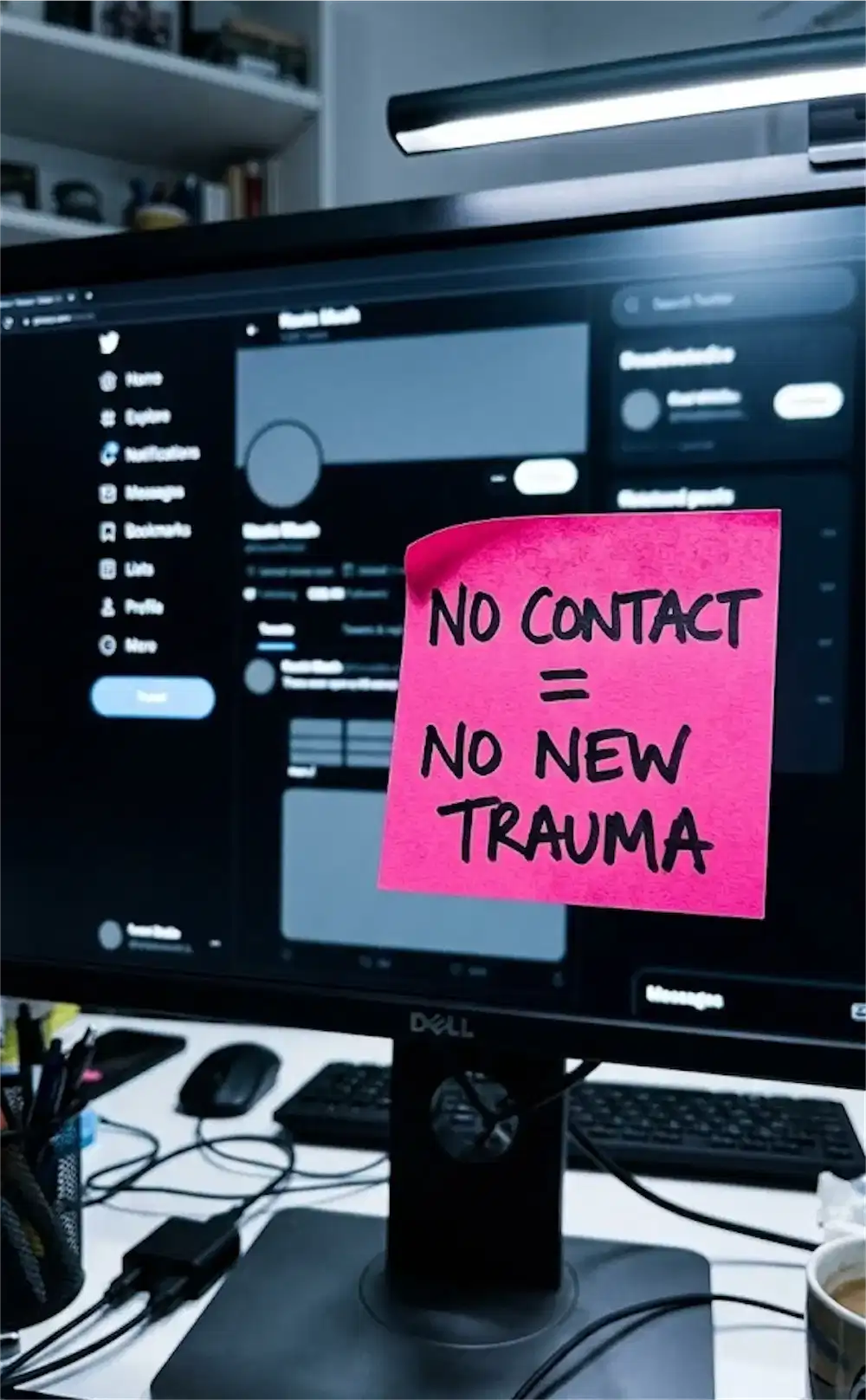
Once you actually cut ties with toxic family, you will likely face “flying monkeys.” This term refers to people the toxic family member recruits to pressure you back into the fold. They might call you and say, “But they love you so much,” or “Life is too short to be angry.” These people are often being manipulated themselves, or they simply want to restore the status quo so they don’t have to deal with the toxic person’s outbursts. It is vital to remember that you do not owe these messengers an explanation.
When I left my toxic relationship, I lost friends who didn’t understand why I had to go completely dark. It was painful and isolating. However, those who truly love you will respect your boundaries without requiring a PowerPoint presentation on your trauma. If someone tries to guilt you into breaking no contact, they are showing you exactly why the boundary was necessary in the first place. You can use a family scapegoat healing blueprint to help you identify these patterns and stay strong when the pressure mounts.
A firm boundary is not a negotiation. It is a statement of what you will no longer tolerate. You can choose to block phone numbers, filter emails, or even move without giving a forwarding address. Your safety and peace are more important than their desire for access to you. Do you feel like you are being “mean” by protecting yourself? Remind yourself that protecting a victim from an abuser is never mean, even when the victim is you.
The Grieving Process and Finding Your Identity
The aftermath of safely cutting ties for good is rarely a feeling of instant celebration. It usually feels like grief. You aren’t just grieving the people you left, you are grieving the family you deserved but never had. After my twelve-year ordeal, I felt like a stranger in my own life. I didn’t know what kind of music I liked or what I wanted to do on a Saturday morning. I had spent so long managing someone else’s emotions that my own were buried deep inside.
Healing comes when you start to fill that empty space with things that nourish you. For me, it was returning to small hobbies and professional therapy. I had to learn about codependency and why I felt responsible for the happiness of people who hurt me. Slowly, the fog began to lift. I started to feel optimistic again. I found that my “original self” was still there, just waiting for the noise to stop so it could speak.
You might find that your physical health improves as well. Chronic stress from family toxicity can lead to exhaustion, brain fog, and even physical pain. As your nervous system begins to regulate in the absence of constant conflict, you will find a level of clarity you haven’t felt in years. This is the reward for the hard work of setting boundaries. You are not just ending a relationship, you are beginning a life where you are finally the lead character.
Walking away is the final step in a long journey of realization. If you are still struggling with the weight of these roles, remember that The Scapegoat’s Release – Breaking Free from Toxic Family Roles is available to guide you through the emotional transition. You deserve a life defined by your own choices, not by the demands of people who cannot see your light. Your peace is a gift you give to yourself, and it is worth every difficult boundary you have to set.

Meet Your Guide
Helen Brooks
After surviving a 12-year NPD/BPD relationship, I dedicated over a decade to studying trauma bonding and nervous system recovery. My mission is to help you break free from the fog and reclaim your authentic self.
Ready to break the trauma bond and reclaim your life?