Narcissistic Parent Boundaries: Handling Large Family Events
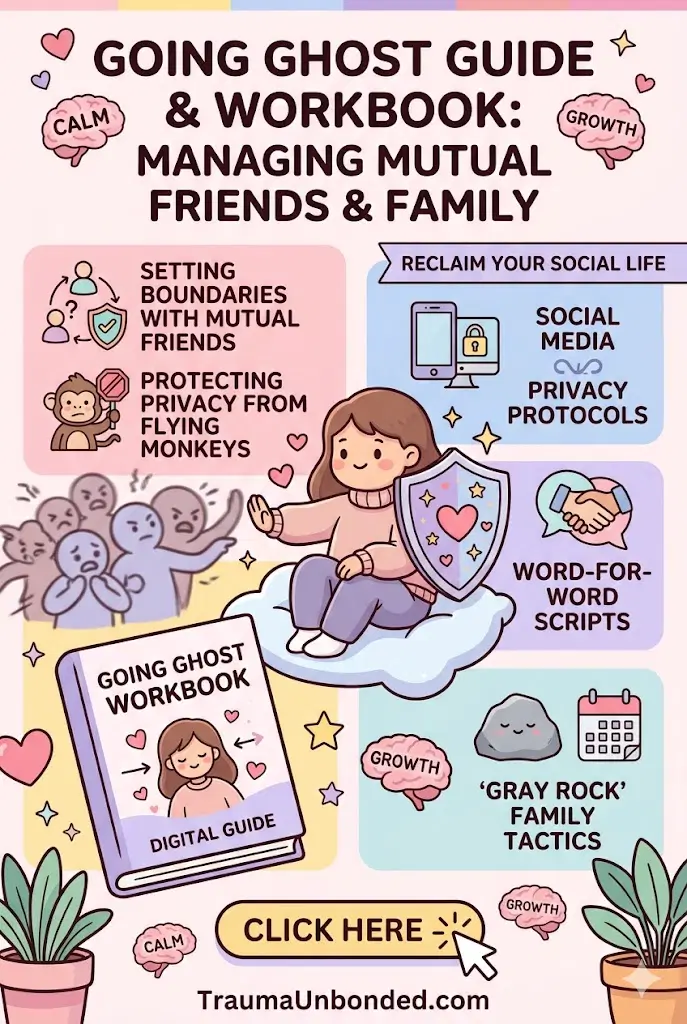
Narcissistic parent boundaries are your most important tool when you have to navigate large family events like weddings, holidays, or reunions. Dealing with a toxic parent in a crowd is a unique kind of stress because the audience usually makes them feel more entitled to perform and manipulate. If you are struggling with how to survive these gatherings without losing your mind, you are not alone in this journey. I spent twelve years in a toxic relationship where I learned exactly how it feels to walk on eggshells every single day. I was isolated, I had no hobbies left, and I felt like a shell of a person before I finally found my way back to my cheerful, grounded self through therapy and deep healing. If you are feeling overwhelmed, you might find relief by checking out the Going Ghost Guide & Workbook which focuses on managing family pressure.
Does the thought of a family dinner make your stomach knot up for days in advance? That is your body trying to protect you from the trauma bond and the predictable chaos that follows a narcissist. During my twelve years of chaos, I realized that I could not change the other person, but I could change how much access they had to my heart. When you attend a large event, your goal is not to have a “perfect” family moment. Your goal is simply to protect your peace and leave with your dignity intact.
Preparing Mentally for Narcissistic Parent Interactions
Before you even step foot into the venue, you need a mental game plan. Narcissistic parents often use large family events to stage drama or play the victim because they know you are less likely to cause a scene in public. They count on your politeness. They want you to stay quiet while they take jabs at your life or your choices. I remember how it felt when my former partner would wait for a group setting to humiliate me. It felt like being trapped in a bright room with no exit.
To stay grounded, you must lower your expectations to zero. Do not go in hoping that this time they will finally see your worth or apologize for the past. They won’t. When you accept that they are incapable of genuine empathy, you stop being disappointed by their behavior. You are there to see your cousins, your siblings, or your friends, not to seek validation from a parent who uses family gaslighting to keep you off balance. Have you ever noticed how they pick the most joyful moments to bring up a “concern” that is actually a disguised insult?
Setting narcissistic parent boundaries starts in your own mind. Tell yourself that you are a guest, not a servant to their emotional whims. You can also read more about the specific dynamics of family boundaries to understand the roles people play. When you see the patterns for what they are, the insults lose their sting because you realize it is just a script they have been following for decades.
The Grey Rock Method in Crowds
The grey rock method is your best friend at a wedding or a big party. If they try to bait you into an argument or ask intrusive questions about your personal life, give them nothing. Use short, boring answers like “That is interesting” or “I have not thought about that much.” You want to be as uninteresting as a plain grey rock on the ground. Narcissists thrive on narcissistic supply, which is the emotional reaction you give them. If you stay calm and boring, they will eventually move on to a more “exciting” target who will give them the drama they crave.
It takes practice to keep your face neutral when someone is pushing your buttons. I used to feel my heart race and my palms sweat, which is a common sign of a c-ptsd trigger. If you feel that rising heat in your chest, excuse yourself. Go to the bathroom, step outside for fresh air, or offer to help in the kitchen. Physical movement breaks the tension and gives your nervous system a chance to reset.
Handling these situations requires a structured approach to ensure you don’t fall back into old people-pleasing habits. To help you stay firm and protected, I have put together a specific resource that covers how to deal with the inevitable pressure from others who might not understand your situation.
Managing Flying Monkeys and Family Enablers
At large events, you aren’t just dealing with the narcissistic parent. You are also dealing with flying monkeys. These are the aunts, uncles, or siblings who carry messages for the narcissist or pressure you to “just make peace for the sake of the family.” They might say things like, “You know how she is, just let it go,” or “He is getting older, you should be nicer.” This is a form of enabling that keeps the toxic cycle alive.
When a flying monkey approaches you, remember that you do not owe them an explanation for your boundaries. Explaining your reasons usually leads to them trying to talk you out of your feelings. Instead, use a firm but polite “I am here to enjoy the celebration, not to discuss my relationship with my parent.” If they persist, walk away. You are allowed to end a conversation that feels like an interrogation. For more on this, you can look into how to manage a narcissist flying monkeys guide for deeper strategies.
It is painful when people you love don’t see the abuse you have suffered. After my twelve-year relationship ended, I realized that some friends simply couldn’t handle the truth of what I went through. They preferred the comfortable lie. This is common in families too. They want the event to go smoothly, even if it means you have to suffer in silence. You must be your own advocate because the enablers are focused on the narcissist’s comfort, not your safety.
Creating an Exit Strategy and Recovery Plan
Never go to a large family event without a clear exit strategy. This means having your own transportation and a specific time you plan to leave. If things get toxic, you do not need anyone’s permission to walk out the door. You are an adult now, not the helpless child they remember. Having your own car or a ride-share app ready gives you back the power they tried to take away.
I found that setting a “time limit” for myself helped immensely. I would tell myself I would stay for two hours. Knowing there was a finish line made the snarky comments easier to ignore. Once that time was up, I left, regardless of who was mid-sentence. If you are staying at a hotel or a friend’s house instead of with the family, you create a safe space where you can decompress and process the day without being watched.
The day after a big family gathering is often the hardest. You might feel a “vulnerability hangover” or heavy trauma fatigue. This is because your nervous system was in high-alert mode for hours. Plan a day of rest. Watch your favorite movie, go for a walk, or spend time on a hobby that you rediscovered after your healing journey. My hobbies were the first thing to go during my toxic relationship, so now I cherish my quiet time with my books and my garden. It reminds me that I am back to being me.
You have the right to choose which events you attend and how long you stay. No tradition is worth your mental health. If a specific event feels like too much, it is okay to say no. Protecting your energy is not selfish; it is a necessity for your survival and long-term happiness. If you need more support in handling these difficult social dynamics, the Going Ghost Guide & Workbook is a great place to start your journey toward a life free from family drama.
Takeaway: You cannot control a narcissist’s behavior at a party, but you can control your proximity to them and your reaction to their games. Your peace is worth more than their approval.

Meet Your Guide
Helen Brooks
After surviving a 12-year NPD/BPD relationship, I dedicated over a decade to studying trauma bonding and nervous system recovery. My mission is to help you break free from the fog and reclaim your authentic self.
Ready to break the trauma bond and reclaim your life?