Journal Prompts for a Trauma Bond: 15 Daily Healing Exercises
I spent twelve years trapped in a cycle that felt more like a drug addiction than a relationship. My partner had a mix of NPD and BPD traits that kept me in a state of constant confusion. For a long time, I forgot what it was like to have my own thoughts because I was so busy managing theirs. If you feel like your brain has been hijacked, you are likely dealing with a trauma bond. Healing starts when you begin to put pen to paper and see the truth for what it actually is. Using a Trauma Bond Recovery Guide & Workbook can give you the structure you need when your mind feels like a chaotic mess.
Journaling was my lifeline during the darkest days of my recovery. When I first left, I had no hobbies and zero friends left because I had been isolated for a decade. I felt like a hollow shell of a person. Writing down my reality was the only way to combat the gaslighting that had convinced me I was the crazy one. Have you ever felt like you need to record conversations just to prove to yourself that they actually happened? That is the level of mental fog we are dealing with here.
These fifteen daily exercises are designed to pull you out of the fantasy and back into your own skin. We are not just writing about feelings; we are dismantling a biochemical addiction to a person who hurt us. Every time you write the truth, you are taking a small piece of your power back. It takes time to return to your original self, but I am proof that you can become cheerful and grounded again.
Why Your Brain Needs the Truth on Paper
Trauma bonds thrive in secrecy and silence. When the thoughts stay inside your head, they loop endlessly, fueled by intermittent reinforcement. This is the “hot and cold” game where your partner gives you just enough crumbs of affection to keep you waiting through the next storm. Writing things down makes them permanent and unchangeable. It prevents your mind from “forgetting” the bad parts during the moments when you feel lonely or tempted to reach out.
I used to spend hours trying to stop ruminating arguments in my head. It was exhausting and kept my nervous system in a state of high alert. Journaling creates a physical distance between you and the trauma. It allows you to observe your situation like a scientist instead of a victim. Are you ready to see the patterns that have been keeping you stuck?
15 Daily Healing Exercises for Trauma Bonds
1. The Fact-Checking List. Write down three things that happened this week that were objectively hurtful. Do not add excuses or “he was stressed” or “she had a bad childhood.” Just the facts. This helps break the cognitive dissonance that keeps you making excuses for bad behavior.
2. The “Original Self” Inventory. What did you love to do before you met this person? I realized I hadn’t touched a paintbrush in twelve years. List three activities that made you feel like “you” before the relationship consumed your identity.
3. Identifying the Hoover. Describe a time they tried to pull you back in with a fake apology or a crisis. This is called hoovering. How did your body feel in that moment? Usually, it is a tightening in the chest or a pit in the stomach. Listen to that physical warning sign.
4. The Anxiety Map. When do you feel the most anxious? Is it right before they come home or when your phone buzzes? Recognizing the triggers helps you see that your “love” might actually just be hypervigilance disguised as passion.
5. Breaking the Fantasy. Write about the relationship you actually had, not the one you hoped it would become. We often stay because we are in love with the potential of a person. Today, write about the reality of Tuesday afternoon at 3 PM.
6. The Physical Toll. How has your health changed? I dealt with constant headaches and exhaustion for years. Note any physical symptoms like jaw clenching, hair loss, or stomach issues that appeared during the relationship.
7. Boundaries You Want to Set. If you could say “no” without a three-hour argument, what would you say no to? This exercise helps you find your voice again after years of fawning to keep the peace.
8. The Letter You Will Never Send. Write everything you want to say to them. Be raw and angry if you need to. Then, burn the paper or delete the file. This is for your emotional release, not for their validation. You will never get the closure you want from them, so you must create it yourself.
If you are struggling to keep up with these prompts and need a daily roadmap to guide your pen, I highly recommend checking out the specialized workbook below. It provides the exact structure I used to rebuild my sanity when I was still feeling isolated and lost.
9. Red Flag Retrospective. Look back at the first month. What were the warning signs you ignored? This is not to shame yourself, but to educate your intuition for the future. I ignored the way they spoke about their “crazy” exes, which was a huge mistake.
10. Reclaiming Your Space. Describe one area of your home that belongs only to you. If you are still living together, this might be a single drawer or a chair. How can you make that space feel safe and calm today?
11. The Guilt Audit. List the things you feel guilty about. Now, ask yourself: would a healthy person expect me to feel guilty for these things? Usually, the guilt is projected onto you by the narcissist to keep you compliant.
12. Daily Wins. Write down three things you did today that were just for you. Did you drink a glass of water? Did you take five minutes of silence? Small wins are the bricks that rebuild your self worth.
13. Describing the Mask. Write about the version of them they show the world versus the version you see behind closed doors. Seeing the discrepancy helps you realize that the “good” version was a performance used for narcissistic supply.
14. Your Future Self. Imagine yourself one year from now, fully healed and happy. What does your day look like? Focusing on the “after” helps pull you through the pain of the “now.”
15. The Commitment to No Contact. Why is staying away necessary for your survival? Write this in bold letters. When you feel the urge to check their social media, read this entry first. It is your protective boundary.
Creating a Routine That Sticks

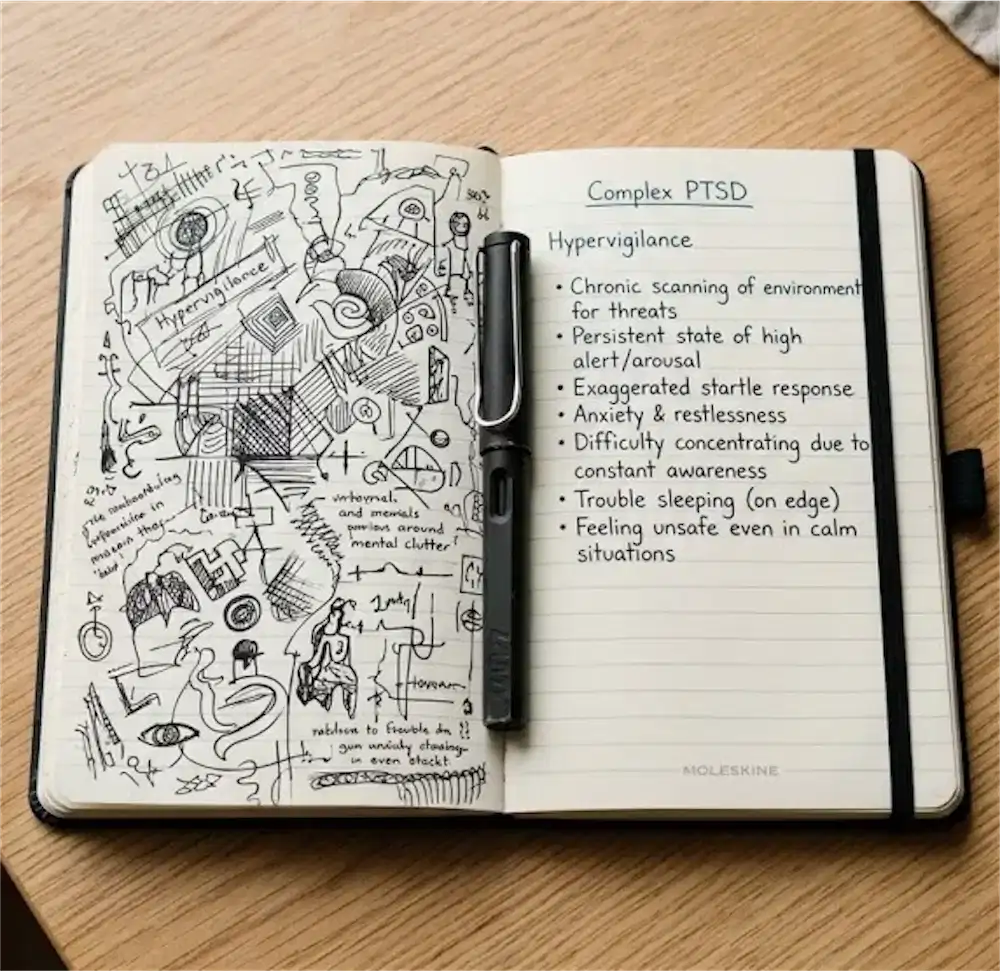
Journaling is most effective when it becomes a ritual. I found that doing morning pages for anxiety recovery helped me dump all the toxic thoughts out before I started my day. It prevented the “emotional hangover” that usually follows a bad night of rumination. You do not need to be a writer to do this. You just need to be honest.
If you find yourself getting overwhelmed by the emotions that surface, stop and breathe. This is not a race. You are undoing years of relational trauma, and that requires patience. Some days you might only write one sentence, and that is perfectly okay. The goal is consistency, not perfection. Do you have a quiet place where you can be alone with your thoughts for ten minutes?
I remember feeling like I would never be happy again. I thought my life was over at 35 because I had “wasted” so much time. But the truth is that the second half of my life has been more beautiful than I ever imagined. These exercises helped me find the person I used to be before the trauma bond tried to erase me. You are still in there, waiting to be found. If you want to dive deeper into the science of why your brain feels this way, the Trauma Bond Recovery Guide & Workbook is the best place to start your journey back to yourself.

Meet Your Guide
Helen Brooks
After surviving a 12-year NPD/BPD relationship, I dedicated over a decade to studying trauma bonding and nervous system recovery. My mission is to help you break free from the fog and reclaim your authentic self.
Ready to break the trauma bond and reclaim your life?