How to Heal Your Inner Child After a Relationship with a Narcissist: Practical Exercises
If you are searching for how to heal your inner child after a relationship with a narcissist, you are likely dealing with the heavy aftermath of emotional exhaustion. Having survived a 12-year toxic relationship with a partner who displayed severe narcissistic and borderline traits, I know exactly what it feels like to look in the mirror and not recognize the person looking back. After the final discard, I found myself isolated from my closest friends, completely devoid of hobbies, and convinced that my life would remain permanently broken.
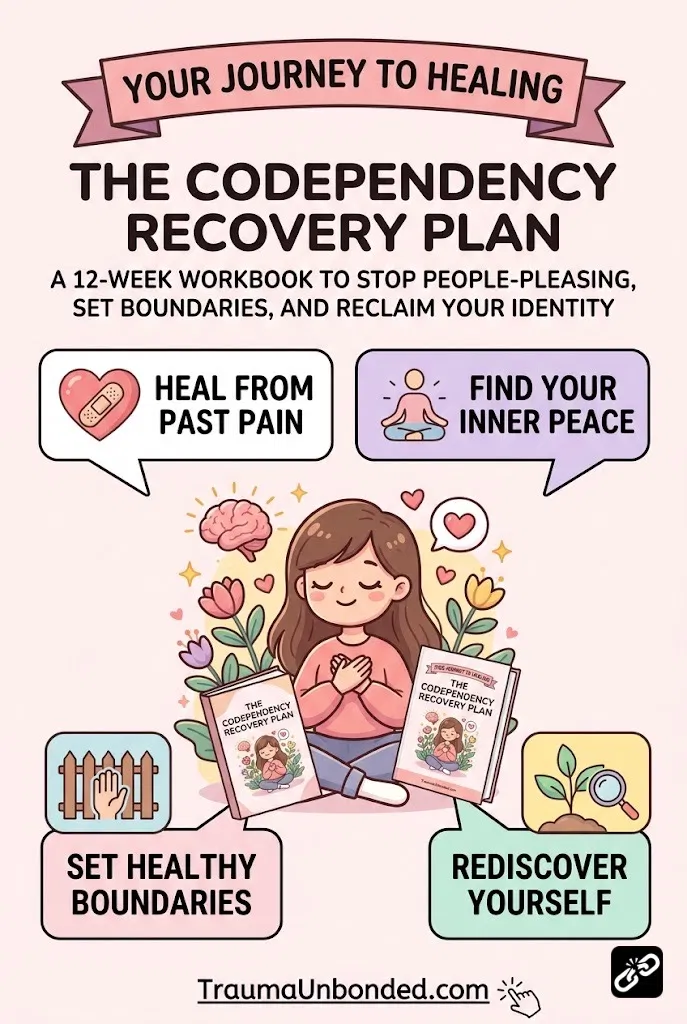
But healing is possible when we focus on the root of our adult vulnerability, which is often our wounded inner child. If you want to begin reclaiming your identity and breaking free from people-pleasing, working through The Codependency Recovery Plan can help you rebuild your boundaries and reconnect with who you truly are.
During my decade-long relationship, I learned to suppress my feelings to keep the peace. When you spend years walking on eggshells, your inner child learns that their emotions are dangerous and must be hidden. How many times did you silence your own voice just to prevent another explosive argument?
That silent coping mechanism is actually a trauma response. To recover, we must go backward to go forward.
What Does Inner Child Healing Look Like After Narcissistic Abuse?
Healing your inner child after narcissistic abuse means reclaiming the parts of yourself that you suppressed to survive the relationship. It involves learning to validate your own emotions, rebuild self-trust, and act as the protective adult you needed back then.
In a healthy dynamic, your feelings are met with curiosity and care. In a toxic relationship, they are weaponized against you. Gaslighting makes us doubt our own senses, leaving us disconnected from our intuition.
This constant invalidation teaches our inner child that our reality is wrong. To survive, we become codependent, constantly scanning our partner’s moods while neglecting our own physical and mental needs. According to research on trauma and development, childhood patterns of adaptation often dictate how we respond to adult relationship distress. Indeed, Psychology Today explains inner child work as a psychological process of uncovering and addressing these early survival strategies.
When I finally got out of my toxic relationship, I realized that my adult self was still operating from a place of childhood fear. I was terrified of conflict and desperate for external validation. Healing meant learning how to parent myself and reassuring that scared kid inside me that we were finally safe.
If you want to accelerate this healing process and stop the cycle of people-pleasing for good, you need a structured plan. The step-by-step workbook below is designed to guide you through setting ironclad boundaries and reclaiming the identity you lost during those toxic years.
Practical Inner Child Exercises for Post-Abuse Recovery

1. The Two-Handed Writing Exercise
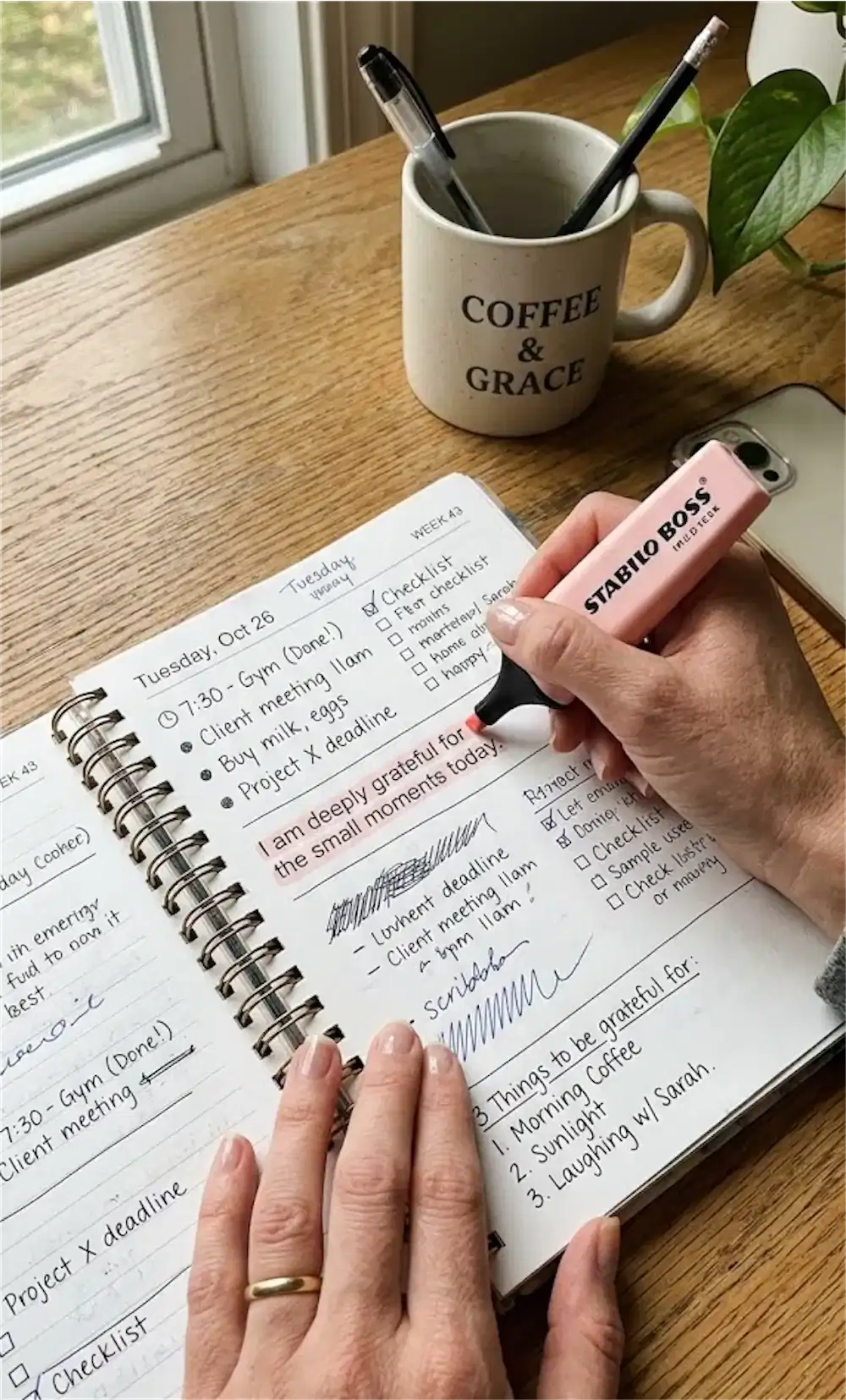
This was one of the most powerful tools my therapist introduced to me. Sit down with a journal and a pen. Using your dominant hand, write a question from your adult self, such as, “How are you feeling today?” Then, switch the pen to your non-dominant hand and allow your inner child to answer without filtering or judging the response.
Using your non-dominant hand bypasses your logical, defensive adult brain. You might find that the child writes things like, “I am scared you will leave me,” or “I am tired of pretending everything is fine.” Let the tears flow if they come. This raw dialogue is where the healing starts.
2. Reparenting Your Inner Child Through Written Affirmations
The narcissist likely used words to break you down, installing a harsh inner critic in your mind. To counteract this, you must consciously practice reparenting your inner child by feeding them the safety and validation they never received.
Write down these phrases daily and speak them aloud to yourself:
- “I hear you, and your feelings make complete sense to me.”
- “You do not have to perform or be perfect to earn my love.”
- “I am the adult now, and I will keep you safe from people who hurt us.”
Through consistency, these affirmations help quiet the critical voice and build a foundation for rebuilding self-worth after a discard.
3. Visualizing a Safe Haven
Close your eyes and take several slow, deep breaths. Visualize a peaceful place, such as a sunny meadow, a quiet room, or a beach. In this space, invite your younger self to sit next to you.
Talk to them directly. Tell them about the survival steps you have taken, and explain that the toxic partner cannot reach them here. This simple visualization helps soothe the hyperactive nervous system, helping to shift your brain chemistry out of constant flight-or-fight mode. Understanding your trauma bond brain chemistry is important, but body-based grounding exercises are what truly teach your nervous system that the threat is over.
4. Reclaiming Your Childhood Joy
When my toxic relationship ended, I realized I had no idea what I liked to do anymore. My entire existence had been consumed by managing my ex-partner’s chaotic moods. To heal, I had to ask myself: what did I love doing before the world told me who I had to be?
Think back to when you were seven or eight years old. Did you love drawing, riding your bike, climbing trees, or listening to music? Dedicate at least one hour a week to doing something purely for the fun of it, with no pressure to produce a perfect result. For me, it was picking up a dusty sketchbook and drawing terribly. It felt silly, but it was a declaration of freedom for my inner child.
Navigating the Grief of the Lost Years
It is entirely natural to feel intense anger and grief for the years you lost to a toxic partner. Twelve years of my own life sometimes feel like a blurry haze of anxiety and confusion. How do we move past that resentment?
First, stop punishing yourself for staying as long as you did. Your inner child was doing the absolute best they could to keep you safe using the coping tools they had. Forgiving yourself is not about letting the toxic person off the hook; it is about releasing the heavy burden of self-blame from your own shoulders.
Today, I am back to my original self. I laugh easily, I look forward to the future, and I no longer tolerate people-pleasing. That transformation did not happen overnight, but it started the moment I decided to stop looking for validation from my abuser and started giving it to myself.
Your inner child was not broken by the narcissist; they were simply hidden away for protection. By practicing these exercises regularly, you show that vulnerable part of you that it is finally safe to step out into the light. You are the protector you always needed, and your healing journey starts with a single step toward self-compassion. If you are ready to take that next step and rebuild your life, explore The Codependency Recovery Plan to start your path toward lasting peace.

Meet Your Guide
Helen Brooks
After surviving a 12-year NPD/BPD relationship, I dedicated over a decade to studying trauma bonding and nervous system recovery. My mission is to help you break free from the fog and reclaim your authentic self.
Ready to break the trauma bond and reclaim your life?