The Healing Power of Storytelling: How Writing Your Narrative Helps You Recover from Abuse
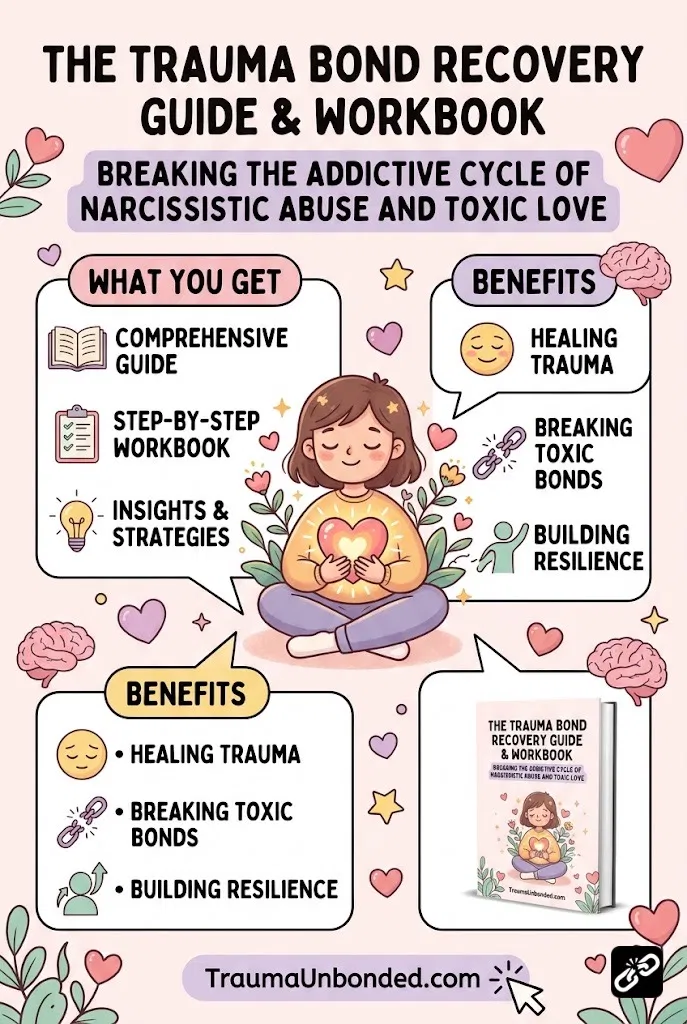
The healing power of storytelling after narcissistic abuse is one of the most underrated tools in trauma recovery. If you have ever searched for “how to process emotional abuse through writing” or “does journaling help with trauma bonding,” you are not alone. Writing your story down, even just for yourself, can be the thing that finally helps you see what happened with clarity. After spending 12 years in a relationship with someone who had both NPD and BPD traits, I can tell you that putting words on paper was the moment my brain started to untangle the fog. It was messy. It was painful. But it was the beginning of everything changing. If you are looking for a structured way to begin this process, The Trauma Bond Recovery Guide & Workbook pairs perfectly with the storytelling practices I’ll walk you through here.
For years, I could not explain what had happened to me. Not to friends, not to therapists, not even to myself. The events were all tangled up with guilt, self-blame, and a persistent voice telling me I was the problem. Sound familiar? That confusion is not a personal failure. It is a direct result of gaslighting, which is when someone repeatedly denies your reality until you stop trusting your own perceptions. After a decade of hearing “that never happened” and “you’re too sensitive,” my memory felt unreliable. Writing was the first thing that gave it back to me.
Why Does Writing Your Abuse Story Help You Heal?
Writing your abuse narrative helps you heal because it externalizes fragmented traumatic memories, allowing your brain to process and organize painful experiences into a coherent story, which reduces emotional overwhelm and restores your sense of reality.
When you live inside a trauma bond, your memories do not store properly. They come in flashes, feelings, body sensations. You might remember the pit in your stomach more than the actual words that were said. This is because chronic emotional abuse keeps your nervous system in survival mode, and your brain prioritizes threat detection over organized memory storage.
Research published in the journal Psychological Science has shown that expressive writing about traumatic experiences can lead to measurable improvements in both physical and psychological health. The act of translating emotional chaos into words engages the prefrontal cortex, the part of your brain responsible for reasoning and perspective. In simple terms, writing forces your brain to slow down and make sense of what happened instead of just reliving it on a loop.

I remember the first time I sat down and tried to write about my relationship from the beginning. I got about three sentences in and started crying so hard I couldn’t see the screen. But something strange happened. The next day, I tried again. And the day after that. Each time, the crying came a little later. The clarity came a little sooner. That is what narrative healing does. It does not erase the pain. It teaches your brain that the pain belongs to the past.
How Storytelling Breaks the Cycle of Rumination
Have you ever caught yourself replaying the same argument in your head for the hundredth time? Maybe you are still rehearsing what you should have said, or trying to figure out what you did wrong. That is rumination, and it is one of the most exhausting symptoms of C-PTSD after narcissistic abuse. Your brain gets stuck in a loop because the experience was never fully processed. It keeps circling back, trying to find a resolution that does not exist.
Writing interrupts that loop. When you put the argument on paper instead of replaying it in your head, you give your brain a place to put it down. You are essentially telling your nervous system: “I have recorded this. I do not need to keep it running in the background anymore.”
During my recovery, I had a therapist who told me something I will never forget. She said, “Your brain is trying to solve a puzzle with missing pieces. Writing helps you accept that some pieces will always be missing, and that is okay.” That reframe changed everything for me.
Here are some specific ways storytelling disrupts the rumination cycle:
- Externalizing the memory: Moving the event from your internal loop to a physical page reduces its emotional charge over time.
- Identifying patterns: When you write out multiple incidents, you start to see the cycle of love bombing, devaluation, and discard clearly for the first time.
- Separating facts from feelings: Writing helps you distinguish between what actually happened and the guilt or shame your abuser conditioned you to feel.
- Creating a witness: Even if no one else reads it, writing creates a record. You become your own witness, and that matters deeply after years of being told your experience was not real.
What to Write When You Don’t Know Where to Start
This is where most people freeze. You sit down with a blank page and the weight of a whole relationship sits on your chest. So let me make this simple. You do not need to write a memoir. You do not need to start at the beginning. You do not need to write well.
Start with one moment. Just one. Maybe it is the first time you felt something was “off” but could not name it. Maybe it is the time they gave you the silent treatment for three days and you spent every minute of it trying to figure out what you did. Maybe it is the moment you realized you had no friends left.
Write it exactly how you remember it. Do not edit. Do not censor. Do not worry about whether it “makes sense.” Trauma memories are fragmented on purpose. Let them be messy on the page. The coherence comes later, almost on its own, as you keep writing.
Some prompts that helped me during my own recovery:
- “The first time I knew something was wrong was when…”
- “I stayed because I believed…”
- “The version of me before the relationship was someone who…”
- “What I wish someone had told me is…”
- “The hardest thing to admit is…”
If you want a more guided approach with prompts specifically designed for trauma bond recovery, I found that working through structured journal prompts for trauma bonding made the process feel less overwhelming and more intentional.
If you have been struggling to put your experience into words, or you keep starting and stopping, a structured framework can make all the difference. The guide below was designed for exactly this stage of recovery.
Writing Reveals the Patterns You Could Not See While Living Inside Them
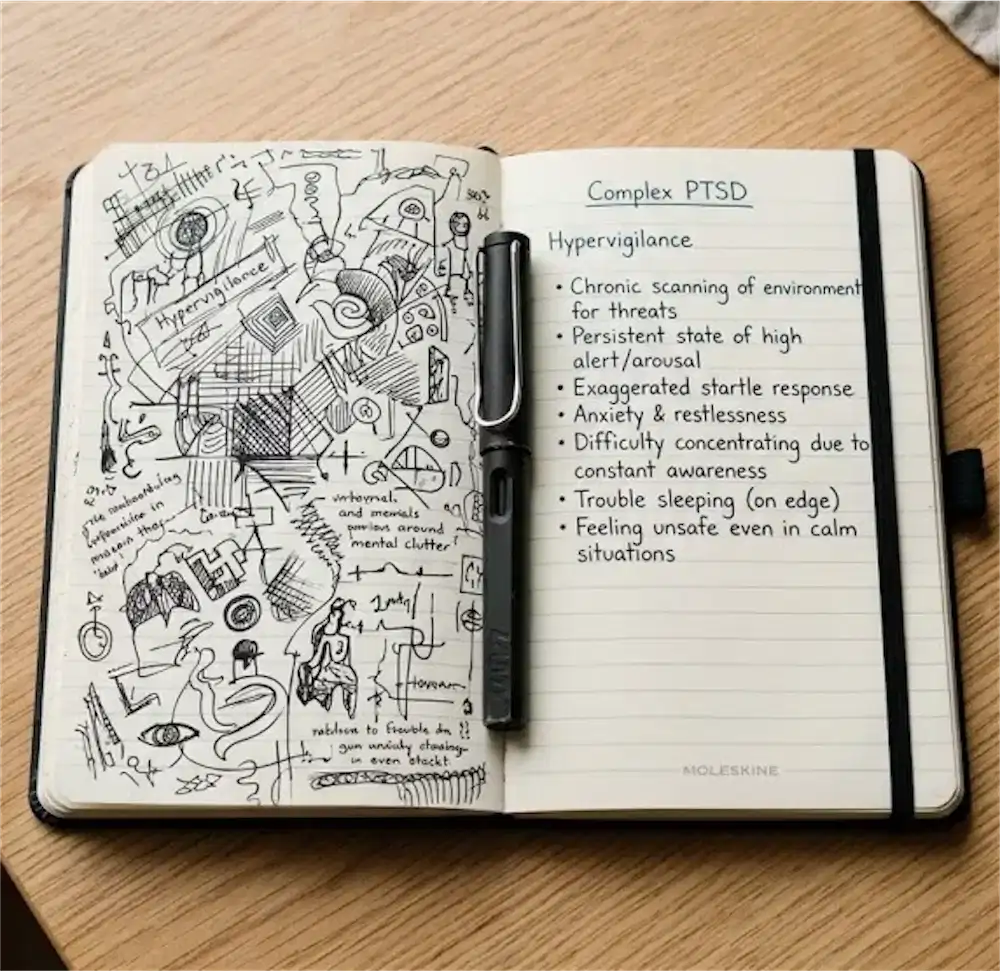
This is something no one warns you about. When you start writing, you will begin to see things you genuinely could not see while you were in the relationship. The intermittent reinforcement, which is that unpredictable pattern of cruelty followed by intense affection, looks completely different on paper than it felt in real time. In real time, it felt like hope. On paper, it looks like a calculated cycle.
I wrote out a timeline of my relationship once. Just simple bullet points. Month by month for the first two years. When I finished, I stared at it for a long time. The pattern was so obvious it almost made me angry. Love bombing for three weeks. Withdrawal for one. A manufactured crisis. Then overwhelming tenderness and promises. Rinse and repeat. I could not see it while I was living it because my nervous system was too flooded with cortisol and dopamine to think straight. But on paper? It was undeniable.
That is the power of narrative. It gives you distance. Not emotional distance, at least not right away, but cognitive distance. You move from “What is wrong with me?” to “What was done to me?” And that shift is everything.
Your Story Is Not Just for Healing. It Is Proof You Survived.
There will be days when you doubt yourself again. Days when a hoovering attempt lands in your inbox, which is when your ex reaches out with a carefully worded message designed to pull you back in, and suddenly you question whether it was really “that bad.” Those are the days you go back and read what you wrote.
Your written story becomes your anchor to reality. It is harder to gaslight yourself when the truth is sitting right there in your own handwriting. I kept a folder on my laptop labeled “Read This When You Miss Him.” Inside were entries from the worst moments. The nights I spent on the bathroom floor. The time he disappeared for a week with no explanation and came back acting like nothing happened. The slow, quiet way my friendships died because I was too ashamed to tell anyone the truth.
That folder saved me from going back more than once.
A Few Things to Keep in Mind
Writing about trauma is not the same as reliving it, but it can feel that way at first. Be gentle with yourself. You do not have to write every day. You do not have to share what you write with anyone. And if a particular memory feels too activating, it is completely fine to step away, do some grounding, and come back to it later. This is not a race.
If you find yourself dissociating while writing, meaning you feel numb, spacey, or disconnected from your body, that is a sign to pause. Put your feet on the floor. Name five things you can see. Drink some cold water. Your nervous system is telling you it needs a break, and honoring that is also part of healing.
Writing your abuse narrative is not about creating a perfect account of what happened. It is about reclaiming the voice that was taken from you. It is about saying, “This happened. It was real. And I am still here.” If you are ready to take that step with real structure and support, The Trauma Bond Recovery Guide & Workbook walks you through it one page at a time. You already survived the hardest part. Now it is time to tell yourself the truth about it.

Meet Your Guide
Helen Brooks
After surviving a 12-year NPD/BPD relationship, I dedicated over a decade to studying trauma bonding and nervous system recovery. My mission is to help you break free from the fog and reclaim your authentic self.
Ready to break the trauma bond and reclaim your life?