How Trauma Affects Decision-Making After an Abusive Relationship: Reclaiming Your Judgment
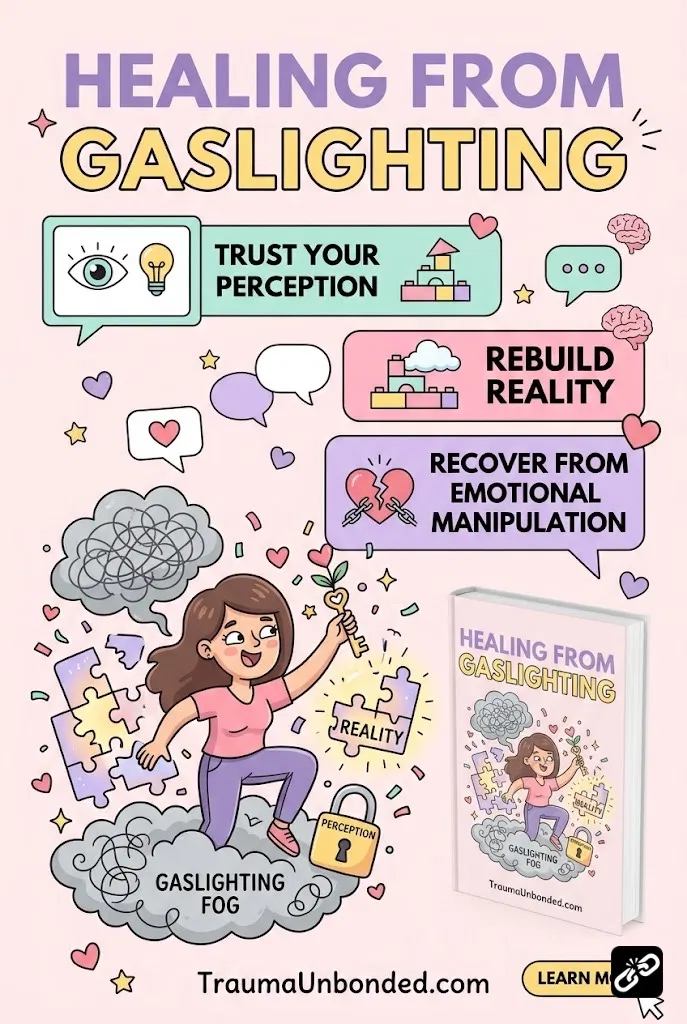
Trauma affects decision-making in ways that most survivors don’t even recognize at first. If you’ve recently left a narcissistic or BPD relationship and find yourself unable to make simple choices, second-guessing every instinct, or freezing when someone asks what you want for dinner, you’re not broken. You’re experiencing the neurological aftermath of prolonged emotional abuse. After 12 years in a relationship with someone who had both NPD and BPD traits, I walked out the door unable to decide whether I deserved to buy myself a coffee. That’s what chronic psychological abuse does to your brain. And if you’re searching for answers about why you can’t make decisions after leaving a toxic relationship, I want you to know: your judgment is still in there. It’s just been buried under years of manipulation, and it can absolutely be recovered. A resource that genuinely helped me rebuild that internal compass was the Healing from Gaslighting guide, which walks you through trusting your own perception again.
Why Can’t I Make Decisions After Narcissistic Abuse?
After narcissistic abuse, decision-making becomes impaired because the brain’s threat-detection system (the amygdala) remains in a hyperactivated state, while the prefrontal cortex, responsible for rational thinking and planning, becomes suppressed from chronic stress exposure.
Let me put that in real terms. When you live with someone who punishes you for having opinions, mocks your preferences, or gaslights you into believing your perceptions are wrong, your brain literally rewires itself. Gaslighting isn’t just lying. It’s a systematic campaign to make you distrust your own reality. After years of hearing “that never happened” or “you’re too sensitive,” your brain stops trusting its own signals.
I remember standing in a grocery store six months after leaving, paralyzed in front of the cereal aisle. Not because cereal matters. But because for over a decade, every choice I made was monitored, criticized, or weaponized. Choosing the “wrong” thing meant hours of silent treatment or an explosive argument. My nervous system learned that making a decision equals danger.

Research published by Harvard Medical School confirms that chronic stress fundamentally alters brain structure and function, particularly in areas governing executive function, memory, and emotional regulation. This isn’t a character flaw. It’s biology responding to an unsafe environment.
The 5 Ways Trauma Hijacks Your Decision-Making
Understanding exactly how abusive relationship trauma impacts your judgment is the first step toward getting it back. Here are the patterns I experienced personally, and that my therapist helped me name:
- Decision paralysis: You freeze when faced with even small choices because your nervous system associates decisions with punishment.
- Constant second-guessing: You make a choice, then immediately panic that it was wrong. This comes directly from years of having your reality questioned through gaslighting.
- People-pleasing as a default: Instead of deciding what YOU want, you automatically try to figure out what the other person wants. This is the fawn response in action, a trauma survival mechanism where you abandon your own needs to keep someone calm.
- Hypervigilance before choosing: You scan for threats, try to predict outcomes, and run through worst-case scenarios before making any move. Your brain is still protecting you from an abuser who is no longer there.
- Impulsive or reckless choices: On the flip side, some survivors swing into impulsivity. After years of having no autonomy, you might make rapid, emotionally charged decisions just to feel something or prove you’re free.
Do any of these sound familiar? If so, that recognition is actually progress. You can’t fix what you can’t see.
How Gaslighting Destroys Your Inner Compass
I want to spend a moment here because this piece is critical. Gaslighting doesn’t just confuse you in the moment. It trains your brain, over months and years, to outsource all validation externally. You stop checking in with yourself. You stop asking “what do I think?” and start asking “what should I think to avoid conflict?”
In my relationship, I couldn’t even trust my own memory. My ex would describe arguments that never happened, deny things I literally witnessed, and then act hurt that I was “making things up.” After a decade of this, my internal compass wasn’t just broken. It was gone. I didn’t have opinions anymore. I had survival strategies.
If you’re struggling with trusting your own reality after gaslighting, please know that this is one of the most common and most healable wounds. Your perception was never the problem. The person who kept telling you it was? They were the problem.
The Role of Cortisol and Your Nervous System
Here’s what nobody told me when I left: my body was flooded with cortisol. After years of living in fight-or-flight mode, my stress hormones were running the show. And cortisol doesn’t just make you anxious. It directly impairs the prefrontal cortex, which is the part of your brain responsible for planning, weighing options, and making thoughtful choices.
So when you feel like your brain is wrapped in cotton, or like you can’t think straight, or like you’ve developed brain fog after abuse, that’s cortisol doing its work. Your body is still operating as if the threat is present, even though you’ve physically left.
This is why nervous system regulation is not optional in recovery. It’s foundational. Until your body calms down, your brain cannot function at full capacity. Things like breathwork, grounding exercises, and even cold water on the wrists can start to bring your system back online. I also found that learning about cognitive dissonance in narcissistic abuse helped me understand why my brain felt so fractured.
If you’ve been looking for a structured way to rebuild clarity and confidence in your own mind, the resource that made the biggest difference for me was a step-by-step system that addressed both the emotional and cognitive damage of gaslighting.
Practical Steps to Reclaim Your Decision-Making After Trauma
Recovery didn’t happen overnight for me. It took months of intentional practice. But my judgment did come back, and yours will too. Here’s what actually worked:
Start With Tiny, Low-Stakes Decisions
Pick your own coffee order without asking anyone’s opinion. Choose what to watch on TV. Select your own outfit without imagining someone criticizing it. These seem ridiculously small, but they’re retraining your brain that your preferences are safe to have.
Name the Fear Behind the Freeze
When you feel paralyzed, pause and ask: “What am I afraid will happen if I choose wrong?” Usually the answer traces back to your abuser’s reactions, not actual present-day consequences. Naming it takes away its power. My therapist called this “separating past threat from present reality.”
Set a Decision Timer
Give yourself 60 seconds for small decisions. Not because rushing is good, but because it interrupts the rumination loop. You’re not going to get it perfectly right every time, and that’s actually the point. Imperfect choices made freely are better than “perfect” choices made under someone else’s control.
Build a Support System That Validates Without Deciding For You
One trap I fell into early in recovery was replacing my ex’s opinions with a friend’s opinions. I went from one external compass to another. A good therapist or trusted friend will reflect your thoughts back to you and say, “What do YOU want?” instead of telling you what to do.
Journal Your Decisions and Their Outcomes
This was game-changing. I started writing down choices I made and what actually happened. Over time, I built a real, tangible record that proved: my instincts are reliable. My judgment works. The person who told me otherwise was wrong.
When Will I Feel Like Myself Again?
I won’t sugarcoat this. It takes time. For me, it was about eight months before I could make a moderately important decision without spiraling. It was over a year before I could set a boundary with confidence and not crumble afterward.
But I want to tell you something that would have meant the world to me in those early months: the fact that you’re questioning your decision-making means your critical thinking is already coming back online. Someone still in the fog doesn’t question it. You are no longer in the fog. You’re just learning to see clearly again after years with someone who kept the lights off.
Today, I make decisions with ease. I trust my gut. I say no without guilt. I say yes without fear. That version of you exists on the other side of this process, and she’s waiting. If you want a structured path to rebuild that trust in your own perception, the Healing from Gaslighting guide is the resource I wish I’d had from day one. Your judgment was never the problem. It was stolen from you. And now, you get to take it back.

Meet Your Guide
Helen Brooks
After surviving a 12-year NPD/BPD relationship, I dedicated over a decade to studying trauma bonding and nervous system recovery. My mission is to help you break free from the fog and reclaim your authentic self.
Ready to break the trauma bond and reclaim your life?