Why You Can’t Remember Your Relationship: Trauma-Induced Amnesia Explained
If you experience **trauma-induced amnesia** and find that you **can’t remember your relationship** with a toxic partner, you are not alone. For years, I experienced severe **memory loss after an abusive relationship**, finding myself unable to recall basic timelines. If you are currently dealing with this silent challenge, you can find a clear path to recovery in The Brain Fog Solution to start reclaiming your cognitive health.
Do you look at old photos and feel like you are looking at a stranger? This distressing block in your memory is actually your body trying to shield you from psychological harm. In toxic dynamics, the nervous system stays locked in a survival loop, which actively disrupts how your brain processes and stores memories.
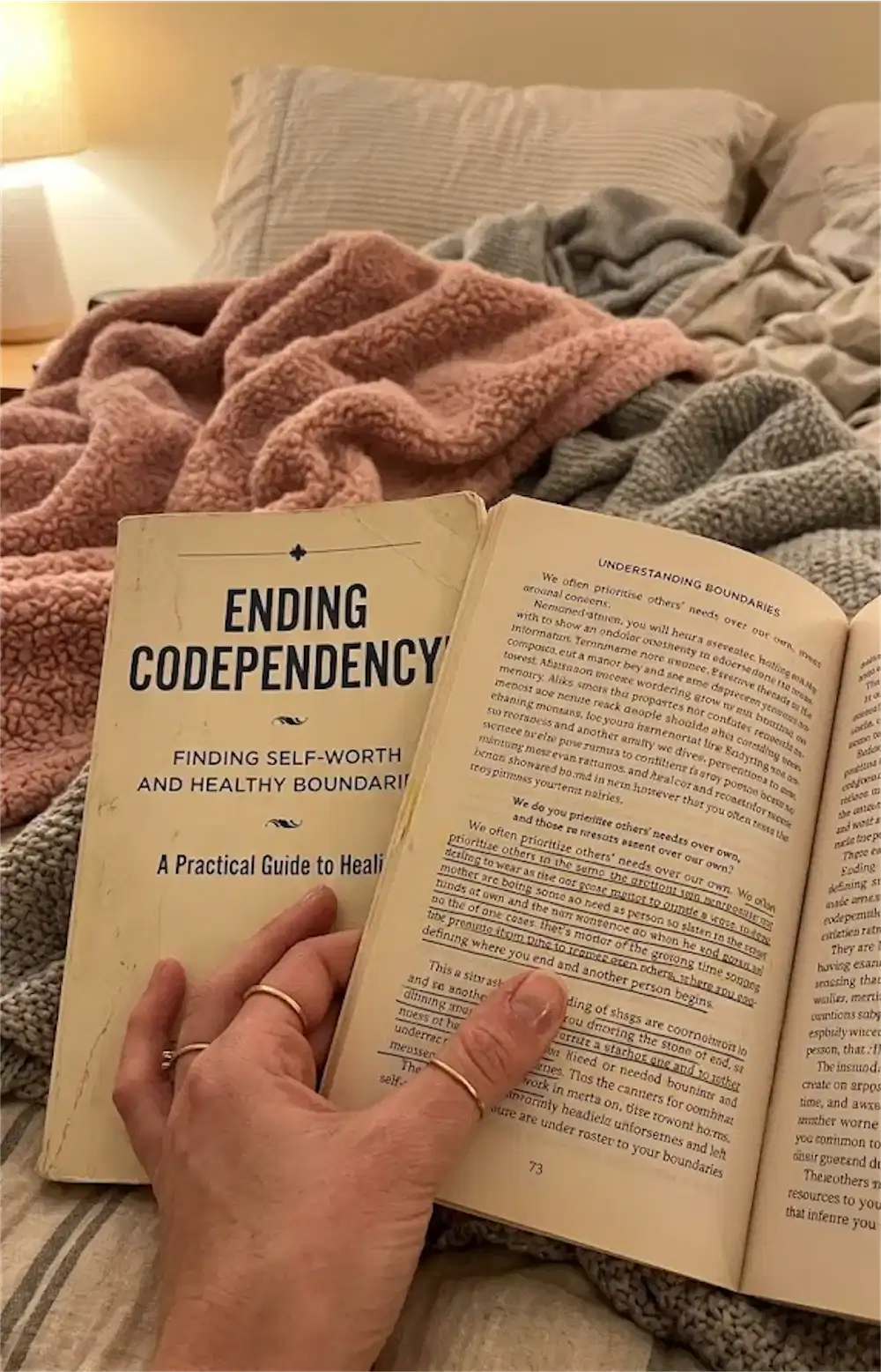
Through professional therapy and learning about codependency, I slowly began to piece my history back together. Today, I have returned to my natural, optimistic self, but getting here required understanding the heavy toll chronic survival stress takes on our cognitive health. Let us look at why your mind chose to forget, and how you can reclaim your narrative.
Why You Can’t Remember Your Relationship After Narcissistic Abuse
Trauma-induced amnesia is a biological defense mechanism where the brain suppresses painful memories of chronic abuse to protect your mental stability. This survival response temporarily blocks access to traumatic events, leaving survivors struggling to recall timeline details of their toxic relationship.

During my decade-long relationship, I experienced hundreds of instances of gaslighting and dramatic shifts. Yet, when friends asked me about the details later, I could only offer vague summaries or total silence. Did you experience this too? Your brain is not broken; it is simply operating under emergency protocols.
When you live in constant survival mode, your brain puts immediate safety first over long-term recording. Studies on trauma-related memory loss published in Psychology Today show that chronic stress impairs the hippocampus, the brain’s filing cabinet, making it hard to organize and retrieve memories chronologically [1]. When cortisol levels spike daily, the neural pathways required to form clear timelines are heavily disrupted.
The Survival Biology of Trauma-Induced Amnesia
Your brain contains a delicate alarm system consisting of the amygdala and the hippocampus. The amygdala acts as a smoke detector, screaming of danger every time your partner rages, threatens, or withdraws. To keep you safe, your amygdala floods your body with adrenaline and cortisol.
The hippocampus, which is responsible for cataloging these events, gets overwhelmed by this flood of chemicals. It cannot organize the memories, leaving them stored as fragmented, raw emotions rather than cohesive stories. This is why you might find it hard to cope with trauma brain fog relief and feel unable to remember simple arguments.
I spent years feeling intense guilt, believing I was simply lazy or unintelligent because I forgot major events. In truth, my brain was working overtime to block those moments so I could wake up every day, make breakfast, go to work, and keep moving. Forgetting was the only way I could stay in that environment without completely breaking down.
Gaslighting, Splitting, and Cognitive Dissonance
Apart from the physical changes in your brain, psychological manipulation also erases your history. A partner with NPD or BPD traits relies heavily on altering your perception of reality. When they tell you that an event never happened, or that you are misremembering it, they force you to discard your own memories.
This constant manipulation leads to extreme cognitive dissonance, where your brain holds two opposing realities at once. To survive the daily friction, your mind often defaults to their version of events or simply erases the memory altogether to avoid further conflict. You can read more about what I learned from these patterns in my lessons from 12 years with a narcissist.
Additionally, dealing with sudden discards or rapid mood shifts creates an unstable environment where your brain cannot form a coherent narrative. You are constantly waiting for the next crisis, leaving no room for your mind to settle down and process what just occurred. Over time, this chronic instability leaves your memory bank looking like a puzzle with half the pieces missing.
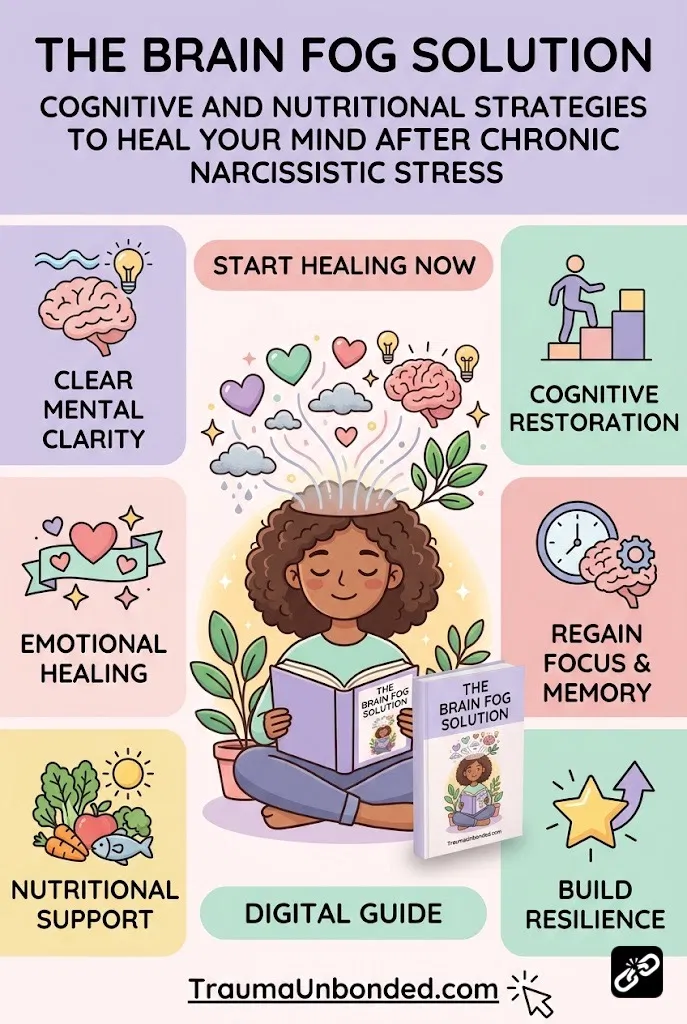
If you are tired of living in a mental haze and want to actively rebuild your focus, clear the mental clutter, and protect your nervous system, a structured path is key. To help you step out of the fog and systematically restore your cognitive strength, I highly recommend using this evidence-based workbook designed specifically for survivors of chronic narcissistic stress.
How to Reconnect with Your Reality and Rebuild Memory

Reclaiming your lost history is not about forcing yourself to remember every painful detail. Instead, it is about teaching your nervous system that it is finally safe to stop forgetting. When your body realizes the danger has passed, the brain can slowly start to rebuild its filing system.
Here are some of the most helpful, practical steps that helped me step out of the haze and ground myself back in reality:
- Keep a low-pressure journal: Write down your daily feelings and small victories without pressure to write a perfect narrative.
- Ground your body: Use somatic grounding exercises like cold water splashes or mindful walking to signal safety to your amygdala.
- Validate your experiences: Stop telling yourself you are crazy; accept that your memory gaps are proof of what you survived.
- Document the present: Take photos of daily peaceful moments to help your brain practice storing positive, safe memories.
As you practice these steps, you will find it easier to distinguish your own voice from the critical inner monologue left behind by your ex. Learning how to heal from gaslighting and trust your reality is a slow process, but it is entirely possible with patience.
For years, my home office was covered in sticky notes because I could not trust myself to remember basic tasks. Today, those notes are gone, and my natural focus has returned. Your brain is incredibly resilient; it has a natural ability to reorganize and heal itself once the toxic pressure is removed.
Your memory gaps are not a personal failure; they are the physical scars of a highly survival-focused era of your life. Be gentle with yourself as you navigate this healing process. If you are ready to take the next step toward clearing the mental fog and regaining your cognitive health, check out The Brain Fog Solution to start reclaiming your clarity today.

Meet Your Guide
Helen Brooks
After surviving a 12-year NPD/BPD relationship, I dedicated over a decade to studying trauma bonding and nervous system recovery. My mission is to help you break free from the fog and reclaim your authentic self.
Ready to break the trauma bond and reclaim your life?