How to Distinguish Your Voice from the Narcissist’s Inner Monologue
Distinguishing your voice from the narcissist’s inner monologue is one of the most confusing and painful parts of recovery after narcissistic abuse. If you have spent years in a toxic relationship where your thoughts, feelings, and perceptions were constantly questioned, you may no longer know which thoughts are actually yours. That critical voice telling you that you are too sensitive, too needy, too broken? It probably does not belong to you. After twelve years inside a relationship with someone who had both NPD and BPD traits, I could not tell where my own mind ended and my ex’s programming began. Learning how to recognize internalized abuse and separate it from your authentic self is not optional. It is the foundation of healing from gaslighting and rebuilding trust in your own perception.
If you are searching for answers like “why do I still hear my narcissist ex in my head” or “how to stop thinking like my abuser,” you are in the right place. And more importantly, you are not losing your mind. You are waking up.
What Is the Narcissist’s Inner Monologue and Why Is It Stuck in Your Head?
The narcissist’s inner monologue is the internalized voice of your abuser that continues to criticize, doubt, and control your thoughts long after the relationship has ended. It is not your conscience or intuition. It is a conditioned response created by repeated gaslighting, verbal abuse, and emotional manipulation over months or years.
When someone tells you for years that your feelings are wrong, that your memory is unreliable, that your needs are burdens, something happens inside your brain. You stop trusting yourself. You start filtering every single thought through their lens. “Would they approve of this?” “Am I being dramatic?” “Maybe I really am the problem.”
That is not you thinking. That is their voice living rent-free in your nervous system. During my twelve years, I did not even realize it was happening. I thought I was just a naturally self-critical person. It took months of therapy to understand that my inner critic was speaking in my ex’s exact phrases. Word for word.
Research published by the American Psychological Association confirms that prolonged exposure to gaslighting can fundamentally alter a person’s self-concept and inner dialogue, causing them to internalize the abuser’s perspective as their own. This is not weakness. This is what chronic psychological abuse does to the human brain.
How Gaslighting Rewires Your Inner Voice
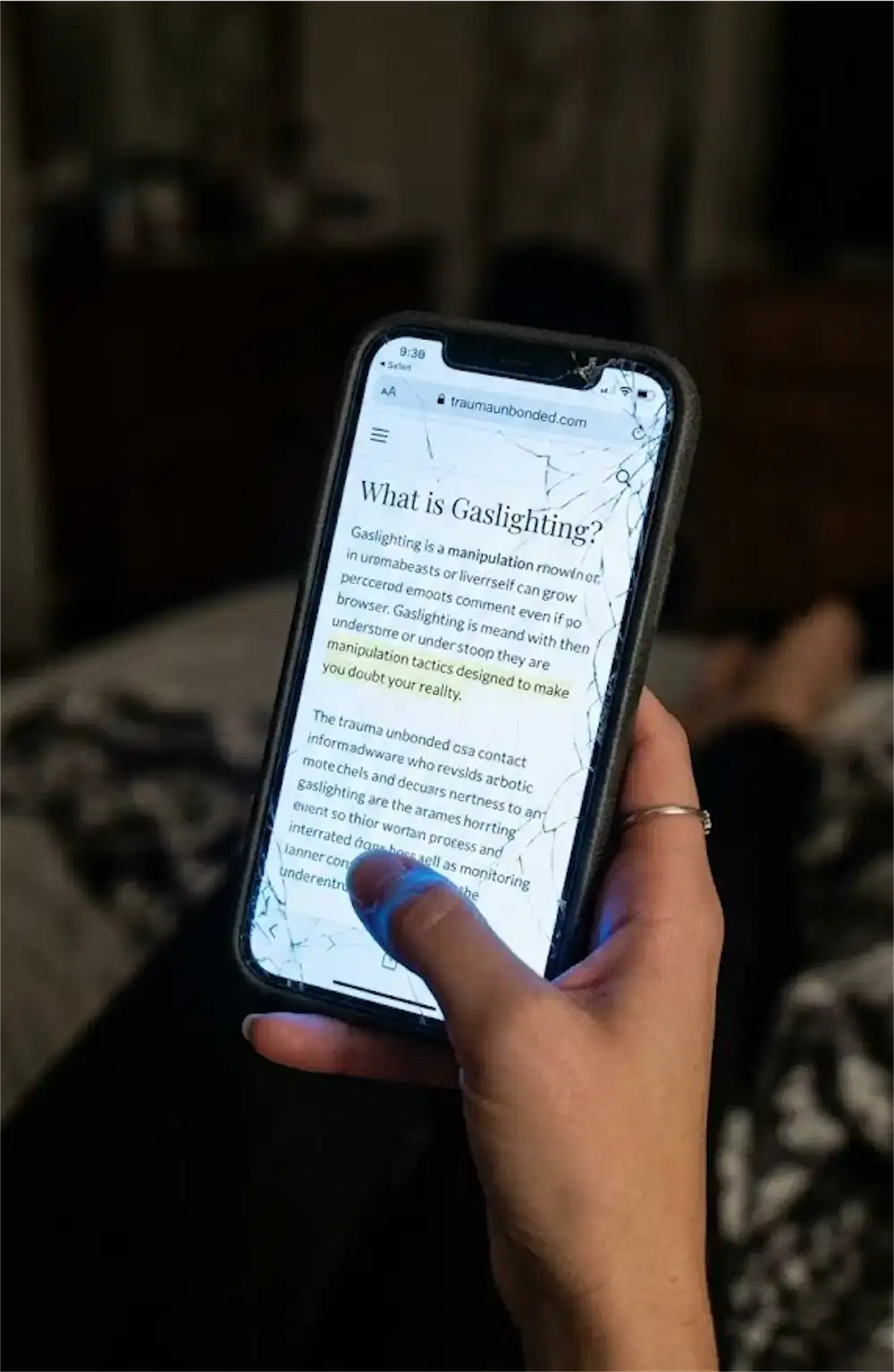
Gaslighting is not just lying. It is a slow, calculated erosion of your ability to trust what you see, feel, and remember. In simple terms, it is when someone makes you question your own reality so many times that you eventually give up and accept their version instead.
In a decade-long relationship, gaslighting does not feel dramatic. It feels normal. It sounds like “You never said that,” or “You are remembering it wrong,” or “Everyone agrees with me, not you.” After hearing this hundreds of times, your brain starts doing the abuser’s job for them. You gaslight yourself before they even have to.
Here is what that looked like for me. I would have a completely valid emotional reaction to something hurtful. Before I could even process it, a voice inside would say: “You are overreacting. You are too sensitive. Nobody would put up with you.” That voice was not mine. It was an echo. And if you are reading this right now nodding along, yours probably is too.
Understanding how gaslighting destroys your trust in reality is the first step toward reclaiming what belongs to you: your own mind.
Your Voice vs. Their Voice: How to Tell the Difference
So how do you actually separate the two? This was the hardest question I faced in recovery. My therapist gave me a framework that changed everything, and I want to share it with you.
Your authentic voice and the internalized abuser voice have completely different qualities. Once you learn to recognize the patterns, you will start catching the imposter in real time.
- Your voice is curious. It asks “What do I need right now?” The abuser’s voice demands “Why are you so weak?”
- Your voice uses nuance. It says “That hurt, and I need to think about why.” The abuser’s voice speaks in absolutes: “You always ruin everything.”
- Your voice feels warm, even when it is honest. The abuser’s voice feels cold, shaming, and punishing.
- Your voice encourages growth. The abuser’s voice discourages any change that would give you independence.
- Your voice sounds like compassion. The abuser’s voice sounds like contempt.
Does that inner voice ever say something your ex used to say almost word for word? Does it mimic their tone, their timing, their favorite insults? That is not self-awareness. That is conditioned self-destruction.
The Role of Trauma Bonding in Keeping Their Voice Alive

The reason the narcissist’s voice stays inside your head long after the relationship ends is directly connected to the trauma bond. A trauma bond is the intense emotional attachment that forms through cycles of abuse and intermittent reinforcement. It is not love. It is a biochemical addiction created by unpredictable patterns of cruelty and kindness.
When you are trauma bonded, the abuser becomes your primary reference point. Their approval equals safety. Their disapproval equals danger. So your brain builds an internal replica of them to keep you “safe” even after they are gone. It is like carrying a guard dog that bites you instead of protecting you.
I remember being six months post-breakup and still mentally “checking” whether my choices would upset my ex. Picking a restaurant. Choosing what to wear. Deciding whether I was allowed to feel happy. That internal checking was the trauma bond operating on autopilot. If this resonates, I strongly recommend learning about the biochemical addiction behind trauma bonds because understanding the science took away so much of my shame.
If you have been struggling to break free from the cycle and want a structured, step-by-step path to reclaim your thinking, this is the resource I wish I had found years earlier.
Practical Steps to Reclaim Your Authentic Inner Voice
Knowing the difference intellectually is one thing. Actually catching the abuser’s voice in real time and choosing your own? That takes practice. Here are the exact methods that worked for me during recovery.
1. Name the Voice
My therapist had me give the internalized critic a name. Not my ex’s name. A separate name. This sounds strange, but it creates psychological distance. When a shaming thought appeared, I would say internally, “That is not me. That is the echo.” Naming it takes away its authority. It turns the voice from “truth” into “pattern.”
2. Journal the Thought, Then Fact-Check It
Write down the critical thought exactly as it appears. Then ask yourself: Is this something my ex used to say? Is there actual evidence for this? Would I say this to a friend? Nine times out of ten, the thought fails the fact check. That is how you know it is not yours.
3. Practice Somatic Awareness
Your body knows the difference even when your mind does not. Your authentic voice usually feels like a gentle pull in your chest or gut. The abuser’s voice creates tension in your jaw, shoulders, or stomach. Start paying attention to where you feel the thought, not just what it says. Over time, your body becomes a reliable lie detector for thoughts that do not belong to you.
4. Build a “Truth File”
Collect evidence of who you actually are. Screenshots of kind messages from friends. Notes from therapy sessions. Memories from before the relationship when you felt confident and whole. When the abuser’s voice gets loud, open this file. It is tangible proof that their narrative about you was a lie.
What Healing Actually Sounds Like Inside Your Head
Recovery is not about silencing the inner critic forever. It is about changing the ratio. In the early months after my breakup, the abuser’s voice ran about 90% of my inner dialogue. Now, years later, it might pop up once a week. And when it does, I recognize it instantly.
Healing sounds like catching yourself mid-thought and saying, “Wait. That is not true.” It sounds like choosing self-compassion over self-punishment. It sounds like your own voice, maybe quiet at first, saying “I deserve better” and actually believing it.
I spent twelve years believing I was fundamentally broken. That belief was never mine. It was installed by someone who needed me to stay small so they could feel big. Uninstalling it took time, patience, and a lot of rebuilding the self-trust that abuse destroyed.
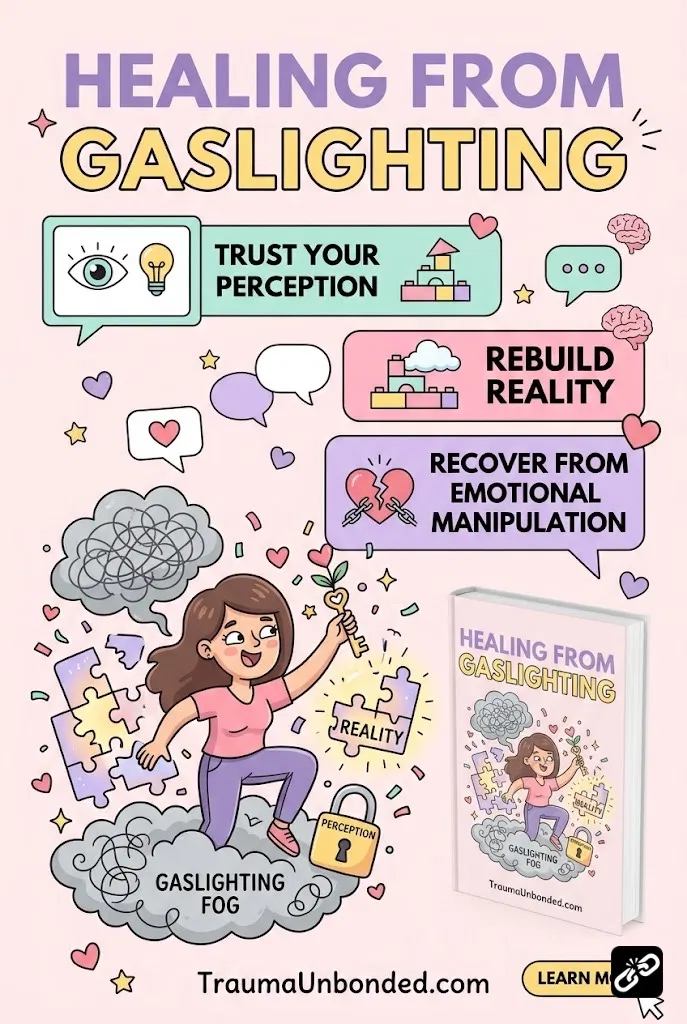
Your real voice is still in there. It never left. It just got buried under someone else’s noise. And the fact that you are here, reading this, searching for answers? That is your voice right now. Quiet but persistent. Tired but unbroken. Follow it. And if you need a structured framework to rebuild trust in your own thoughts and perceptions, the Healing from Gaslighting guide walks you through exactly that, step by step, from someone who had to do the same work.

Meet Your Guide
Helen Brooks
After surviving a 12-year NPD/BPD relationship, I dedicated over a decade to studying trauma bonding and nervous system recovery. My mission is to help you break free from the fog and reclaim your authentic self.
Ready to break the trauma bond and reclaim your life?