Narcissistic Father Recovery: Healing Your Inner Child Deeply
If you grew up with a father who demanded perfection, withheld affection, or made his love conditional on your achievements, you already know the invisible weight of emotional neglect. A relationship with a narcissistic father leaves deep, often unrecognized scars that echo into every area of your adult life. You might find yourself constantly seeking external validation, struggling with intense self-doubt, or feeling like you are never quite enough, no matter how hard you work. But healing is possible, and it begins with understanding that the fundamental flaw was never yours to carry.
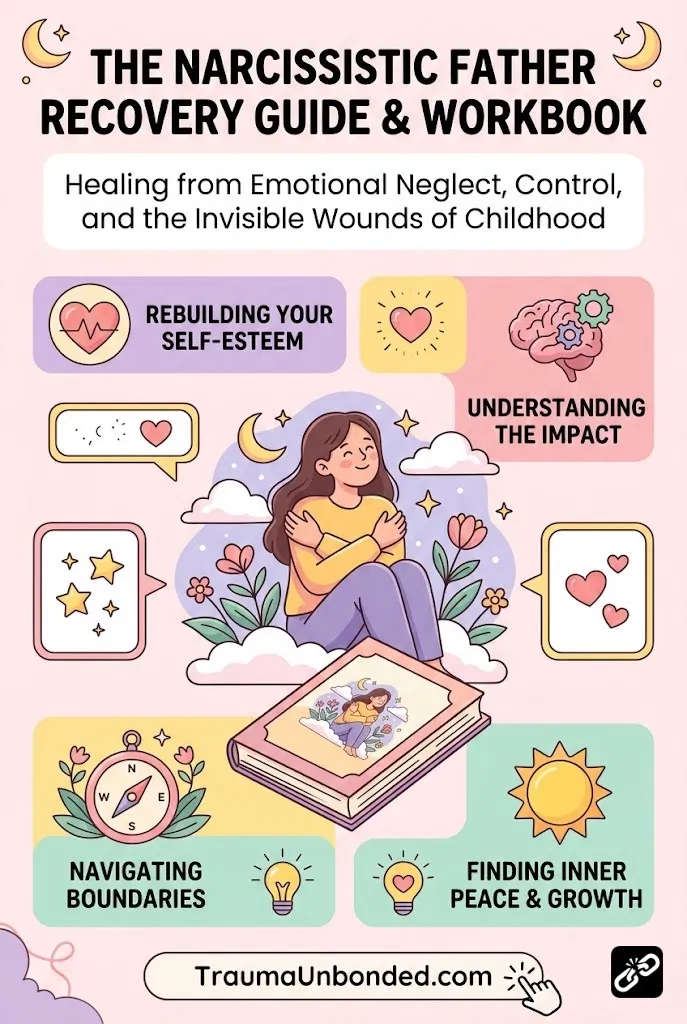
The first step in true recovery is acknowledging the reality of your childhood without sugarcoating it. This is not about blame; it is about radical clarity. For years, I believed my inability to feel secure in relationships was a personal failure. I thought I was simply broken. It took professional support and resources like The Narcissistic Father Recovery Guide & Workbook to realize my nervous system was simply reacting to a decade of chronic unpredictability. Your inner child is still waiting for the safety they never received, and reparenting that vulnerable part of yourself is the core of true healing.
Growing up under the shadow of a narcissistic parent forces you to adapt in ways that are exhausting in adulthood. You become hyper-attuned to the moods of others, terrified of conflict, and quick to abandon your own needs just to keep the peace. You learn to read the room before you even take off your coat. But you can break this exhausting cycle. You can teach your nervous system that the war is over and it is finally safe to exhale.
Understanding the Narcissistic Father Dynamic

A narcissistic father rarely sees his children as independent individuals with their own thoughts and feelings. Instead, they are treated as extensions of his own ego. If you succeed, it is his victory to parade around. If you fail or simply make a different choice that doesn’t align with his vision, it is treated as a personal attack against him. This dynamic creates a confusing, unstable environment where love feels entirely transactional. You learn early on that your worth is tied directly to your utility, not your inherent value as a human being.
In my own experience, the most damaging part was the subtle, persistent gaslighting. It wasn’t always explosive rage; often, it was a quiet, insidious dismissal of my reality. Gaslighting happens when someone manipulates you into doubting your own memories, perceptions, or sanity. When a father does this repeatedly, it fractures your foundational trust in yourself. You grow up believing your emotions are “too much,” overly dramatic, or simply wrong. You stop trusting your own gut instincts.
This manipulation naturally leads to the creation of the Golden Child and Scapegoat dynamic within the family structure. If you were the family scapegoat, you carried the heavy burden of blame for the family’s dysfunction, constantly criticized and marginalized. If you were the golden child, you carried the crushing, suffocating pressure of maintaining the father’s fragile ego, terrified of making a single mistake. Both roles are severe forms of emotional abuse, methodically stripping away your authentic identity.
How to Reparent Your Inner Child
Healing your inner child means actively becoming the parent you always needed but never had. It requires a conscious, daily commitment to showing up for yourself with radical compassion and patience. When you feel a sudden wave of anxiety, a deep sense of inadequacy, or the urge to panic over a minor mistake, that is your inner child reacting to a perceived threat from the past. Instead of criticizing yourself for being sensitive, pause, take a breath, and offer that younger version of you comfort and reassurance.
Start by establishing deep emotional safety within your own mind. This means validating your own feelings without requiring anyone else’s approval or understanding. If you feel sad, allow the sadness to exist without judgment. If you feel angry, recognize that your anger is a completely justified response to years of boundary violations. For a long time, I tried to logic my way out of pain, intellectualizing my trauma to avoid feeling it. It wasn’t until I sat with my grief, truly letting myself mourn the loving father I deserved but didn’t get, that the heavy fog began to lift.
Another crucial, non-negotiable step is setting firm boundaries. When you are raised by a narcissist, boundaries feel like a betrayal. You are taught that saying “no” makes you a bad, selfish person. Relearning this fundamental human right is uncomfortable but absolutely necessary for survival. Setting a boundary might mean limiting phone calls, refusing to engage in circular arguments, or simply deciding not to share personal details with a father who consistently uses them as ammunition against you.
Breaking the Cycle of Codependency
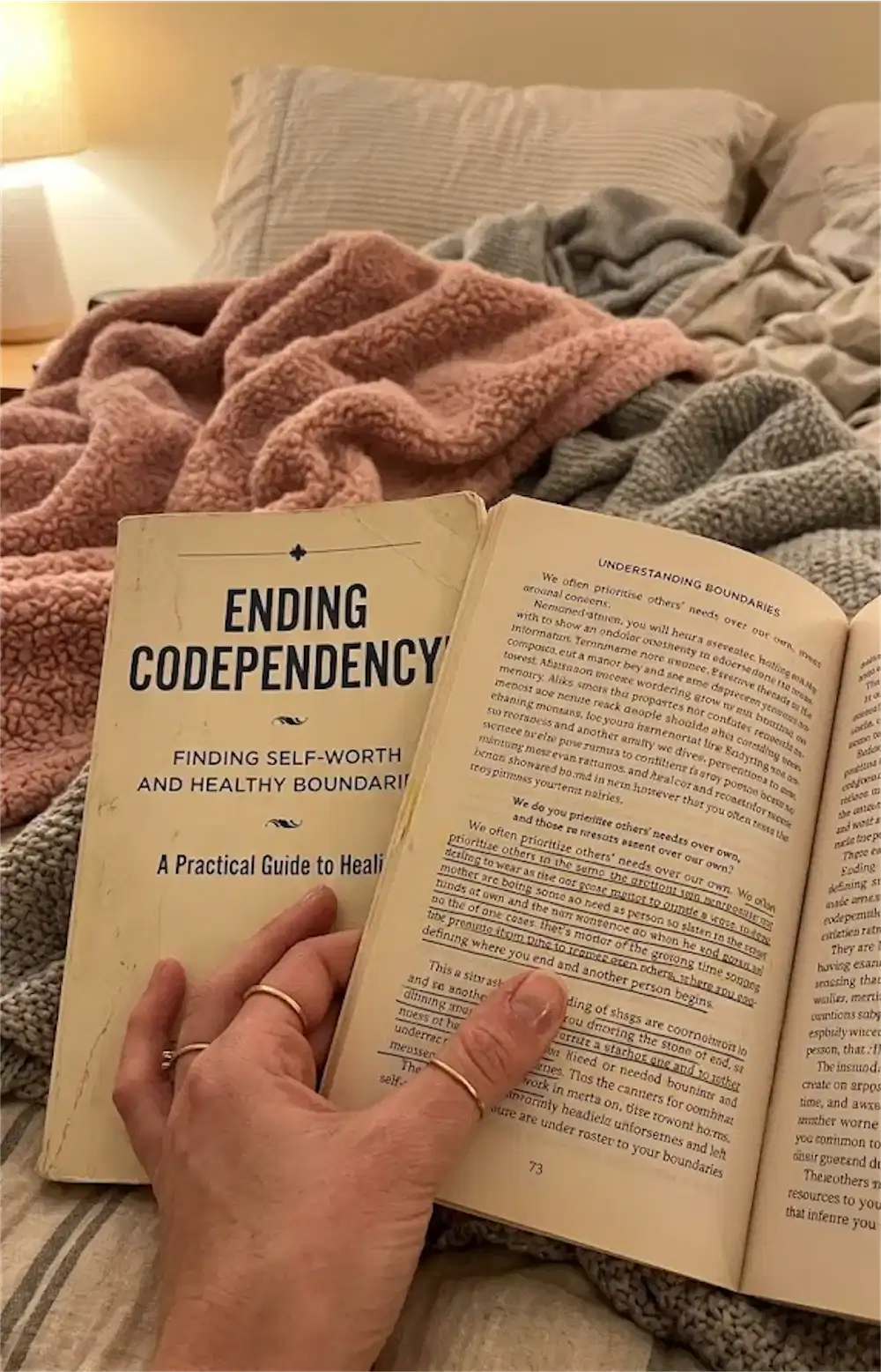
Children of narcissistic fathers almost always develop profound codependency. We learn to read the room the moment we walk in, instantly adjusting our behavior, tone, and opinions to manage the emotional climate. We become chronic people-pleasers, terrified of abandonment or conflict. Breaking this deeply ingrained cycle means learning to tolerate the acute discomfort of someone else being disappointed in you.
You have to stop trying to fix, manage, or save the people around you. Your only real responsibility is your own well-being and mental health. This shift in perspective is terrifying at first, but it is also deeply, profoundly liberating. When I finally stopped trying to earn my father’s approval, I had so much energy left over to actually figure out what I wanted from my own life. I began to discover hobbies I enjoyed, not because they looked impressive to outsiders, but because they brought me genuine, quiet joy.
Part of this unlearning process involves recognizing the fawn response. Fawning is a trauma response where you immediately appease, flatter, or agree with a threat to avoid conflict. If your default reaction to tension is to apologize profusely and make yourself smaller, your inner child is simply trying to protect you the only way they know how. Gently remind yourself that you are an adult now, you have agency, and you are safe enough to hold your ground without crumbling.
Reclaiming Your Authentic Self
The ultimate goal of narcissistic father recovery is not just surviving the aftermath; it is returning to your original, unburdened self. Beneath the layers of anxiety, the constant hypervigilance, and the exhausting people-pleasing, there is a vibrant, optimistic, and grounded person waiting to be rediscovered. Healing allows you to peel back the heavy layers of childhood conditioning and finally meet that person face-to-face.
Celebrate your small victories every single day. Every time you set a boundary, every time you choose your own peace over someone else’s unreasonable demands, and every time you speak your truth, you are physically rewiring your brain. Recovery is not a straight, easy line. There will be days when the grief feels incredibly heavy, and that is completely normal. What matters is that you keep showing up and choosing yourself.
You did not choose the chaotic, painful environment you were raised in, but you hold the absolute power to build the peaceful environment you will thrive in today. You deserve relationships based on mutual respect, trust, and safety, not manipulation and control. If you are ready to do the deep, transformative work of healing these specific childhood wounds and breaking the cycle for good, The Narcissistic Father Recovery Guide & Workbook provides the structured, compassionate roadmap your inner child has been waiting for.

Meet Your Guide
Helen Brooks
After surviving a 12-year NPD/BPD relationship, I dedicated over a decade to studying trauma bonding and nervous system recovery. My mission is to help you break free from the fog and reclaim your authentic self.
Ready to break the trauma bond and reclaim your life?