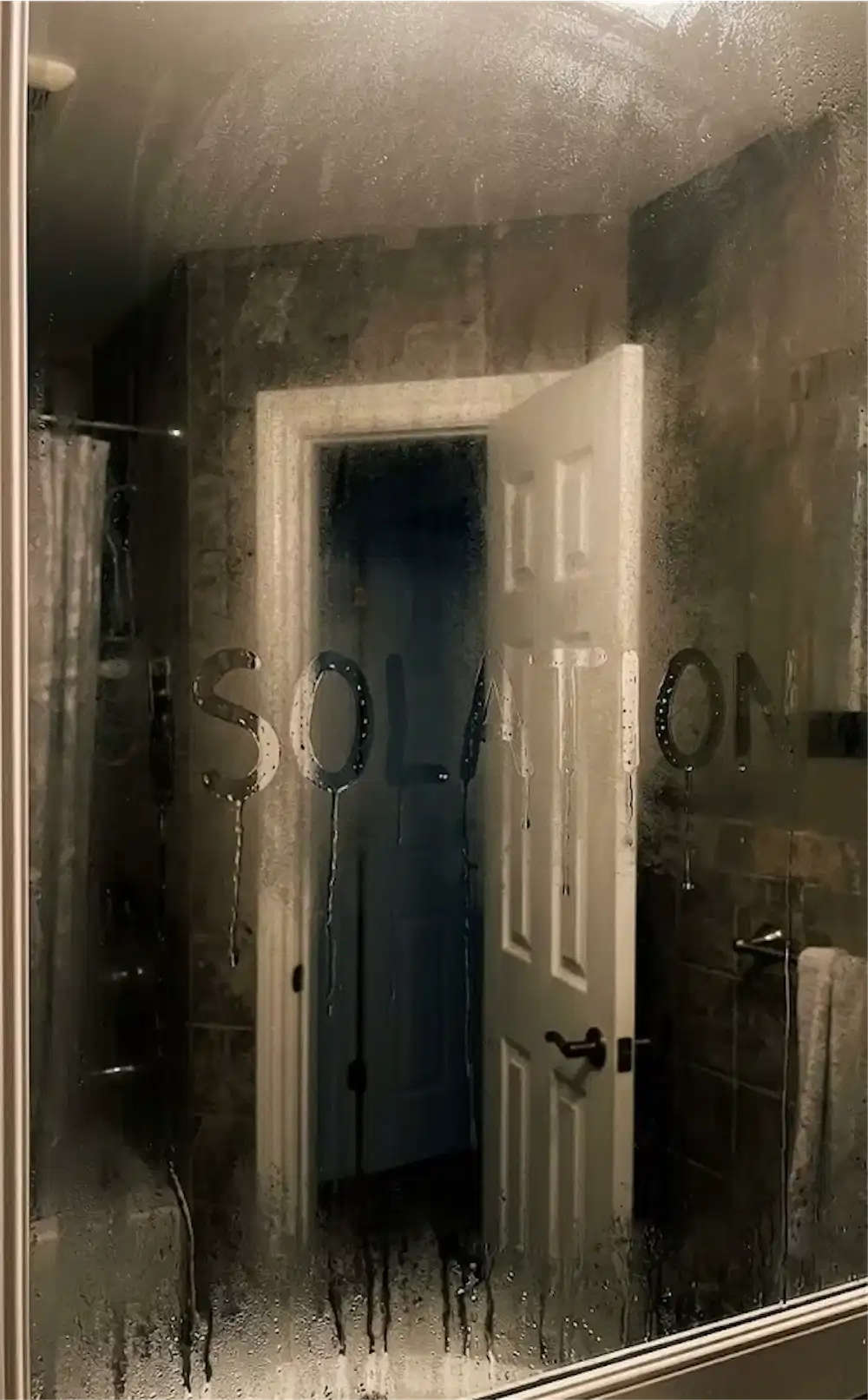
How to Survive the Quiet BPD Discard: Healing When There is No Loud Conflict
When you are trying to figure out how to survive the quiet BPD discard, the silence itself is often the heaviest part of the trauma. In a typical breakup, there is usually some kind of warning, a final argument, or at least a brief explanation. But when a partner with quiet Borderline Personality Disorder walks away, they do so with zero warning, leaving you in a vacuum of confusion and grief. During my own 12-year toxic relationship, I lived through these agonizing cycles of sudden, cold retreats that made me feel entirely invisible, isolated, and miserable, which is why healing when there is no loud conflict requires a completely different approach.
If you are currently reeling from this sudden abandonment, getting your hands on a practical tool like the BPD Breakup Recovery Guide can help you make sense of this abrupt shift. It is agonizing to watch someone who loved you intensely just days ago look at you like you are a stranger. How do you recover when there are no answers, no closure, and no loud fights to signal the end? Let us look at what is happening beneath the surface and how you can reclaim your peace.
What is a Quiet BPD Discard?
A quiet BPD discard occurs when a partner with quiet Borderline Personality Disorder internally splits and withdraws from the relationship completely without loud arguments or overt conflict. This sudden, silent abandonment leaves the other partner feeling confused, invisible, and deeply traumatized due to the lack of closure.
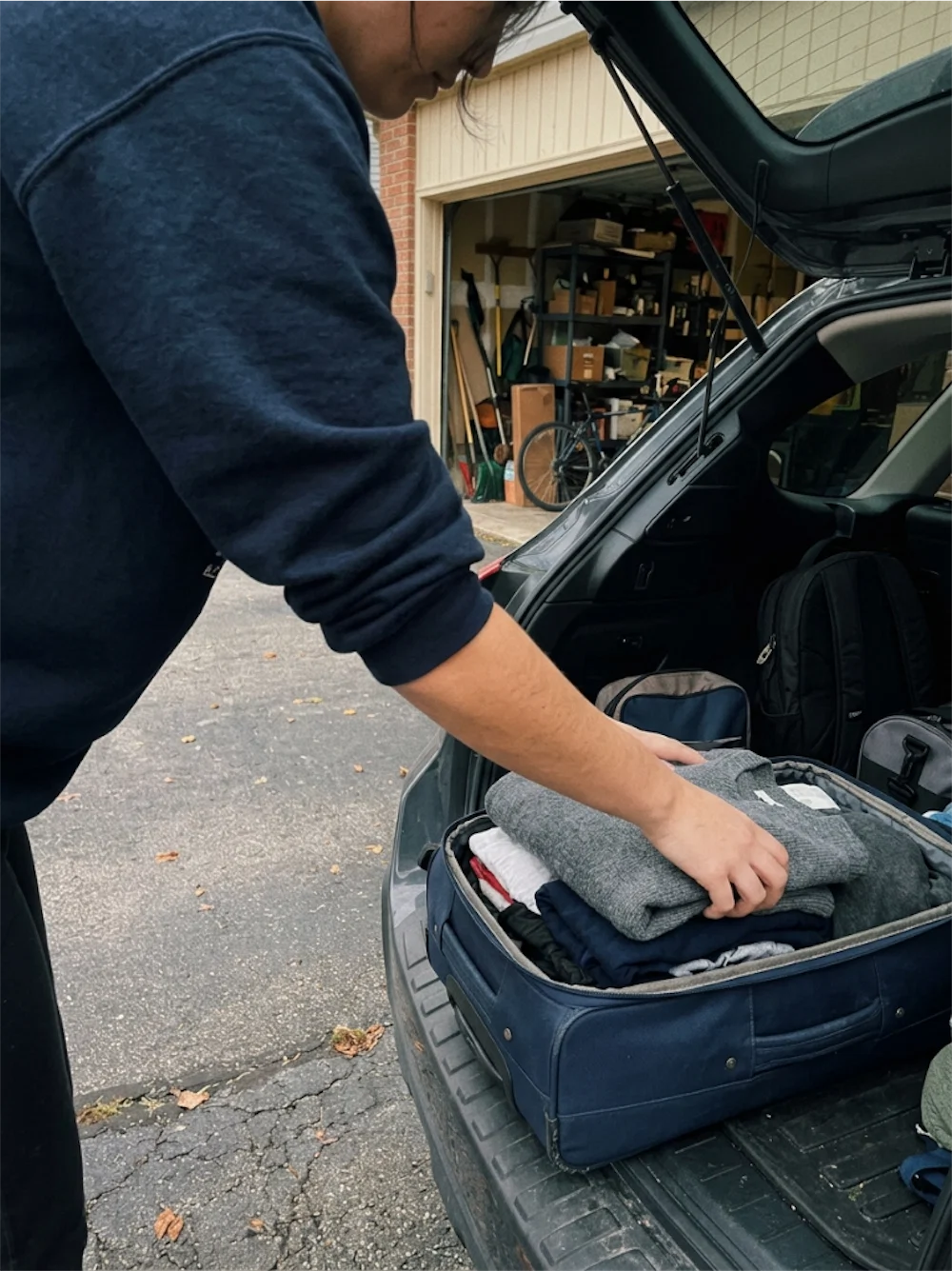
Unlike conventional Borderline Personality Disorder, where emotional storms are directed outward in loud, volatile explosions, the quiet subtype turns those storms inward. When they split on you, they do not scream, make accusations, or throw things. Instead, they make a sudden, silent decision in their own head that you are the cause of their intense pain, and they simply vanish from your life.
During my decade-long relationship, this felt like walking on thin ice daily. One night we would be planning our future, and by morning, my partner was a hollow shell, refusing to look me in the eye or speak. You are left asking yourself what you did wrong, replaying every conversation, and exhausting yourself trying to fix a problem you cannot even define.
How to Differentiate Quiet BPD Splitting from Narcissistic Discard

It is easy to mistake a quiet BPD discard for a narcissistic discard because the outcome looks identical on the surface. However, the internal mechanisms are completely different, and understanding this is vital for your recovery. A narcissist discards you because they have exhausted your utility or found a new source of validation, leaving you behind with cold, calculated intent.
In contrast, BPD splitting is a primitive defense mechanism triggered by deep emotional overwhelm and a fear of engulfment or abandonment. The person with quiet BPD literally cannot hold two opposing thoughts at once. They cannot see you as a good partner who made a minor mistake; they see you as entirely bad. They run away because their internal shame is so unbearable that cutting you off is their only way to survive their own feelings.
To heal, you must realize that their sudden exit has nothing to do with your worth. Our bpd-discard-survival-guide offers deeper insights into how to handle this specific type of relational trauma without losing your mind.
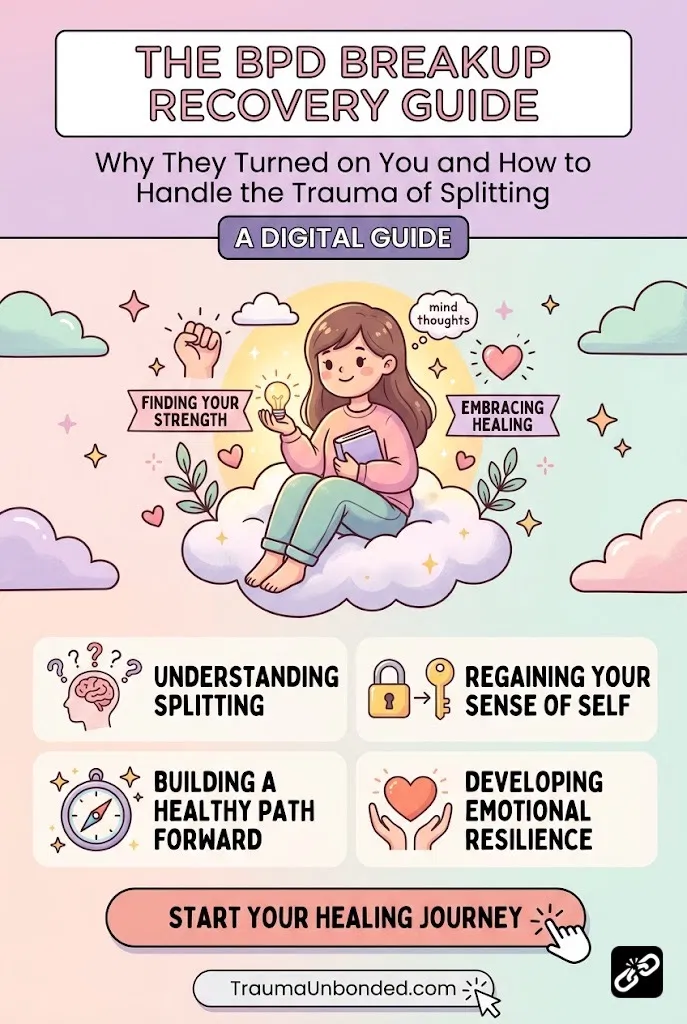
If you are struggling to process the sudden silence and want a structured, step-by-step roadmap to rebuild your self-worth, make sense of the splitting process, and heal your nervous system, this specialized guide is designed specifically for your recovery journey.
Why Silent Abandonment Hurts the Brain
Why does the lack of a loud conflict make the healing process so much harder? When you have an argument, your brain has a logical narrative to hold onto. You can say, we fought about this, we disagreed on that, and it ended. With a quiet discard, there is no narrative, leaving your brain trapped in a loop of trying to solve an unfinished puzzle.
According to experts at Psychology Today, silent rejection actually triggers the same pain pathways in our brains as physical injury. Your body goes into an active threat response, flooding your system with adrenaline and cortisol. You might suffer from severe insomnia, physical aches, or intense trauma bond withdrawal symptoms that feel identical to quitting a chemical substance.
In my own recovery, I had to stop looking for answers from a person who was too emotionally fragile to give them to me. The silence is the message. It tells you that they do not possess the emotional regulation skills required to navigate adult conflict, and no amount of pleading on your part will change that reality.
Steps to Reclaim Your Sanity and Heal
Surviving this silent trauma requires a shift in focus. You must stop trying to decode their silence and start focusing entirely on your own recovery. Here are practical steps you can take today to ground yourself:
- Commit to No-Contact: Do not send the long paragraph explaining your feelings. Do not ask mutual friends how they are doing. Every text you send that goes unanswered acts as a fresh wound, resetting your healing clock.
- Grieve the Lack of Closure: Accept that you will never get an apology or an explanation. You must write your own ending to this story. Your closure is the peace you build after they walk away.
- Regulate Your Nervous System: Your body is stuck in a fight or flight response. Practice daily somatic exercises, take long walks, or make deep breathing a daily habit to tell your nervous system that you are safe.
- Address the Codependency: Ask yourself why you tolerated walking on eggshells for so long. For me, addressing my own people pleasing tendencies was the turning point that allowed me to return to my original self.
When you are in the thick of it, it feels like this pain will last forever. But as someone who was once isolated, without hobbies, and entirely miserable after a 12-year toxic relationship, I can assure you that the fog does lift. By focusing on your own boundaries, you can slowly rebuild your life from the ground up.
The silent treatment is not a reflection of your lack of worth, it is a reflection of their lack of capacity. When a partner chooses to vanish instead of communicate, they are showing you their developmental limitations. It is hard to accept, but this silence is actually your cue to walk away and never look back. If you need a complete guide to help you stop the obsessive thoughts and start rebuilding your self esteem, download my BPD Breakup Recovery Guide today and take your first step toward true peace.

Meet Your Guide
Helen Brooks
After surviving a 12-year NPD/BPD relationship, I dedicated over a decade to studying trauma bonding and nervous system recovery. My mission is to help you break free from the fog and reclaim your authentic self.
Ready to break the trauma bond and reclaim your life?