Fear of Engulfment vs. Fear of Abandonment: Navigating Disorganized Attachment
Understanding the painful conflict between the fear of engulfment vs. fear of abandonment is essential when trying to make sense of disorganized attachment. When you are healing from disorganized attachment style, relationships often feel like an emotional battlefield where no distance is safe. How do you find peace when staying close feels suffocating, but pulling away triggers absolute panic?
During my 12-year toxic relationship with a partner who displayed strong borderline and narcissistic traits, this constant swing was my daily reality. I spent over a decade oscillating between the terror of being discarded and the overwhelming urge to run away just to breathe. If you find yourself trapped in this volatile push-pull dynamic, working through resources like The BPD Relationship Detox can help you steady your nervous system.
Understanding Disorganized Attachment: The Push-Pull of Fear of Engulfment vs. Fear of Abandonment
The conflict between the fear of engulfment and the fear of abandonment represents the core of disorganized attachment, where a person simultaneously craves deep emotional intimacy but panics when someone gets too close. This push-pull dynamic creates a painful cycle of seeking connection, feeling trapped, and then pushing the partner away to regain safety.
To heal, we must first look at these fears individually. When they lock together, they create a relational trap that keeps your nervous system in a state of high alert. Let us unpack how these opposing forces tear down your sense of self and how you can begin rebuilding.
What Is the Fear of Abandonment?
The fear of abandonment is an intense, visceral panic that you will be rejected, replaced, or completely forgotten. In my own journey, this fear kept me trapped for years. I would tolerate unacceptable behavior, excuse lies, and ignore glaring red flags simply to avoid the agony of being left behind.
When this fear is active, you might notice yourself people-pleasing, keeping the peace at all costs, and ignoring your own boundaries. This often manifests as hypervigilance, where you constantly scan your partner’s facial expressions, tone of voice, or text response times for any sign of emotional withdrawal. Many survivors find themselves sliding into fawn response traits, sacrificing their own identity to make sure their partner remains happy and present.
What Is the Fear of Engulfment?
The fear of engulfment is the terrifying feeling that you are losing your identity, being controlled, or being completely swallowed up by another person. If you spent years with a highly manipulative partner, closeness starts to feel like a prison. During my own decade-long relationship, I had slowly isolated myself from friends, stopped engaging in my hobbies, and felt completely empty inside because I had abandoned my own life to keep my partner comfortable.
In a toxic partnership, this fear shows up when things start to feel stable. Instead of enjoying the peace, your internal alarm system warns you that you are losing control. You might feel a sudden, intense need to pull back, pick a fight, or shut down emotionally.
Have you ever felt a sudden wave of irritation toward a partner simply because they asked you about your day? That is engulfment panic masquerading as annoyance. Unraveling these deep-seated habits is not easy, especially if you have spent years adapting to a partner who used your attachment wounds against you.
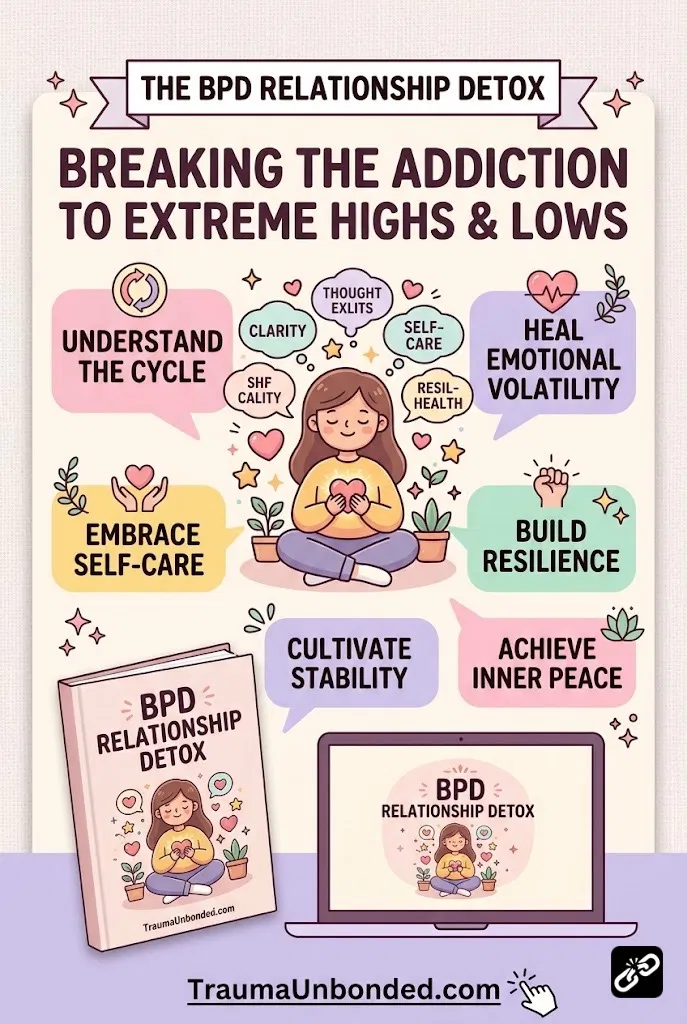
Real, lasting change requires a structured roadmap to help you quiet the constant anxiety and reclaim your sense of stability. To help you break this exhausting loop, restore your emotional boundaries, and finally step off the relationship roller coaster, we have developed a practical step-by-step workbook.
Rebuilding Yourself and Healing From Codependency
People with disorganized attachment, also known as fearful-avoidant attachment, carry both of these deep-seated fears. This combination creates an exhausting paradox. When your partner is distant, your fear of abandonment flares up, driving you to pursue them frantically.
However, the moment they turn around and offer you warmth, your fear of engulfment is triggered, and you feel a desperate need to push them away. This dynamic forms what experts call a “fright without solution.” Your natural source of comfort in a relationship is simultaneously your source of fear.
According to clinical observations on Psychology Today, people with fearful-avoidant patterns often struggle with this internal gridlock because their nervous system associates intimacy with danger. You want love, but your body treats closeness like a threat to your survival. Some of the most common signs of disorganized attachment in relationships include:
- Rapidly cycling between intense dependency and sudden, cold detachment.
- Creating conflict or starting arguments when the relationship feels peaceful or safe.
- Experiencing constant hypervigilance, always waiting for the other shoe to drop or anticipating betrayal.
- Chronic difficulty expressing needs, which leads to passive-aggressive behavior or silent treatment.
This agonizing cycle leaves both you and your partner utterly confused. You might wonder why you cannot just accept love when it is right in front of you. The truth is, your brain has been wired to believe that opening up leads to pain, and staying distant leads to isolation.
Healing from this pattern is not about turning off your feelings or forcing yourself to never feel anxious again. It is about learning to recognize these fears as old, outdated protective mechanisms. When I finally left my toxic relationship, I had to learn how to self-soothe when my body screamed that closeness was dangerous.
Here are the core steps to begin your recovery. They will help you move from a state of constant survival into a peaceful, grounded daily rhythm.
1. Rebuild Your Relationship with the Present Moment
When you have disorganized attachment, your brain constantly lives in the past or the future. You are either remembering the pain of past betrayals or anticipating future abandonment. Learning to ground yourself in the present moment is critical.
Somatic grounding exercises, such as deep breathing or focusing on physical sensations, help signal to your nervous system that you are safe right now. These simple daily practices work to slowly reset your baseline anxiety levels.
2. Differentiate Your Core Self from the Trauma Bond
In toxic relationships, we often confuse the high-stress adrenaline spikes of a relationship with true love. This is actually a trauma bond biochemical addiction. Realizing that healthy love is calm, consistent, and predictable can feel boring at first, but it is the foundation of secure attachment.
3. Establish and Practice Micro-Boundaries
Fear of engulfment usually stems from a history of having your boundaries ignored. The remedy is to practice setting small, manageable boundaries. You do not have to build a giant wall; instead, start by saying no to small requests, taking an hour of alone time, or keeping your own hobbies.
This teaches your brain that you can be close to someone without losing yourself in the process. It allows you to build safety from the inside out.
4. Seek Trauma-Informed Support
Because these patterns run deep in our biology, thinking your way out of them is rarely enough. Working with a professional therapist who understands trauma bonds and codependency can make a profound difference. As you move through your personal bpd relationship trauma recovery, having a safe, non-judgmental space to unpack these fears is invaluable.
Over time, the desperate pendulum swing between panic and isolation will begin to slow down. You will learn to tolerate closeness without feeling consumed, and you will learn to navigate space without feeling abandoned. Reclaiming your original self, the person who is capable of trusting, loving, and laughing without fear, is entirely possible when you commit to this gentle healing process.
If you are ready to take the next step and actively untangle the emotional patterns of your past, consider working through The BPD Relationship Detox. It is designed to help you calm the storms of emotional volatility, establish safe boundaries, and build a peaceful life on your own terms.

Meet Your Guide
Helen Brooks
After surviving a 12-year NPD/BPD relationship, I dedicated over a decade to studying trauma bonding and nervous system recovery. My mission is to help you break free from the fog and reclaim your authentic self.
Ready to break the trauma bond and reclaim your life?