How Childhood Family Dynamics Lead to Staying in Narcissistic Relationships
I stayed for 12 years. Twelve years of walking on eggshells, second-guessing my reality, and believing I could fix someone who didn’t want to be fixed. When people asked why I didn’t leave sooner, I had no answer. The truth is, I didn’t know I could leave. My childhood taught me that love meant sacrifice, silence, and staying no matter what.
If you grew up in a household where your needs came last, where conflict was avoided at all costs, or where one parent dominated while the other disappeared, you learned a blueprint for relationships. That blueprint didn’t include healthy boundaries, mutual respect, or the belief that you deserved better. It included endurance.
Childhood family dynamics don’t just shape who we become. They shape who we choose, who we tolerate, and how long we stay when we should run. According to research published in the Journal of Personality and Social Psychology, individuals who experienced inconsistent caregiving in childhood are significantly more likely to develop anxious attachment styles, which predispose them to toxic relationship patterns.
This article isn’t about blaming your parents. It’s about understanding the invisible scripts that run in the background of your mind, keeping you stuck in relationships that harm you. Once you see the pattern, you can rewrite it.
The Invisible Blueprint: What Your Childhood Taught You About Love

Your first relationship wasn’t with your romantic partner. It was with your caregivers. They taught you what to expect from people who claim to love you. If love came with conditions, criticism, or emotional unavailability, that became your baseline.
I grew up watching my mother tiptoe around my father’s moods. She never raised her voice. She never asked for help. She just managed, endured, and smiled through it. When I met my ex, I didn’t recognize the red flags because they felt like home. The unpredictability, the emotional coldness, the need to earn affection—it was all familiar.
Here’s what specific childhood dynamics create:
- Emotional neglect: You learned your feelings don’t matter, so you tolerate partners who ignore or dismiss your emotions.
- Enmeshment: Boundaries were nonexistent. You don’t know where you end and your partner begins, making it impossible to recognize abuse as something happening to you.
- Role reversal (parentification): You took care of your parents emotionally. Now you’re drawn to partners who need “fixing.”
- Conditional approval: Love was earned through performance. You believe if you just try harder, your partner will finally see your worth.
- Conflict avoidance: Disagreements were dangerous. You’d rather endure mistreatment than risk confrontation.
These aren’t conscious choices. They’re survival adaptations that once kept you safe. But what protected you as a child now traps you as an adult.
Why You Keep Choosing the Same Type of Person
After my breakup, I looked back at every relationship I’d had. Different faces, same patterns. Emotionally unavailable. Controlling. Hot and cold. I thought I had terrible luck. Therapy taught me otherwise.
Dr. Bessel van der Kolk, trauma expert and author of The Body Keeps the Score, explains that traumatized individuals are drawn to familiar relational dynamics, even when those dynamics are harmful. Your nervous system recognizes the emotional texture of your childhood home. When you meet someone who recreates that texture, it feels like recognition, not danger.
This is why healthy, stable people might feel “boring” or “too nice” early on. They don’t trigger the hypervigilance you associate with intimacy. Your body doesn’t know how to relax into safety because safety wasn’t part of your early relational vocabulary.
Common childhood patterns that lead to narcissistic partnerships:
- A narcissistic or emotionally volatile parent: You’re already fluent in managing someone else’s ego and moods.
- A passive or enabling parent: You learned that love means tolerating bad behavior without complaint.
- Sibling scapegoating: You’re used to being blamed for things that aren’t your fault.
- Lack of emotional validation: You never learned to trust your own perceptions, making you vulnerable to gaslighting.
Understanding this doesn’t erase the pain, but it does take away the shame. You’re not weak. You’re wired for a type of connection that was all you knew.
If you’re ready to understand how these patterns formed, this guide on childhood trauma and narcissistic vulnerability breaks down the neuroscience behind it.
The Codependency Connection: How Caretaking Became Your Love Language
If you were the “good kid,” the peacemaker, or the one who held the family together, you learned early that your value came from what you could do for others. You weren’t taught to have needs. You were taught to meet them.
I was praised for being “low-maintenance” and “easy.” What my family didn’t see was that I had no sense of self outside of being useful. When I met my ex, I poured all of that caretaking energy into him. His chaos became my purpose. His moods dictated my day. I lost myself completely, but I called it love.
Codependency isn’t about loving too much. It’s about abandoning yourself to manage someone else’s emotional world. And it’s a direct result of childhood dynamics where your role was to regulate a parent’s feelings, mediate conflict, or be the “good one” to compensate for a sibling’s behavior.
Signs your childhood set you up for codependency:
- You feel responsible for other people’s emotions
- You struggle to say no without guilt
- You believe relationships require constant sacrifice
- You’re more aware of your partner’s needs than your own
- You equate conflict with catastrophe
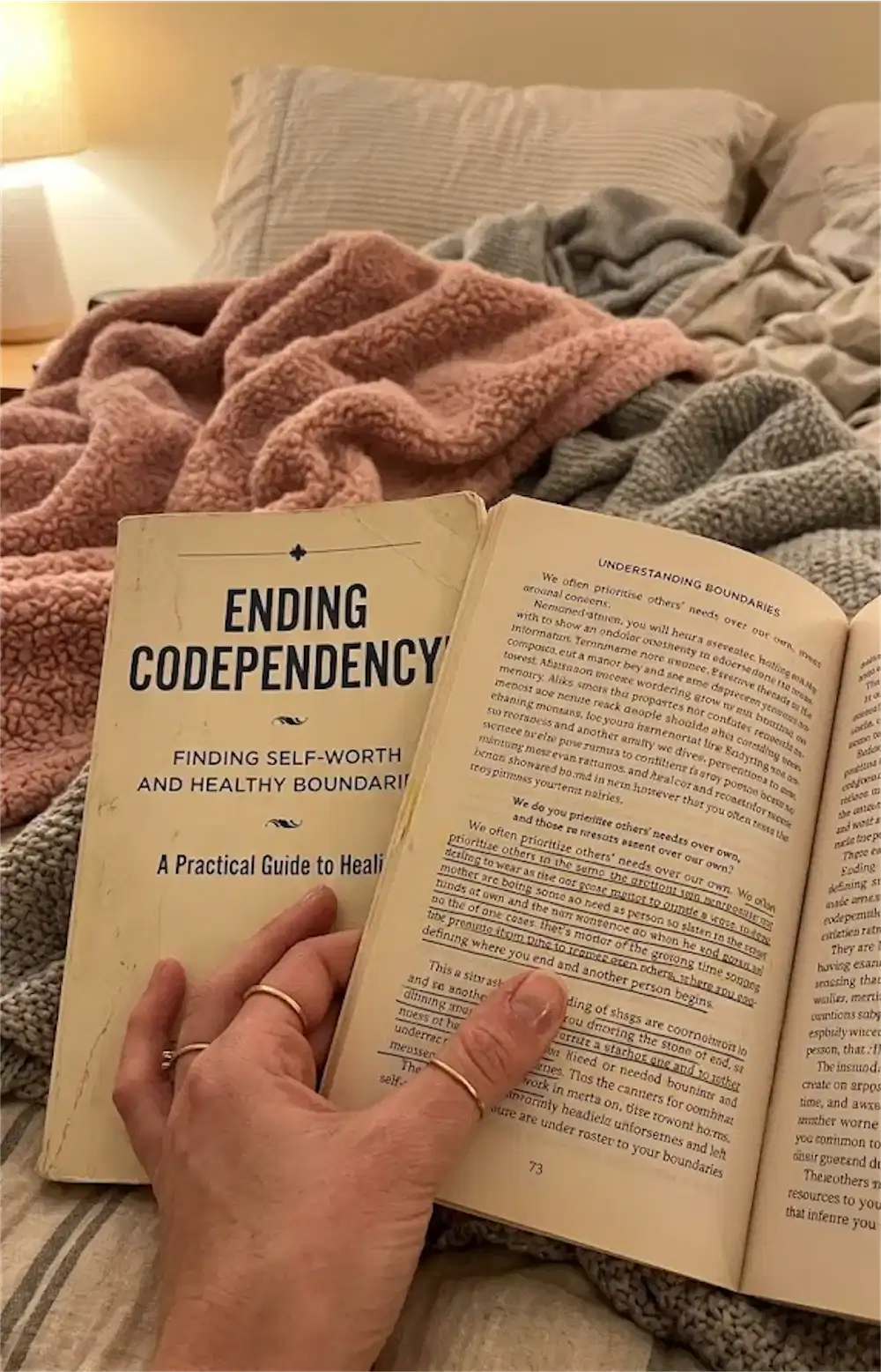
Books like Codependent No More by Melody Beattie helped me see how deeply these patterns ran. It wasn’t a quick read. I cried through most of it. But it gave me language for what I’d been living.
For practical steps on breaking free, check out these strategies to overcome codependency and toxic stress.
Trauma Bonding: Why Leaving Feels Like Dying
Even when you know the relationship is destroying you, leaving feels impossible. That’s not weakness. That’s a trauma bond, and it’s neurologically similar to addiction.
If your childhood included unpredictable affection—where love was sometimes warm and sometimes withdrawn—you developed a tolerance for intermittent reinforcement. Narcissists weaponize this. They give you just enough warmth to keep you hooked, then withdraw it to keep you chasing.
I remember the few times my ex was kind after days of cruelty. Those moments felt like sunlight after a storm. My nervous system flooded with relief, gratitude, even hope. I didn’t realize I was bonding to the cycle, not the person.
Trauma bonds are strongest when:
- There’s a power imbalance (just like the parent-child dynamic)
- Abuse is intermittent, not constant
- You believe you can earn consistent love through better behavior
- Leaving means losing your identity (because you’ve merged with the other person)
Your childhood taught you that love is unpredictable and must be earned. A narcissistic relationship simply continues that lesson.
Understanding why no contact is the only way to break a trauma bond was the turning point in my recovery. It’s not about punishing your ex. It’s about giving your nervous system space to detox from the cycle.
The Role of Attachment Styles in Staying Too Long
Attachment theory explains why some people can walk away from red flags while others stay for years. If you developed an anxious or disorganized attachment style in childhood, you’re wired to pursue connection even when it hurts.
Anxious attachment forms when caregivers are inconsistent. Sometimes they’re available, sometimes they’re not. You learn to cling, to monitor their moods, to do whatever it takes to keep them close. When you meet a narcissist, this attachment style makes you the perfect target.
Disorganized attachment is even more complex. It develops when a caregiver is both your source of comfort and your source of fear. You want closeness but associate it with danger. Narcissistic relationships recreate this exact dynamic, which is why leaving feels both necessary and unbearable.
I tested as anxious-preoccupied. My ex was dismissive-avoidant. We were a textbook anxious-avoidant trap. The more I pursued, the more he withdrew. The more he withdrew, the harder I tried. It was my childhood dynamic on repeat.
Healing attachment wounds takes time. Attached by Amir Levine and Rachel Heller is an excellent starting point for understanding your attachment style and how it influences your relationship choices.
Breaking the Cycle: How to Reprogram Your Relational Patterns

Awareness is the first step, but it’s not enough. You need to actively rewire the patterns that keep you stuck. This isn’t about willpower. It’s about creating new neural pathways through consistent, intentional practice.
Here’s what actually worked for me:
1. Therapy (Specifically Trauma-Focused Therapy)
Not all therapy is created equal. I tried talk therapy for years and made little progress. What helped was schema therapy, which targets the core beliefs formed in childhood. My therapist helped me identify my “schemas”—deeply held beliefs like “I’m unworthy unless I’m needed” and “Conflict means abandonment.”
Once I saw these schemas, I could challenge them. Every time I felt the urge to over-explain myself or apologize for having needs, I recognized it as my childhood pattern, not reality.
Learn more about how schema therapy heals narcissistic relationship trauma.
2. Reparenting Yourself
You can’t change your childhood, but you can give yourself what you didn’t receive. This sounds abstract, but it’s practical. When you feel anxious, scared, or unworthy, ask yourself: What would a loving parent say to a child feeling this way?
I started small. I let myself rest without earning it. I validated my own feelings instead of waiting for someone else to do it. I set boundaries without justifying them. These were radical acts for someone who grew up believing her needs were an inconvenience.
3. Building a Different Kind of Support System
If your family of origin didn’t model healthy relationships, you need to find people who do. This might mean joining a support group, working with a recovery coach, or simply spending time with friends who respect your boundaries.
I was terrified of being a burden. Asking for help felt like admitting failure. But the people who stayed in my life after the breakup taught me that healthy relationships aren’t transactional. You don’t have to earn care. You just receive it, and you give it back when you can.
Check out these essential recovery tools for building a stronger support network.
4. Learning to Tolerate Discomfort
Healthy relationships feel uncomfortable at first when you’re used to chaos. Stability can feel boring. Kindness can feel suspicious. Respect can feel unfamiliar.
I had to train myself to sit with the discomfort of being treated well. I journaled through it. I reminded myself that “boring” was actually “safe,” and “safe” was what I needed.
Try these journaling prompts for post-narcissist breakup recovery to process the discomfort of change.
5. Establishing Non-Negotiable Boundaries
Boundaries weren’t modeled in my childhood, so I had to learn them from scratch. I started with simple rules: I don’t tolerate yelling. I don’t accept blame for things I didn’t do. I don’t explain my decisions to people who won’t respect them anyway.
Setting boundaries felt selfish at first. It triggered guilt, fear, and anxiety. But every time I held a boundary, I reinforced a new belief: my needs matter.
For a step-by-step guide, read this no-contact guide for narcissistic abuse recovery.
Why Self-Awareness Alone Won’t Save You

You can read every book, listen to every podcast, and understand exactly why you stay in toxic relationships. But if you don’t address the somatic (body-based) imprints of your childhood, you’ll keep choosing the same partners.
I knew my relationship was toxic years before I left. I could explain attachment theory, trauma bonding, and narcissistic cycles in detail. But my body still craved the familiarity of chaos. My nervous system still interpreted neglect as normal.
Healing required more than intellectual understanding. It required somatic work—practices that help your body release stored trauma and learn new responses. This included:
- Breathwork: To regulate my hyperactive nervous system
- Yoga and gentle movement: To reconnect with my body after years of dissociation
- EMDR therapy: To process traumatic memories without reliving them
- Grounding techniques: To stay present instead of spiraling into anxiety
If you’re struggling with physical symptoms of trauma, explore this guide on physical health symptoms of toxic relationships.
Tools like a vagus nerve stimulation device or a weighted blanket can support nervous system regulation as you do the deeper work.
The Long Game: What Recovery Actually Looks Like
I wish I could tell you that once you understand your childhood patterns, everything clicks into place. It doesn’t. Recovery is slow, nonlinear, and frustrating. You’ll have setbacks. You’ll doubt yourself. You’ll wonder if it’s worth it.
It is.
Two years after leaving my ex, I had my first healthy relationship. It felt strange. There was no drama, no guessing games, no walking on eggshells. I kept waiting for the other shoe to drop. My therapist reminded me that my nervous system was recalibrating. Safe doesn’t feel exciting when you’re wired for chaos.
The real breakthrough came when I stopped seeking validation from others and started trusting my own judgment. I didn’t need someone to confirm my reality. I didn’t need permission to have boundaries. I didn’t need to earn love.
That shift didn’t happen overnight. It happened in small, unglamorous moments:
- The first time I said “no” without apologizing
- The first time I felt angry and didn’t suppress it
- The first time I walked away from someone who reminded me of my ex
- The first time I chose my own peace over someone else’s comfort
Each of these moments rewired my brain a little more. Each one proved that I could survive discomfort, that I could tolerate being disliked, that I could exist without molding myself to fit someone else’s needs.
For insights on what the recovery timeline actually looks like, read this breakdown of the first 3 months after leaving a narcissist.
Moving Forward: You’re Not Doomed to Repeat the Past
Your childhood shaped you, but it doesn’t define you. The fact that you’re reading this means you’re already breaking the cycle. You’re asking questions, seeking understanding, and refusing to accept that this is just “how relationships are.”
It’s not.
You didn’t choose the family you were born into. You didn’t choose the attachment wounds you carry. But you can choose what happens next. You can choose therapy over denial. You can choose boundaries over people-pleasing. You can choose yourself, even when it feels selfish, even when it feels impossible.
The patterns that kept you stuck in a narcissistic relationship aren’t permanent. They’re just well-practiced. With intentional effort, you can practice something new. You can learn that love doesn’t require suffering. You can learn that your needs aren’t a burden. You can learn that you’re enough, exactly as you are.
It won’t happen quickly. Some days you’ll feel like you’re back at square one. But you’re not. Every time you recognize a pattern, every time you choose differently, every time you refuse to settle for crumbs—you’re rewriting the script.
And one day, you’ll look back and realize that the person you are now wouldn’t tolerate what you once accepted. That’s when you’ll know you’ve broken free.
Recommended Resources
Breaking free from childhood patterns requires education, support, and the right tools. Here are some resources that made a real difference in my recovery:
- Adult Children of Emotionally Immature Parents by Lindsay C. Gibson – This book helped me understand how my parents’ emotional limitations shaped my relationship patterns.
- Running on Empty by Jonice Webb – A guide to understanding childhood emotional neglect and how it affects adult relationships.
- The Body Keeps the Score by Bessel van der Kolk – Essential reading for understanding how trauma lives in your body and how to heal it.
Your childhood doesn’t have to be your destiny. The work is hard, but you’re worth it.

Meet Your Guide
Helen Brooks
After surviving a 12-year NPD/BPD relationship, I dedicated over a decade to studying trauma bonding and nervous system recovery. My mission is to help you break free from the fog and reclaim your authentic self.
Ready to break the trauma bond and reclaim your life?