10 Tips to Survive No Contact: First 3 Months After a Narcissist
The first 90 days of no contact after leaving a narcissist are, without question, the hardest stretch of the entire healing journey. I know because I lived through them after 12 years in a relationship with someone who had both narcissistic and borderline personality traits. Twelve years. That is not a typo. And when it ended, I genuinely did not know who I was without that relationship. I had no hobbies left. My friends had quietly drifted away. I sat in my apartment most nights wondering if I had made the worst decision of my life by leaving.
The pull to break no contact in those first three months was not just emotional. It was physical. My nervous system had been conditioned to regulate itself through contact with this person, even when that contact was painful. That is the cruel reality of a trauma bond. Breaking it can feel like quitting a substance cold turkey, because neurologically, it kind of is.
What I am sharing below are the 10 things that actually helped me get through those 90 days without breaking. Not theories. Not textbook advice. Things I personally did, some on good days and some on days I was barely holding it together.
Why the First 3 Months of No Contact Feel Impossible
Before we get into what helped, it is worth naming why this period is so brutal. When you leave a narcissistic relationship, you are not just leaving a person. You are leaving an entire psychological ecosystem that your brain built its sense of safety around. Research from trauma specialists including Dr. Patrick Carnes, who first developed the clinical concept of trauma bonding, shows that intermittent reinforcement (the unpredictable cycle of reward and punishment) creates some of the strongest emotional attachments known in behavioral psychology. You can read more about the science behind this at the Psychology Today Trauma Resource Center.
The first three months are the peak of withdrawal. Your brain is flooded with stress hormones, your identity is fractured, and your ex is probably doing everything in their power to pull you back in. Understanding this does not make it hurt less. But it does help you stop blaming yourself for how hard it is.
1. I Wrote Down Every Single Reason I Left
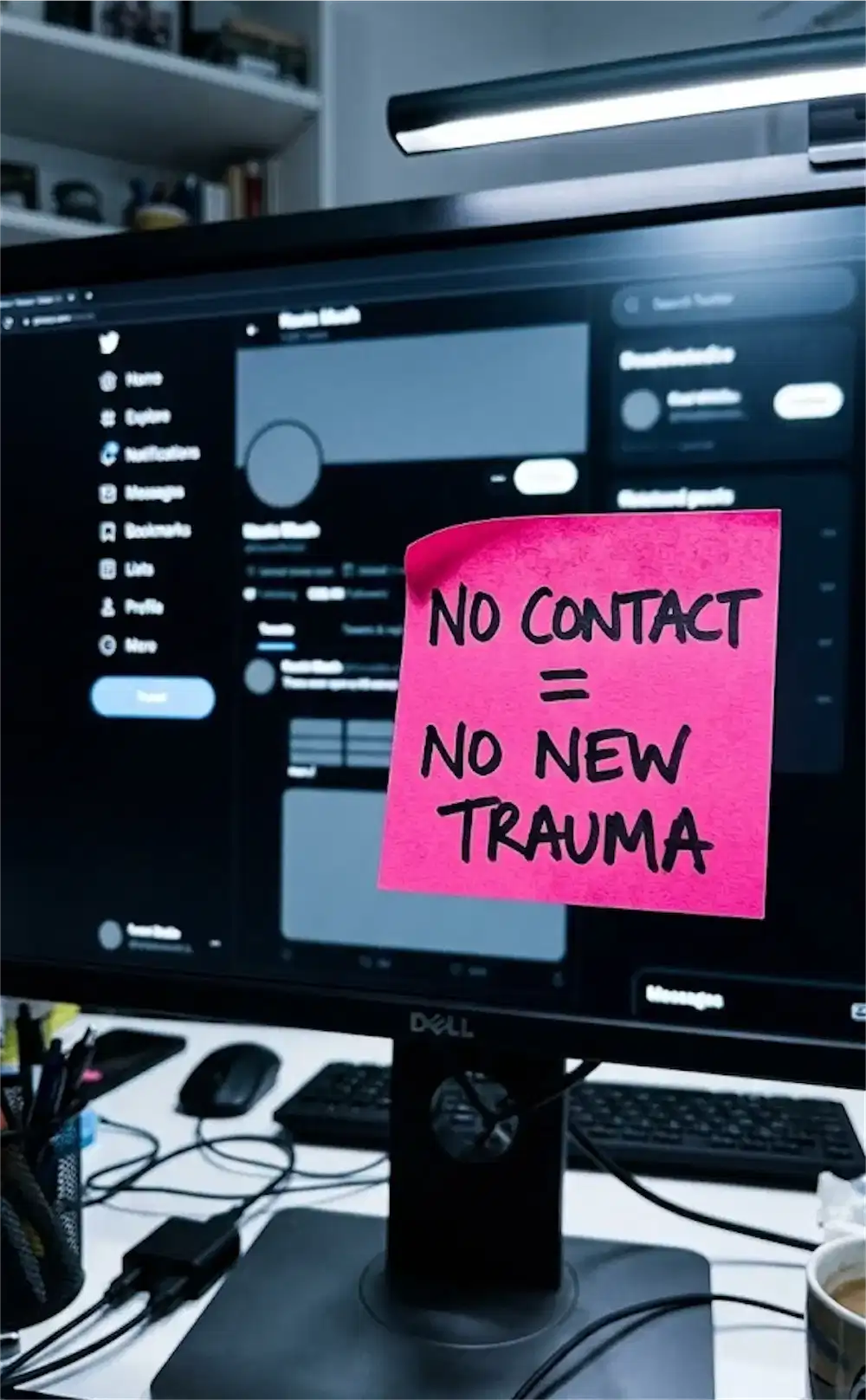
This was not poetic journaling. This was survival writing. On a bad night when the urge to text was overwhelming, I would open my notebook and re-read the list I had made of specific incidents that had happened over the years. The time he raged at me for an hour over a tone of voice. The week he disappeared without explanation and returned as if nothing had happened. The years I spent second-guessing my own perception of reality.
Writing those things down served two purposes. First, it kept my memory honest, because our minds have a terrible habit of romanticizing abusers during no contact. Second, it gave me something concrete to hold onto when the trauma bond was screaming at me to go back.
If you want a structured tool for this, a dedicated trauma recovery journal can help enormously. Something like the trauma recovery journal on Amazon gives you prompts that guide the process when you do not know where to start.

2. I Blocked on Everything and Stopped Apologizing for It
The first time I blocked my ex’s number, I felt guilty. That guilt is something a lot of survivors talk about, and it makes sense when you think about how many years of conditioning went into making you feel responsible for this person’s emotional state. But blocking is not cruelty. It is the most basic form of self-protection available to you.
I blocked his phone number, his email, every social media account, mutual friends who I suspected were acting as messengers, and even his family members who had been used as proxy contacts in the past. Did I get pushback? Yes. Did some people call me extreme? Also yes. Do I regret it? Not even slightly.
If you are struggling to understand why full blocking matters so much for your nervous system and healing timeline, the article on why no contact works after narcissistic abuse breaks it down clearly and it was one of the pieces of writing that helped me stay grounded in my own decision.
3. I Educated Myself About Trauma Bonds (And It Changed Everything)
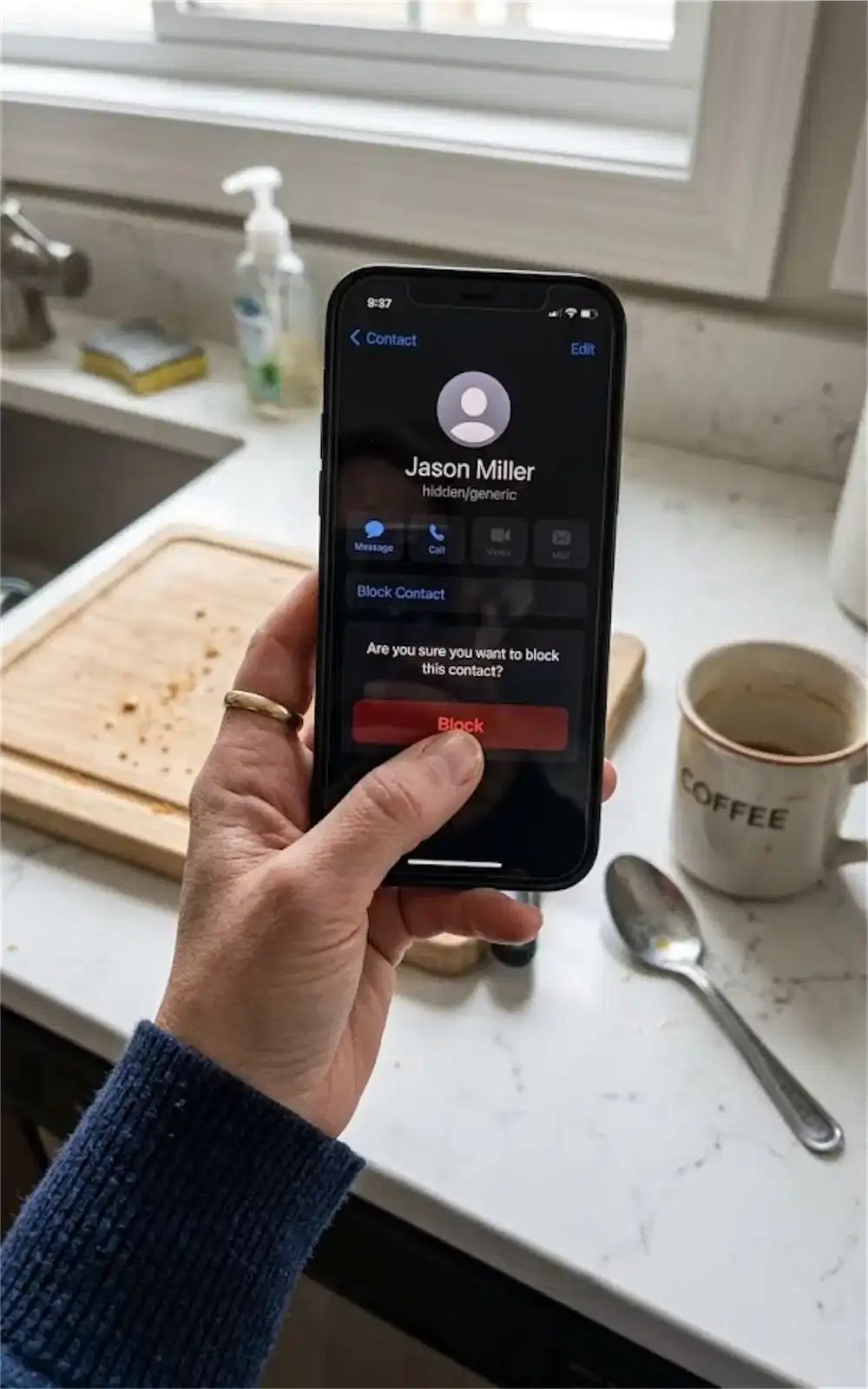
One of the most powerful shifts I experienced in those first three months was the moment I stopped asking “why can’t I just move on?” and started asking “what is actually happening in my brain right now?” The answer to that second question is what finally gave me some compassion for myself.
A trauma bond is not weakness. It is a neurological response to a very specific pattern of abuse. When I learned that the hot-and-cold cycles, the love bombing followed by devaluation, the crumbs of affection after periods of cruelty, these patterns literally rewire the brain’s reward circuitry, something clicked. I was not pathetic for being addicted to someone who hurt me. I was a person whose nervous system had been systematically hijacked over 12 years.
The book that cracked this open for me was Trauma and Recovery by Judith Herman, a foundational text in trauma psychology that treats survivors with the seriousness and respect they deserve. Another one I return to regularly is The Body Keeps the Score by Dr. Bessel van der Kolk, which explains in plain language how trauma is stored physically and why traditional talk therapy alone is often not enough.
4. I Let My Body Move Even When My Mind Refused
There were mornings in month one where getting out of bed felt like an act of defiance against my own nervous system. Everything in me wanted to curl up and disappear. But I had read enough about somatic healing by that point to know that trauma lives in the body, and movement is one of the few things that actually helps discharge it.
I did not run marathons. I walked. Sometimes around the block. Sometimes just to the end of the street and back. On better days, I did a short workout at home. The point was not fitness. The point was giving my body a way to process the cortisol and adrenaline that had been running through it for years. According to research published through the National Institutes of Health on exercise and PTSD, regular physical movement is associated with meaningful reductions in PTSD symptoms, which many narcissistic abuse survivors experience clinically.
If you need a practical guide to rebuilding physical routines after a trauma-heavy breakup, the piece on morning routines for NPD breakup recovery has some genuinely useful starting points.
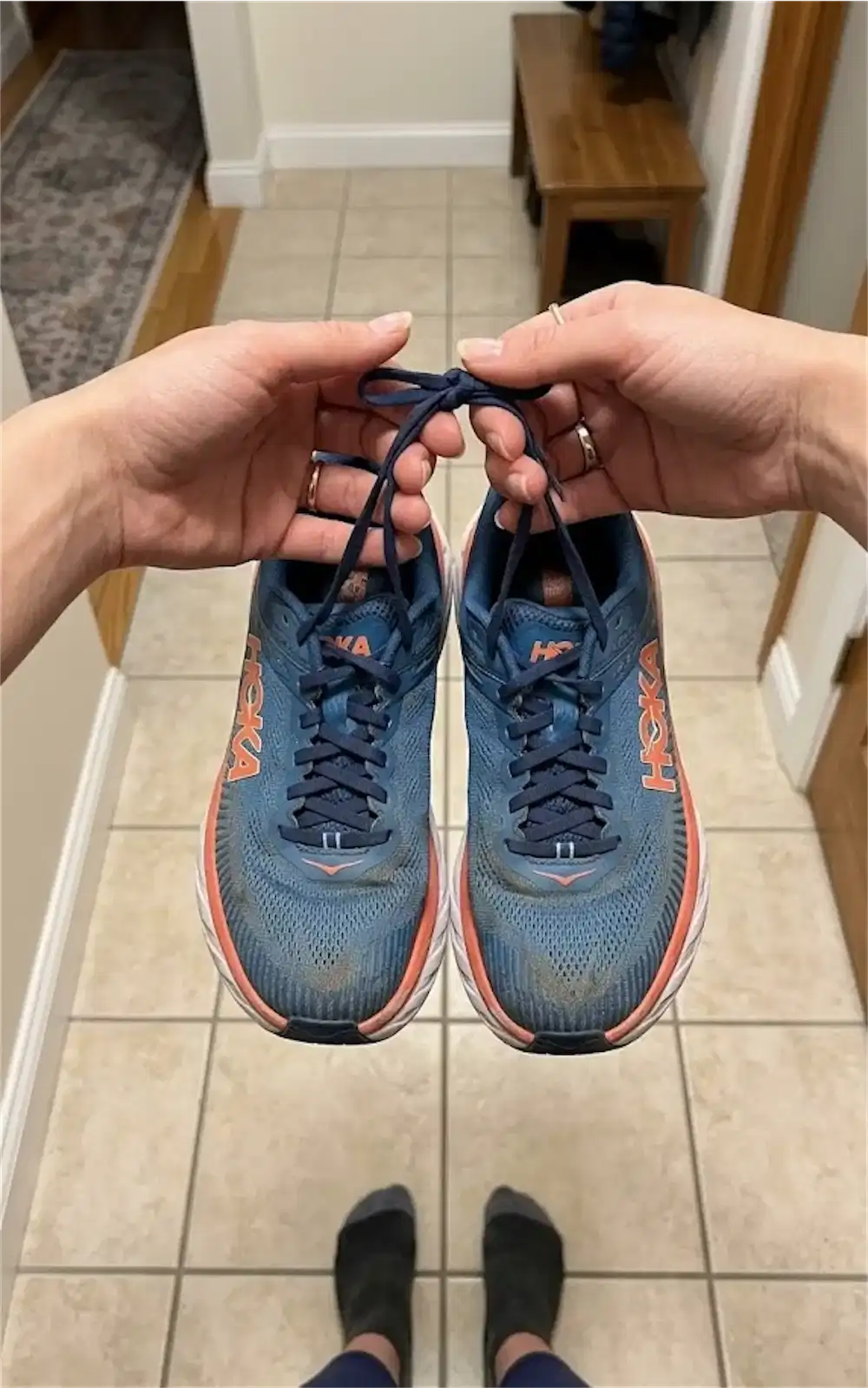
5. I Rebuilt the Tiniest Daily Structure I Could Manage
After years of having my schedule, moods, and decisions controlled or disrupted by someone else’s chaos, I had almost no internal compass left. I did not know what I liked to eat for breakfast anymore. I did not know when I felt tired versus when I had been conditioned to push through exhaustion to avoid conflict.
So I built the smallest routine I could. Wake up. Make coffee. Open the window. That was it for week one. Then I added a 10-minute walk. Then I added reading one chapter of something before bed. Tiny anchors to the day. What I was really doing, without knowing the clinical term for it at the time, was re-regulating my nervous system through predictability. Trauma thrives in chaos. Routine is one of the most low-tech tools available to counter it.
For more on building these kinds of small but meaningful daily habits post-breakup, this piece on habits to quit after a narcissistic breakup is worth reading alongside it.
6. I Called One Person Who Already Knew the Truth
Isolation is one of the most common byproducts of long-term narcissistic relationships. By the time mine ended, I had drifted from most of my friendships. I felt embarrassed to reach out after so many years of being somewhat absent. But I had one friend, one person who had watched bits and pieces of my relationship from the outside, and who had never once made me feel stupid for staying.
I called her. She came over. We drank coffee and I cried for two hours without her trying to fix anything. That kind of witnessed grief, having someone sit with you in it without judgment or advice, is something a lot of people coming out of these relationships have been deprived of for years. You do not need a crowd. You need one person who gets it.
If your social circle has been largely depleted by the relationship, online support communities for narcissistic abuse survivors can serve a similar function while you rebuild. Reddit forums like r/NarcissisticAbuse, for all their imperfections, were a place I read obsessively in month one just to feel less alone.
7. I Gave Myself Permission to Grieve the Person I Thought They Were
Here is something that took me a while to understand. When you grieve a narcissist, you are not really grieving who they are. You are grieving the version of them that existed during love bombing. The early months. The version that felt like home. That person, or that projection, was real to you. Grieving them is valid even if the real person behind that mask was harmful.
I spent a lot of the first month crying and feeling ashamed of the crying. Like I was somehow proving that I loved them too much or that I was weak. Therapy helped me understand that grief is not a sign you made the wrong decision. Grief is proof that you were a fully feeling person in a relationship you invested in completely. That is not weakness. That is humanity.
If this resonates, the piece on lessons from 12 years with a narcissist covers some of what I unpacked in therapy about why leaving still feels like loss even when you know leaving was right.
8. I Was Strategic About What I Consumed
In month two, I got very intentional about what I was putting into my mind. I deleted Instagram off my phone. I stopped watching romantic storylines on television that either romanticized unhealthy dynamics or triggered longing. I replaced that noise with podcasts on narcissistic abuse recovery, audiobooks on codependency, and YouTube channels run by actual licensed therapists.
Some of the most practical reading I did during this time included Codependent No More by Melody Beattie, which is genuinely one of the clearest books on codependency written in plain language, and Psychopath Free by Jackson MacKenzie, which I found more emotionally validating than almost anything else I read in that period.
What you consume shapes what you believe about yourself and your situation. Be deliberate about it, especially in those first three months when your identity is fragile and highly impressionable.
9. I Stopped Checking Their Social Media Cold Turkey
This one deserves its own category because it is the thing most people struggle with the longest and the thing that does the most invisible damage to recovery. Every time you check their profile, their new photos, who they are spending time with now, your brain re-experiences a mini version of the original trauma. Your cortisol spikes. Your abandonment wound reopens. And the no contact clock, emotionally speaking, resets.
I logged out of every platform on my phone and deleted the apps. Then I asked my one trusted friend to hold me accountable. I told her: if I text you and say I am thinking about looking, remind me why I said I would not. She did exactly that, twice, in month one. Having to involve another person in the impulse created enough of a pause to let me make a different choice.
There is a practical breakdown of why this habit is so corrosive and how to interrupt it at stop checking your ex’s social media: strategies that actually work.
10. I Started Therapy Before I Felt Ready
I want to be honest about this one. I started therapy reluctantly. I had convinced myself for years that I was too self-aware to need it, that I understood what was happening in my relationship, that reading books and listening to podcasts was enough. I was wrong. Beautifully, helpfully wrong.
The specific things that therapy gave me that no book could replace were: a witness to my specific experience, someone who could reflect my patterns back to me in real time, and a structured space to process grief without it leaking uncontrollably into every other area of my life. My therapist also identified fairly quickly that I was showing signs of complex PTSD, which explained a lot of what I had been experiencing for years but had never had a name for.
If you are unsure whether what you experienced qualifies as trauma or abuse, the resource page at TraumaUnbonded Recovery Tools has some useful starting points for finding support. And if cost or access is a barrier, platforms offering sliding-scale therapy have expanded significantly and are worth researching in your area.
What I Wish I Had Known Before Day One of No Contact
If I could go back and say one thing to myself on the first day, it would be this: the pain you are feeling right now is not evidence that you made the wrong choice. It is evidence of how much you gave to something that was never able to give back equally. The pain is real. The relationship was real. And healing from it will take longer than you want it to, and that is okay.
The first 90 days are not about feeling better. They are about not going back. That is the only goal. Everything else, the identity rebuilding, the joy, the sense of self you thought you had lost, that comes later. But it does come. I am living proof of that.
Give yourself the 90 days. Every single day you hold no contact is a day your nervous system gets a little more of its baseline back. Trust the process even when you cannot feel it working.
Recommended Resources
These are tools and books I personally used or recommend based on what survivors in the community consistently find helpful during no contact and early recovery.
- Why Does He Do That? by Lundy Bancroft – One of the most clear-eyed books ever written about abusive relationship dynamics. Required reading for understanding patterns you may have normalized over years.
- Healing from Hidden Abuse by Shannon Thomas – Written by a licensed therapist and survivor-focused counselor, this book outlines a six-stage recovery model specifically for psychological abuse survivors.
- The Narcissist You Know by Joseph Burgo PhD – A nuanced look at narcissism that helps you understand the person you left without excusing the harm they caused. Useful for the phase where you keep asking “but why did they do that?”
- Mindfulness and Anxiety Recovery Journal – A structured journal specifically designed to help regulate anxious thought patterns during high-stress life transitions.
- Magnesium Glycinate Supplement – Frequently recommended by integrative health practitioners for stress regulation and sleep disruption, two of the most common physical symptoms during the early no-contact period.
You can also explore the full recommended books list for a curated reading path through narcissistic abuse recovery, organized by stage of healing.

Meet Your Guide
Helen Brooks
After surviving a 12-year NPD/BPD relationship, I dedicated over a decade to studying trauma bonding and nervous system recovery. My mission is to help you break free from the fog and reclaim your authentic self.
Ready to break the trauma bond and reclaim your life?