Generational Trauma Healing: Stopping the Cycle of Abuse
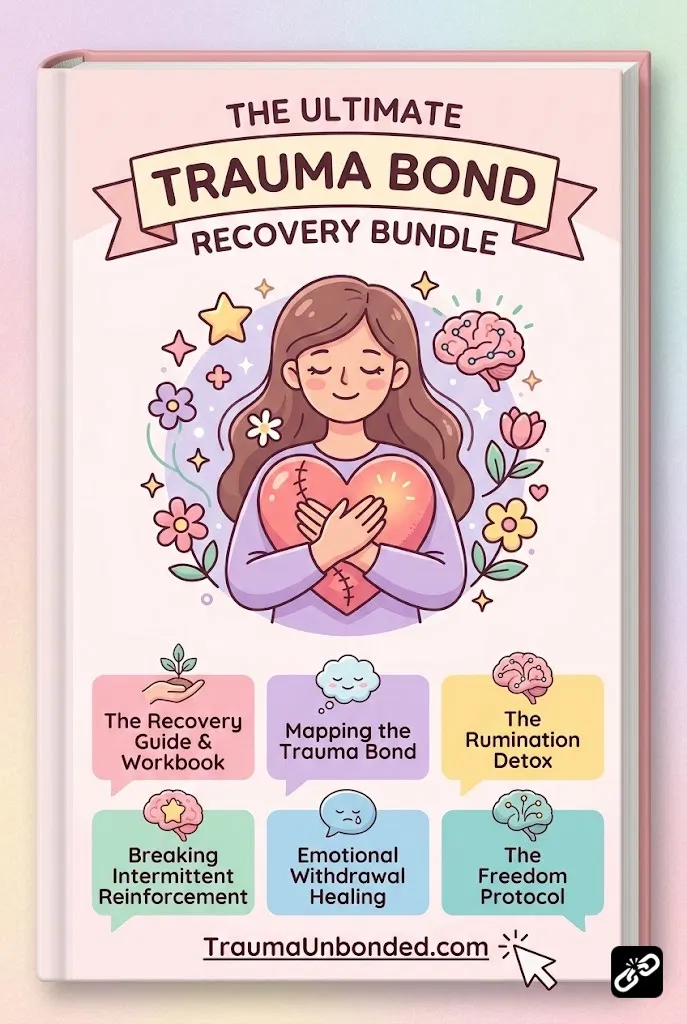
Generational trauma healing and stopping the cycle of abuse are the first steps toward a life free from toxic patterns. If you have spent years feeling like you are carrying a weight that does not belong to you, it is likely because you are. Many of us find ourselves in “familiar” but painful relationships because we are subconsciously trying to resolve wounds that started long before we were born. I spent 12 years in a toxic relationship with a partner who showed both narcissistic and borderline traits, and it took hitting rock bottom to realize I was living out a family script. To truly break free, you need a roadmap like The Ultimate Trauma Bond Recovery Bundle to help you navigate the exit.
When I finally walked away, I was a ghost of myself. I had no hobbies, my friends were long gone because of the isolation, and my daily life felt miserable. I thought the problem was just my partner, but therapy showed me that my codependency was a survival skill I learned as a child. I was used to walking on eggshells, so a partner who exploded over small things felt normal to my nervous system. Have you ever wondered why you stay in situations that you know are destroying you? It is often because the trauma bond feels more like “home” than peace does.
Healing is not just about leaving the person; it is about changing the internal wiring that made you a match for them. I am now back to my original self, which is cheerful and optimistic, but that did not happen by accident. It happened through a trauma-informed approach that looked at the roots of my family tree. This article will show you how to start that same process for yourself.
What is the Root of This Generational Pattern?
Generational trauma is like a silent inheritance. It is the emotional pain, coping mechanisms, and toxic behaviors passed down from one generation to the next. In my case, I saw a parent who never felt good enough, and I spent my 12-year relationship trying to “fix” a partner to prove I was worthy of love. This is a classic trauma bond where we confuse intensity for intimacy. We think that if we can just love them enough, they will change, and we will finally be whole.
This cycle often involves roles like the scapegoat or the golden child. If you grew up in a home where love was conditional, you likely became an expert at “fawning.” Fawning is a trauma response where you please others to stay safe. In a relationship with a narcissist, this makes you the perfect target. They need someone to provide endless narcissistic supply, and you have been trained since childhood to provide it at the expense of your own needs.
To stop this, you have to look at your family history without the rose-colored glasses. Was there gaslighting in your childhood home? Gaslighting is when someone makes you doubt your own reality, and it is a tool of control used by both toxic parents and partners. When you recognize that your current pain is a continuation of an old story, you can finally start writing a new one. You can find more specific steps in this generational trauma healing guide.
Recognizing the Trauma Bond in Your Daily Life
A trauma bond is an addiction. It is not just “bad love,” it is a chemical loop in your brain caused by intermittent reinforcement. One day they are the person of your dreams, and the next they are the person of your nightmares. During my decade-long struggle, I lived for those “good days.” I would ignore the hoovering tactics, which are the manipulative ways they suck you back in after a breakup, just to feel that high again.
Breaking the cycle means admitting that you are addicted to the chaos. Does the idea of a “normal,” calm relationship feel boring to you? That is a sign that your nervous system is tuned to a high-stress frequency. In therapy, I learned that I had to sit with the boredom and the loneliness until my brain reset itself. I had to learn that peace is actually the goal, not the constant adrenaline of a fight followed by a makeup session.
Stopping the cycle also means looking at how you talk to yourself. Do you have a voice in your head that tells you that you are selfish for having boundaries? That voice is not yours; it is the voice of the people who profited from your lack of limits. When you start saying “no” and sticking to it, the toxic people in your life will react poorly. That is actually proof that the boundary is working.
Healing these deep-seated wounds is a heavy lift that requires specific tools to prevent falling back into old habits. If you are tired of the revolving door of toxic people and want a clear path to lasting peace, the following resource was built for exactly that purpose.
How to Rebuild Your Identity After Narcissistic Abuse

Reclaiming who you are is the most beautiful part of generational trauma healing. For 12 years, I did not know what kind of music I liked or what I wanted to eat for dinner without checking my partner’s mood first. I was a mirror, reflecting whatever they wanted me to be. To find your “original self,” you have to start small. I started with a simple morning routine: coffee, a journal, and silence. No phone, no checking for angry texts, just me.
You must practice radical acceptance. This means accepting that your toxic family members or ex-partner may never change or apologize. You are not waiting for them to “get it” anymore. You are moving on because you deserve a life that is not centered around their drama. This is how you stop the cycle of abuse. You refuse to be a participant in the game. When you stop playing, the game ends.
Many people find success through inner child reparenting. This is the process of giving yourself the validation and safety that you did not receive as a child. If you feel a wave of anxiety, instead of reaching for a toxic ex, you talk to yourself like a loving parent would. You tell yourself, “You are safe, and I am not going to let anyone hurt us again.” This internal shift is what eventually leads to being grounded and optimistic. You can find techniques for this in the inner child reparenting guide.
Protecting the Next Generation from Toxic Cycles
If you have children, stopping the cycle of abuse is the greatest gift you can give them. Children do not do what we say; they do what we do. If they see us accepting mistreatment, they learn that mistreatment is what love looks like. By healing yourself, you are literally changing their future. You are teaching them that boundaries are healthy and that their feelings matter. You are showing them that it is possible to walk away from someone you love if that person is not good for you.
I remember the day I realized I was finally free. I was sitting on my balcony, watching the sun set, and I felt a genuine sense of joy. Not the frantic, “he called me back” kind of joy, but a deep, quiet happiness. I was no longer isolated. I had reconnected with my friends and found new hobbies like hiking and painting. I was grounded. I was me again. It took 12 years to lose myself and a few years of hard work to find myself, but I would do it all again to be where I am now.
Healing is not a straight line. There will be days when you miss the person or the “intensity” of the old life. That is just your brain craving the old chemical hit. On those days, look at your progress. Look at the peace in your home. You have broken the chains of generations of pain. You are the one who said, “It ends with me.” That is a massive achievement. If you are ready to make that commitment official, I highly recommend starting with The Ultimate Trauma Bond Recovery Bundle to ensure you have the support you need for the long term.

Meet Your Guide
Helen Brooks
After surviving a 12-year NPD/BPD relationship, I dedicated over a decade to studying trauma bonding and nervous system recovery. My mission is to help you break free from the fog and reclaim your authentic self.
Ready to break the trauma bond and reclaim your life?