10 Subtle Signs of Trauma Bonding You Might Be Overlooking
I spent twelve years of my life living in a fog that I couldn’t name. During that decade-long relationship with a partner who showed both narcissistic and BPD traits, I felt like I was constantly drowning while trying to save someone else. I lost my friends, my hobbies, and my sense of joy. I was a shell of a person, yet I felt more attached to my partner than ever before. This is the reality of a trauma bond. It is not love. It is a biochemical addiction that keeps you tethered to the person causing you pain. If you feel stuck, The Trauma Bond Recovery Guide & Workbook can help you start untangling these feelings.
Do you ever wonder why it is so hard to leave even when you know you are being mistreated? It is because the cycle of abuse creates a physical and emotional grip on your brain. After I finally got out and started therapy, I realized that I had been overlooking the small, quiet signs that I was bonded to my trauma. It wasn’t just about the big fights. It was about the subtle ways I had changed to survive.
When you are in the thick of it, you might think you are just being loyal or supportive. In reality, you are likely stuck in a loop of intermittent reinforcement. This is where the “good” moments feel so amazing that they wash away the memory of the “bad” ones. Let’s look at the signs you might be missing in your own life right now.
1. Making Excuses for the Unexcusable
During my twelve-year relationship, I became a professional at justifying his cruelty. If he screamed at me until I cried, I told myself he was just stressed at work. If he gave me the silent treatment for days, I blamed his difficult childhood. Have you found yourself explaining away their behavior to your family or even to yourself?
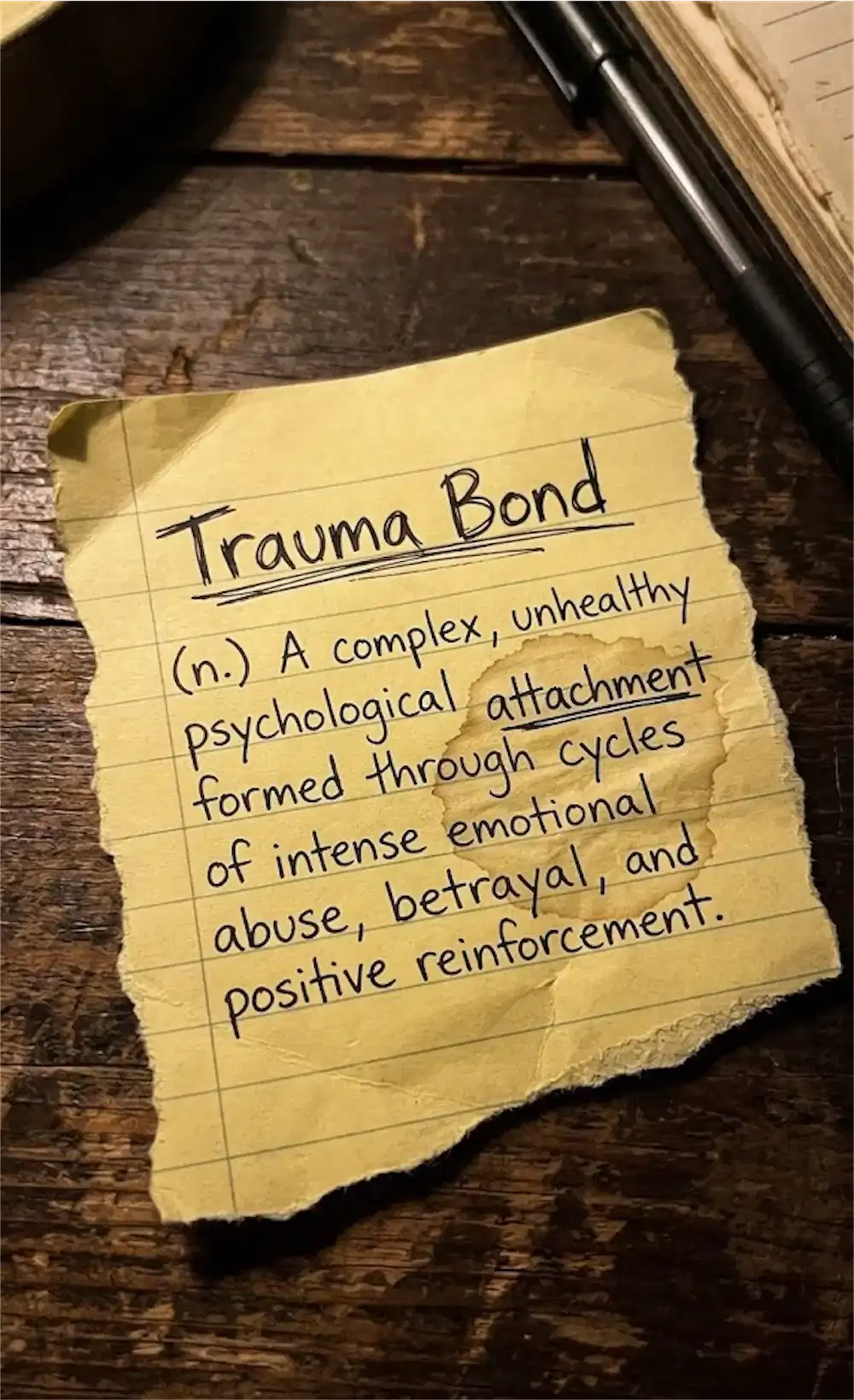
This is called cognitive dissonance. It is the mental conflict you feel when the person you love does things that are unlovable. To keep the relationship going, your brain chooses to focus on the “potential” version of them instead of the person standing in front of you. You start to believe that if you just love them enough, they will finally change.
2. You’ve Become a Secret Keeper
One of the clearest signs for me was when I stopped telling my friends the truth. I knew that if I told them what was really happening, they would tell me to leave. I started hiding the arguments and the insults. Do you find yourself lying about why you seem so tired or why you aren’t coming to social events?
This isolation is a key part of the bonding process. By keeping their “dark side” a secret, you become their only protector. This creates a fake sense of intimacy. You feel like the only person who truly understands them, but really, you are just the only person who is tolerating the abuse.
3. Living in the “Waiting Room” of Life
For over a decade, my life was on hold. I didn’t pursue new career goals or take up new hobbies because I was too busy managing his moods. I was always waiting for the next crisis to end or for the next “honeymoon phase” to start. Are you waiting for a version of your partner that only appears 10% of the time?
A trauma bond keeps you focused on the future instead of the present. You tell yourself that things will be better after the holidays, after the move, or after they get a new job. This keeps you trapped in a cycle of hope that never leads to actual change. You deserve to live your life now, not in some hypothetical future.
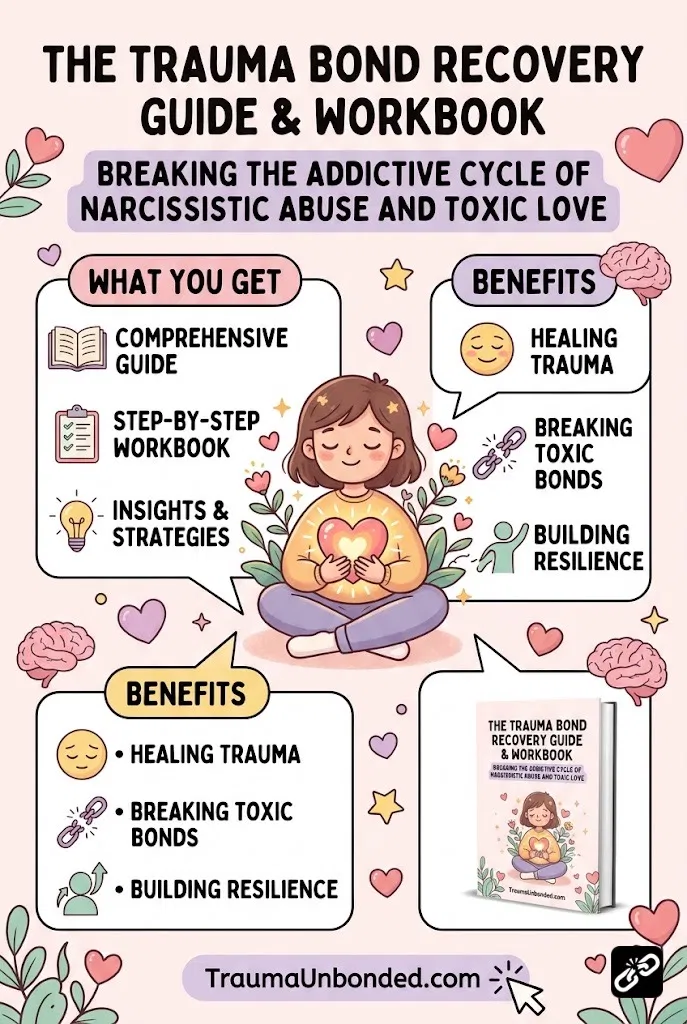
Healing from this kind of deep emotional entanglement requires a roadmap that addresses the way your brain has been rewired. It is not just about moving out; it is about reclaiming your mind from the fog of toxic attachment. This workbook is designed to help you break that addictive cycle and find your way back to your original, cheerful self.
Break the cycle today with a structured path to recovery.
4. Your Body is in Constant Survival Mode
During my recovery, I learned about how the nervous system reacts to abuse. Toward the end of my relationship, I had chronic stomach issues, headaches, and a feeling of “heaviness” in my chest. Do you feel a sense of dread when you hear their car pull into the driveway? That is your body trying to warn you that you are not safe.
When you are trauma bonded, you are often stuck in a trauma fawn response. This means you are constantly scanning their face for signs of anger and adjusting your behavior to keep them calm. Your body is perpetually flooded with cortisol and adrenaline, which can lead to serious health problems over time.
5. You No Longer Recognize Yourself
I used to be an optimistic, cheerful person who loved hiking and painting. By year eight of my relationship, I hadn’t touched a paintbrush in years and rarely left the house. I had become whatever he needed me to be just to avoid a fight. Who were you before this relationship started?
Trauma bonding erodes your identity. You start to adopt their opinions and their dislikes just to keep the peace. You might even feel guilty for having your own thoughts or desires. This loss of self is a sign that the bond has taken over your life.
6. Ruminating on “What Went Wrong”
I used to spend hours replaying conversations in my head, trying to figure out where I made a mistake. I thought that if I could just find the right words, I could make him understand my pain. Does your mind feel like it is on a treadmill, constantly spinning over the same arguments?
This rumination is a way to try and regain control in an uncontrollable situation. It is part of the “addiction” to the relationship. You are trying to solve a puzzle that has no solution because the other person is not playing by the same rules of empathy and logic that you are.
7. You Feel Like You Are Quitting a Drug
When I finally left, I didn’t feel relieved at first. I felt physically ill. I was shaking, I couldn’t sleep, and I was obsessed with checking his social media. This is because a trauma bond is a biochemical attachment. Your brain is literally going through withdrawal from the dopamine spikes of the “make-up” periods.
If you feel like you “need” them to survive despite how they treat you, that is the addiction talking. It is not evidence that they are your soulmate. It is evidence that your reward system has been hijacked by the intermittent nature of the abuse. Recognizing this as a physical process can help you be kinder to yourself during the healing process.
8. You Apologize for Everything
I found myself saying “I’m sorry” even when he bumped into me. I apologized for having feelings, for being tired, or for things that were completely out of my control. This is a survival tactic. You learn that by taking the blame, you can sometimes shorten the duration of their anger.
Over time, this destroys your self-worth. You begin to believe that you truly are the problem. In my twelve years, I forgot that I was allowed to have needs. I forgot that a healthy relationship is a partnership, not a constant performance where one person is always wrong.
9. You Defend Them to Your Therapist or Friends
Early in my therapy, I spent most of the sessions talking about how “good” he could be. I wanted my therapist to see the man I fell in love with, not the man who was breaking me down. Are you protective of your abuser’s reputation even though they don’t protect yours?
This happens because your brain is trying to protect you from the pain of reality. If they are “bad,” then you have to leave, and leaving feels terrifying. So, you focus on their small acts of kindness to prove that they are actually a good person. It is a way to stay in the comfort of the known, even if the known is painful.
10. You Are Terrified of Their Rejection
Even when I was miserable, the thought of him leaving me felt like death. He would often threaten to break up during arguments, and I would beg him to stay. This intense fear of abandonment is a hallmark of the bond, especially in relationships involving BPD traits like splitting.
You become so small that you feel like you cannot exist without them. But I promise you, you can. After I left and went through the hard work of therapy, I found that “original self” again. I am now cheerful and grounded, and my life is no longer a crisis. You can get here too.
If these signs hit home for you, please know that you are not crazy and you are not alone. Breaking a trauma bond is one of the hardest things you will ever do, but it is the only way to get your life back. If you are ready to start that journey, I highly recommend using The Trauma Bond Recovery Guide & Workbook as your companion to help you stay strong and focused on your own healing.

Meet Your Guide
Helen Brooks
After surviving a 12-year NPD/BPD relationship, I dedicated over a decade to studying trauma bonding and nervous system recovery. My mission is to help you break free from the fog and reclaim your authentic self.
Ready to break the trauma bond and reclaim your life?