Trauma Fawn Response: Why You Became a People Pleaser Early On
Trauma fawn response is a term you might not have heard until your world started falling apart. If you are wondering why you became a people pleaser early on, the answer usually lies in a survival strategy you developed long ago. During my twelve years in a toxic relationship with a partner who had both NPD and BPD traits, I realized my tendency to please was not a personality quirk. It was a shield. I spent a decade scanning his moods and adjusting my personality to keep the peace, which is the core of The Fawn Response Detox process I eventually had to undergo to find myself again.
Do you feel like you have a “radar” for other people’s emotions that never turns off? In my relationship, I became so good at predicting an outburst that I would change my plans, my words, and even my tone of voice before he even spoke. This constant state of alertness is exhausting. It leaves you feeling isolated from your own needs and hobbies. When I finally walked away, I was a shell of a person. I had no idea what I liked or who I was without someone else to appease.
The trauma fawn response is often the most misunderstood of the four stress responses. While fight, flight, and freeze are well known, fawning is the act of using people-pleasing to avoid conflict and establish a sense of safety. If you grew up in a home where love was conditional or unpredictable, you likely learned that being “good” or “helpful” was the only way to stay safe. You carried that into your adult relationships, making you a prime target for those who thrive on control.
Understanding the Trauma Fawn Response in Daily Life
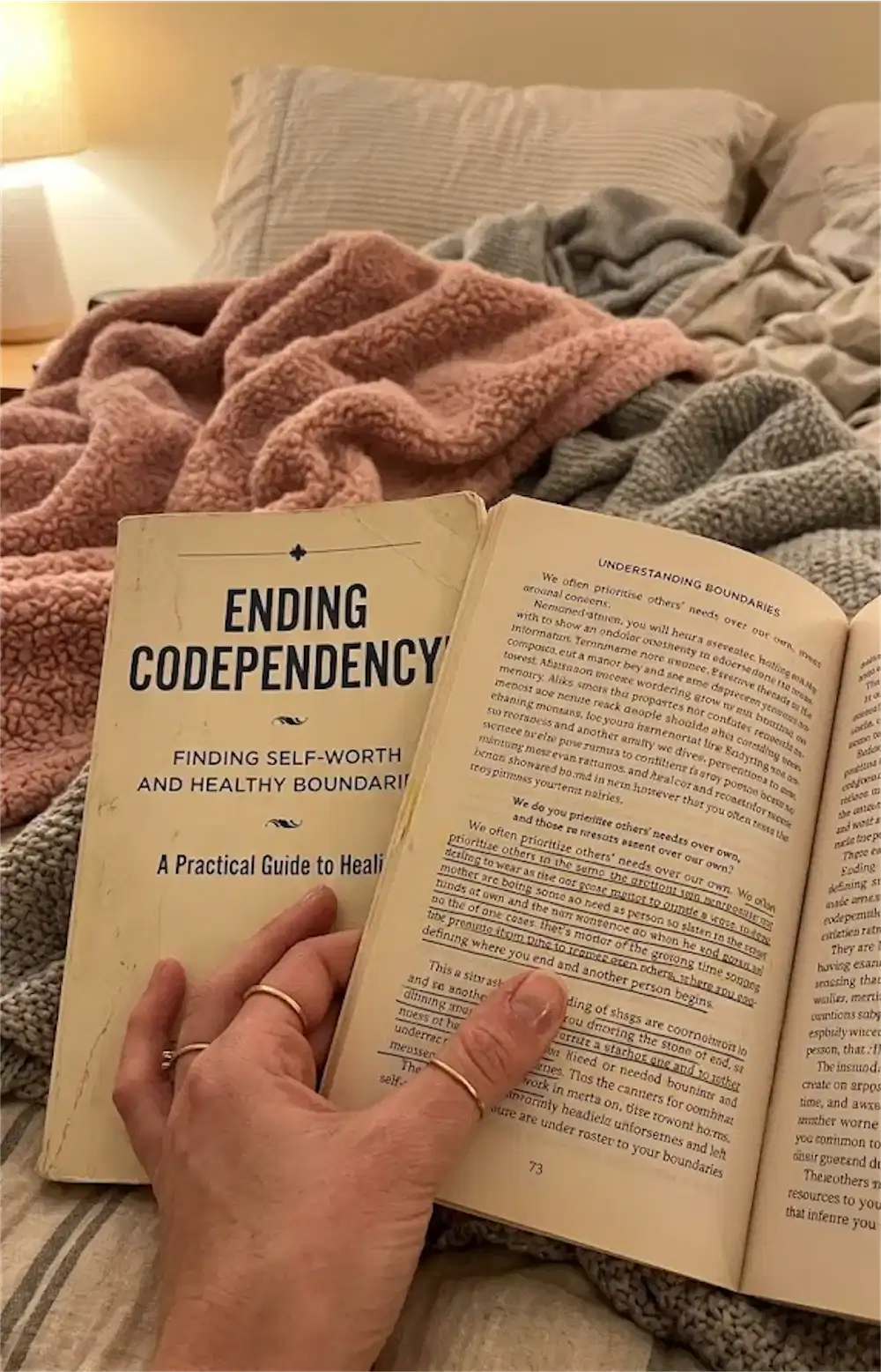
Fawning is more than just being nice. It is a physiological reaction where your nervous system decides that the best way to survive a threat is to merge with the needs of the person threatening you. In my long-term relationship, this looked like “walking on eggshells” every single day. If he was unhappy, I felt it was my job to fix it. If he was angry, I would apologize even if I had done nothing wrong. Have you ever found yourself saying “I’m sorry” for just existing in the same room as a frustrated partner?
This response often starts in childhood. If you had a parent who was emotionally volatile or neglectful, you learned to “read the room” before you even learned to read books. You became an expert at monitoring facial expressions and tone of voice. This trauma fawn response guide is meant to help you see that this was a brilliant survival strategy when you were small. The problem is that as an adult, this habit keeps you locked in toxic cycles with people who take advantage of your kindness.
When you are in a relationship with someone who has Narcissistic Personality Disorder (NPD) or Borderline Personality Disorder (BPD), your fawning becomes their fuel. They use your desire for harmony to manipulate your reality. This is often called gaslighting, which is when someone makes you doubt your own memory or perception. In my case, I was told so often that I was “too sensitive” that I started to believe my own eyes were lying to me. I would fawn even harder just to prove I was “on his side.”
Why You Became a People Pleaser Early On
The roots of people pleasing early on usually go back to your family of origin. For many of us, we were the “peacekeepers” or the “fixers” in the family. We learned that our value was tied to how much we could do for others. This is a common trait in the fawn response traits guide that many survivors recognize. If you didn’t feel safe expressing anger or sadness as a child, you tucked those parts of yourself away. You traded your authenticity for attachment.
In a healthy environment, a child is allowed to have boundaries. In a traumatic environment, boundaries are seen as threats. If you tried to say “no,” you might have been met with silence, rage, or guilt-tripping. Over time, your brain decided that saying “yes” was the only way to keep the people you loved from leaving or hurting you. This creates a deep-seated fear of abandonment that follows you into adulthood, making you vulnerable to partners who use “hoovering” or “love bombing” to keep you hooked.
Think back to your earliest memories. Was there someone you felt you had to “manage” to keep the house calm? Maybe it was a parent who drank or a sibling who was always in trouble. By becoming the perfect, low-maintenance child, you were trying to reduce the total amount of stress in your home. You became a people pleaser because it was the most logical way to navigate a chaotic environment. It was never about being “weak,” it was about being a survivor.
How This Strategy Fails You in Adulthood
While fawning worked to keep you safe as a child, it becomes a cage in your adult life. In my twelve-year relationship, my fawning led to total self-loss. I didn’t have friends left because I was too busy managing his crises. I didn’t have hobbies because he found them threatening to his control. This is the heavy price of chronic fawning. You become a supporting character in your own life while the toxic person takes center stage.
Breaking this cycle requires more than just willpower. It requires a deep understanding of how your nervous system is wired. You have to learn how to set boundaries and stop apologizing for things that aren’t your fault. This journey back to your “original self” is possible, even if you feel completely lost right now. I am living proof that you can go from a shattered, anxious mess to a person who is optimistic and grounded once again.
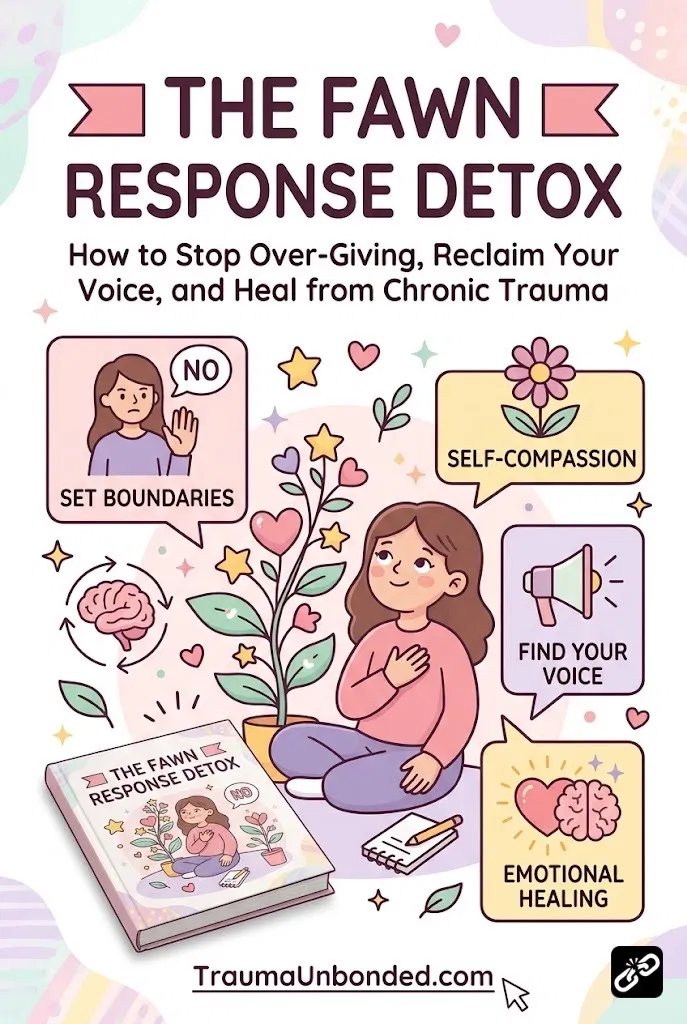
If you find yourself constantly over-giving and feeling drained by toxic dynamics, you need a structured way to reclaim your power. The guide below was designed specifically for those of us who have spent years putting everyone else first while our own identity faded away.
Reclaim your voice and break the cycle of chronic people-pleasing with our specialized recovery workbook.
The Hidden Costs of the Fawn Response
Living in a constant fawn state has physical and emotional consequences that often go unnoticed. For years, I suffered from chronic fatigue and unexplained tension in my shoulders. I didn’t realize my body was stuck in a “high alert” mode. When you are always trying to please others, your body is flooded with cortisol. You are never truly relaxed because you are always waiting for the next “drop” in the other person’s mood. This is a common experience for those dealing with a trauma fawn response.
One of the most painful costs is the loss of intuition. When you spend years prioritizing someone else’s reality, you stop trusting your own gut feelings. You might feel like something is “off,” but you immediately talk yourself out of it because you don’t want to cause a conflict. This makes it very hard to leave a toxic relationship. You become addicted to the small moments of “peace” when the other person is happy, even if those moments are rare and manufactured.
Signs You Are Stuck in a Fawn State
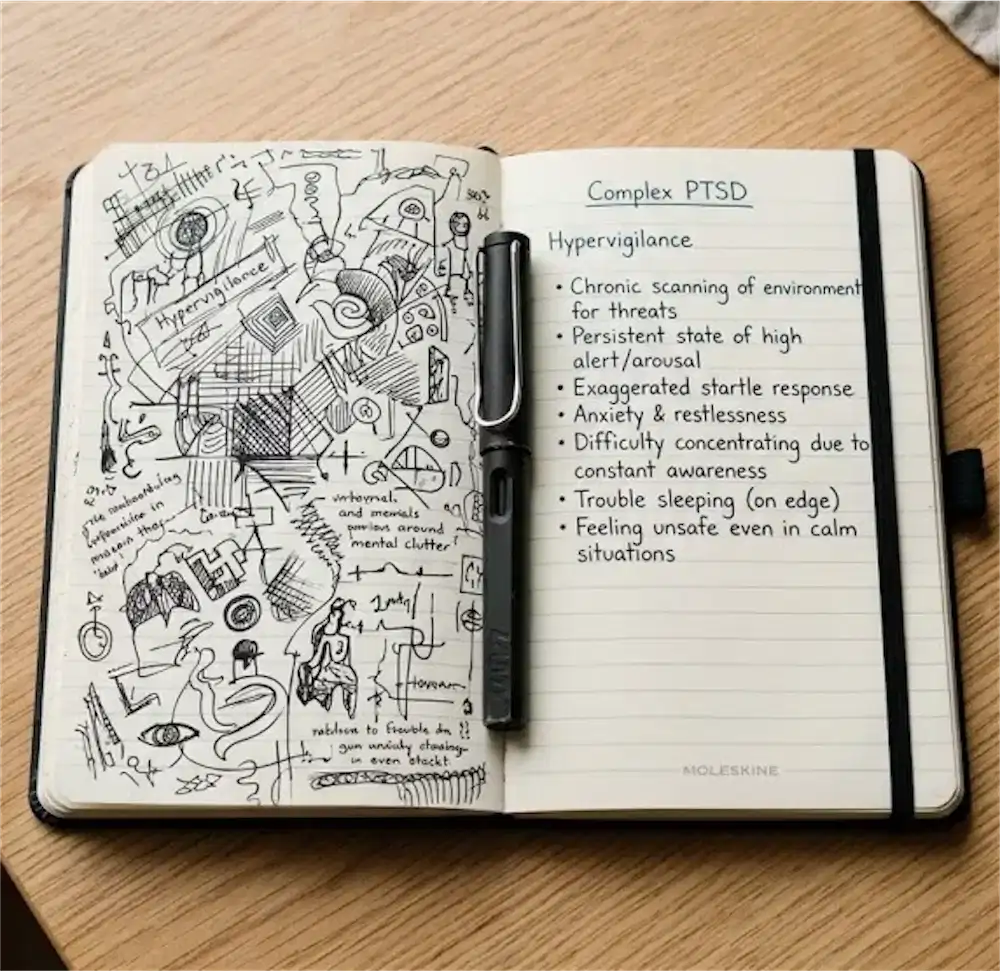
How do you know if you are fawning? Look at your social interactions. Do you find yourself agreeing with opinions you don’t actually hold just to avoid a debate? Do you feel responsible for everyone else’s comfort at a party? In my own recovery, I realized I would even change my “favorite” foods or music to match whatever my partner liked at the time. I was so afraid of being “different” that I became a mirror of him.
Other signs include an inability to say no, feeling guilty when you do something for yourself, and a constant need for external validation. You might feel like you are a “chameleon,” shifting your personality depending on who you are with. While this makes you very likable to others, it leaves you feeling empty inside. You are providing a service to everyone else, but no one is providing that same care for you. It is a lonely way to live.
If you are a survivor of a partner with NPD or BPD, you might also find yourself “over-explaining” your actions. I used to write long paragraphs to justify why I went to the grocery store or why I was five minutes late. This is a trauma fawn response meant to prevent a perceived attack. You are trying to provide so much information that the other person can’t find a reason to be mad at you. But in a toxic relationship, they will always find a reason, no matter how much you explain.
Steps to Stop Fawning and Reclaim Your Identity
The road back to your original self starts with awareness. You have to begin noticing the physical sensation in your body when you are about to fawn. Is it a tightness in your chest? A fluttering in your stomach? When you feel that urge to over-give or apologize, pause. Take a breath and ask yourself, “Am I doing this because I want to, or because I am afraid?” This simple question can be the beginning of your freedom.
Start small with your boundaries. Practice saying “no” to things that don’t matter much, like a request for a small favor from a coworker. Notice that the world does not end when you prioritize your own time. As you build this muscle, you will find it easier to stand your ground in bigger areas of your life. I had to learn that my “no” was just as valid as anyone else’s “yes.” It felt terrifying at first, but each boundary I set brought a little bit of my spark back.
Reconnecting with your hobbies is another vital part of healing. What did you love to do before the relationship? For me, it was gardening and photography. I had stopped doing them because they took time away from “serving” the relationship. When I started picking up my camera again, it felt like I was waking up from a long sleep. Your hobbies are not just “fun,” they are anchors for your identity. They remind you that you are a person with your own interests and passions.
Finally, find a support system that understands trauma. Talking to friends who haven’t been through narcissistic abuse can sometimes be frustrating because they might tell you to “just leave” or “be more assertive.” They don’t understand the deep biological wiring of the trauma fawn response. Seek out therapy or groups where your experience is validated. You are not “crazy,” and you are not “weak.” You are a person who learned how to survive a very difficult situation, and now you are learning how to thrive.
Recovering from years of people-pleasing is a journey that takes patience and self-compassion. You didn’t become a fawner overnight, and you won’t stop overnight either. But every time you choose yourself, you are healing that early wound. If you are ready to take a deeper step into reclaiming your voice and setting firm boundaries, check out The Fawn Response Detox to guide your daily recovery. You deserve to live a life where your needs matter just as much as anyone else’s.

Meet Your Guide
Helen Brooks
After surviving a 12-year NPD/BPD relationship, I dedicated over a decade to studying trauma bonding and nervous system recovery. My mission is to help you break free from the fog and reclaim your authentic self.
Ready to break the trauma bond and reclaim your life?