The Reverse Empath Trap: How to Protect Your Empathy from Being Weaponized Again
Falling into the reverse empath trap is surprisingly easy when you naturally lead with an open heart and deep compassion. If you have ever wondered why your deep care for others keeps leaving you empty and exhausted, you are likely experiencing how toxic partners learn to exploit your sensitivity. During my own 12-year toxic relationship with a partner who showed severe narcissistic and borderline personality traits, my ability to feel their pain became my prison. I had to learn how to stop this weaponized empathy before it completely destroyed my identity.
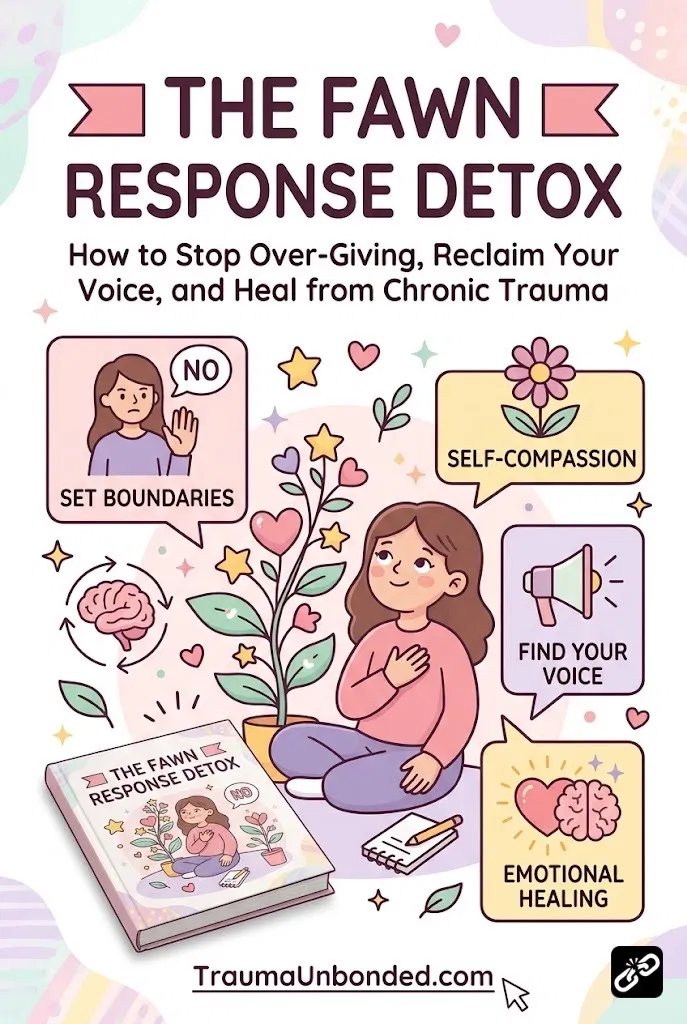
When you are in the thick of a toxic dynamic, you often minimize your own pain to soothe theirs. Healing from this requires understanding why you feel responsible for fixing people who only use your kindness as ammunition. If you feel like you have lost your voice entirely, reading The Fawn Response Detox can help you start reclaiming your space and stopping the cycle of over-giving.
Understanding the Reverse Empath Trap
The reverse empath trap is a manipulation tactic where a toxic partner exploits your natural empathy to make you accept blame, tolerate abuse, and prioritize their emotional instability over your own psychological safety.
In a healthy relationship, mutual understanding flows both ways. In a toxic dynamic, your sensitivity is mapped out like a blueprint, allowing an abusive partner to trigger your guilt whenever you try to set a boundary. They turn your greatest strength into a tool for your own submission.
How My Empathy Was Weaponized for 12 Years
For more than a decade, I believed that if I could just show enough patience, my partner would finally feel safe enough to stop hurting me. Every outburst of rage or sudden icy silence was met with my attempts to understand their childhood wounds. This is a common trap discussed in the empaths attract narcissists theory, where our desire to heal others binds us to people who have no intention of changing.
When they hurt me, I ended up apologizing to them because I could see how miserable they were inside. Have you ever found yourself comforting the person who just broke your heart? That is the exact moment your empathy becomes weaponized, leaving you isolated, without hobbies, and living in constant survival mode.
The Cost of Living in Survival Mode
When you spend years walking on eggshells, your body stays stuck in a high-alert state. You begin to believe that keeping your partner calm is a matter of survival, which completely rewires how you process stress. I remember sitting in my car after work, dreading the drive home because I didn’t know which version of my partner would walk through the front door.
Breaking this heavy cycle of emotional exhaustion means changing how you relate to your own kindness. If you are ready to stop carrying the weight of everyone else’s emotional storms and want a practical, step-by-step roadmap to reclaim your personal power, this focused workbook is designed specifically for your healing journey:
Signs Your Empathy Is Being Exploited

Recognizing the warning signs is the first step toward reclaiming your sanity. When you are conditioned to put others first, you normalize behaviors that are deeply destructive to your nervous system. There is a strong, proven link between codependency and fawn response behaviors that makes us highly susceptible to these patterns.
If you are struggling to tell where your feelings end and theirs begin, look out for these classic patterns in your daily life:
- Apologizing for their behavior: You find yourself making excuses to family and friends for how your partner treats you or others.
- Absorbing their emotional states: If they enter the room angry, your stomach instantly tightens, and your mood plummets to match theirs.
- Fearing their reactions: You constantly adjust your words, tone, and actions to avoid triggering an emotional outburst or silent treatment.
- Losing touch with your own needs: You have stopped asking yourself what you want because all of your energy is spent keeping the peace.
How to Protect Your Empathy and Set Boundaries
Protecting your peace does not mean turning into a cold, unfeeling person. It simply means learning to build a protective wall around your heart so that your care is reserved for those who respect it. True healing happens when you realize your compassion is a finite resource that must be managed wisely.
To begin reclaiming your life, you must shift your focus from analyzing their behavior to rebuilding your own self-worth. According to research on relationship dynamics published by Psychology Today, setting clear boundaries is essential for preventing empathy burnout and maintaining your own emotional stability. You cannot heal a relationship by sacrificing your own mental health.
Start practicing these small but significant shifts in your daily routine:
- Observe instead of absorb: When someone is upset, remind yourself that their anger belongs to them, not you. You can witness their pain without taking it onto your own shoulders.
- Practice the pause: Before jumping in to fix a problem or offer comfort, take three deep breaths and ask if this is truly your responsibility.
- Set small, firm limits: Start saying no to minor requests that drain your energy, and practice sitting with the temporary discomfort of their disappointment.
Reclaiming Your True Self After Chronic Exploitation
When I finally walked away from my toxic relationship, I felt like an empty shell. I had spent twelve years focusing entirely on another person’s volatile emotions, leaving me with no sense of who I actually was. But as I worked through therapy and began understanding my codependent patterns, my original cheerful and optimistic self slowly returned.
You can reclaim your light too, but you must first stop letting others use your kindness as a weapon against you. Your empathy is a beautiful gift, but it belongs to you first. If you are ready to break these destructive patterns for good, consider using The Fawn Response Detox to guide your steps toward a peaceful, self-respecting life.

Meet Your Guide
Helen Brooks
After surviving a 12-year NPD/BPD relationship, I dedicated over a decade to studying trauma bonding and nervous system recovery. My mission is to help you break free from the fog and reclaim your authentic self.
Ready to break the trauma bond and reclaim your life?