How to Break the ‘Favorite Person’ Obsession in a BPD Relationship
If you want to know how to break the ‘favorite person’ obsession in a BPD relationship, you are likely feeling completely drained by an intense cycle of extreme adoration and sudden emotional withdrawal. When you are the center of a BPD favorite person obsession, your entire existence becomes tied to another person’s volatile emotional state. During my own twelve-year relationship with a partner who struggled with severe BPD and narcissistic traits, I lived this reality daily, feeling like a savior one minute and an enemy the next.
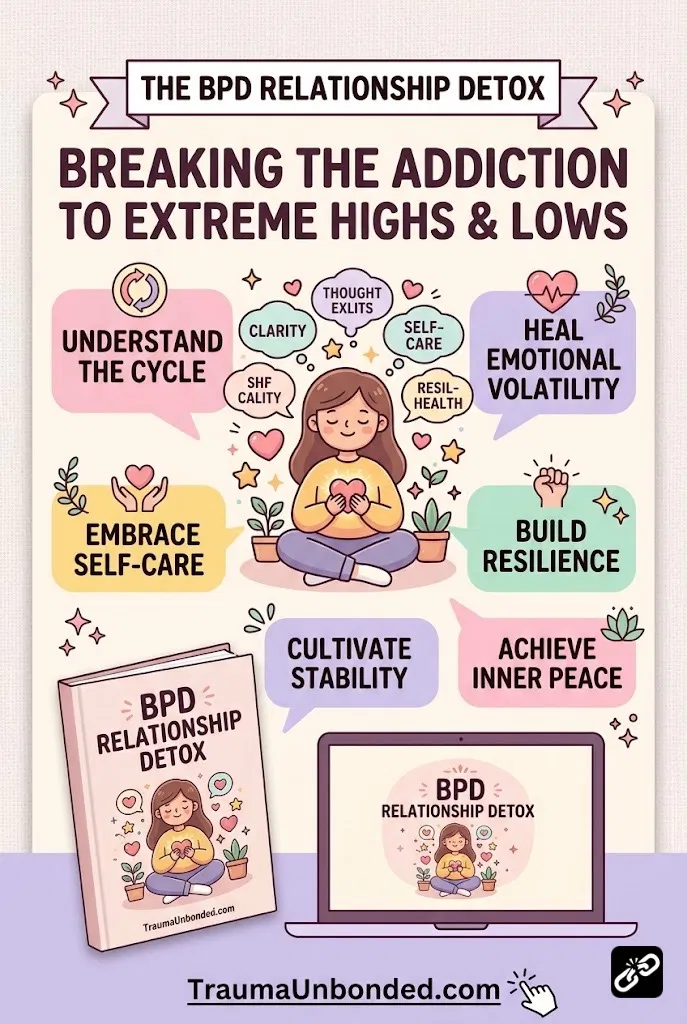
Getting out of this magnetic trap requires more than just willpower. You need a structured path to untangle your nervous system, which is why working through The BPD Relationship Detox is an essential first step toward reclaiming your sanity. When you learn how the brain gets hooked on these extreme highs and lows, you can begin to dismantle the unconscious patterns keeping you stuck.
Do you feel like you are constantly walking on eggshells, terrified that one wrong word will shatter their fragile mood? This constant state of alert is a classic sign of a deep, trauma-based attachment.
What is a BPD Favorite Person Obsession?
A BPD favorite person obsession is an intense, codependent attachment where an individual with Borderline Personality Disorder relies entirely on one specific person for their emotional stability, self-worth, and security, often resulting in a volatile cycle of idealization and devaluation.
In psychological terms, a “Favorite Person” (FP) is the individual upon whom someone with borderline personality disorder projects all of their hopes, fears, and emotional needs. When the relationship is good, you are put on a pedestal and showered with absolute worship. But the moment you show a hint of independence, the pendulum swings to anger and rejection.
In the beginning, this dynamic feels incredibly flattering. You are showered with undivided attention, and it feels as though you have found your ultimate soulmate. This extreme idealization phase is how the trap is set, making it hard to see the warning signs until you are already deeply enmeshed.
In my decade-long relationship, this felt like being a human oxygen tank. If I stepped away to see a friend or work on a hobby, my partner would panic, interpreting my absence as abandonment. I stopped doing things I loved just to keep the peace, which only fed the toxic codependency.
Understanding this dynamic is the foundation of BPD relationship trauma recovery. You are not responsible for regulating another adult’s nervous system, no matter how much they claim they cannot survive without you.
The Emotional Toll of Being the Favorite Person
Living as an FP is exhausting because you are constantly reacting to splitting behavior. Splitting is a defense mechanism where the person with BPD sees you as either all-good or all-bad, with no middle ground. You go from being the most perfect partner to the root of all their pain overnight.
You eventually find yourself editing your thoughts before you speak, adjusting your body language, and suppressing your own needs just to avoid triggering an emotional outburst. This continuous self-erasure slowly chips away at your sense of reality, leaving you feeling like a ghost in your own home.
This unpredictable pattern triggers a flood of stress hormones in your body, leaving you in a permanent state of hypervigilance. Over time, your brain adapts to this chaos, turning a normal relationship attachment into a biochemical addiction. According to research published by the National Institutes of Health, chronic interpersonal stress fundamentally alters how our brains process fear and safety, keeping us trapped in survival mode.
This biochemical lock-in is why you experience severe trauma bond withdrawal symptoms when you try to step back. The anxiety, physical aches, and obsessive thoughts are real physiological responses to breaking a high-conflict attachment loop.
Breaking free from this constant emotional roller coaster requires a proven strategy to detoxify your mind and rebuild your inner strength. If you want to stop the cycle of emotional instability and find your footing again, this specialized workbook is designed to guide you through the process step-by-step.
Practical Steps to Break the ‘Favorite Person’ Obsession
Breaking this addictive cycle requires a deliberate shift from caretaking to self-protection. Here are the most practical strategies to step down from the favorite person pedestal and reclaim your life:
- Establish rigid emotional boundaries: Stop offering immediate reassurance every time they panic. Let them sit with their discomfort while you maintain a calm, steady presence.
- Stop playing the therapist: You cannot cure their BPD, and trying to fix their emotional distress only deepens the toxic attachment.
- Implement radical no-contact: If the relationship has ended but the obsession persists, a radical no-contact guide is your best defense against hoovering and guilt-tripping.
- Rebuild your isolation-ruined life: Reconnect with the friends, family members, and hobbies that you slowly abandoned over the years.
- Practice physical grounding: Use deep breathing, cold water splashes, or quiet walks to calm your nervous system when the urge to rescue them spikes.
When I first started setting these boundaries, the pushback was immense. My partner accused me of being cold and heartless, which triggered deep waves of guilt. But I had to realize that my compliance was not actually helping them, it was only keeping both of us sick.
Reclaiming Your Identity and Rebuilding Self-Worth
The hardest part of breaking a BPD favorite person obsession is finding out who you are when the spotlight is gone. When you are the center of someone’s universe, even a toxic one, it fills a need for purpose. When that spotlight turns off, the silence can feel deafening.
After my twelve-year relationship collapsed, I looked in the mirror and did not recognize the person staring back. I was isolated, had zero hobbies left, and felt completely empty. I had to learn how to direct all of that nurturing, protective energy back toward myself through intensive therapy.
During my healing journey, I had to accept that I could not love someone into wellness. It was painful to realize that my codependency was actually enabling the toxic cycle, but that realization was also incredibly freeing. Once you stop trying to control their emotions, you regain the energy to rebuild your own life.
Rebuilding your life is a slow, daily process of small choices. It is about waking up and asking what you want for breakfast, rather than scanning the room to see what mood your partner is in. Gradually, your original self will return, stronger and more grounded than before.
Breaking free is not about hating the other person; it is about choosing your own survival. If you are ready to take back your life, stop walking on eggshells, and quiet the noise in your mind, take a closer look at The BPD Relationship Detox. Your peace of mind is worth every single boundary you have to set.

Meet Your Guide
Helen Brooks
After surviving a 12-year NPD/BPD relationship, I dedicated over a decade to studying trauma bonding and nervous system recovery. My mission is to help you break free from the fog and reclaim your authentic self.
Ready to break the trauma bond and reclaim your life?