8 Science-Backed Morning Routines for Mental Clarity After an NPD Breakup
If you have ever woken up after leaving a narcissistic relationship and felt a wave of dread before your eyes were even fully open, you know exactly what I mean when I say mornings hit differently after this kind of breakup. For most of the 12 years I spent in a relationship with someone who had both narcissistic and borderline personality traits, mornings were unpredictable. Some days started with warmth and felt almost normal. Other days I woke up already bracing for what mood he would be in. My nervous system never had a chance to simply… start the day in peace.
After I left, the mornings did not automatically become peaceful. They became disorienting. The anxiety was still there. The hypervigilance was still scanning for a threat that was no longer present. I did not know what to do with the silence. What I eventually learned, partly through therapy and partly through honest trial and error, is that the morning hours are a biological window. How you use the first 60 to 90 minutes of your day can either feed the anxiety spiral or quietly begin to undo it. The science backs this up, and I am going to walk you through what that looked like in my own life.
Why Mornings Are So Hard After Leaving a Narcissist
Before we get into what to actually do, it helps to understand what is happening in your brain and body when you wake up post-breakup. Cortisol, which is your body’s primary stress hormone, peaks naturally in the first 30 to 45 minutes after waking. This is called the cortisol awakening response. In healthy people, this morning spike gives you energy and alertness. In people who have been in prolonged high-stress or abusive relationships, this natural cortisol spike can amplify anxiety, intrusive thoughts, and the urge to check your phone for messages from your ex.
Research published through the National Institutes of Health on the cortisol awakening response and psychological stress shows that people with elevated baseline stress levels experience a sharper and more dysregulated cortisol spike in the morning, which directly worsens mood, concentration, and emotional regulation. When you have been living in a trauma bond for years, your baseline is already elevated. So the morning is genuinely harder for you than it is for someone who has not been through chronic psychological stress, and that is not a mindset problem. It is a physiology problem.
The good news is that you can work with this biology rather than against it. Each of the eight routines below targets something specific, either cortisol regulation, nervous system stabilization, identity reconstruction, or cognitive clarity. None of them require you to be a morning person. Some of them take three minutes.
1. Drink Water Before You Do Anything Else
This sounds almost embarrassingly simple, but stay with me. After 7 to 8 hours of sleep, your body is mildly dehydrated, and dehydration raises cortisol. When cortisol is already spiking naturally as part of the awakening response, adding dehydration on top of that makes the anxiety window sharper and longer. Drinking a full glass of water within 10 minutes of waking is one of the fastest ways to support your body’s ability to regulate that spike.
I started adding a squeeze of lemon to mine. It felt like a small act of taking care of myself, which after years of being focused almost entirely on another person’s needs, was something I genuinely had to relearn. It sounds trivial. It was not trivial. Small physical acts of self-care, done consistently, start to rebuild the internal message that you matter and your body deserves attention. If you want to build a hydration habit with some extra support, electrolyte morning hydration packets are something I used during the first few months to make it feel like more of a ritual.

2. Keep Your Phone Face Down for the First 30 Minutes
This one was brutal for me early on. The urge to check my phone first thing in the morning was not really about staying connected to the world. It was about checking for him. Had he texted? Had he posted something? Was he okay? Even after leaving, the hypervigilance that had kept me emotionally safe for years was still running in the background, and it expressed itself through compulsive phone checking.
What happens neurologically when you open social media or messages the second you wake up is that you hand your prefrontal cortex, the rational, self-aware part of your brain, over to incoming information before it has had time to boot up properly. Your brain is still in a semi-reactive state for the first 20 to 30 minutes after waking. Checking your phone in that window means your emotional brain is responding to stimuli before your rational brain can filter them.
I put my phone in a drawer in the kitchen before bed each night. Not on silent. Not face down on the nightstand. In a drawer, in another room. That physical distance made the habit easier to hold. If you find this genuinely hard, this piece on strategies for stopping the social media checking cycle breaks down exactly why the pull is so strong and what to replace it with.

3. Five Minutes of Intentional Breathing or Grounding
Grounding is a term therapists use to describe any technique that anchors your awareness in the present moment rather than letting it spiral into memory or anticipatory anxiety. For people recovering from narcissistic abuse, the mind tends to either replay the past or catastrophize the future. The present moment is actually the safest place to be. The problem is that trauma teaches your brain to avoid it.
One of the simplest grounding tools is controlled breathing. Specifically, a technique called box breathing, which involves inhaling for 4 counts, holding for 4 counts, exhaling for 4 counts, and holding again for 4 counts. This pattern directly activates the parasympathetic nervous system, which is the branch of your autonomic nervous system responsible for calm and recovery. According to clinical psychologist Dr. Arielle Schwartz, a specialist in complex trauma and EMDR therapy, breathwork is one of the most accessible and evidence-supported tools for calming a dysregulated nervous system outside of formal therapy sessions.
I did five minutes of this every morning sitting on the edge of my bed before standing up. Some mornings I cried through it. That was fine. The point was not to feel peaceful immediately. The point was to show my nervous system that the morning did not have to start in fight-or-flight.
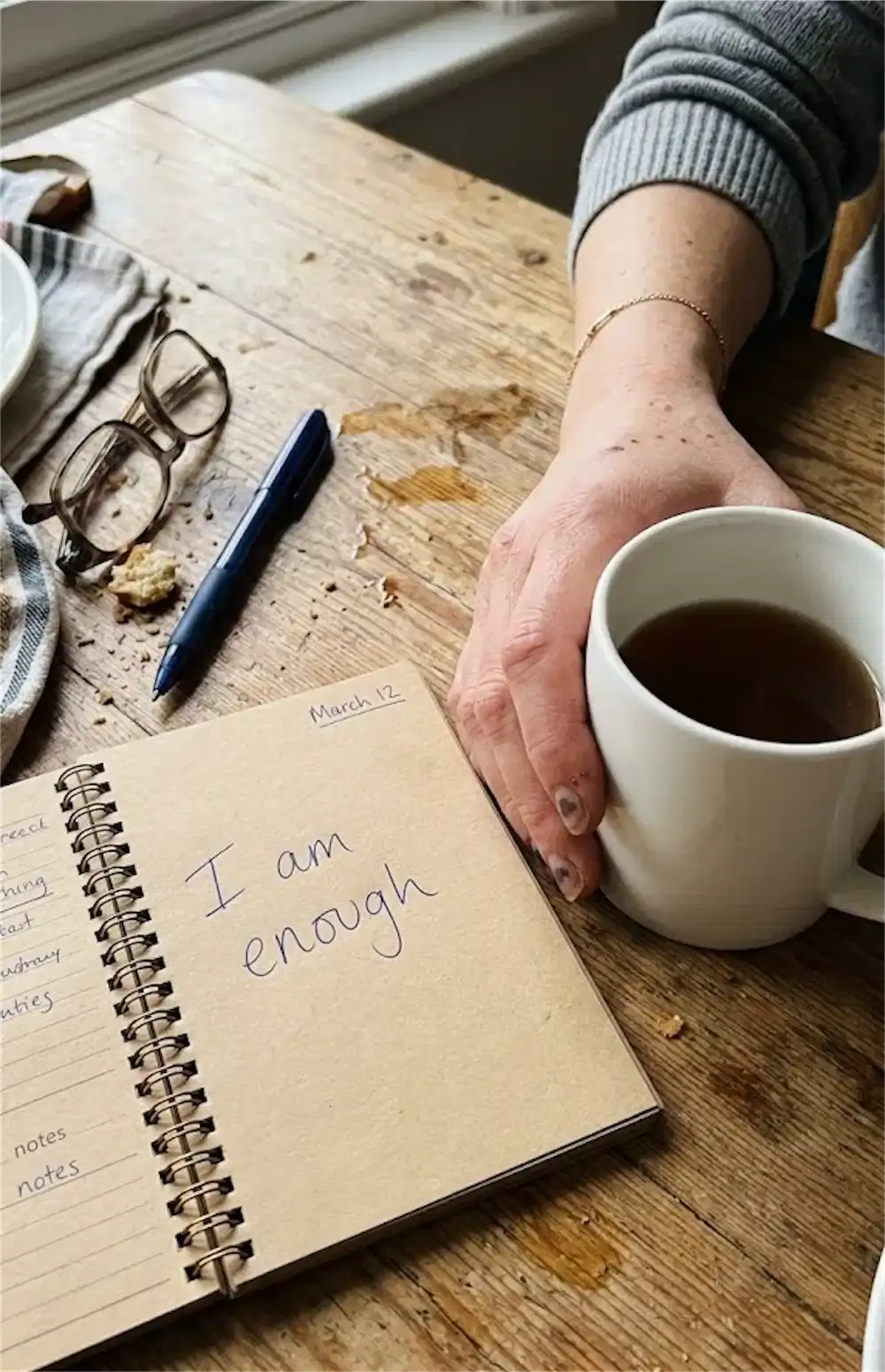
4. Write Three Pages Before Your Brain Has Time to Argue
The morning pages method comes from Julia Cameron’s book The Artist’s Way, and while the book is primarily about creative recovery, the core practice is extraordinarily useful for trauma recovery as well. The idea is simple: as soon as you wake up, before coffee if possible, you write three pages of longhand stream-of-consciousness writing. You do not edit. You do not try to write something meaningful. You just write whatever is in your head.
Why does this help after narcissistic abuse specifically? Because one of the central wounds of this kind of relationship is the loss of your own inner voice. Years of gaslighting, which is when someone systematically makes you doubt your own perceptions and memory, disconnects you from your ability to trust your own thoughts. Writing those thoughts down, messy and unfiltered and private, starts to rebuild that connection. You start to hear yourself again.
I filled several notebooks in the first two months alone. I wrote things I had never said out loud. I processed rage and grief and confusion in those pages before the day had even started, which meant I was less likely to carry those things into interactions with other people. A good dedicated journal makes this easier to sustain. Something like a quality lined journal for daily writing is worth investing in because the physical ritual of opening a real notebook matters.

5. Eat a Real Breakfast and Take It Seriously
Skipping breakfast is extremely common during the acute phase of a traumatic breakup. Appetite drops. Nothing sounds appealing. The idea of cooking for just yourself can feel almost absurdly sad when you are still in the raw grief stage. I understand all of this. I lived on coffee and occasionally crackers for the first couple of weeks.
But here is what that does physiologically. When you skip breakfast, your blood sugar drops, which triggers another cortisol release. That means the cortisol spike from waking, which is already elevated due to stress, gets a second wave from low blood sugar. The result is increased anxiety, difficulty concentrating, emotional reactivity, and a much lower threshold for being flooded by grief or intrusive thoughts. Eating something with protein and healthy fat in the morning blunts that cortisol response and gives your brain the glucose it needs to actually function.
I started with eggs. Then avocado toast with eggs on top. Nothing complicated. The act of making myself a real meal in the morning also served as a quiet ritual of self-respect. I was worth feeding. That sounds obvious, but after years of a relationship that had systematically eroded my sense of my own value, it was not obvious at all. It was a practice.
6. Move Your Body for at Least 10 Minutes
You do not need to train for anything. You do not need a gym membership or a structured program. What you need is to give your body a way to metabolize the stress hormones that have been building up during sleep and through the cortisol awakening response. Even 10 minutes of walking, gentle yoga, or dancing alone in your kitchen does this.
The connection between movement and trauma recovery is not just common wellness advice. It has serious clinical backing. Dr. Bessel van der Kolk, whose work on somatic trauma healing is widely cited in trauma-informed clinical practice, writes extensively about how the body holds trauma and requires physical movement to begin releasing it. His work specifically addresses how trauma is stored not just in memory but in the body’s muscular and autonomic patterns, and how movement helps interrupt those stored responses.
In the early weeks I did 10-minute walks around my block. That was it. Later I added a short home workout. The specific activity mattered less than the consistency. If you want a structured approach to reintegrating movement after a trauma-heavy period, yoga for trauma recovery guides are particularly good because they are designed to be done slowly and with self-compassion rather than performance.
7. Set One Small, Concrete Intention for the Day
Not a goal. Not a to-do list. One intention. There is a difference. A goal is outcome-focused. An intention is about how you want to show up. Something like: today I will notice when I am being kind to myself. Or: today I will go outside at least once. Or even just: today I will eat a real dinner.
Why does this matter for recovery? Because narcissistic relationships systematically strip away your sense of agency. Over time, your decisions were made for you, questioned, or overridden so consistently that making your own choices can start to feel uncomfortable or even unfamiliar. Setting a small daily intention is a low-stakes way to practice decision-making and self-direction again. You are the author of this day. Even if it is a hard day, you decided what it was going to be about.
I wrote my intention on a sticky note and put it on my bathroom mirror. Some of them were so small they would seem silly written out here. But those small intentions stacked up. By month three, I had a stronger sense of my own wants and preferences than I had felt in almost a decade. For more on rebuilding self-trust after long-term abuse, the piece on self-doubt signs during narcissistic abuse recovery gets into the specific ways this kind of relationship dismantles your confidence and what the path back looks like.
8. Feed Your Mind With Something That Supports Your Healing
The last 10 to 15 minutes of my morning routine involved reading one chapter of a recovery-related book or listening to a short podcast episode on narcissistic abuse, codependency, or trauma. Not as background noise. Intentionally, with attention. This served two functions: it kept me educated about what had happened to me, which reduced the self-blame, and it replaced the mental space that used to be filled with ruminating about him.
Some of the books that genuinely shifted things for me during this period include Codependent No More by Melody Beattie, which I read slowly, one chapter per morning, and Should I Stay or Should I Go by Dr. Ramani Durvasula, a clinical psychologist who specializes in narcissistic relationships and writes in a way that makes you feel genuinely seen.
If books feel like too much to process in the morning, podcasts work just as well. Several are run by licensed therapists and cover NPD and trauma bonds specifically. The key is that whatever you choose should validate your experience and give you something useful rather than sending you down a rabbit hole of anger or obsessive research about your ex. There is a difference between education that heals and information that keeps you stuck. Pay attention to how you feel after consuming something. That is your signal.
You Do Not Have to Do All Eight at Once
The first week after I committed to building a morning routine, I managed three of these things on a good day. Some mornings I managed one. That was not failure. That was a person recovering from years of psychological and emotional abuse doing what she could with the energy she had available that day.
The research on habit formation consistently shows that implementation intentions, meaning deciding in advance exactly when and how you will do something, dramatically increase follow-through compared to vague commitments. So instead of telling yourself “I’ll journal in the morning,” you write down: “I will write three pages at my kitchen table immediately after making coffee, before checking my phone.” That specificity matters more than motivation does.
Start with two. Pick the two from this list that feel most manageable and do those for two weeks before adding anything else. The goal is a sustainable morning that belongs to you, not a performance of wellness. If your mornings currently involve a lot of crying, that is okay too. The crying can coexist with the water and the breathing. Healing is not linear and mornings are not always going to be clean or tidy. But they can still be intentional.
For a companion piece that covers what to do with the evenings, which are often just as hard as mornings in a different way, evening routines for healing a trauma bond covers the other end of the day with the same practical lens.
And if you are somewhere in the middle of rebuilding and still making sense of what happened to you, self-healing tips for narcissistic abuse survivors brings together a broader map of what recovery actually looks like beyond just the routines.
The Takeaway
Mental clarity after an NPD breakup does not arrive suddenly. It comes back in small installments, mostly through consistent action on ordinary mornings. The mornings I built in those first three months of recovery are the reason I started trusting myself again. Not because any single habit was magical, but because choosing myself every morning, even in the smallest possible ways, slowly rebuilt the belief that I was worth choosing.
Your brain is not broken. It has been trained by years of unpredictability and stress. Routines are how you give it a different training. That work starts tomorrow morning, with a glass of water and five minutes that belong entirely to you.
Recommended Resources
Below are tools and books that genuinely support the kind of morning routine work described in this article. These are things I used personally or have seen recommended consistently within trauma-informed recovery communities.
- The Body Keeps the Score by Dr. Bessel van der Kolk – The most important book I read during recovery. It explains in plain, human language how trauma is stored in the body and what actually helps release it. Essential reading if you want to understand why your nervous system behaves the way it does post-abuse.
- The Artist’s Way by Julia Cameron – The original source of the morning pages method. Even if you do not consider yourself a creative person, the morning writing practice in this book is one of the most powerful identity-rebuilding tools I have come across.
- The Five Minute Journal – A structured daily journal with morning and evening prompts built around gratitude and intention. Good for people who find blank-page journaling overwhelming in early recovery.
- Magnesium Glycinate Supplement – Frequently used by integrative health practitioners to support sleep quality, reduce baseline anxiety, and support cortisol regulation. If you are waking up exhausted and wired, this is worth researching with your doctor.
- Adaptogen Morning Tea Blends – Herbs like ashwagandha and holy basil have clinical evidence behind their ability to support healthy cortisol levels. A morning tea ritual using adaptogen blends is a gentle addition to the hydration habit described above.
You can also find a curated reading list organized by recovery stage at the TraumaUnbonded recommended books page, and practical tools for different phases of healing at the recovery tools resource page.

Meet Your Guide
Helen Brooks
After surviving a 12-year NPD/BPD relationship, I dedicated over a decade to studying trauma bonding and nervous system recovery. My mission is to help you break free from the fog and reclaim your authentic self.
Ready to break the trauma bond and reclaim your life?