6 Normal Signs of Self-Doubt After Narcissistic Abuse Recovery You Should Not Ignore
There is a strange thing that happens after you leave a narcissistic relationship. You expect to feel relief. Sometimes you do. But underneath that relief, there is often something quieter and more unsettling: you do not trust yourself anymore. You second-guess what you think, what you feel, and whether your read on any situation is accurate. You wonder if you are being “too sensitive” again. You wait for someone else to confirm that what you experienced was real.
I spent about two years after leaving my 12-year relationship feeling this way. I had done the work. I was in therapy. I was reading everything I could find. And still, I would catch myself apologizing for things that were not my fault, shrinking in conversations, or freezing in front of decisions that should have been simple. I thought something was still wrong with me.
My therapist eventually explained it like this: the self-doubt is not a sign that you are broken. It is a normal, predictable response to years of psychological manipulation. It is something that happened to you, not something that is you.
Below are six of the most common signs of self-doubt that show up during narcissistic abuse recovery. If you recognize yourself in any of these, that is not a reason to panic. It is a reason to pay attention.
Sign 1: You Do Not Trust Your Own Perceptions Anymore
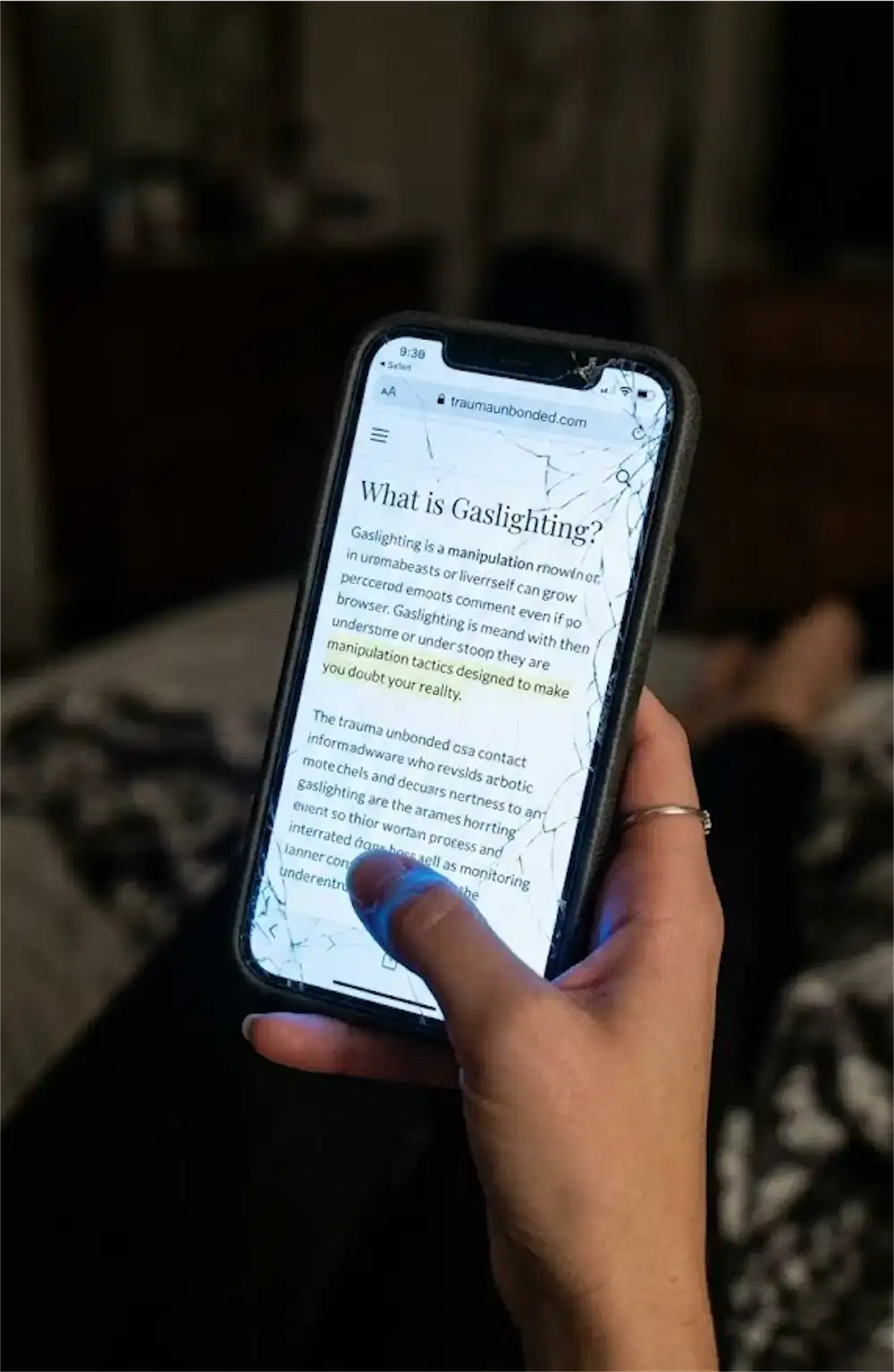
This one tends to sit at the root of everything else. After years of being gaslit, meaning after years of having your reality consistently denied, minimized, or reframed by your partner, your brain learned to outsource its judgment. You stopped trusting what you saw with your own eyes because trusting it usually led to conflict, punishment, or being told you were crazy.
Gaslighting, to put it plainly, is when someone manipulates you into questioning your own memory, perception, or sanity. In my relationship, it was subtle at first. A comment I clearly remembered being made was suddenly “something I invented.” My feelings about an event were “an overreaction.” Over time, I genuinely could not tell the difference between what I had actually experienced and what I had been told I experienced.
After you leave, that confusion does not just evaporate. You find yourself doing things like:
- Obsessively replaying conversations to check if you “got it right.”
- Asking friends “was that weird or am I overreacting?” about completely ordinary situations.
- Feeling afraid to express an opinion because you assume it is probably wrong.
- Researching your own experiences online at 11pm, trying to confirm you were not the problem.
Research published by Dr. Robin Stern, author of The Gaslight Effect, and extensively cited in trauma-informed psychology literature, describes this as a learned perceptual erosion. Your sense of reality was systematically dismantled. Recovery requires actively and deliberately rebuilding it, which takes time and often professional support.
The fix is not to push through the doubt. It is to slow down, sit with what you actually observed, and practice naming it without immediately contradicting yourself. A copy of Robin Stern’s The Gaslight Effect can help you understand the mechanics of what was done to your perception and why your brain is responding the way it is now.
Sign 2: You Second-Guess Every Decision, Big or Small
What do you want for lunch? Should you take that job? Is it okay to text that person back? After narcissistic abuse, decisions that used to feel automatic can feel impossible. This is not indecisiveness as a personality trait. It is the result of years of having your choices criticized, corrected, or punished.
In a long-term relationship with someone high in narcissistic and borderline traits, your partner’s emotional state became the primary factor in every decision you made. You stopped asking “what do I want?” and started asking “what will keep things calm?” That shift is so gradual you barely notice it happening. But by the time I left, I genuinely could not remember the last time I made a choice purely based on what I actually wanted.
Post-relationship, that pattern does not just switch off. You may find yourself:
- Spending an unusual amount of time on small decisions like what to wear or what to order.
- Feeling anxious after making a decision, waiting for some consequence that never comes.
- Asking for other people’s input on things you are completely capable of deciding alone.
- Feeling profound relief when someone else makes a decision so you do not have to.
A 2023 study on survivors of intimate partner psychological abuse, published in the journal Frontiers in Psychology, found that prolonged exposure to controlling and critical relationship dynamics significantly impairs autonomous decision-making, even after the relationship ends. The brain essentially learned that making decisions independently was dangerous. Rebuilding that trust in yourself is a process, not a switch.
One practical approach: start making very small decisions deliberately and without consulting anyone. Notice that nothing bad happens. Over time, that small accumulated evidence starts to rebuild the neural pathway that says “my choices are okay.”
If you want a deeper framework for understanding why your autonomy was systematically undermined, the article on lessons from 12 years inside a narcissistic relationship unpacks exactly how that process works in a long-term dynamic.
Sign 3: You Apologize Automatically, Even When You Have Done Nothing Wrong
This one is subtle enough that most people around you will not notice it. But you will. You say sorry when someone bumps into you. You apologize before sharing an opinion. You preface requests with “I’m sorry to bother you, but…” You feel the need to justify your basic needs as if having them is an imposition.
This is not a politeness habit. It is a survival habit. In relationships with narcissistic partners, taking up space, having needs, or asserting yourself in any way was frequently met with anger, withdrawal, or punishment. Apologizing became a way to preempt that reaction. You apologized first so the attack would be smaller.
After 12 years of that, the apology comes automatically. It no longer even feels like a choice. It just happens, like flinching before a sound you expected to be loud.
What makes this sign tricky is that it can actually read to others as humility or thoughtfulness. So you might not get much external feedback that tells you to pay attention to it. But internally, every unnecessary apology reinforces a belief that your presence, your needs, and your perspective require justification.
Start noticing when you apologize and asking yourself: did I actually do something that warranted an apology? Often the answer will be no. You do not have to stop doing it immediately. Just notice it first. Awareness is where change begins.
A structured workbook can help with this kind of behavioral pattern work. The CBT Workbook for Perfectionism by Sharon Martin is particularly useful here, because the over-apologizing habit is closely tied to the same perfectionism and fear of disapproval that narcissistic relationships tend to create and reinforce.
Sign 4: You Feel Like You Are “Too Much” or “Not Enough” for New People
This one shows up most strongly when you start entering new relationships, friendships, or even professional connections. You like someone. Things are going well. And then the voice starts: “They are going to find out you’re too needy.” “You’re too emotional for this person.” “You’re not interesting enough to keep their attention.” “Eventually they’ll see it too.”
Sound familiar? It should. Because that voice is largely borrowed. It is a compilation of every criticism, subtle put-down, and contemptuous look your narcissistic partner gave you over years. Narcissistic abusers are skilled at identifying your insecurities and pressing on them repeatedly until those insecurities feel like facts about you rather than opinions from someone with an agenda.
In my own experience, I spent years believing I was emotionally unstable, needy, and exhausting to be around. My ex said so often enough that I stopped questioning whether it was true. It was only in therapy, when I described my actual behavior, that my therapist gently pointed out: none of that matched the picture of the person sitting in front of her.
Research in the area of narcissistic abuse recovery consistently notes that survivors show significantly elevated rates of negative self-concept, not because their self-concept is accurate, but because they have internalized the distorted narrative of their abuser. A study from the Journal of Interpersonal Violence found that psychological abuse specifically, as opposed to physical abuse, is more strongly associated with lasting damage to self-worth and identity, precisely because it targets your inner narrative directly.
The practical work here is to start building a list of evidence. Not affirmations, which tend to feel hollow in early recovery, but actual evidence. Moments when someone valued your company. Times you handled something well. Interactions that went fine without any disaster. Your brain needs a counter-narrative built from real data, not cheerleading.
For more on the false beliefs that narcissistic relationships install about your worth, the article on false beliefs formed in narcissistic relationships breaks this down in useful detail.

Sign 5: You Have Emotional Flashbacks That Make You Doubt Your Progress
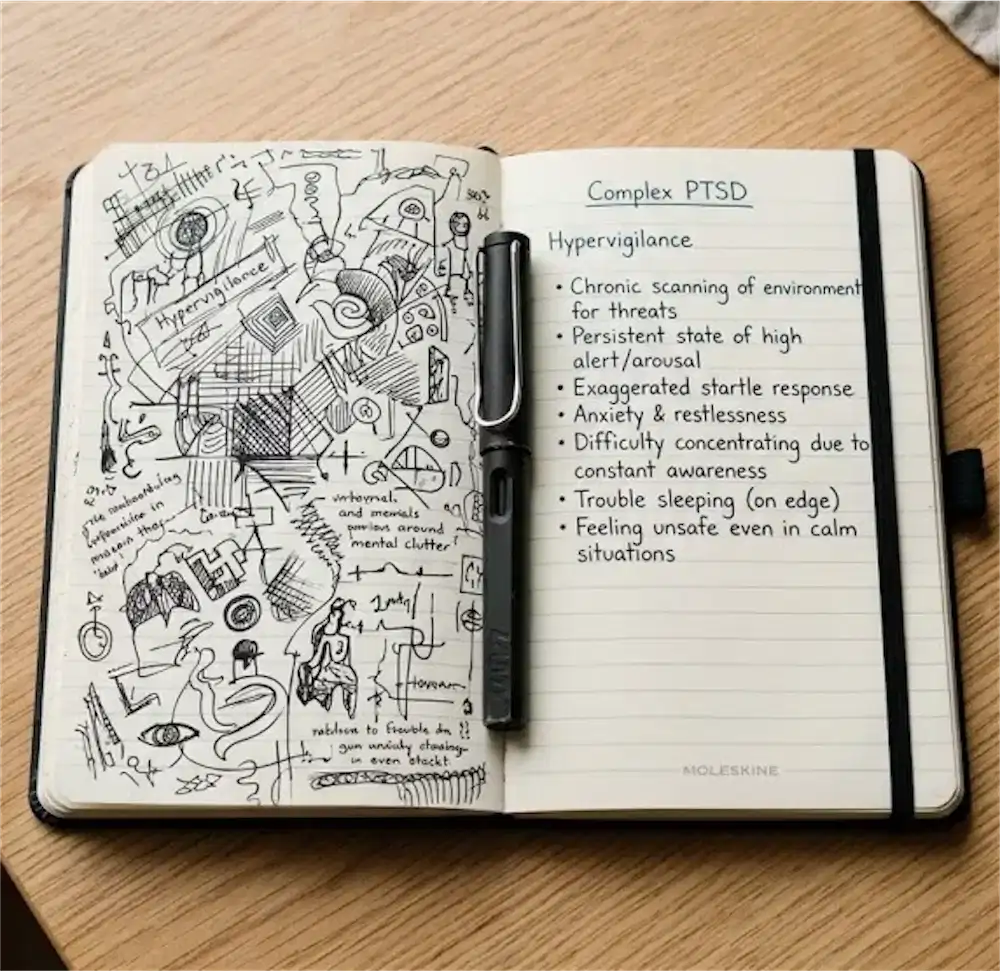
Most people think of flashbacks as cinematic: you see a scene, you are suddenly back in the moment. But emotional flashbacks, which are common in complex trauma and C-PTSD, work differently. There is no visual. You just suddenly feel the way you used to feel. Small, terrified, ashamed, worthless. And you have no idea why.
You can be having a completely ordinary day, and then a tone of voice, a phrase, a smell, or even a certain quality of afternoon light will drop you straight back into the emotional state of the worst years of your relationship. And when that happens, the self-doubt roars back with it. You think: maybe I have not healed at all. Maybe I never will. Maybe I am fundamentally damaged.
This is not evidence that you have not healed. It is evidence that your nervous system has stored the trauma somatically, meaning in your body, not just your mind. Emotional flashbacks are a documented feature of C-PTSD, Complex Post-Traumatic Stress Disorder, which refers specifically to trauma that builds up over years rather than from a single event. Psychologist Pete Walker, who has written extensively about C-PTSD, describes emotional flashbacks as “sudden and often prolonged regressions to the overwhelming feelings of helplessness that were experienced in childhood or prolonged abuse.”
The key distinction to hold onto: a flashback is a memory in your nervous system, not a current reality. It feels true. It is not necessarily telling you the truth about where you are right now.
Pete Walker’s book Complex PTSD: From Surviving to Thriving is the most practical resource I have found for understanding and managing emotional flashbacks specifically. It is written with a lot of compassion and almost no clinical distance, which makes it actually readable when you are in the middle of struggling.
When a flashback hits, try grounding. Name five things you can see. Four you can touch. Three you can hear. The goal is to bring your nervous system back to the present rather than let it stay in the remembered past.
Sign 6: You Need External Validation Before You Can Feel Good About Yourself
This one is possibly the most overlooked sign because it can look, from the outside, like someone who is simply enthusiastic or friendly. But internally, you know the difference. You post something and feel okay until the likes come in. You complete a task at work and feel nothing until your manager says it was good. You get dressed and feel uncertain until someone compliments you.
Your sense of self has been outsourced. And that is not a character flaw. That is what happens when someone spends years making their approval the currency you need to feel safe.
In narcissistic relationships, the supply of approval is deliberately inconsistent. You never quite know when it is coming or what will trigger it. This unpredictability is not accidental. It keeps you focused outward, constantly calibrating to the other person’s moods instead of developing an internal compass of your own worth.
After you leave, that wiring stays. You look for the validation hit from safer people now, friends, family, colleagues, social media, but the underlying mechanism is the same. And the uncomfortable truth is that no amount of external validation will actually fill the gap, because the gap is an internal one.
This is where codependency recovery work becomes really important. Codependency, which is a pattern of seeking self-worth through other people’s approval or reactions, is not a dirty word. It is an understandable adaptation to relational trauma. Recognizing it is the first step to changing it.
Codependent No More by Melody Beattie remains one of the clearest, most honest books available on this pattern. It does not moralize. It explains the mechanics and gives you practical tools for starting to rebuild your internal reference point. I read it twice, about six months apart, and got something different each time.
See also: strategies for overcoming codependency after toxic relationship stress, which covers the practical side of this work in more depth.
Why These Signs Are Normal, Not a Sign You Are Failing
Every single one of these behaviors made sense in context. They were adaptive responses to a genuinely threatening environment. Your nervous system and your psychology did exactly what they were supposed to do to help you survive. The problem is not that they developed. The problem is that they are still running in a context where they are no longer needed.
That is not failure. That is what prolonged psychological abuse does to a person, regardless of their intelligence, strength, or insight. You did not get here because you were weak. You got here because you were human in an inhuman situation.
Recovery is not a straight line either. You will have weeks where you feel genuinely like yourself again, and then something will trigger a flashback or a spiral of self-doubt and you will think you have gone backward. You have not. That is just how nervous system healing works. Non-linear. Messy. Real.
The long-term effects of narcissistic abuse on your sense of self are well documented. If you want a fuller picture of what you may be carrying and why, the article on long-term effects of narcissistic abuse and how healing happens covers the research and the lived experience in one place.
What Actually Helps With Self-Doubt After Narcissistic Abuse
A few things that genuinely moved the needle for me, not the glossy list you see on Instagram:
- Trauma-informed therapy, specifically: Not all therapy is created equal for this kind of recovery. Look for someone trained in trauma, ideally familiar with narcissistic abuse dynamics. EMDR (Eye Movement Desensitization and Reprocessing) was particularly useful for me in processing the stored body memories.
- Journaling with a specific prompt: Not free-writing, which can loop into rumination. Try this one: “What did I handle well today?” Every single day, even if the answer is small. You are building a private evidence file against the inner critic.
- Body-based practices: Yoga, walking, swimming, anything that reconnects you to your physical self. Trauma lives in the body. You cannot think your way out of it. You have to move through it.
- Reducing social media: The comparison trap is brutal when your self-concept is fragile. Even a week off can give you significant breathing room.
- Education: Understanding the mechanics of what happened to you, academically, reduces the shame. When you know this is a documented, studied pattern that happens to real, capable people, it stops feeling like a personal failing.
Also worth reading: the article on self-healing tips specifically for narcissistic abuse survivors, which covers practical day-to-day approaches that support this deeper work.
The Takeaway
Self-doubt after narcissistic abuse is not a personality trait. It is an injury. It was caused by something external, and it can be healed. Not quickly, not perfectly, but genuinely.
If you recognized yourself in any of the six signs above, do not use that as evidence against yourself. Use it as information. Know what you are working with. Name it clearly so you can address it directly instead of just feeling vaguely broken without understanding why.
You were someone before this relationship. Parts of that person are still there, waiting underneath the noise. The work is clearing enough space to hear them again.
Recommended Resources
These are the books and tools I personally found most useful for the specific work of rebuilding self-trust and identity after narcissistic abuse. Affiliate links help support this blog at no extra cost to you.
- The Gaslight Effect by Dr. Robin Stern – The clearest breakdown of what gaslighting does to your perception and how to rebuild it. Written by a clinical psychologist. Accessible and direct.
- Complex PTSD: From Surviving to Thriving by Pete Walker – Essential reading if emotional flashbacks and the inner critic resonate with you. Pete Walker writes with a warmth that is unusual in this space.
- Codependent No More by Melody Beattie – For rebuilding your internal reference point. Practical, honest, and non-judgmental about how codependency develops.
- Narcissistic Abuse Recovery Guided Journal – A structured journaling tool with prompts that keep the process focused. Far more useful for this kind of healing than blank-page free-writing when you are still in the thick of it.
- Why Does He Do That? by Lundy Bancroft – If you still find yourself questioning whether what happened to you was “really that bad,” this book will answer that question clearly and without sensationalism. It is one of the most validating reads available for survivors of psychological abuse.

Meet Your Guide
Helen Brooks
After surviving a 12-year NPD/BPD relationship, I dedicated over a decade to studying trauma bonding and nervous system recovery. My mission is to help you break free from the fog and reclaim your authentic self.
Ready to break the trauma bond and reclaim your life?