How to Recover from 12 Years of BPD Relationship Trauma in 12 Months: 2026 Guide
Twelve years is a long time to be inside something that was slowly taking you apart.
When I finally left my relationship with a partner who had both borderline personality disorder and narcissistic traits, I didn’t feel free. I felt completely hollowed out. I had lost my friendships, my hobbies, my sense of humor, and honestly, most of my ability to trust my own memory. I didn’t know who I was outside of that relationship. I wasn’t even sure there was a “me” left to recover.
If that sentence hits close to home, keep reading. Because what I’m about to share is the actual recovery map I wish someone had handed me on day one. Not a motivational poster. A real, month-by-month framework grounded in psychology, therapy, and the kind of lived experience that only comes from having spent over a decade inside a BPD-driven trauma cycle.
Twelve months sounds fast. And honestly, it’s not a finish line so much as a meaningful turning point. What happens inside those months, if you do the work with any consistency at all, is that you start to feel like yourself again. Not the version of you that existed inside that relationship. The one who existed before it.
What BPD Relationship Trauma Actually Does to Your Mind and Body
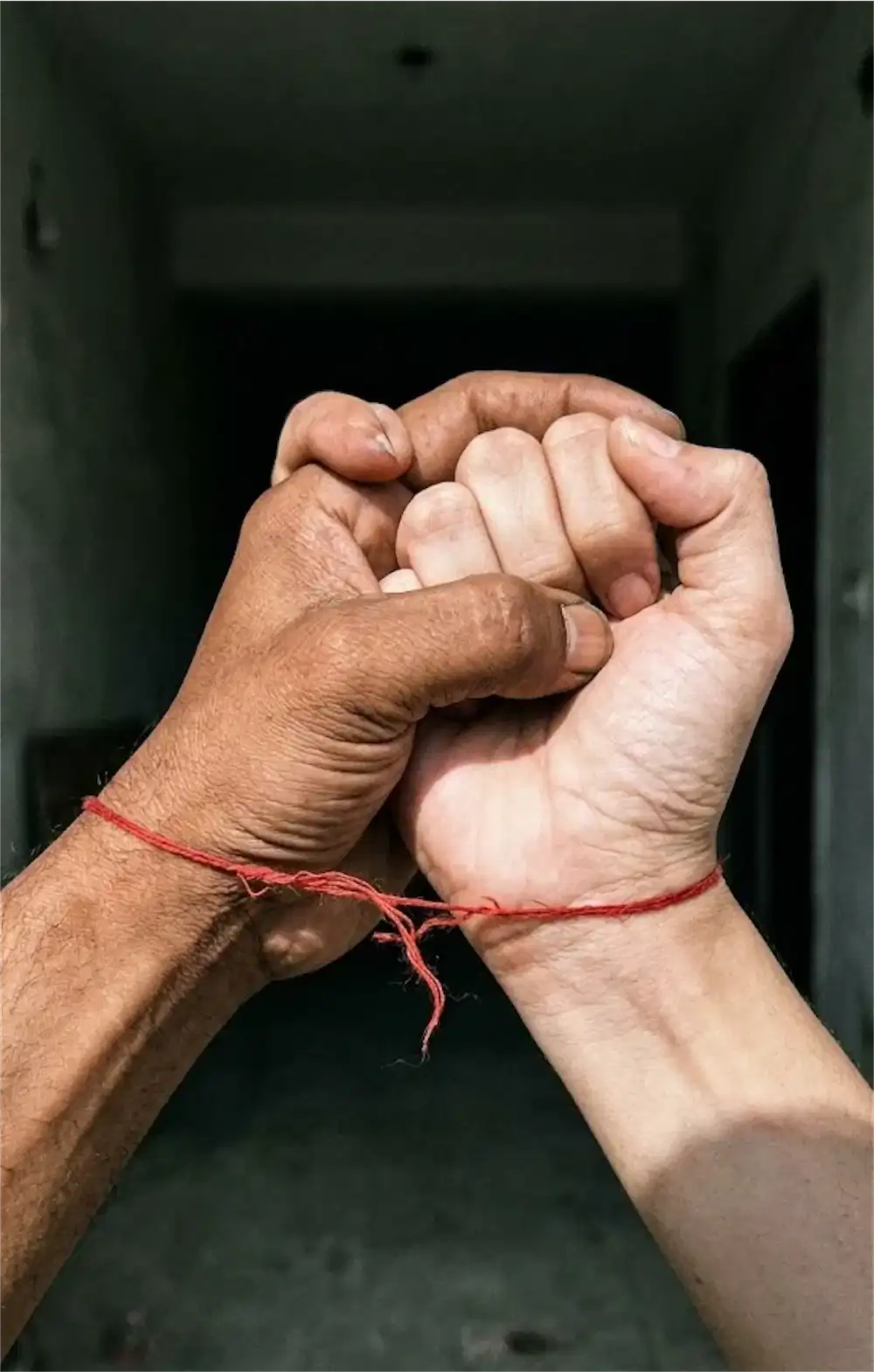
Before we get into the monthly framework, let’s be clear about what we’re actually dealing with. Because if you’ve spent years with someone who has borderline personality disorder, the damage isn’t only emotional. It’s neurological, physiological, and deeply relational.
Borderline personality disorder is characterized, at its core, by extreme emotional dysregulation, fear of abandonment, unstable self-image, and intense, chaotic interpersonal relationships. According to the National Institute of Mental Health, people with BPD often experience “wide mood swings, an unstable self-image, and behavior that can seem impulsive and reckless.” In a long-term relationship, this doesn’t just affect the person with BPD. It fundamentally reshapes the nervous system of their partner.
Living with someone in active BPD symptoms for years produces something that looks a lot like C-PTSD. Complex Post-Traumatic Stress Disorder, which is different from standard PTSD, develops from prolonged, repeated trauma rather than a single event. According to Pete Walker, MFT and author of Complex PTSD: From Surviving to Thriving, survivors of long-term emotional abuse often experience “emotional flashbacks,” sudden and intense emotional states from the past that are triggered by present-day situations, without any accompanying visual memory. That’s why something as small as a certain tone of voice or a door slamming can send you straight back into panic mode months after the relationship ends.
Here’s what twelve years of that cycle does in practice:
- Hypervigilance: You become constantly alert to other people’s moods, scanning for danger even in safe environments. This is exhausting and it doesn’t switch off automatically after the relationship ends.
- Self-erasure: Years of walking on eggshells trains you to suppress your own needs, opinions, and even your sense of humor, anything that might trigger a reaction.
- Identity diffusion: When you’ve spent years adapting yourself to someone else’s emotional weather, you genuinely lose track of who you are and what you actually want.
- Trauma bonding: The cycle of idealization and devaluation that is typical in BPD relationships creates a neurological bond that functions similarly to addiction. This is why leaving doesn’t automatically bring relief.
- Disrupted attachment: Long-term exposure to chaotic love distorts your baseline for what relationships feel like, making stable, calm connection feel boring or somehow wrong.
Understanding what you’re actually healing from matters. Not to label yourself as broken, but because different kinds of damage need different kinds of repair. And most generic “breakup advice” was not written for this situation.
For a deeper look at the physical dimension of all this, the article on physical health symptoms from a toxic relationship covers what prolonged stress does to the body in ways most people don’t connect to their relationship history.
Months 1 and 2: Stop the Bleeding and Stabilize
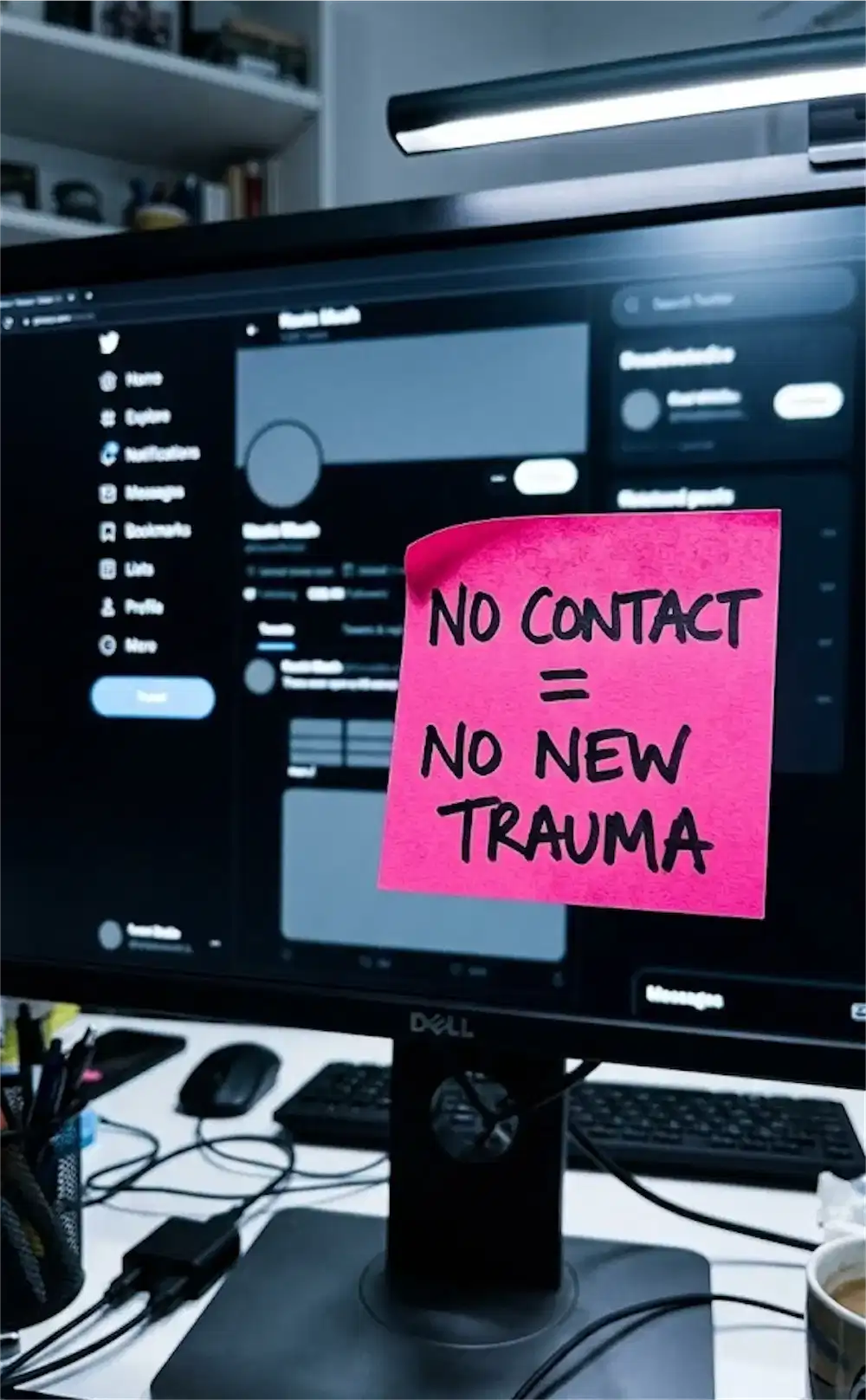
The first two months are not about healing. They’re about stabilization. If you’re still in the acute phase of the breakup, your nervous system is in survival mode. You are not going to have breakthroughs right now. You are going to survive the day. That’s the actual goal for this period, and it’s enough.
No Contact Is Not Optional
If you came from a BPD relationship, you already know how impossible this sounds. People with BPD often use extreme measures to prevent abandonment, including threats, desperate pleas, rage episodes, and sudden switches to the idealized version of themselves that first drew you in. The hoovering, which is the attempt to suck you back in after a breakup, can be relentless.
But here is the hard truth: every time you respond, every time you check their social media, every time you engage with a text that “just asks one question,” you restart the trauma cycle at the neurological level. The wound cannot close if you keep reopening it.
Block on every platform. Mute the number if full blocking feels legally or logistically complicated. Ask a trusted friend to be your accountability person for the first few weeks. The practical details of how and why this works are covered in the why no contact works guide, and I’d suggest reading it during this phase.
What to Focus on in Months 1 and 2
- Sleep: Prioritize it aggressively. Your nervous system regenerates during sleep. If your sleep is destroyed, nothing else in this process will work well. Talk to a doctor if needed.
- Food and basic movement: Not a fitness plan. Just eating something real every day and walking outside for 20 minutes counts as a win right now.
- One safe person: Identify one person you can call when the pull to reach out becomes overwhelming. You don’t need a full support network yet. One person is enough.
- One therapist: If you can access therapy, start now. You want someone with experience in trauma, personality disorders, and attachment. Ask specifically about their experience with clients from BPD relationships.
- No major decisions: Don’t move cities, don’t start a new relationship, don’t quit your job. Your judgment is genuinely compromised in the acute phase of trauma. Give it time.
In my first two months, I white-knuckled through most days. I cried at completely unpredictable moments. I sometimes sat in my car in a parking lot for twenty minutes because I couldn’t make myself go inside and be alone. That’s okay. That’s what this phase looks like. The goal is not to feel better yet. The goal is to stop the exposure.
👉 Stop Walking on Eggshells by Paul Mason and Randi Kreger is the first book I’d recommend reading in this phase. It’s written specifically for people in relationships with BPD partners and gives language to experiences most people have never been able to name.
Months 3 and 4: Understanding What You Actually Lived Through
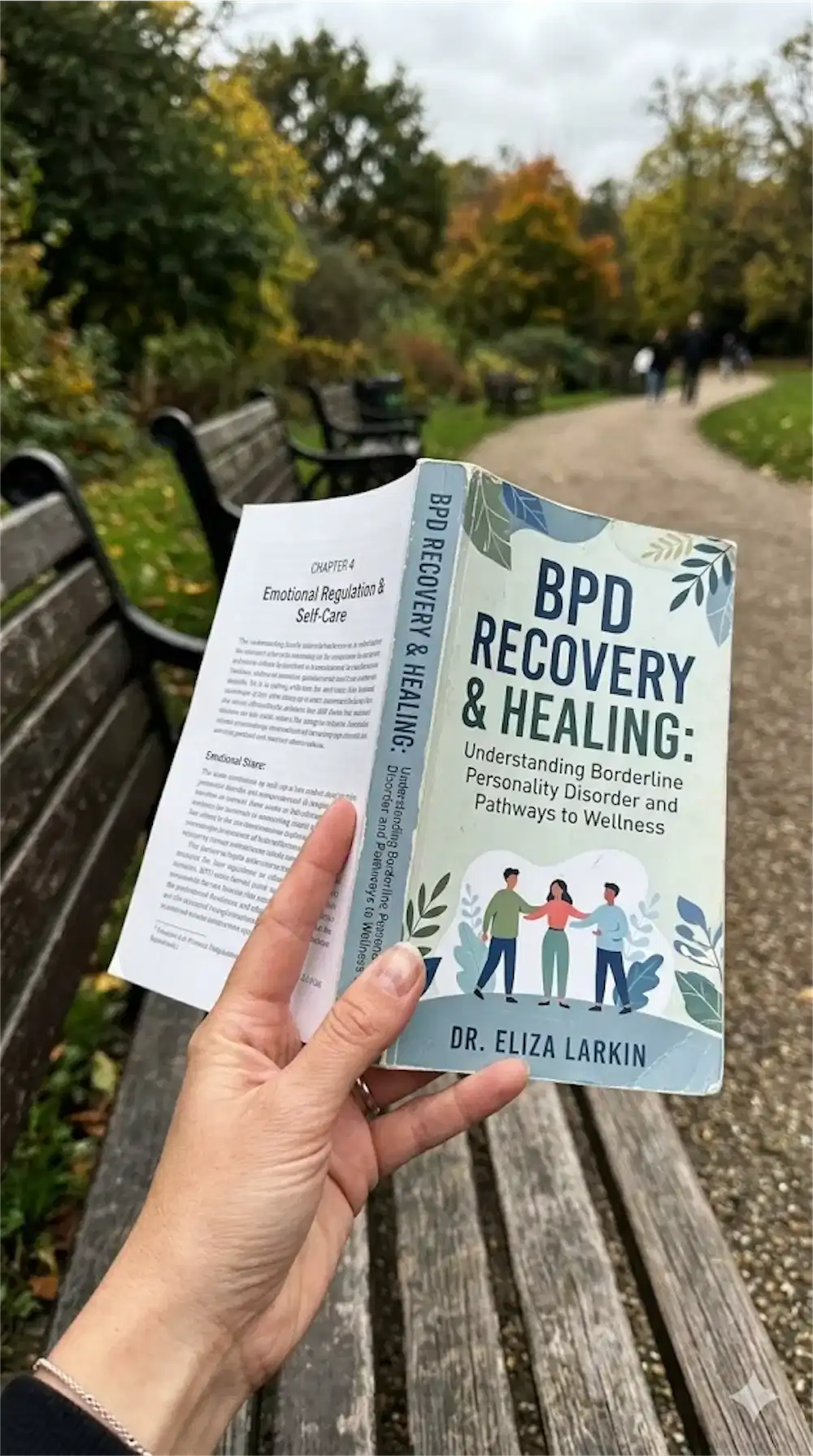
By month three, if you’ve maintained any real distance, something starts to shift. The acute panic starts to dull slightly. You might have a few hours in a row where you feel almost okay. This is when the next layer of work becomes possible: understanding.
One of the most disorienting parts of leaving a long BPD relationship is that you can’t make sense of what happened. The relationship felt real. The love felt real. The cruelty felt real. And then it would flip, and the tenderness felt real too. How do you grieve something that was also genuinely harmful? How do you stop missing someone who hurt you repeatedly?
Education is the answer to that question. Not so you can pathologize your ex, but so you can finally give your own experience a coherent narrative. When I started learning about the BPD cycle, specifically the fear of abandonment, the splitting (where a person sees others as all good or all bad with no middle ground), and the emotional dysregulation, so many things from my twelve years suddenly made sense in a way they never had before.
Key concepts to learn in this phase:
- Splitting: This is the BPD tendency to see people, including you, as either completely good or completely bad, with nothing in between. Understanding this explains the emotional whiplash that defined your relationship.
- Favorite person dynamic: In BPD, the partner is often designated the “favorite person,” a role that comes with intense idealization and equally intense reactions when expectations aren’t met.
- Emotional flashbacks: Your own nervous system’s response to triggers is not weakness or “still being attached.” It is a conditioned response that developed over years. It heals with time and the right support.
- Trauma bonding mechanics: Understanding why you feel grief, longing, and even loyalty toward someone who hurt you consistently removes the shame from those feelings and makes them workable.
In therapy during this phase, ask your therapist to walk through what actually happened in the relationship in chronological terms. Externalizing the story, telling it out loud with a witness, does something to the brain that reading alone can’t fully replicate. It moves the experience from raw sensation into processed narrative.
👉 I Hate You, Don’t Leave Me by Jerold J. Kreisman is the most thorough and readable book on what it’s actually like to be in a relationship with someone with BPD. It helped me grieve and make sense of things simultaneously, which is a hard combination to find in a single book.
Months 5 and 6: Reconnecting With Who You Were Before
After twelve years in a relationship where your emotional energy was almost entirely directed at managing someone else’s internal world, the concept of “who am I?” is not a cliche. It’s an actual problem. You genuinely don’t know.
In my case, I had stopped playing guitar around year three. Stopped seeing certain friends around year five. Stopped having opinions about restaurants, movies, where to spend holidays. Little by little, in the way that always happens gradually in these relationships, I had made myself smaller and smaller to avoid triggering a crisis.
Months five and six are about deliberately reversing that.
The framework I used:
- What did you love before this relationship? Write a list. Not what you think you should enjoy now. What you actually enjoyed before. Go back as far as you need to.
- Pick one thing and do it badly: I picked up the guitar again after almost nine years. I was terrible. I didn’t care. The act of doing it, of claiming that space again, mattered more than the result.
- Rebuild one friendship: Choose the person you drifted from, not because the relationship ended but because you were slowly isolated. Send one message. Explain what you can. Most people who genuinely cared about you will respond with more warmth than you expect.
- Start noticing your own preferences again: What do you want for dinner? What movie do you feel like watching? These sound trivial. They are not. Reconnecting with your own preference system is actual identity work.
The therapeutic concept at work here is sometimes called “reclaiming the self.” In BPD relationships specifically, the partner’s emotional instability becomes the organizing principle of the entire household. Everything bends around it. Recovery is the slow process of bending back.
This is also the right time to start a morning pages practice if you haven’t already. Morning pages are three pages of longhand, stream-of-consciousness writing done first thing in the morning, before your analytical brain fully switches on. They are not journaling in the traditional sense. They’re more like a daily drain of the accumulated mental residue from the relationship. The guide on using morning pages to heal a trauma bond explains the method in full detail.
Months 7 and 8: Addressing Codependency and the Patterns That Kept You There
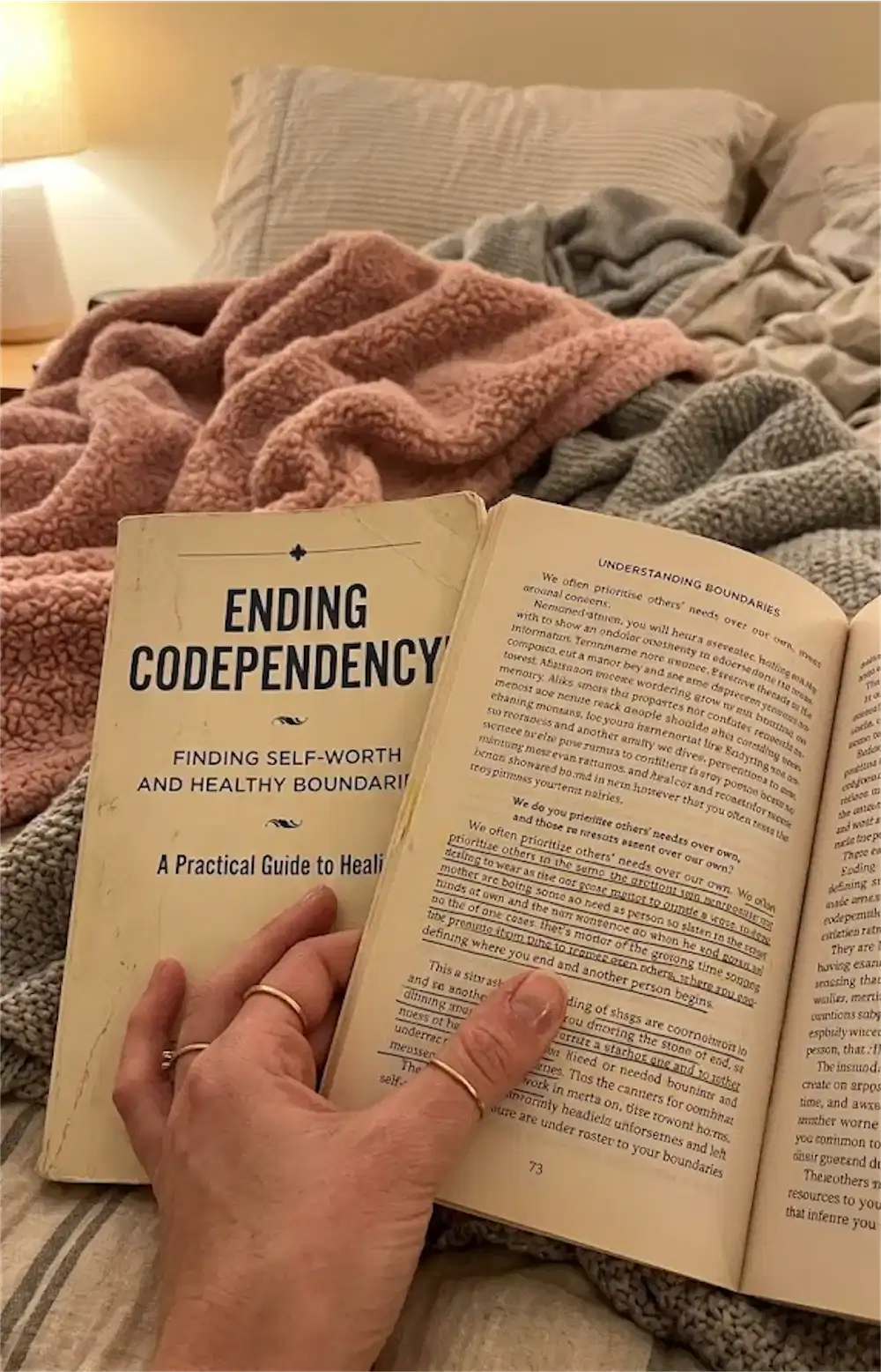
At some point in recovery, usually around this halfway mark, a harder question surfaces: why did I stay for so long?
That question can be a trap if you use it to beat yourself up. But it can also be one of the most useful questions you ever sit with, if you approach it with genuine curiosity instead of self-punishment.
Most people who end up in long-term BPD relationships have something called codependency operating in the background. Codependency, in its simplest form, is a pattern of relating where your sense of self-worth becomes tied to caretaking someone else, managing their emotions, rescuing them from consequences, and organizing your life around their needs.
It often develops in childhood, in homes where a parent was emotionally unpredictable, unwell, or absent, and you learned early that love means managing someone else’s emotional state. A partner with BPD, who genuinely does struggle enormously with emotional regulation, becomes the perfect environment for that old pattern to run on autopilot.
Signs that codependency was part of your relationship dynamic:
- You felt responsible for their emotional state and worked constantly to manage it.
- You stayed through behavior that crossed your values because you believed they “needed” you.
- You suppressed your own needs automatically, without even consciously deciding to.
- Leaving felt selfish, cruel, or impossible even when you knew on some level that you needed to go.
- You identified yourself primarily as their partner, their support, their person, not as a separate individual with your own life.
Naming codependency is not the same as blaming yourself for the relationship. Your partner’s behavior was real. The harm was real. And you had patterns that made it very hard to leave earlier than you did. Both things are true simultaneously, and both deserve attention in recovery.
The detailed work on this is covered in the strategies for overcoming codependency and toxic stress. That article goes into the specific daily practices that actually interrupt codependent patterns, not just the theory of what they are.
👉 Codependent No More by Melody Beattie remains the most practical guide to understanding and interrupting codependency in real time. It’s not new, but what it describes is timeless, and I reread certain chapters multiple times during my recovery.
Months 9 and 10: Rebuilding Physical Health After Chronic Stress
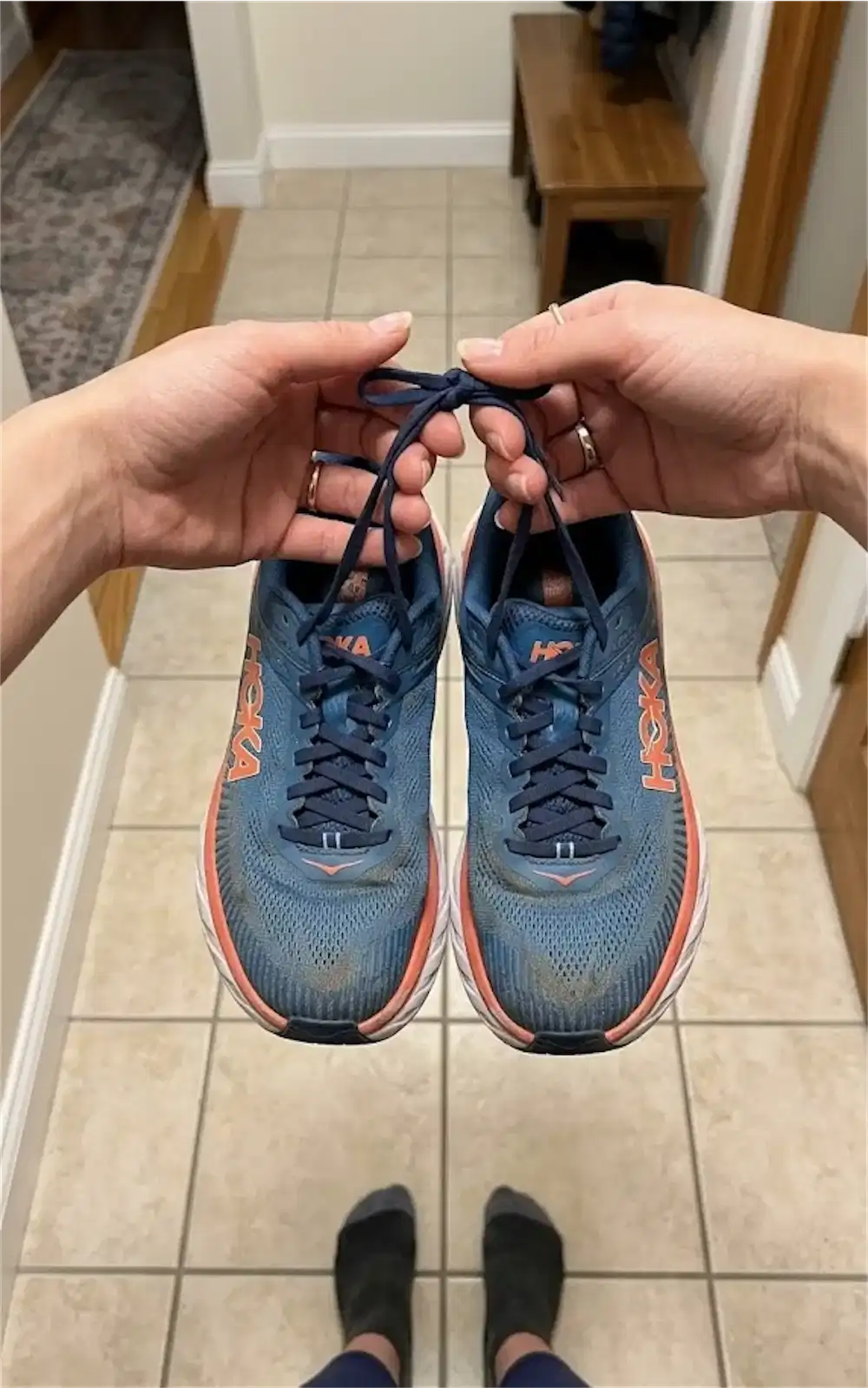
By month nine, if you’ve been doing consistent work, your emotional state has probably stabilized considerably. You’re not in acute crisis every day. You might actually have stretches of feeling genuinely okay. And this is when the physical layer of healing deserves full attention.
Long-term exposure to emotional chaos does measurable things to the body. Cortisol, the stress hormone, stays chronically elevated. This affects the immune system, digestive function, cardiovascular health, sleep architecture, and even inflammatory markers. After twelve years of that, the physical repair work is real and non-trivial.
What to focus on physically in this phase:
Movement That Regulates the Nervous System
This means rhythmic, bilateral exercise: walking, running, swimming, cycling. The bilateral part, meaning your left and right sides alternately engaged, is specifically helpful for trauma processing according to somatic therapy research. You don’t need a gym membership. A 30-minute walk outside every morning is genuinely therapeutic in a neurological sense, not just metaphorically.
Sleep Architecture Repair
If you’ve been in survival mode for years, your deep sleep and REM sleep are probably disrupted. Focus on consistent sleep and wake times, reducing screen exposure in the hour before bed, and creating a genuinely dark and quiet sleep environment. Some people in recovery find magnesium glycinate supplementation helpful for sleep quality; it is gentle, well-researched, and supports the GABA system that calms the nervous system.
👉 Browse magnesium glycinate supplements on Amazon
Nutrition and Anti-Inflammatory Eating
Chronic stress drives systemic inflammation. An anti-inflammatory diet, one that’s high in whole foods, omega-3 fatty acids, and low in processed sugars, directly supports nervous system repair. This isn’t about weight or appearance. It’s about giving a stressed body the materials it needs to recover. Omega-3 supplements (fish oil or algae-based) are among the most consistently researched for mood and inflammation reduction.
👉 Browse omega-3 supplements for mood and inflammation support on Amazon
Somatic Work
Yoga, breathwork, and body-oriented therapy (Somatic Experiencing or EMDR) reach the parts of trauma that talk therapy alone can’t always touch. If you can access a somatic-informed therapist in addition to talk therapy, this phase is the right time to add that layer. The body genuinely stores what the mind couldn’t fully process at the time, and physical practices create pathways for that material to move through and out.
Months 11 and 12: Rebuilding Trust, Connection, and Your Future Self

By month eleven, something that probably feels impossible right now will have quietly happened: you will have started to remember who you are.
Not perfectly. Not completely. But there will be moments, actual moments, where you feel like the version of yourself that existed before all of this. Where you laugh at something and the laugh is real. Where you have an opinion about something and you don’t immediately check yourself. Where you spend an evening alone and it doesn’t feel like punishment.
This final phase is about building forward. Not “getting over it” but building a life that has room for who you actually are. There are a few specific areas that deserve attention here:
Rebuilding Relational Trust
After years of emotional chaos, your nervous system may have learned to distrust calmness. Stable people can feel boring or somehow less real than the intensity you got used to. This is a normal consequence of long-term trauma bonding, and it’s worth naming in therapy explicitly. The goal is not to rush into new relationships. The goal is to practice tolerating stable, mutual, reciprocal connection without the anxiety that it means something is wrong.
Friendships are the right training ground for this. Low stakes, no romance, just the gradual practice of being in a relationship where you are allowed to be yourself without consequence.
The Question of New Relationships
I get asked this a lot: when is it okay to start dating again? My honest answer, based on my own experience and everything I’ve learned since, is: when a quiet, calm, consistent person interests you more than an intense, chaotic one. When you are attracted to steadiness rather than feeling like steadiness is suspicious. That internal shift is the signal. Not a specific amount of time.
Identity Integration
Your recovery experience is now part of you, not a chapter to seal and hide. The self-awareness, the emotional vocabulary, the understanding of attachment and patterns that you developed through all of this, these are real and lasting. Some people use this phase to channel that into something purposeful: support communities, creative work, advocacy, or simply becoming the kind of friend to others in crisis that they wished they’d had.
That’s not mandatory. But it’s worth knowing that the twelve years weren’t only damage. They also produced something in you. The question of what to do with that is yours to answer.
What “Recovered” Actually Looks Like After This Much Time
I want to be honest with you about this, because the word “recovered” can set up an expectation that doesn’t serve anyone well.
Recovered does not mean you never think about it. It doesn’t mean you stopped feeling sad about the years that were lost. It doesn’t mean the relationship left no marks at all.
What recovered looks like, from where I stand now, is this: you can think about the relationship without being consumed by it. You know what your triggers are and you have tools for them. You are genuinely interested in your own life again. You have opinions, preferences, and plans that belong to you. You can sit with a difficult emotion without immediately needing to escape it or suppress it. And you have rebuilt enough self-trust that your own perception of reality doesn’t automatically defer to whoever is in the room with you.
That last one, trusting your own perception of reality, took the longest for me. And it is, I think, the most meaningful marker of actual recovery from a BPD relationship specifically. Because what those relationships often do, above everything else, is make you doubt your own experience of your own life.
When you trust yourself again, you are home.
The article on long-term effects of narcissistic abuse and healing covers the extended timeline of recovery with more clinical detail, and it’s worth reading alongside this guide as you move into the later months of your process.
Recommended Resources
These are the books that carried me through my own recovery from BPD relationship trauma. Each one fills a different gap, and together they cover the emotional, psychological, and somatic dimensions of what you’re healing from.
- Complex PTSD: From Surviving to Thriving by Pete Walker — Pete Walker is a licensed psychotherapist and C-PTSD survivor himself. This book is the most compassionate, practical, and psychologically accurate guide to recovering from prolonged relational trauma I have ever read. If you read only one book in your recovery, this is the one.
👉 Find it on Amazon - Running on Empty by Jonice Webb — Dr. Jonice Webb is a licensed psychologist whose work on childhood emotional neglect directly addresses why so many people from emotionally chaotic childhoods end up in relationships like this one. This book was the missing piece in my recovery that explained the “why me” question without shame.
👉 Find it on Amazon - The Body Keeps the Score by Bessel van der Kolk — Dr. van der Kolk is a psychiatrist and trauma researcher at Boston University School of Medicine. This book explains, in accessible terms, how trauma is stored in the body and why physical approaches to healing are not supplementary but central. Essential reading for anyone in the physical recovery phase.
👉 Find it on Amazon
Some links in this article are affiliate links. If you purchase through them, I may earn a small commission at no extra cost to you. I only recommend books and resources I have personally read or researched and believe are genuinely useful for recovery from BPD relationship trauma.

Meet Your Guide
Helen Brooks
After surviving a 12-year NPD/BPD relationship, I dedicated over a decade to studying trauma bonding and nervous system recovery. My mission is to help you break free from the fog and reclaim your authentic self.
Ready to break the trauma bond and reclaim your life?