Auricular Vagus Nerve Stimulation: Simple Ear Massages to Turn Off the Stress Response
If you are looking for immediate relief from the chronic anxiety of a traumatic breakup, **auricular vagus nerve stimulation** offers a simple, somatic pathway back to peace. Learning how to regulate vagus nerve after emotional abuse is one of the most useful steps you can take to rebuild your nervous system. By using **simple ear massages to turn off the stress response**, you can shift your body out of a state of constant threat without needing expensive equipment or clinical settings. If you want a step-by-step roadmap to reset your nervous system, check out The Somatic Trauma Reset, which provides body-based exercises to release stored survival energy.
For twelve years, I lived with a partner who showed both narcissistic and borderline personality traits. My body was constantly on high alert, waiting for the next sudden outburst or cold shoulder. When that relationship finally collapsed, I was left completely isolated, devoid of hobbies, and feeling deeply miserable. My health was failing, and I did not realize that my nervous system was stuck in a survival loop. It was only through professional therapy and learning about trauma bonds that I began to heal and return to my original, cheerful, and grounded self.
Do you ever feel like your chest is permanently tight, or that you cannot take a full, deep breath? That is your sympathetic nervous system running the show. When we are exposed to toxic dynamics for years, our bodies forget how to feel safe. **Auricular vagus nerve stimulation** acts as an access point to tell your brainstem that the danger has passed.
What Is Auricular Vagus Nerve Stimulation?
Auricular vagus nerve stimulation is a gentle, non-invasive practice that targets the sensory branch of the vagus nerve located in the outer ear. By massaging specific areas of the ear, you send safety signals directly to your brain, helping to quiet the fight-or-flight response.
The vagus nerve is the longest cranial nerve in your body, running from your brainstem down to your abdomen. It controls your parasympathetic nervous system, which is responsible for the “rest and digest” state. Most of this nerve is buried deep inside your chest and neck, but there is one place where a branch of it reaches the surface of your skin: your outer ear.
This surface pathway is called the **auricular branch of the vagus nerve**. When you apply gentle pressure, warmth, or movement to specific parts of your outer ear, you are using a manual form of **vagal nerve stimulation**. This action triggers a cascade of chemical changes that lower your heart rate and calm your breathing.
How Stress Settles in Your Body After Chronic Abuse
During my twelve-year relationship, my body slowly broke down under the weight of unexpressed grief and constant tension. I experienced severe digestive issues, brain fog, and chronic fatigue, which are classic physical health symptoms of a toxic relationship. My mind was trying to survive the psychological warfare, but my body was keeping the score. I did not realize that my autonomic nervous system was completely dysregulated from years of walking on eggshells.
As detailed in research published by the National Institutes of Health, stimulating the auricular branch of the vagus nerve helps lower cortisol and reduce systemic inflammation. When you are recovering from a toxic partner, your brain is stuck in a loop of anticipating threat. Simple somatic techniques, like ear massages, give your brain the tangible, physical proof of safety it needs to power down.
Three Simple Ear Massages to Try at Home

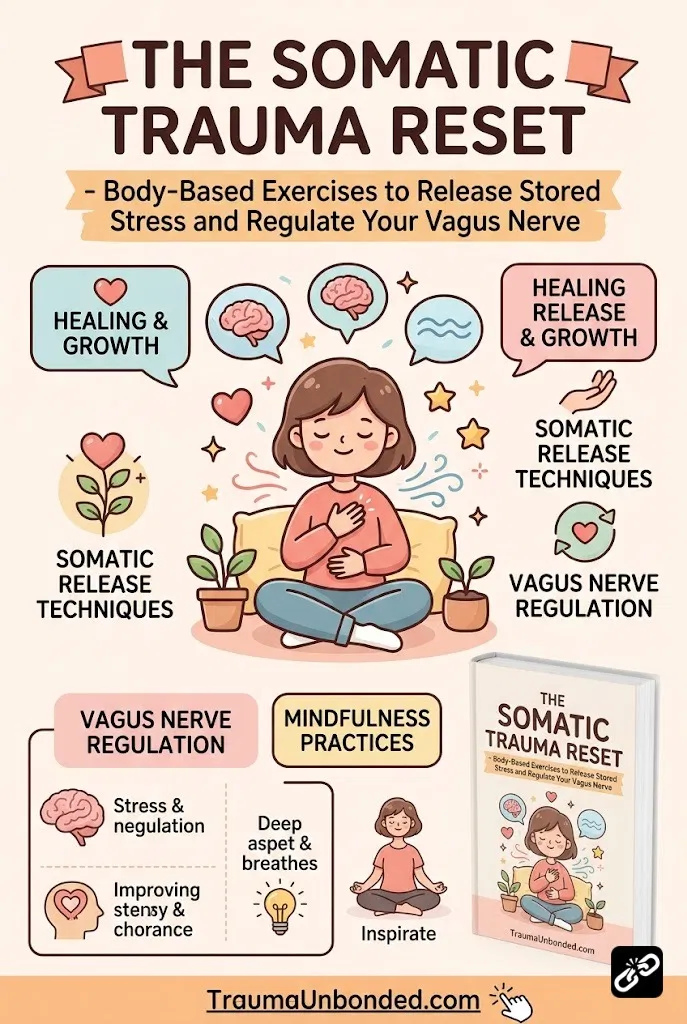
While basic self-soothing tools are incredibly helpful for day-to-day relief, deeply healing a dysregulated nervous system requires a structured, daily somatic plan. To help you move from a constant state of hyperarousal to genuine, lasting peace, I highly recommend using a structured guide designed specifically for trauma survivors. You can find detailed, body-based exercises tailored for your recovery in this workbook:
1. The Tragus Press
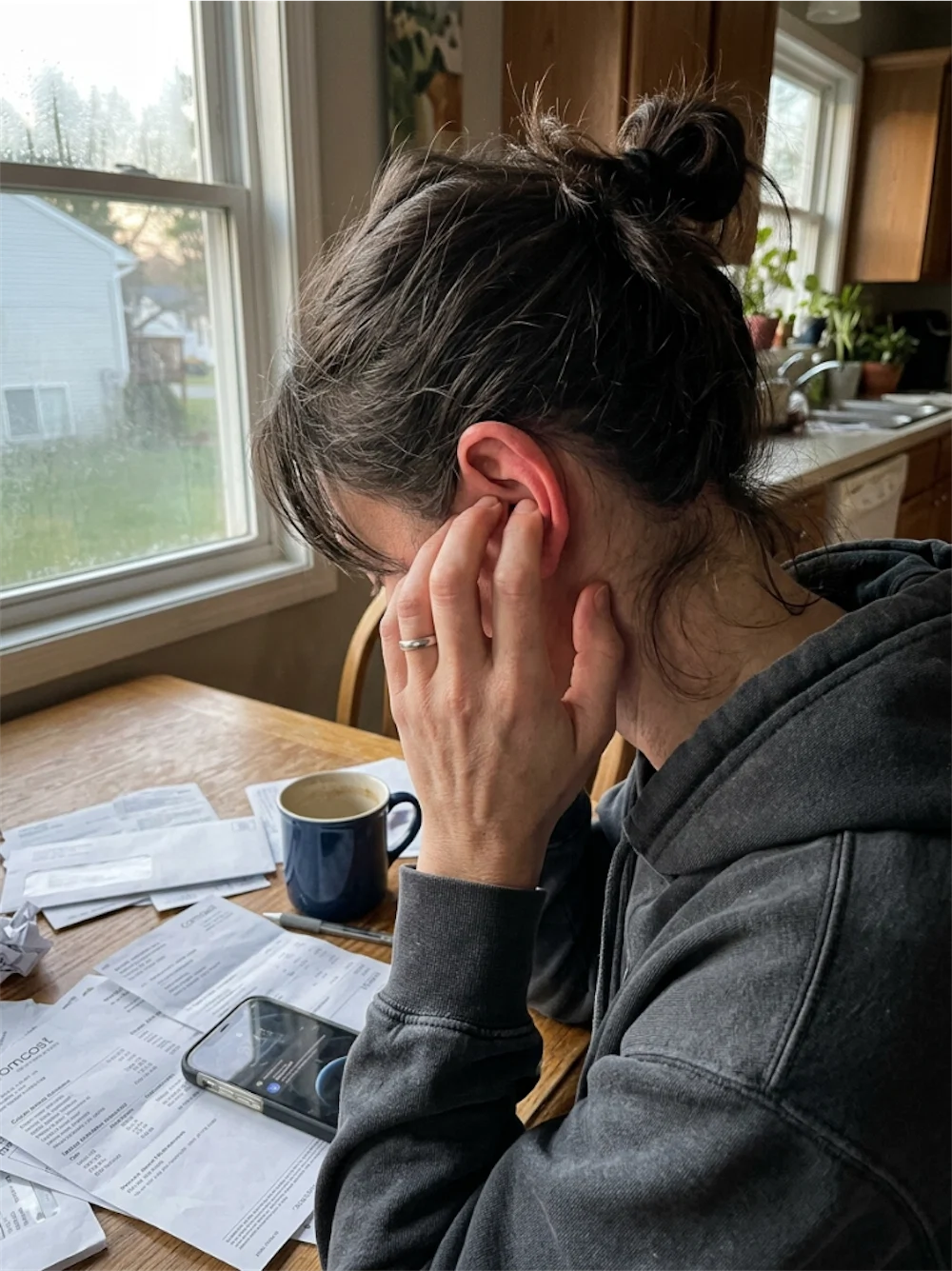
The tragus is the small, fleshy flap of cartilage located right in front of your ear canal. To stimulate this area, gently pinch the tragus between your thumb and index finger. Apply a light, steady pressure and massage it in small, slow circles for one to two minutes. Breathe deeply into your belly as you do this, focusing on the physical sensation of the warmth from your fingers.
2. The Cymba Concha Rub
The concha is the hollow bowl-like part of your outer ear, located right next to the opening of the ear canal. The upper portion, known as the cymba concha, is heavily populated by vagus nerve endings. Place your index finger inside this hollow area and make gentle, circular rubbing motions. Be careful not to press too hard; the skin here is thin, and a soft, rhythmic touch is all it takes to trigger a relaxation response.
3. The Lobule Pull and Stretch
Your earlobe, or lobule, contains a dense network of nerve endings that can help ground your focus. Hold your earlobes between your thumbs and index fingers, and gently pull them downward and slightly outward. Hold this mild stretch for a few seconds, then release. Repeat this motion ten times, pairing each gentle pull with a slow, long exhalation to signal safety to your brain.
Integrating Somatic Practices into Your Daily Healing Routine
When you are recovering from years of psychological abuse, consistency is your greatest ally. These simple ear massages work best when integrated with other nervous system regulation exercises that you practice throughout the day. I used to do these ear massages sitting at my kitchen window every morning, slowly teaching my body that I was finally safe in my own home.
How often should you practice these techniques? I recommend starting with twice a day, or whenever you feel a wave of anxiety, chest tightness, or hypervigilance washing over you. You do not need to spend hours doing this; even two minutes of focused ear stimulation can shift your physiological state. Over time, these small somatic moments build up, helping you rewire your brain’s response to stress.
The journey back to your authentic self after toxic abuse is slow, but your body is incredibly resilient. Your nervous system is not broken; it is simply tired of trying to protect you from past threats. By utilizing gentle somatic tools like **auricular vagus nerve stimulation**, you can actively participate in your own physical and emotional recovery. If you are ready to take the next step and establish a structured routine for your body’s recovery, consider reading and working through The Somatic Trauma Reset to guide you home to yourself.

Meet Your Guide
Helen Brooks
After surviving a 12-year NPD/BPD relationship, I dedicated over a decade to studying trauma bonding and nervous system recovery. My mission is to help you break free from the fog and reclaim your authentic self.
Ready to break the trauma bond and reclaim your life?