Nervous System Regulation Exercises for Chronic Trauma and Stress
Nervous system regulation exercises for chronic trauma and stress saved my life after I finally escaped a twelve-year relationship with a partner who struggled with both NPD and BPD traits. When you live in a constant state of hypervigilance, your body forgets how to feel safe. I remember feeling completely isolated, with no hobbies and a deep sense of misery that seemed permanent. It was through professional therapy and specific trauma-informed healing techniques that I finally found my way back to my original, optimistic self. If you are currently searching for nervous system regulation exercises to help manage the aftermath of a toxic bond, know that your body is not broken, it is just stuck in a survival loop.
Do you ever feel like you are vibrating with anxiety even when nothing is happening? That is the result of years of intermittent reinforcement, where the “hot and cold” nature of your ex-partner kept your brain on a dopamine rollercoaster. In my experience, the gaslighting (when they make you question your own sanity) and the hoovering (when they suck you back in with false promises) don’t just hurt your heart, they actually rewire your brain for chaos. To heal, we have to teach the body that the war is over. This requires more than just talk therapy; it requires physical intervention to calm the vagus nerve.
Understanding the Cost of Chronic Survival Mode
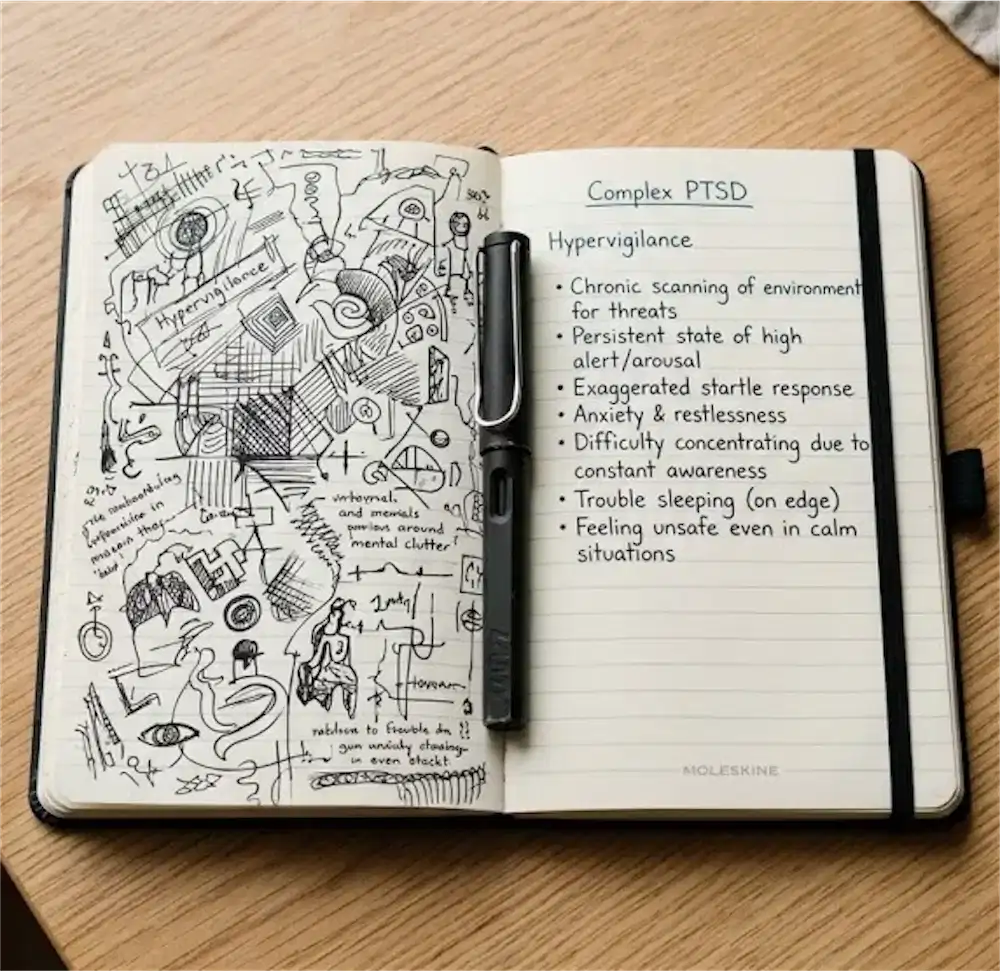
After a decade of narcissistic abuse, my internal alarm system was shattered. I was constantly waiting for the next outburst or the next “silent treatment” that would last for days. This kind of prolonged stress causes your cortisol levels to stay peaked, leading to what many call “trauma brain.” You might find it hard to focus, or you might feel emotionally numb. Have you noticed that you can’t seem to relax even when you are alone in a quiet room?
This happens because your sympathetic nervous system is stuck in the “on” position. To shift back into the parasympathetic state (rest and digest), you need to use specific tools that bypass the thinking mind. One of the most effective ways to do this is through vagus nerve anxiety exercises. These movements send a direct signal to your brain that you are no longer in danger. When I started these, I finally felt the heavy weight on my chest begin to lift for the first time in years.
The Power of the Vagus Nerve in Trauma Recovery
The vagus nerve is like a superhighway connecting your brain to your major organs. When you have been through BPD or NPD abuse, this nerve often loses its “tone.” Improving your vagal tone helps you bounce back from triggers more quickly. Simple things like humming, splashing cold water on your face, or even slow, deep belly breathing can make a massive difference. I used to think these things were too simple to work, but after twelve years of being trauma bonded, simplicity was exactly what my fried brain needed.
Daily Grounding Techniques for Anxiety Relief
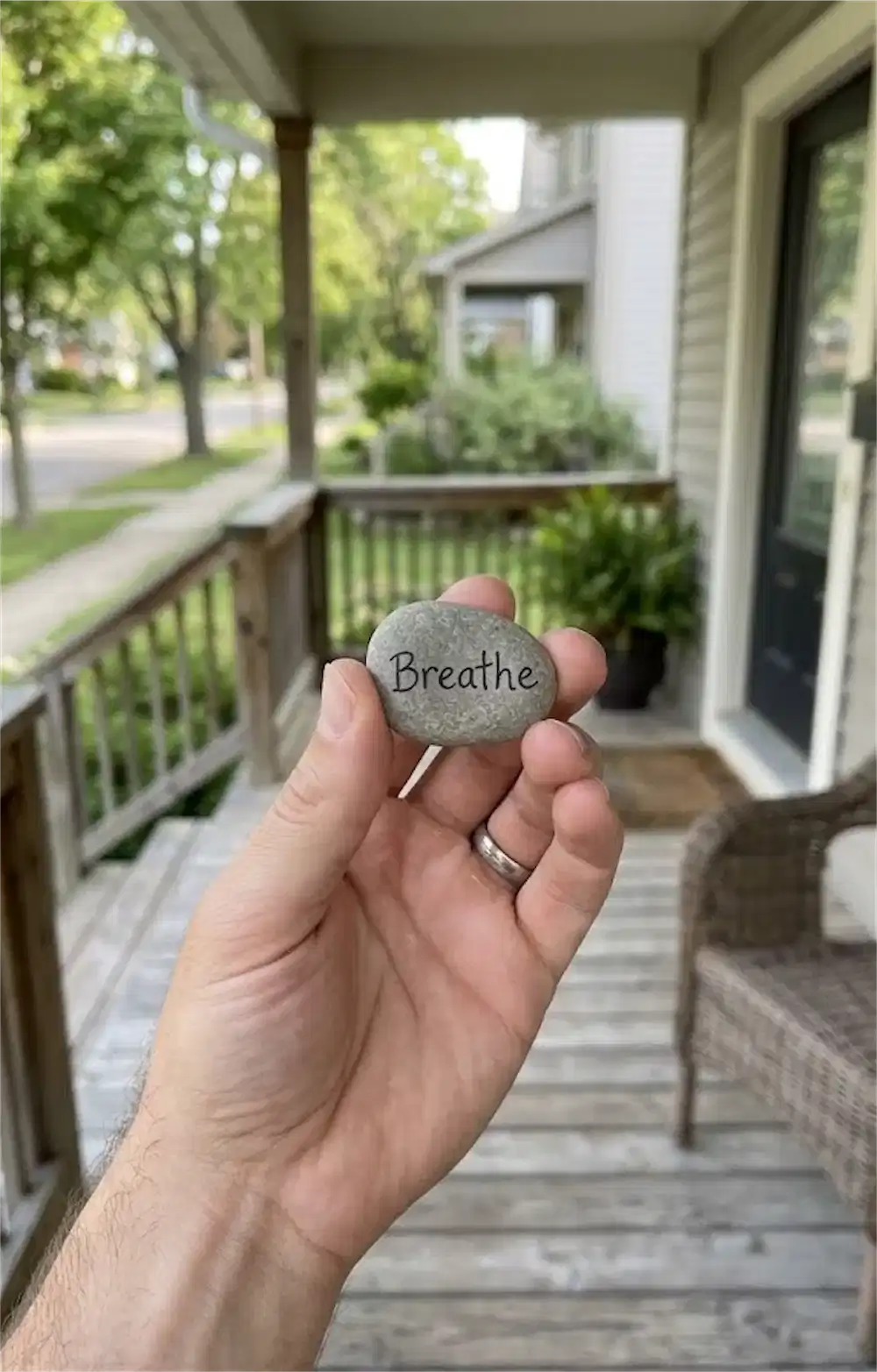
When the rumination starts and you can’t stop replaying the arguments in your head, grounding is your best friend. In the middle of my recovery, I would get hit with waves of panic just thinking about my ex. I felt like I was back in that house, hearing the front door open and feeling my stomach drop. Grounding exercises pull you out of the past and into the present moment. It is about using your five senses to anchor yourself in reality.
Try the 5-4-3-2-1 method. Name five things you see, four things you can touch, three things you hear, two things you can smell, and one thing you can taste. This isn’t just a distraction; it is a way to force your nervous system to acknowledge the safety of your current environment. I found that doing this while sitting on the floor was especially helpful, as the firm pressure of the ground reminded me that I was stable and independent once again.
If you find that your stress is manifesting as physical tension in your lower body, you might want to look into a somatic trauma hip release. We often store our deepest survival fears in the psoas muscles. After years of being ready to run from a conflict, those muscles become tight and painful. Gently stretching and allowing your body to shake can release that pent-up energy. It might feel strange at first, but the emotional relief that follows is incredible.
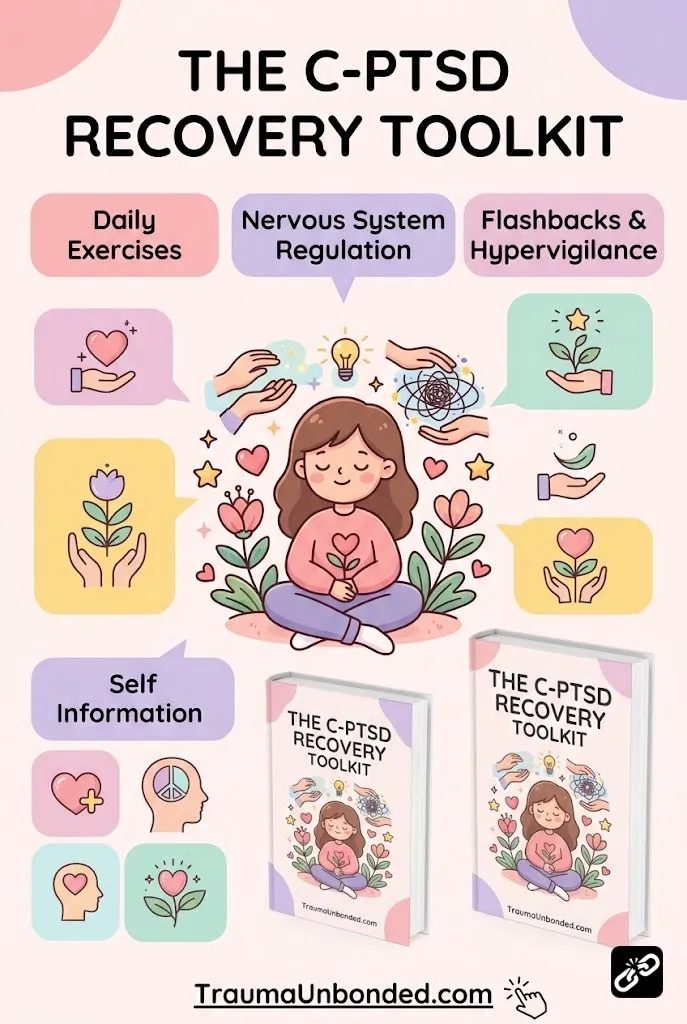
If you’re feeling overwhelmed by constant triggers and need a structured way to calm your body every single day, this toolkit is the exact resource I wish I had when I was first starting my recovery journey.
Somatic Exercises to Break the Trauma Bond
A trauma bond is a physiological addiction to the person who abused you. Your body is literally craving the highs of the love bombing to offset the lows of the discard. When you go No Contact, your nervous system goes through a literal withdrawal process. You might shake, sweat, or feel like you can’t breathe. This is where somatic experiencing comes in. Instead of just thinking about the pain, you learn to feel where it lives in your body and move through it.
One technique I used often was “orienting.” Slowly turn your head from side to side and really look at the corners of the room. Notice the colors, the textures, and the light. This tells your reptilian brain that there are no predators hiding in the shadows. For someone who spent twelve years checking their phone every thirty seconds for a “rage text,” this simple act of looking around and seeing peace is incredibly regulating. It helps you reclaim your personal space and safety.
Another powerful tool is the “butterfly hug.” Cross your arms over your chest and alternately tap your shoulders. This bilateral stimulation helps the left and right hemispheres of your brain process traumatic memories. It is a way of self-soothing that doesn’t require anyone else’s permission. I used to do this in my car after seeing a “flying monkey” or someone who reminded me of my ex. It kept me from spiraling into a panic attack and helped me stay grounded in my new life.
Building a Sustainable Routine for Long-Term Healing
Recovery is not a straight line, and there will be days when you feel like you’ve taken ten steps back. During my first year of trauma-informed healing, I had to be very patient with myself. I had forgotten what it was like to have a hobby or to simply enjoy a cup of coffee without feeling guilty. Nervous system regulation is a daily practice, not a one-time fix. You are essentially teaching an old, tired dog new tricks, and that takes time and a lot of kindness toward yourself.
Try to incorporate at least one regulation exercise into your morning and evening routines. Maybe it is a five-minute stretch or a cold shower. Maybe it is a trauma recovery exercise guide that you follow along with. The goal is consistency. Over time, your body will start to trust you again. You will find that you are no longer easily startled, and your original self-the person who was cheerful and optimistic-will start to peek through the clouds. I never thought I would feel happy again, but here I am, living a life that is mine alone.
Are you ready to stop living in survival mode? It starts with one breath and one small movement. You have the power to rewire your brain and find peace after the storm. The 12-year nightmare I lived through is a memory now, not my reality, and the same can be true for you. Focus on your body, stay consistent with your nervous system regulation exercises for chronic trauma and stress, and watch how your world begins to change for the better.
To deepen your practice and find more specific tools for your journey, I highly recommend looking into The C-PTSD Recovery Toolkit. It provides a structured path to reclaiming your calm and ending the cycle of internal chaos once and for all.

Meet Your Guide
Helen Brooks
After surviving a 12-year NPD/BPD relationship, I dedicated over a decade to studying trauma bonding and nervous system recovery. My mission is to help you break free from the fog and reclaim your authentic self.
Ready to break the trauma bond and reclaim your life?