Vagus Nerve Exercises to Stop Post-Trauma Anxiety Fast
There’s a specific kind of anxiety that comes after leaving a toxic relationship. It’s not the regular “I’m stressed about work” kind. It’s the kind where your body won’t stop bracing for impact even though the danger is technically gone. Your chest is tight. Your stomach is in knots. You jump at your phone buzzing. You can’t sleep because your brain keeps scanning for threats that aren’t there anymore.
I lived like that for months after ending my 12-year relationship with someone who had both narcissistic and borderline personality traits. Even after I went no contact, my body refused to believe I was safe. My therapist told me something that changed everything: “Your thinking brain knows it’s over, but your nervous system doesn’t.” That’s when I learned about the vagus nerve and how somatic exercises can reset your body’s stress response from the inside out.
If you’ve been searching for how to stop anxiety after narcissistic abuse or why your body still feels stressed after leaving a toxic relationship, this is where the answers start.
What Is the Vagus Nerve and Why Does It Matter After Trauma?
The vagus nerve is the longest cranial nerve in your body. It runs from your brainstem all the way down through your chest and into your abdomen. Think of it as the communication highway between your brain and your organs. It controls your heart rate, digestion, breathing, and your ability to calm down after stress.
Here’s what nobody tells you when you leave an abusive relationship: years of walking on eggshells, being gaslit (told your reality isn’t real until you start doubting your own memory), and enduring unpredictable emotional explosions literally rewire your nervous system. Your vagus nerve gets stuck in a low-tone state. That means your body’s “rest and digest” mode is basically offline. You’re running on cortisol and adrenaline 24/7.
During my 12 years, I didn’t even realize my baseline had shifted. I thought constant hypervigilance was just “being careful.” I thought the stomach problems were just stress. It wasn’t until therapy that I understood my vagal tone had been suppressed for over a decade. And the beautiful thing? You can rebuild it. You can actually train your vagus nerve to work properly again.
Signs Your Vagus Nerve Is Dysregulated After Abuse
How do you know if your vagus nerve is part of the problem? Ask yourself these questions:
- Do you feel a constant tightness in your chest or throat even when nothing bad is happening?
- Is your digestion a mess since the breakup? Bloating, nausea, or that weird trauma belly?
- Do you startle easily at sounds, doorbells, or text notifications?
- Can you not take a full, deep breath no matter how hard you try?
- Do you feel emotionally numb or frozen, like you can’t cry even when you want to?
If you said yes to even two of those, your nervous system is likely stuck in a fight, flight, or freeze response. I experienced all five simultaneously for the first three months after leaving. The freeze response was the scariest. I’d sit on my couch unable to move, unable to think, unable to make even the smallest decision. That’s your dorsal vagal shutdown. Your body is playing dead because it ran out of energy to keep fighting.
Understanding hypervigilance after abuse was a turning point for me. Once I could name what was happening, the exercises below became my daily medicine.
5 Vagus Nerve Exercises That Actually Work for Post-Trauma Anxiety
These aren’t theoretical suggestions. These are exercises I used, that my therapist recommended, and that are backed by polyvagal theory research. You don’t need equipment. You don’t need an hour. Most take under five minutes.
1. The Physiological Sigh (Fastest Reset)
Take two short inhales through your nose (back to back, without exhaling), then one long, slow exhale through your mouth. That’s it. Do it three times. This is the single fastest way to activate your parasympathetic nervous system and tell your vagus nerve that you are safe right now.
I used this one at 3 AM when I’d wake up with my heart pounding, convinced something terrible was about to happen. Nothing was happening. My body was just replaying the chaos it had memorized over 12 years.
2. Cold Water on the Face or Neck
Splash cold water on your face or hold a cold, wet cloth against the sides of your neck for 30 seconds. This activates the mammalian dive reflex, which directly stimulates the vagus nerve and slows your heart rate almost immediately. It sounds too simple to work. Try it once during a panic spiral and you’ll become a believer.
3. Humming, Chanting, or Gargling
The vagus nerve passes right through your throat. When you hum deeply, sing, chant, or even gargle water vigorously, you create vibrations that stimulate the nerve directly. I started humming while doing dishes. It felt ridiculous at first. Within two weeks, I noticed I could actually feel my shoulders dropping and my jaw unclenching for the first time in years.
If you’re also dealing with the biochemical side of your trauma bond, understanding how your brain became addicted to the chaos helps you see why these physical exercises are not optional but necessary.
4. Gentle Ear Massage
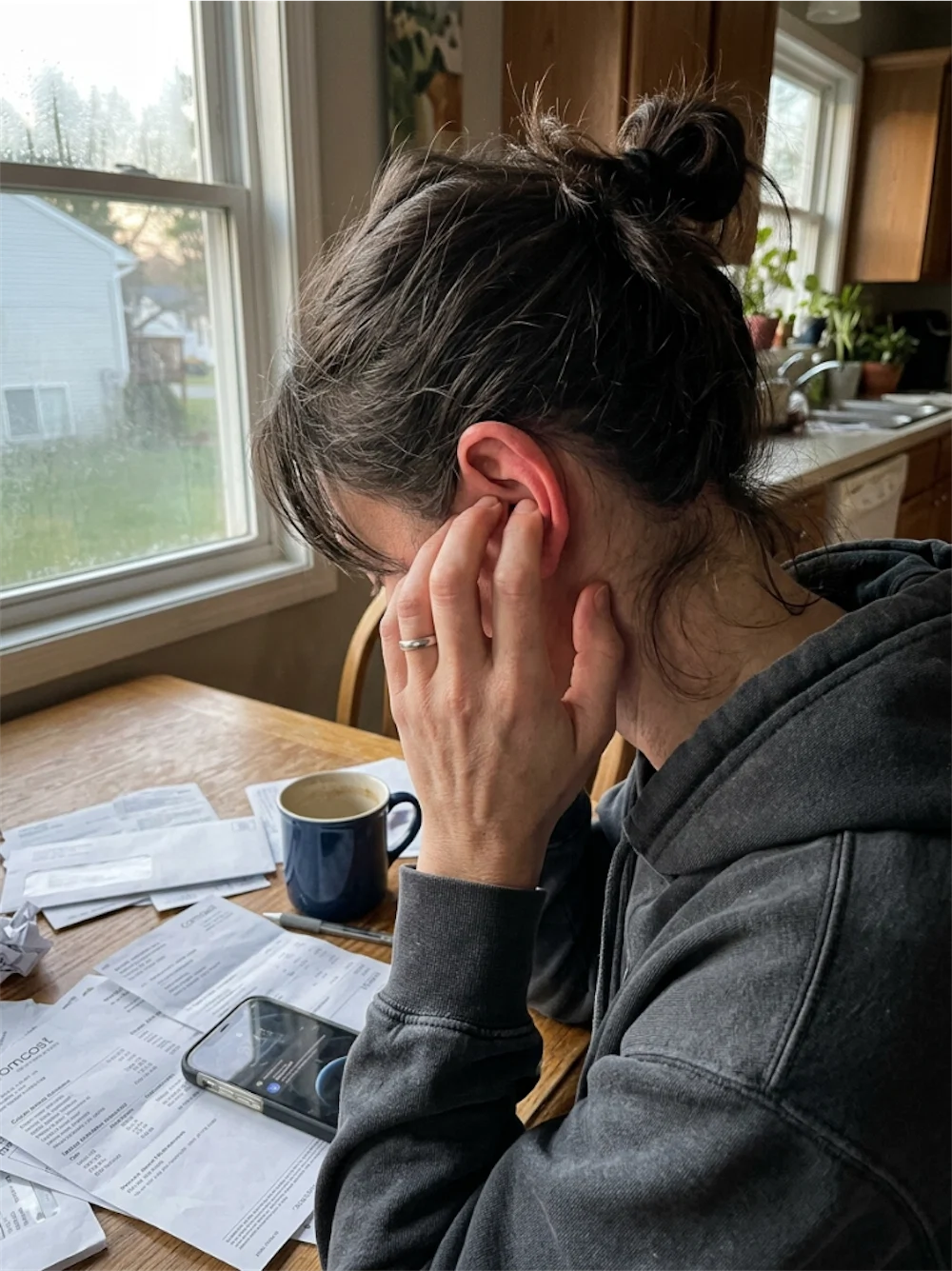
There’s a branch of the vagus nerve in your ear called the auricular branch. Gently massage the outer rim of your ears, especially the tragus (that little flap in front of your ear canal), for about two minutes. Apply slow, gentle pressure. This sends calming signals directly to your brainstem. I do this in bed before sleep. It’s subtle, but it helps your body shift out of that wired-but-tired state.
5. Extended Exhale Breathing
Inhale for 4 counts. Exhale for 6 to 8 counts. The key is making your exhale significantly longer than your inhale. This ratio is what flips the switch from sympathetic (stress) to parasympathetic (calm) activation. Five minutes of this pattern before bed changed my sleep more than any supplement ever did.
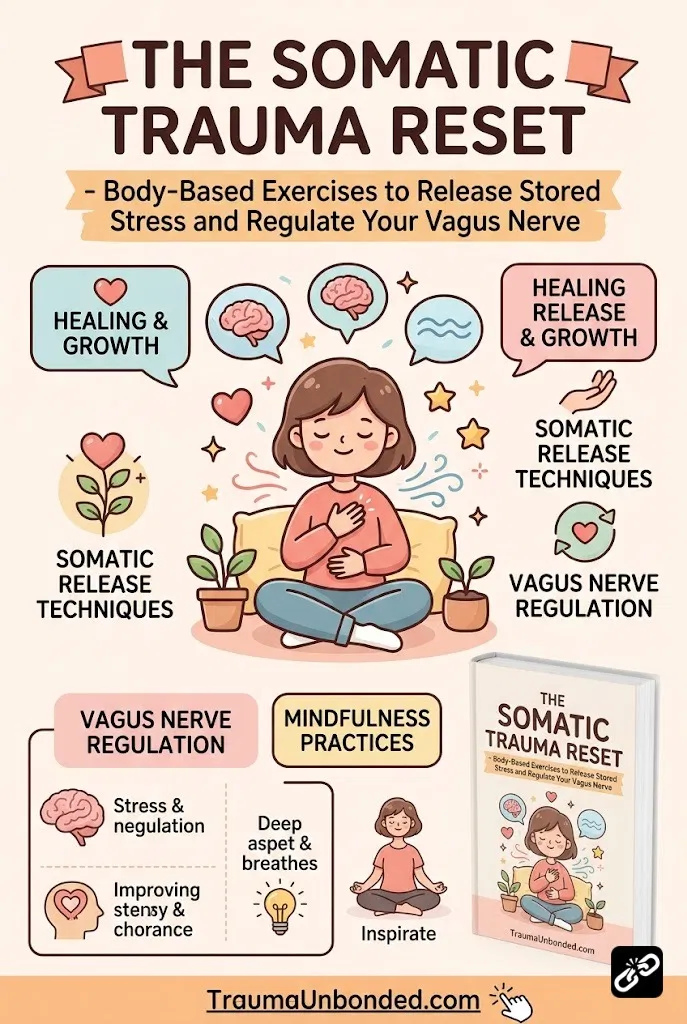
If you want a complete, structured program for body-based trauma release and vagus nerve regulation, I put together everything I wish I had during my worst months into one place.
How to Build a Daily Vagus Nerve Practice After Narcissistic Abuse
You don’t need to do all five exercises every day. Pick two. Rotate them. The goal is consistency, not intensity. Your nervous system wasn’t damaged in a day, and it won’t heal in a day either.
Here’s what my daily routine looked like during my first six months of recovery:
- Morning: Extended exhale breathing for 5 minutes before getting out of bed.
- Midday: Humming while making lunch or doing chores (yes, it counts).
- Panic moments: Physiological sigh, three rounds, wherever I was.
- Evening: Ear massage while lying in bed, then exhale breathing until sleep came.
Was it a magic cure? No. But within about three weeks, I noticed I could sit through silence without my body screaming that something was wrong. That was huge. After 12 years of constant emotional chaos, silence had felt more threatening than the abuse itself. The exercises slowly taught my body that quiet doesn’t mean danger.
Why Talk Therapy Alone Isn’t Enough for Trauma Anxiety
Let me be clear. Therapy saved my life. Cognitive work, understanding narcissistic patterns, learning about codependency, all of that was essential. But here’s what I wish someone had told me earlier: you cannot think your way out of a body-based trauma response.
Your vagus nerve doesn’t care about your journal entries. It doesn’t respond to affirmations when it’s in full shutdown mode. It responds to physical signals. Breath patterns. Vibration. Temperature. Touch. That’s why vagus nerve exercises for PTSD and C-PTSD are becoming a cornerstone of modern trauma recovery. They meet your body where it actually is, not where your logical brain wishes it were.
If you’re doing the mental work but your body still feels like it’s trapped in the relationship, that disconnect is not a failure. It’s biology. And biology responds to biological interventions.
Your Body Kept the Score. Now Let It Heal.
The anxiety you feel right now is not a sign that you’re broken. It’s proof that your nervous system did its job protecting you during an impossible situation. But you’re out now. And your vagus nerve needs to get the memo.
Start with one exercise today. The physiological sigh. Try it right now. Two quick inhales through the nose, one long exhale through the mouth. Do it three times. Notice what shifts, even slightly. That tiny shift is your nervous system remembering what safety feels like. Build from there. Be patient with yourself. You survived something that most people will never understand. Healing the body that carried you through it is not a luxury. It’s the next step. And if you’re ready for a structured, step-by-step approach to releasing the trauma your body is still holding, The Somatic Trauma Reset guide walks you through every exercise with clear daily protocols designed specifically for abuse survivors.

Meet Your Guide
Helen Brooks
After surviving a 12-year NPD/BPD relationship, I dedicated over a decade to studying trauma bonding and nervous system recovery. My mission is to help you break free from the fog and reclaim your authentic self.
Ready to break the trauma bond and reclaim your life?