Hypervigilance Recovery: Daily Checklist to Calm Your Body
For twelve years, I lived in a state of constant vibration. It was not the good kind of energy. It was a low, humming dread that lived in my chest and at the base of my skull. When you spend over a decade with a partner who has both NPD and BPD traits, you forget what peace feels like. You stop living and start reacting. Every slamming door or change in their tone of voice feels like a physical blow to your system.
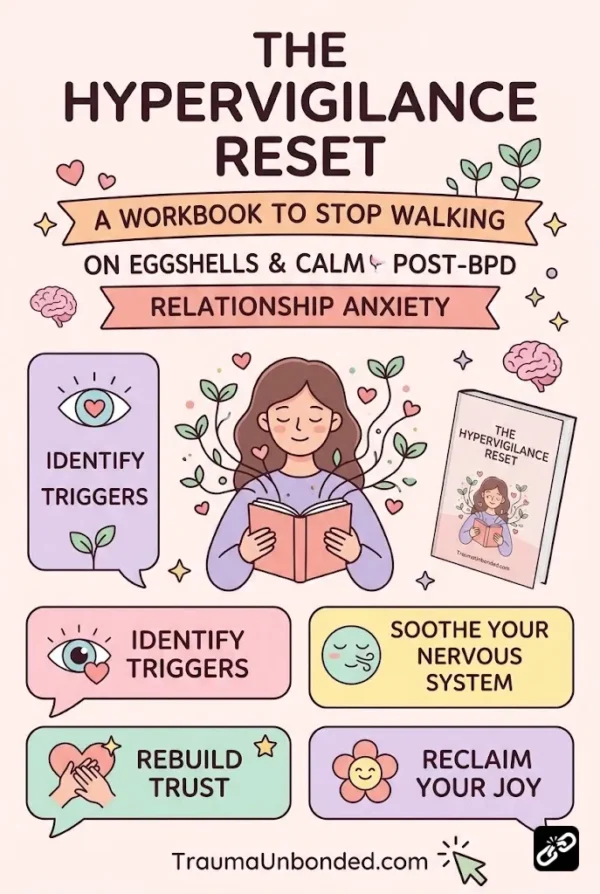
After the breakup, I thought the shaking would stop. I was finally out of that toxic house, but my body did not get the memo. I was isolated, my hobbies were gone, and I felt like a shell of a person. My brain was still scanning for threats that were no longer there. This is what we call hypervigilance. If you are struggling to feel safe in your own skin, The Hypervigilance Reset is a resource I wish I had back when I was still jumping at every phone notification.
Learning how to calm your body after narcissistic abuse is not about a single “aha” moment. It is about a daily commitment to convincing your nervous system that the war is over. Why does it take so long? Because your brain has been physically rewired by the cycle of trauma bond brain chemistry that kept you hooked for years. Recovery is possible, but it requires a practical, body-first approach.
Understanding Why Your Body Stays on High Alert

Do you ever find yourself holding your breath for no reason? Or maybe you notice your shoulders are practically touching your ears while you are just sitting on the couch. In a relationship with a person who has BPD or NPD, you learned that being “ready” was the only way to survive. You had to predict the mood swings, the accusations, and the silent treatment before they happened. This is walking on eggshells, and it leaves a permanent mark on your physiology.
Even after the partner is gone, your amygdala remains oversized and overactive. It acts like a smoke detector that goes off every time you toast bread. You might feel a surge of cortisol when a friend is five minutes late or when an email from your boss pops up. This is not you being “crazy.” This is your body trying to protect you from the betrayal trauma you endured for years. To heal, we have to move from the head down into the heart and gut.
I remember sitting in my new, quiet apartment and feeling more anxious than I did during the relationship. The silence felt suspicious. If things were quiet, I assumed a “splitting” episode was coming where I would be painted as the villain. Breaking this habit took months of therapy and specific somatic tools. You have to teach your cells that silence is actually safety, not a precursor to a storm.
The Morning Checklist: Grounding Before the Day Starts
The first thirty minutes of your day are the most vulnerable. When you wake up, your cortisol levels naturally spike. For a survivor, this spike can quickly turn into a full-blown panic attack or a session of ruminating on the past. My morning routine used to be checking my phone to see if they had sent a hoovering text or left a mean comment somewhere. I had to stop that cold turkey to find my original self again.
Start with no-phone mornings. Do not let the outside world or your toxic ex into your brain before you have even brushed your teeth. Instead, try these three things: drink a full glass of water, step outside for three minutes of natural light, and do a quick body scan. Ask yourself: where am I tight right now? Is it my jaw? My stomach? Just noticing it without judgment helps you exit survival mode trauma patterns.
Gentle movement is another non-negotiable. I am not talking about a high-intensity workout that further stresses your system. I mean stretching or a slow walk. When we were in that toxic environment, we often stayed in a “freeze” state. Moving your limbs tells your brain that you are free to move, that you are not trapped anymore. It sounds simple, but it is a biological signal of freedom that your nervous system desperately needs to hear.
If you are struggling to find a starting point for your healing, I highly recommend using a structured workbook. It takes the guesswork out of the process when your brain is still foggy from the abuse. This specific guide was designed to help you regain control over those physical symptoms of anxiety.
Before you continue reading, take a look at this tool that has helped many others in your exact situation:
Midday Nervous System Resets to Stay Grounded
By lunch, the “fog” usually sets in. If you worked or lived in a high-stress environment with a narcissist, you probably survived on caffeine and adrenaline. Now, you might find your energy crashing or your thoughts drifting back to “what if” scenarios. Are they happy with the new person? Was I actually the problem? These intrusive thoughts are a form of emotional withdrawal.
To combat this, use the 5-4-3-2-1 technique. Name five things you can see, four you can touch, three you can hear, two you can smell, and one you can taste. This forces your brain to come back to the present moment. You can also try vagus nerve anxiety exercises, like humming or splashing cold water on your face. These actions send a direct message to your heart to slow down.
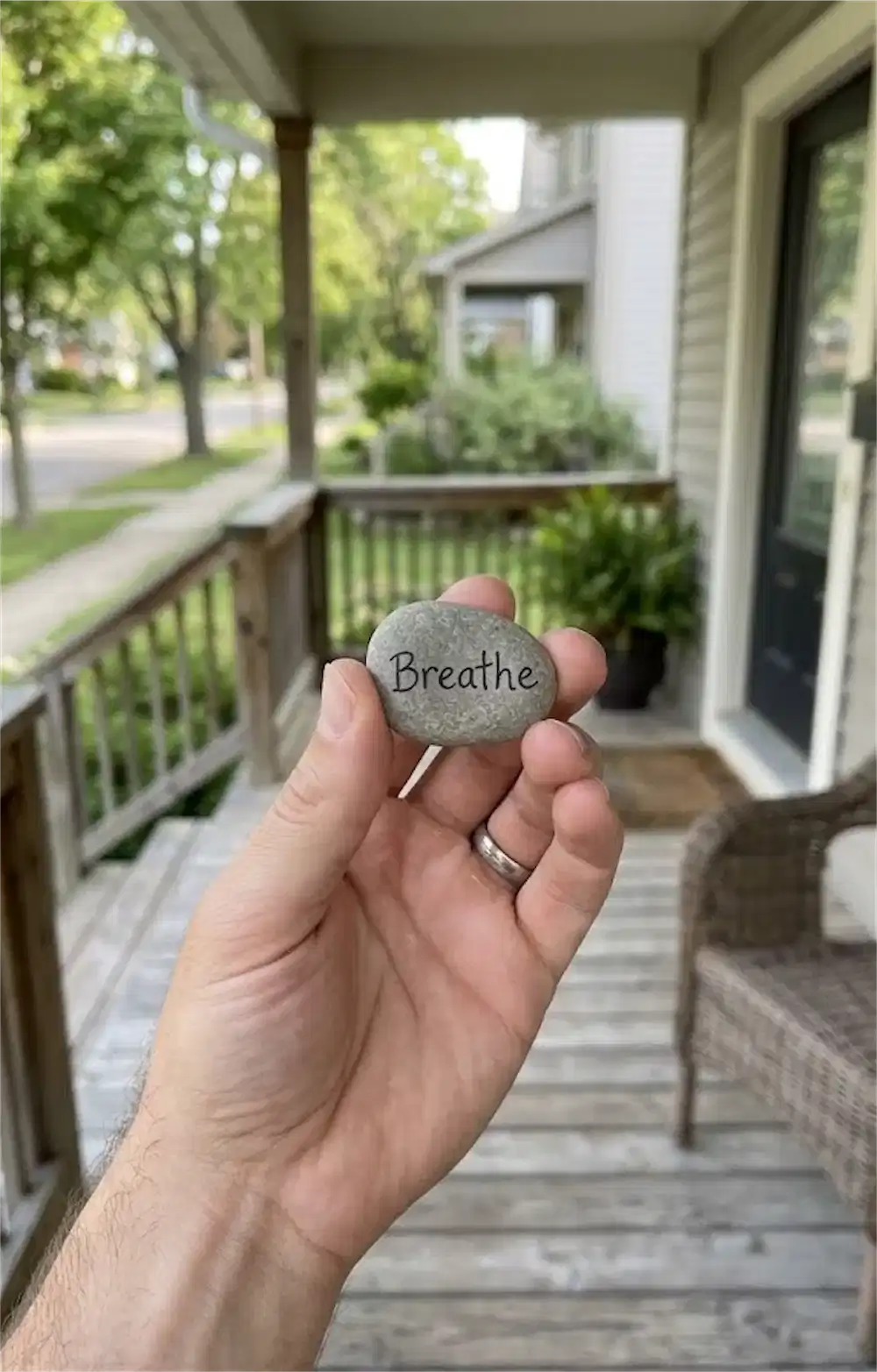
I used to keep a small stone in my pocket. Whenever I felt the urge to check my ex’s social media or felt a wave of post-separation anxiety, I would grip that stone. It was a physical reminder that I was here, in the present, and safe. I was no longer that person who had to apologize for things I did not do just to keep the peace. You are allowed to take up space now. You are allowed to breathe without asking for permission.
Evening Rituals to Signal Safety and Better Sleep
Nighttime is often the hardest for survivors. The world gets quiet, and the memories get loud. For twelve years, my nights were filled with circular arguments or “love bombing” that felt more like a trap than affection. When I finally left, I could not sleep because I was waiting for the other shoe to drop. Hypervigilance recovery requires a very strict evening routine to signal to your brain that it is okay to let go.
Dim the lights an hour before bed. This helps your body produce melatonin, which is often suppressed by chronic stress. Avoid watching intense thrillers or reading about true crime. Your nervous system cannot distinguish between a movie and real life right now. It needs soft textures, warm tea, and perhaps a weighted blanket to feel secure. Think of it as “re-parenting” yourself after years of neglect.
Before you close your eyes, write down three things that went well today. They do not have to be big. “I made a good sandwich” or “I didn’t cry in the grocery store” are massive wins. This shifts your brain from its default “threat detection” mode into “gratitude” mode. Over time, this rewires your neural pathways. You start looking for the good instead of bracing for the bad.
If you find your heart racing the moment your head hits the pillow, try “box breathing.” Inhale for four counts, hold for four, exhale for four, and hold for four. It is a biological override for the fight-or-flight response. It took me a long time to realize that I did not have to be on guard anymore. My bed was mine. My room was mine. My life was finally mine again.
You have been through a literal war of the mind and spirit. It is okay if you are tired. It is okay if your body feels heavy or “broken” right now. But remember: you are the one who survived. You are the one who is still here. By following a daily checklist and using resources like The Hypervigilance Reset, you can slowly return to that cheerful, optimistic person you used to be before the fog rolled in.