
10 Reasons Why No Contact is the Most Effective Way to Heal from Narcissistic Abuse
If you’ve recently left a relationship with a narcissist, someone told you to go no contact. Maybe your therapist said it. Maybe you read it online. Maybe a friend said it bluntly: “Just block them and don’t look back.”
And yet here you are, still texting back. Still checking their profile. Still leaving the door cracked “just in case.” I know exactly how that feels, because I lived it for 12 years.
No contact — meaning cutting off all communication, digital access, and indirect channels with your ex — is not a punishment. It is not being dramatic. It is not “running away.” It is the single most clinically supported, experience-proven, and psychologically sound approach to recovering from narcissistic abuse. And in this article, I’m going to explain exactly why, through both the science and my own lived experience navigating life after a decade-long relationship with someone who had both NPD and BPD traits.
But first, let’s be honest about why it’s so hard.
Why No Contact Feels Almost Impossible After Narcissistic Abuse
People who haven’t been in a toxic relationship with a narcissist assume no contact is simple. Just stop talking to them. But those of us who have lived through it know the truth: breaking contact after narcissistic abuse feels closer to quitting a drug than ending a relationship.
The reason is neurological. Intermittent reinforcement — a pattern where love, attention, and affection are delivered unpredictably, mixed in with criticism, withdrawal, and emotional chaos — creates one of the most powerful psychological conditioning cycles known to behavioral science. Think of it like a slot machine: the unpredictable nature of the reward is precisely what makes you keep pulling the lever.
When the relationship ends, your brain doesn’t quietly accept it. It craves resolution. It craves the “good version” of your partner that appeared just often enough to keep you hooked. That craving drives you to text, to check their Instagram, to respond when they reach out. Every point of contact feeds the addiction rather than healing it.
Dr. Ramani Durvasula, a licensed clinical psychologist and one of the leading researchers on narcissistic personality disorder, consistently states that no contact is not just recommended but often necessary for actual recovery — not merely “moving on,” but genuine psychological healing. You can explore her clinical perspective at doctor-ramani.com.
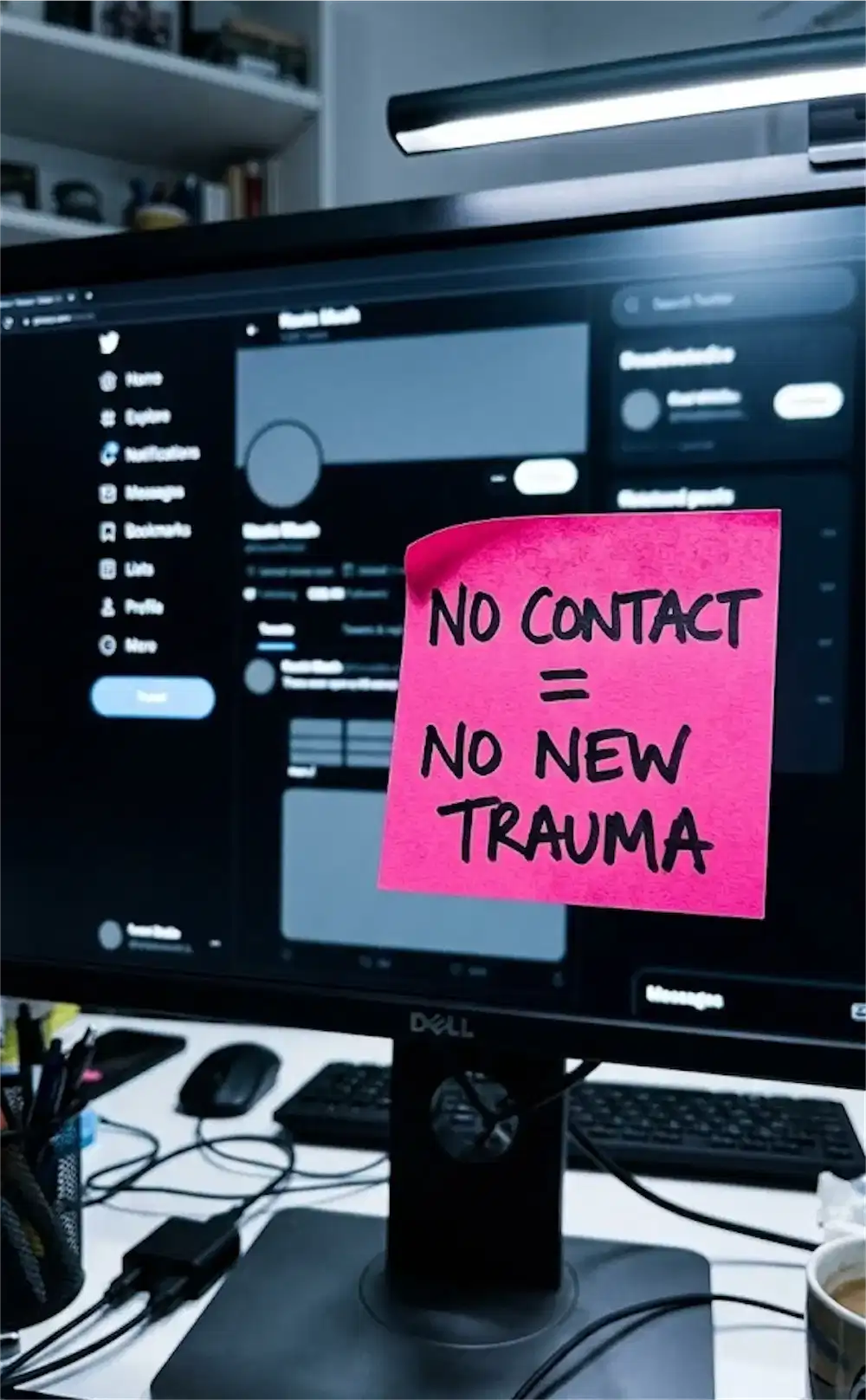
With that context in mind, here are 10 concrete reasons why no contact works — and why partial contact or “low contact” usually doesn’t, especially in the early stages of recovery.
1. No Contact Stops the Intermittent Reinforcement Loop
Every time you respond to a text, check their profile, or accept a call from your ex, you reset the reward loop in your brain. Even a painful interaction delivers neurochemical stimulation. Your nervous system doesn’t distinguish between a good hit and a bad one — it just registers that contact happened and files it as meaningful.
No contact breaks this loop by removing the behavior entirely. It’s the psychological equivalent of putting the slot machine in another room and locking the door. Over time — and it does take time — the craving intensity decreases because the reward pathway stops getting reinforced.
In my own experience, every time I allowed a “one last conversation,” I felt worse afterward. Not because the conversation was necessarily terrible — sometimes it was calm, even kind — but because it reignited hope that things could be different. That hope was the trap. And that’s exactly how the cycle perpetuates itself.
2. It Allows Your Nervous System to Actually Rest
Living with or closely involved with someone with narcissistic traits means your nervous system has been running on high alert for months or years. Hypervigilance — constantly scanning your environment for signs of danger, mood changes, or incoming emotional attacks — becomes your baseline. You stop noticing it because it becomes normal. But it’s exhausting your body.
Research in the field of trauma and stress response consistently shows that prolonged exposure to unpredictable interpersonal threat keeps the body locked in a sympathetic nervous system state — the “fight or flight” mode. Recovery requires the parasympathetic system (rest, digest, repair) to take over, and that cannot happen when contact with the threat source continues.
No contact creates the conditions for nervous system regulation to begin. It is not that you “feel fine” immediately — often you feel worse in the first few weeks. But you are giving your body the silence it needs to start coming down from years of cortisol overload.
If you want to understand exactly what prolonged narcissistic abuse does to your body and brain, read about the long-term effects of narcissistic abuse and how healing actually works.
3. It Removes You as a Source of Narcissistic Supply
Narcissistic supply is the term used to describe the attention, emotional reactions, admiration, or even conflict that a person with narcissistic traits feeds off. It doesn’t have to be positive attention — your anger, your tears, your desperate attempts to reason with them are all forms of supply.
As long as you remain in contact, you remain useful. Your responses confirm their relevance. Your pain confirms their power. Your attempts to get closure give them exactly what they want: your continued focus, your continued emotional energy, directed at them.
No contact removes you from that dynamic entirely. You stop being a source of anything for them. For someone who spent years unconsciously organized around managing another person’s emotional needs — which is often what happens in these relationships — this is a profound shift. You stop existing in relationship to them and start existing for yourself again.
4. It Protects You From Hoovering
Hoovering is when a narcissist reaches back out after a breakup to “suck you back in” — like a vacuum cleaner. It can look like a heartfelt apology. A casual “just thinking of you” message. A fake emergency. A social media post clearly designed to trigger your attention. Sometimes it looks like rage and threats. Other times it looks like the person you fell in love with showing up perfectly, promising everything has changed.
After 12 years, I saw every version of this. The late-night vulnerability texts. The sudden declarations of love right after I’d finally found some peace. The carefully timed crises that needed my help urgently. Each one was effective at pulling me back in — because I wanted to believe it was real.
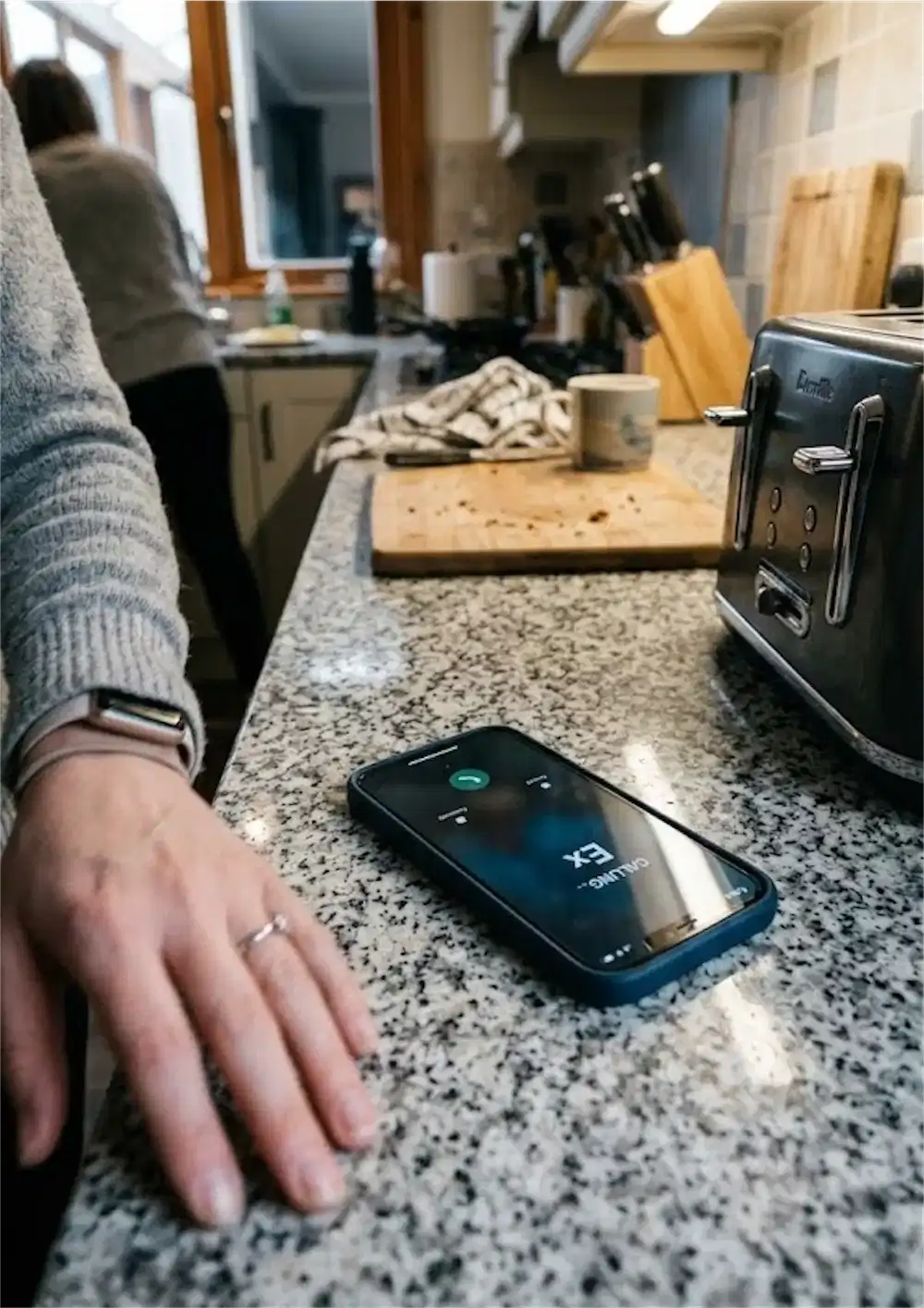
No contact makes hoovering irrelevant. If you’ve blocked them on every channel, they cannot reach you. If they cannot reach you, you cannot be pulled back in. It’s that mechanically simple, even if emotionally it’s anything but.
What makes hoovering so dangerous is the timing. It almost always arrives when you’ve just started feeling better. When your guard drops. When you’re lonely on a Tuesday night and their name appears. Blocking removes the option. And removing the option removes the temptation.
5. It Breaks the Trauma Bond
A trauma bond is a psychological attachment formed through repeated cycles of abuse and reward. It’s not the same as love, even though it feels exactly like it from the inside. Trauma bonds form in conditions of intermittent threat and comfort — and they are remarkably resistant to breaking through logic or willpower alone.
The mechanism behind trauma bonding shares similarities with Stockholm Syndrome — where hostages develop protective feelings toward captors. Research by Patrick Carnes, PhD, whose work on trauma bonding has become a cornerstone of abuse recovery psychology, identifies that these bonds form at a neurological level and require consistent separation to dissolve. You can find his foundational work discussed in detail at the International Institute for Trauma and Addiction Professionals (IITAP).

No contact is not the only thing required to break a trauma bond — therapy is usually essential — but it is the non-negotiable starting point. You cannot break a trauma bond while remaining bonded. Every point of contact, every check-in, every shared moment reactivates the neurological attachment. Separation, held consistently over time, is what allows the bond to loosen its grip.
If you want to understand why the bond feels so real and so unshakeable, read more at why books alone won’t heal a trauma bond — because intellectually understanding it is very different from healing it.
6. It Creates the Mental Space to See the Relationship Clearly
One of the most consistent experiences survivors describe — and one I lived personally — is how distorted your perception becomes inside the relationship. Gaslighting, which is when someone persistently causes you to question your own memory, judgment, and perception of reality, was a daily feature of my relationship. After years of it, I genuinely couldn’t trust my own read on situations.
When contact continues after a breakup, the gaslighting often continues too. Maybe subtly — through a message that reframes a past event, through a version of events that contradicts your memory, through making you feel unreasonable for having boundaries. As long as they have access to your mind, they can keep influencing how you see things.
No contact gives your mind silence. And in that silence, your own perception starts to return. You start remembering things you’d minimized. You start connecting patterns you hadn’t noticed. You start trusting yourself again — slowly, awkwardly, but genuinely. Many survivors describe the period of no contact as the first time they felt “sane” in years.
7. It Forces You to Redirect Energy Back to Yourself
This one is practical and underrated. Think about how much mental bandwidth you currently spend on your ex. Wondering what they’re doing. Analyzing the last conversation. Rehearsing what you would say if they reached out. Checking who they follow on Instagram.
All of that is cognitive and emotional energy that is completely unavailable for your own recovery, your own growth, your own life.
When I started truly honoring no contact, something strange happened: I had time again. I had headspace. I picked up interests I’d completely abandoned during the relationship. I started cooking meals I actually liked instead of whatever kept the peace that evening. Small things. But real things that were mine.
No contact doesn’t just protect you from them. It returns you to yourself. That’s the part nobody talks about enough.
A good starting point for reclaiming your daily rhythms is building intentional structure. Morning routines specifically designed for NPD breakup recovery can be surprisingly powerful in the early stages of no contact, when the days feel shapeless and the urge to reach out is strongest.
8. It Lets You Grieve Without Reopening the Wound
Grief after a narcissistic relationship is complicated. You’re not just grieving the person — you’re grieving the person you believed they were, the relationship you thought you had, the future you planned, and often years of your own life. That’s a heavy, layered grief. And it deserves space to process fully.
But every time contact is made or received, the wound reopens. You get a hit of hope, or a fresh dose of pain, or another layer of confusion added on top. The grief process stalls. You cannot grieve something that isn’t fully gone from your life yet.
No contact makes the loss real. That hurts. It’s supposed to hurt. But the grieving that happens in genuine no contact is productive grieving — the kind that eventually moves through you and leaves something cleaner on the other side. The alternating hope and pain cycle that ongoing contact creates is not grief. It’s prolonged trauma re-exposure.
If you’re in the early stages and the grief feels unbearable, a resource that helped me significantly was Healing from Hidden Abuse by Shannon Thomas, LCSW. She lays out the grief stages specific to psychological abuse in a way that makes you feel deeply understood rather than just diagnosed.
9. It Rebuilds Your Sense of Identity
Long-term relationships with narcissists tend to do one particularly insidious thing: they erode your identity. Not all at once. Gradually, over months and years, your preferences, opinions, friendships, and sense of self get slowly reorganized around the other person’s needs, moods, and worldview. By the end of my 12-year relationship, I genuinely didn’t know what music I liked anymore. I didn’t know how I wanted to spend a Sunday afternoon when it was actually up to me.
Rebuilding that identity requires space that contact actively sabotages. When you’re still in their orbit — even digitally, even minimally — you’re still unconsciously referencing them. What would they think of this? Would they approve? Does this somehow affect them?

No contact removes that reference point. It forces you — uncomfortably at first — to make decisions for yourself, by yourself, based on what you actually want. That process is identity reconstruction in real time. It is uncomfortable and disorienting and also one of the most quietly powerful experiences in recovery.
10. It Is the Foundation That Every Other Healing Strategy Requires
Therapy helps — but not if you’re debriefing new contact incidents every session instead of doing deeper work. Journaling helps — but not if your entries are just recaps of what they texted you yesterday. Exercise, nutrition, sleep, friendships — all of these support recovery. But none of them can fully function as intended while the primary source of your trauma remains active in your life.
No contact is not one strategy among many. It is the foundation that makes all other strategies possible. It is the controlled environment inside which real healing can take place.
Think of it this way: if you had a physical wound and someone kept prodding it, no bandage or antibiotic would be enough. You’d need to first stop the prodding. No contact stops the prodding. Everything else can then begin to work.
For those working through codependency patterns alongside no contact — which is extremely common in survivors of narcissistic relationships — these strategies for overcoming codependency and toxic stress are a natural complement to the work.
What No Contact Actually Looks Like in Practice
No contact is not just not texting them. It means cutting off every channel through which their presence can enter your life. That includes:
- Blocking on all social media platforms (Instagram, Facebook, TikTok, LinkedIn, Snapchat, Spotify)
- Deleting their phone number or at minimum blocking it
- Muting or unfollowing mutual friends who frequently post about or with them
- Asking trusted friends not to share updates about your ex with you
- Avoiding places you know they frequent, especially in the early months
- Not googling their name or checking for mentions online
- Removing them from email, messaging apps, and any shared digital spaces
If you share children or a business with your ex, true no contact may not be fully possible. In those cases, the goal shifts to what many therapists call “gray rock” — making yourself as unresponsive and uninteresting as possible, limiting communication strictly to logistics, and never engaging emotionally. This is harder than full no contact and usually requires therapeutic support to maintain effectively.
What to Expect in the First 30 Days of No Contact
Nobody warns you enough about this: the first few weeks of no contact can feel absolutely terrible. Worse, in some ways, than the relationship itself. The withdrawal is real. The longing is real. The urge to just send one message can feel physically overwhelming.
Here’s what tends to happen in sequence:
- Days 1-7: Panic, obsessive thinking, physical restlessness, urge to make contact is at its peak.
- Days 8-14: Anger may surface. You might find yourself swinging between rage and deep sadness.
- Days 15-21: Reality starts settling in. The fantasy of them begins slowly competing with actual memories of how it felt.
- Days 22-30: Small windows of calm begin appearing. They don’t last, but they exist. That’s significant.
By the 60 to 90 day mark, many survivors report a meaningful shift in their baseline emotional state. Not healed — but genuinely more grounded and less consumed. The process continues from there, but the first 30 days are the hardest. Knowing that doesn’t make them easier, but it does make them survivable.
A supplement that genuinely helped me during that initial period was magnesium glycinate — research consistently supports its role in supporting the nervous system during stress and improving sleep quality, both of which take a significant hit during withdrawal from a trauma bond. You can find a quality option here: magnesium glycinate for stress and sleep.
A Note on Breaking No Contact (Because Most of Us Do, At Least Once)
Here’s the truth: most survivors of narcissistic abuse break no contact at least once. I broke it multiple times before it finally held. That is not failure. That is the nature of trauma bonding and how genuinely hard this is.
What matters is what you do after you break it. Do you spiral into self-blame and use it as evidence that you’re weak or hopeless? Or do you observe what happened, understand what triggered the break, and recommit to no contact with new information?
Every time I broke no contact and then reestablished it, I learned something that made the next period of no contact stronger. The setbacks were painful but they were also instructive. Eventually, the periods between breaks got longer. And eventually, one of those periods became permanent.
If you’re struggling with the urge to reach out or check up on them, this piece on how to stop checking your ex’s social media covers specific practical strategies for the moments when the pull is strongest.
The Real Goal of No Contact Is Not to Hurt Them
Let’s name something that often gets confused: no contact is sometimes discussed as a way to make your ex jealous, to win the breakup, or to get revenge by thriving. While thriving is absolutely a side effect, that framing misses the entire point.
No contact is about you. It is not a move in a chess game with them. It is a decision to remove yourself from the game entirely — to stop organizing your choices around their reactions, their visibility, their awareness of you.
The moment you do no contact “to make them miss you,” you’ve turned it back into a relationship strategy rather than a healing strategy. They’re still the central character. The goal is to make yourself the central character of your own life again. That’s what recovery actually looks like.
Where to Go From Here
No contact creates the conditions for healing. But it’s not the healing itself. Once the space exists, fill it intentionally:
- Work with a therapist who specializes in narcissistic abuse, trauma bonding, and attachment
- Educate yourself on how these relationship dynamics work so you can recognize and avoid them in future
- Rebuild your social connections — isolation is what kept you in the relationship longer than you should have stayed
- Develop daily routines that are entirely yours and not organized around someone else’s needs
- Give yourself significant time — recovery from long-term narcissistic abuse is not a 30-day process
The life on the other side of consistent no contact is not just “better.” It’s quieter, more genuinely yours, and eventually — and I say this having lived it — it’s actually good. Not perfect. But real and good and yours. That’s worth everything the first 90 days cost you.
Resources
These are books and tools that I’ve personally found most useful for the no contact phase of narcissistic abuse recovery. Each one addresses a specific layer of the healing process:
- Should I Stay or Should I Go? by Dr. Ramani Durvasula — Written specifically for people in relationships with narcissists, this is both validating and practical. A strong starting point if you’re still questioning whether no contact is really necessary.
- Healing from Hidden Abuse by Shannon Thomas, LCSW — A stage-by-stage recovery map specifically for survivors of psychological abuse. Extremely grounding during early no contact when you feel most disoriented.
- Psychopath Free by Jackson MacKenzie — Written by a survivor, not a clinician. That’s what makes it valuable. He understands the pull to break no contact and writes about it in a way that actually helps you hold the line.
- Trauma Recovery Guided Journal — Structured journaling is one of the most effective tools for processing the grief and confusion of no contact. Having prompts takes the pressure off staring at a blank page during the hardest days.
- Magnesium Glycinate supplement — For supporting nervous system regulation, sleep quality, and anxiety levels during the physical withdrawal phase of no contact.

Meet Your Guide
Helen Brooks
After surviving a 12-year NPD/BPD relationship, I dedicated over a decade to studying trauma bonding and nervous system recovery. My mission is to help you break free from the fog and reclaim your authentic self.
Ready to break the trauma bond and reclaim your life?