Why Books Alone Won’t Heal a Trauma Bond: Practical Steps That Actually Work
I spent six months reading everything I could find about narcissistic abuse. My nightstand was stacked with self-help books, my browser history filled with articles about trauma bonds, and my notes app overflowing with highlighted quotes. Yet I still found myself checking his social media at 2 AM, rehearsing conversations we’d never have, and feeling that familiar pull in my chest whenever my phone buzzed.
Here’s what twelve years in a relationship with someone who had both NPD and BPD traits taught me: knowledge without action is just well-informed suffering.
You can read every book about trauma bonds and still wake up one morning realizing you’ve made zero progress. This isn’t because you’re weak or because the books are wrong. It’s because healing a trauma bond requires something books can’t give you—physical, embodied action that rewires your nervous system.
Understanding Why Reading Isn’t Enough
When you’re trauma bonded, your brain has created actual neural pathways connecting your ex-partner with survival. Dr. Patrick Carnes, who pioneered research on betrayal trauma, found that trauma bonds activate the same brain regions as substance addiction. Your body literally experiences withdrawal when separated from the person who hurt you.
Reading about this phenomenon gives you the “why” behind your pain. You finally understand that you’re not crazy, that what you experienced has a name, that other people have survived this too. That validation matters tremendously. I remember the relief of finding words for what I’d endured—gaslighting, intermittent reinforcement, the cycle of idealization and devaluation.
But understanding why you’re stuck doesn’t automatically unstick you. Your nervous system doesn’t care that you intellectually know about trauma bonds. It’s still firing off the same alarm signals, still flooding you with cortisol when you don’t get that text, still interpreting separation as a life-threatening emergency.

I learned this the hard way. After reading Psychopath Free by Jackson MacKenzie, I felt empowered for about three days. Then I saw a car that looked like his and spent the next four hours in a dissociative fog. My body hadn’t gotten the memo that I was “educated” now.
What Actually Happens When You Only Read About Trauma Bonds
You create what I call “intellectual distance without emotional safety.” You can describe exactly what a narcissist does during the hoovering phase. You can explain intermittent reinforcement better than some therapists. But when your ex actually reaches out? All that knowledge evaporates like morning fog.
This happened to me around month eight post-breakup. I’d read seven books on narcissistic abuse, joined three online support groups, and could spot manipulation tactics from a mile away. Then he sent a single text: “I miss what we had.” Twenty minutes later, I’d typed and deleted seventeen responses, my hands shaking so badly I could barely hold my phone.
Books give you the map, but they don’t build the road. They show you what healthy boundaries look like without giving you the muscle memory to enforce them. They explain why no contact works without preparing you for the physical agony of actually implementing it.
There’s also a sneaky trap here: reading can become another form of rumination. You’re “working on yourself,” so it feels productive. But if you’re spending three hours a day reading about narcissism while avoiding the uncomfortable work of actually changing your routines, you’re just intellectualizing your way around healing.
The Missing Piece: Taking Physical Action
Your trauma bond lives in your body, not your bookshelf. This was the turning point in my recovery—the moment I realized I needed to physically do different things, not just think different thoughts.
Neuroscientist Dr. Bessel van der Kolk explains in his groundbreaking research that trauma is stored in the body and requires somatic interventions to heal. You can’t think your way out of a nervous system that’s been hijacked by chronic stress and fear conditioning.
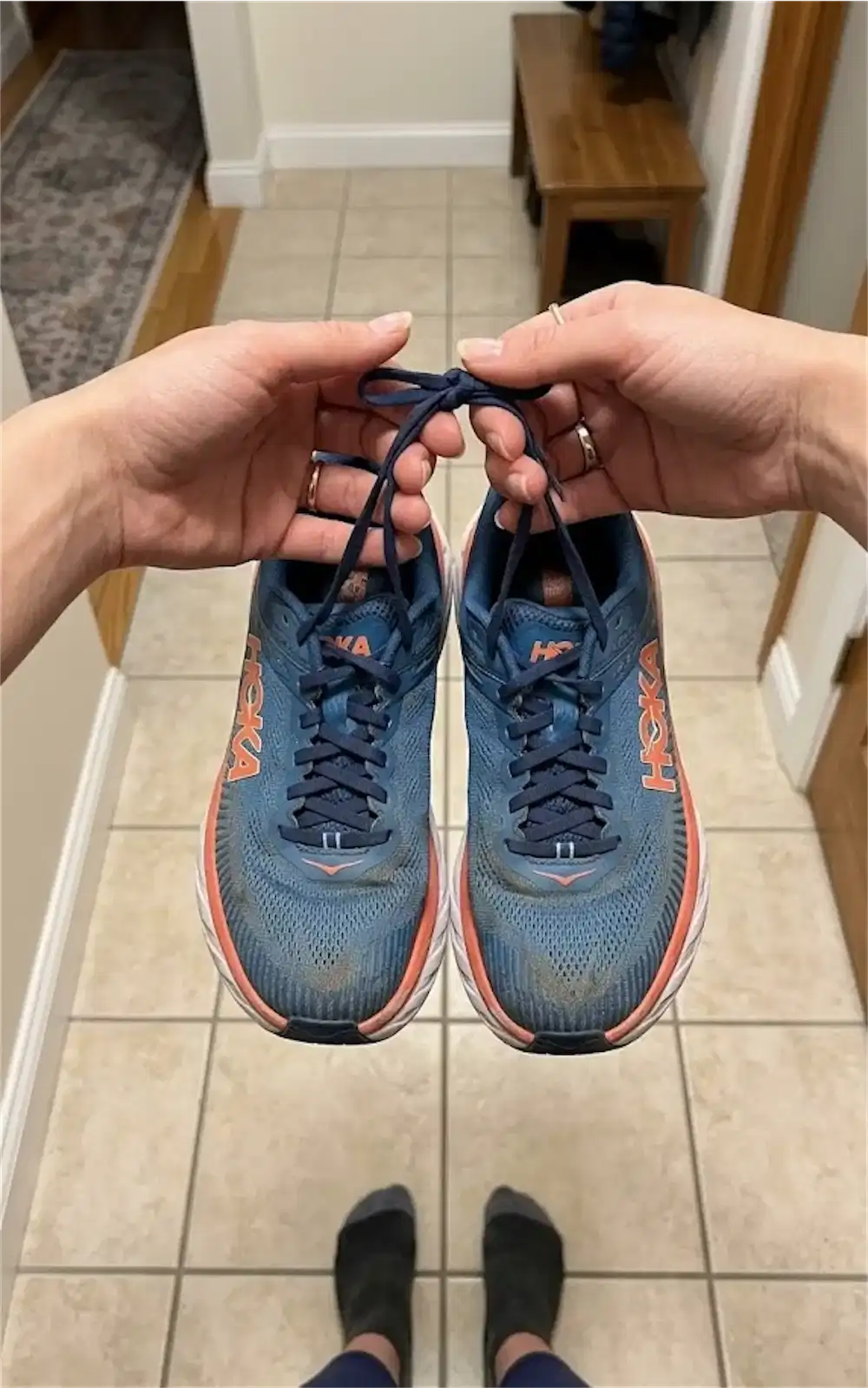
When I finally started running three mornings a week, something shifted. Not because running is magical, but because I was teaching my body a new pattern. Instead of lying in bed replaying arguments, I was moving. Instead of checking his Instagram stories, I was lacing up shoes. My nervous system started to learn: mornings mean movement now, not obsessive thoughts.
This is what books miss. They can’t force you to feel the wind on your face during a walk. They can’t make you experience the grounding sensation of washing dishes mindfully. They can’t create the neural rewiring that happens when you choose yoga over texting your ex “just to check in.”
Practical Steps That Break Trauma Bonds
Here’s what actually worked after twelve years of intermittent reinforcement had wired my brain to crave chaos:
1. Create Physical Barriers to Contact
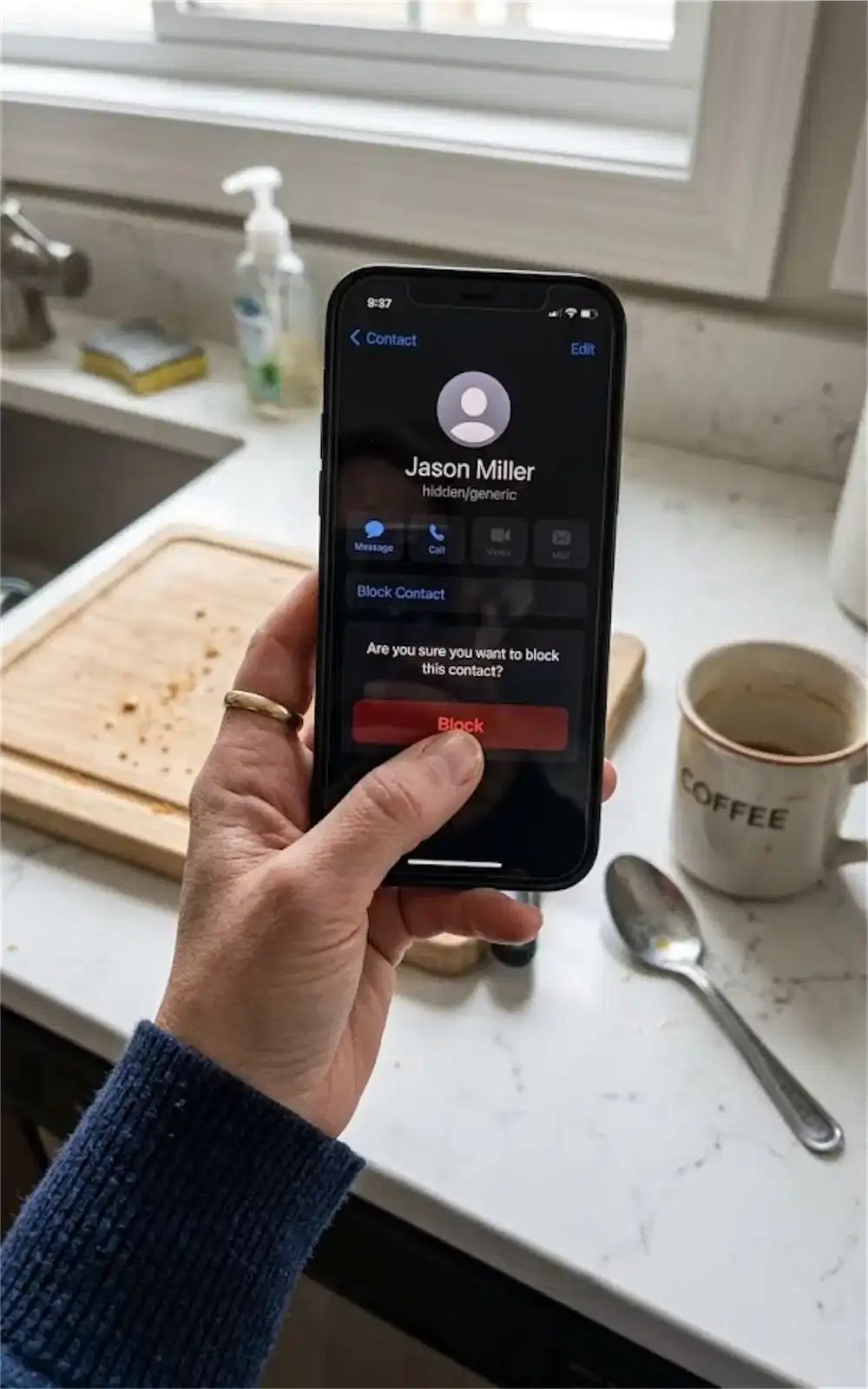
Don’t just know you should block your ex—actually do it. Right now. Block the number, delete it from your contacts, block on all social media platforms. I put my phone in a drawer across the room at night because just having it on my nightstand was too tempting during weak moments.
Knowledge says “no contact is important.” Action says “I’ve made it physically impossible to break no contact at 3 AM when I’m vulnerable.” There’s a massive difference.
2. Establish Non-Negotiable Daily Rituals
Books will tell you that routines help. But you need specific, embodied rituals that become automatic. For me, it was: coffee, journal for exactly ten minutes, shower, get dressed (even if staying home). No exceptions.
These weren’t just “self-care.” They were training wheels for a nervous system that had forgotten how to function without relationship drama. A structured recovery journal kept me accountable when motivation failed.
Your trauma bond thrives in chaos and unpredictability. Rigid routines are kryptonite to it. When you do the same healthy things at the same times every day, you’re literally retraining your brain to expect stability instead of crisis.
3. Move Your Body Every Single Day
Not because you read that exercise helps depression. Because you need to discharge the stress hormones that have been flooding your system for months or years. Walk, run, dance in your living room, do yoga—just move.
I started with fifteen-minute walks around my block. Nothing Instagram-worthy, no fitness goals. Just me, my neighborhood, and the simple act of putting one foot in front of the other. On days when I couldn’t stop thinking about him, I’d walk until my legs were tired. Physical exhaustion is more honest than mental exhaustion.
4. Practice Somatic Grounding Techniques
When the urge to contact your ex hits, you need a physical intervention. I used the 5-4-3-2-1 method: name five things you can see, four you can touch, three you can hear, two you can smell, one you can taste. It sounds simple because it is. It also works because it pulls you out of your head and into your body.
Cold water on your wrists, holding ice cubes, pressing your feet firmly into the floor—these aren’t metaphors. They’re literal nervous system resets. Books explain why they work. Actually doing them is what changes your brain.
5. Build New Neural Pathways Through Repetition
Every time you feel the pull to check on your ex and choose a different action instead, you’re weakening the trauma bond. Not by much—maybe 0.5% each time. But it adds up.
I kept a tally in my journal. Every time I wanted to text him and called a friend instead, I marked it down. Every time I started drafting an email and deleted it, I marked it down. Seeing those tally marks accumulate gave me proof that I was rewiring my brain, one small choice at a time.
Building a Real Recovery Toolkit
Books should be part of your toolkit, not the entire toolkit. Here’s what a balanced recovery approach actually looks like:
- Education (20%): Reading, podcasts, articles to understand what happened
- Physical action (40%): Exercise, routines, somatic practices, enforcing boundaries
- Social connection (20%): Rebuilding friendships, support groups, therapy
- Processing emotions (20%): Journaling, crying, allowing yourself to feel without judgment
Notice that education is the smallest slice. That’s intentional. I spent the first three months doing 80% education and 20% everything else. I was the most knowledgeable miserable person you’d ever meet.

When I flipped those percentages, recovery accelerated. I still read—the right books provided crucial frameworks—but I spent most of my energy doing the uncomfortable work of changing my actual life.
Get yourself practical tools. A recovery workbook with exercises forces you to engage actively rather than passively consume information. The difference between reading about boundary-setting and filling out worksheets that make you identify your specific boundaries is enormous.
When Professional Help Becomes Necessary
There’s a limit to what you can do alone with books and willpower. After about four months of trying to self-heal, I hit a wall. I’d stopped checking his social media and maintained no contact, but I was numb. Just functioning, not living.
That’s when I found a trauma-informed therapist who specialized in complex PTSD. She didn’t just talk to me about my feelings. We did EMDR (Eye Movement Desensitization and Reprocessing) to process the traumatic memories my body was holding. We practiced boundary-setting through role-play until it felt less foreign.
Therapy gave me what books couldn’t: a safe relationship to practice being myself in. Someone who noticed when I people-pleased or fawned. Someone who could spot my trauma responses before I even recognized them. You can’t get that from a self-help book, no matter how well-written.
If you’re dealing with severe symptoms—dissociation, panic attacks, suicidal thoughts, complete inability to function—books aren’t enough. They were never meant to replace professional treatment. Think of them as a supplement to therapy, not a substitute.
I wish someone had told me earlier that struggling to heal on my own didn’t mean I was failing. It meant I needed the right support. Therapy helped me understand patterns books could only describe.
Moving From Knowledge to Healing
Six months into my recovery, I found myself at a coffee shop with a book about narcissistic abuse open in front of me. I’d read the same paragraph three times without absorbing a word because I was actually present in my life for the first time in years. I watched people, tasted my coffee, felt the warm sun through the window.
That’s when I realized I didn’t need another chapter explaining what I’d survived. I needed to live differently. So I closed the book and called a friend I’d been meaning to reconnect with. That phone call did more for my healing than finishing another self-help book would have.
Books about trauma bonds serve a purpose. They validate your experience, give you language for your pain, and help you understand you’re not alone. But healing happens in the thousands of small moments when you choose differently. When you feel the pull toward your ex and go for a walk instead. When you catch yourself ruminating and shift to a grounding exercise. When you show up for therapy even though you’d rather hide.
The book that actually helped me most was The Body Keeps the Score—not because it gave me all the answers, but because it pushed me to try EMDR therapy, to take yoga seriously, to understand that my body needed healing as much as my mind. It led me to action, not just more reading.
After twelve years with someone whose love felt like a game I could never win, I had to relearn everything. Books showed me the rulebook for a healthier life. But I had to play the actual game myself. Messy, imperfect, one day at a time.
Some days I still want to reach out, even years later. The difference is that now I have embodied responses, not just intellectual ones. My body knows what to do: walk, breathe, call someone safe, journal until the urge passes. That knowledge lives in my muscles and nervous system, not just my mind.
Stop reading this article right now and do one physical thing differently. Put your phone in another room. Take five deep breaths. Text a friend you trust. The next paragraph will still be here, but your healing starts with action, not information.
That’s the real secret books can’t tell you: you already know enough. What you need now is the courage to do something different with that knowledge. To get messy with the actual work of rewiring your brain and rebuilding your life. To stop being a trauma bond expert and start being a person who’s moving forward.
Resources
If you’re ready to move beyond reading and into active recovery, these resources can support that transition:
- PTSD and Trauma Recovery Workbooks – Guided exercises that force active participation
- Home Exercise Equipment – Simple tools to build a daily movement practice
- Mindfulness and Grounding Tools – Physical aids for somatic practices
- Our Recovery Tools Guide – Practical strategies beyond books
- Morning Routines for Recovery – Building stability through daily rituals
Remember: the goal isn’t to collect more information. It’s to transform what you already know into a life that feels worth living again. That happens through doing, not just reading.

Meet Your Guide
Helen Brooks
After surviving a 12-year NPD/BPD relationship, I dedicated over a decade to studying trauma bonding and nervous system recovery. My mission is to help you break free from the fog and reclaim your authentic self.
Ready to break the trauma bond and reclaim your life?