Why I Chose a Narcissist: Therapy Insights on Breaking the Cycle of Toxic Attraction
For years, I asked myself the same question over and over: “How did I end up in a twelve-year relationship with someone who had both narcissistic and borderline traits?” I wasn’t stupid. I had a good job, supportive family, and decent self-esteem when we first met. Yet somehow, I chose him. Again and again, through every breakup and makeup cycle, I chose him.
The real answer didn’t come from self-help books or online forums. It came from sitting in a therapist’s office, crying into a tissue box, finally willing to look at the parts of myself I’d been avoiding for over a decade. What I discovered wasn’t about weakness or poor judgment. It was about patterns formed so early in my life that I didn’t even know they were running the show.
If you’ve ever asked yourself why you keep attracting narcissists, or why you stayed so long when the red flags were everywhere, this isn’t going to be another article telling you to “just love yourself more.” This is about understanding the real psychological mechanisms that create toxic attraction, based on what I learned through intensive trauma therapy and breaking free from a pattern that nearly destroyed me.
Understanding the Psychology Behind Choosing a Narcissist
When my therapist first suggested that I had “chosen” my ex-partner, I wanted to walk out. Chosen? I didn’t choose to be gaslighted, manipulated, and left emotionally bankrupt. But she wasn’t blaming me. She was pointing to something deeper: we’re drawn to what feels familiar, not what’s healthy.
Dr. Craig Malkin, a clinical psychologist and Harvard Medical School instructor, explains that we often unconsciously seek partners who recreate familiar emotional dynamics from childhood. This isn’t conscious. Your brain isn’t thinking, “Oh good, someone emotionally unavailable, just like my parent.” It’s operating on autopilot, recognizing patterns that feel like home.
In my case, the intensity felt like passion. The unpredictability felt exciting rather than unstable. When he withheld affection, some part of me interpreted that as a challenge to prove my worth. These weren’t rational choices. They were trauma responses dressed up as romance.
Narcissists are exceptionally skilled at identifying what you need and mirroring it back to you during the initial stages. They study you like a textbook, then become exactly what you’ve been searching for. That’s not love. That’s strategy. But when you’re wired from childhood to earn love through performance or to chase emotionally distant people, you can’t tell the difference.
The attraction isn’t about the narcissist being irresistible. It’s about you being primed to respond to certain cues that trigger deep-seated patterns. Until you understand those patterns, you’ll keep choosing the same type of person with a different face.
The Childhood Roots of Toxic Attraction
This part was the hardest for me to accept. My childhood wasn’t terrible. There was no obvious abuse, no addiction in the home, no major trauma I could point to and say, “That’s why.” But trauma isn’t always dramatic. Sometimes it’s the absence of what you needed, not the presence of something harmful.
My therapist had me do an exercise where I listed the emotional dynamics in my childhood home. My father was loving but emotionally distant. My mother was anxious and needed constant reassurance. I learned early that my job was to be easy, to not need too much, to manage other people’s emotions so they could function.
Sound familiar? That’s textbook codependency training. I was being groomed to choose a narcissist before I even hit puberty. Not intentionally by my parents, who did their best. But the pattern was set: love equals working hard to earn attention from someone who’s emotionally unavailable, while simultaneously managing their emotional state.
Research on attachment theory shows that children who develop anxious or disorganized attachment styles often seek partners who recreate the same unpredictability they experienced growing up. The nervous system gets wired for chaos. Stability actually feels wrong, boring, or even threatening.
When I met my ex, the intermittent reinforcement (hot one day, cold the next) didn’t feel like a red flag. It felt normal. The emotional rollercoaster wasn’t a warning sign. It was what I associated with connection. He criticized me, then love-bombed me with apologies and promises. My nervous system recognized that pattern instantly: this is what intimacy looks like.
If you grew up with a parent who had narcissistic traits, the connection is even more direct. You’ve been trained since birth to center someone else’s needs, to ignore your own feelings, to accept blame for things that weren’t your fault. A narcissistic partner doesn’t have to train you. You arrive pre-programmed.
Understanding how childhood dynamics create attraction to narcissists was the breakthrough moment in my therapy. I wasn’t choosing poorly because something was wrong with me. I was choosing familiarly because my brain was wired to seek what it knew.
What Therapy Taught Me About Breaking the Pattern
Insight alone doesn’t change behavior. I could trace my patterns back to childhood, understand attachment theory, recognize all the dynamics at play, and still feel that pull toward emotionally unavailable people. Therapy had to go deeper than just understanding. It had to rewire how I related to myself and others.
My therapist introduced me to several concepts that changed everything. First was the idea of “earned secure attachment.” Just because you developed an insecure attachment style in childhood doesn’t mean you’re stuck with it forever. Through therapy and intentional relationship work, you can develop a secure attachment style as an adult.
We worked on something called “reparenting.” This sounds weird until you understand it. Basically, I had to learn to give myself what I didn’t get as a child: unconditional acceptance, permission to have needs, validation of my feelings. Every time I caught myself minimizing my pain or defending my ex’s behavior, my therapist would ask, “What would you tell a friend in this situation?”
That question broke something open in me. I would never tell a friend to accept being screamed at, then apologize for “making” someone angry. I wouldn’t tell a friend that three days of silent treatment is normal relationship behavior. But I’d been telling myself versions of that for twelve years.
We also did EMDR (Eye Movement Desensitization and Reprocessing) to process specific traumatic memories from the relationship. This wasn’t talk therapy. It was neurological rewiring. After several sessions, memories that used to send me into a panic started losing their emotional charge. I could remember what happened without my body going into fight-or-flight mode.
Another breakthrough came from learning about my “relationship template.” My therapist had me write out every significant relationship pattern: what attracted me initially, how conflicts were handled, how the relationship ended. The pattern was identical across different people. I wasn’t choosing unique individuals. I was choosing the same emotional dynamic with different names.
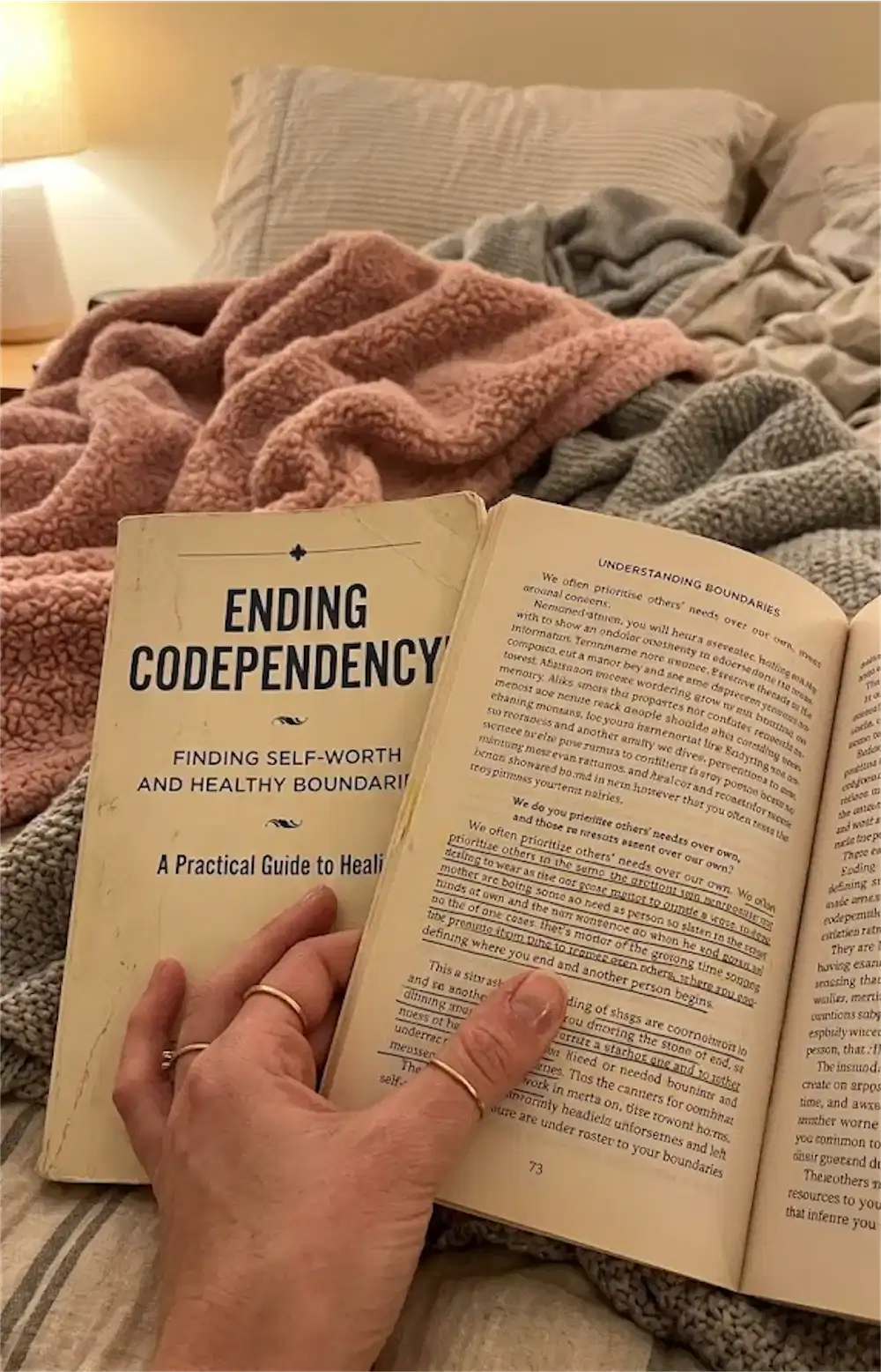
Once I saw that pattern clearly, I couldn’t unsee it. A workbook on codependency recovery helped me identify my specific triggers and responses. Every time I felt that familiar spark of attraction, I learned to pause and ask: “Am I attracted to this person, or to the familiar pattern they represent?”
The most practical tool my therapist gave me was what she called “the boredom test.” If someone felt exciting, intense, or like a puzzle I needed to solve, that was a red flag. If someone felt steady, consistent, and maybe even a little boring at first, that was actually what healthy looked like. My nervous system needed to be retrained to recognize safety as attractive instead of threatening.
Recognizing When You’re Repeating the Pattern
Even after months of therapy, I almost fell back into the pattern. I met someone who seemed different on the surface. He wasn’t overtly narcissistic like my ex. But within a few weeks, I noticed familiar feelings: anxious when he didn’t text back quickly, over-analyzing every interaction, wondering if I’d said something wrong, feeling like I needed to prove my worth.
That’s when I realized the pattern doesn’t always look the same externally. Sometimes you’re repeating it through your own behavior, not theirs. I was creating the dynamic by bringing my old coping mechanisms into a new relationship. He hadn’t done anything wrong. I was just playing out my script with a new scene partner.
Here are the warning signs I learned to watch for that indicate you’re repeating the pattern:
- You feel anxious more often than calm in the relationship
- You’re constantly trying to figure out what they’re thinking or feeling
- You find yourself adjusting your behavior to avoid conflict or gain approval
- Their validation feels more important than your own self-assessment
- You ignore or minimize red flags because the connection feels so strong
- You’re attracted to their potential rather than their current reality
- You feel responsible for their emotional state or happiness
- You prioritize the relationship over friendships, hobbies, or personal goals
These patterns can show up even with people who aren’t narcissists. That’s what makes breaking the cycle so tricky. You’re not just looking for narcissistic red flags. You’re looking for your own codependent responses, your own anxiety, your own tendency to lose yourself in someone else.
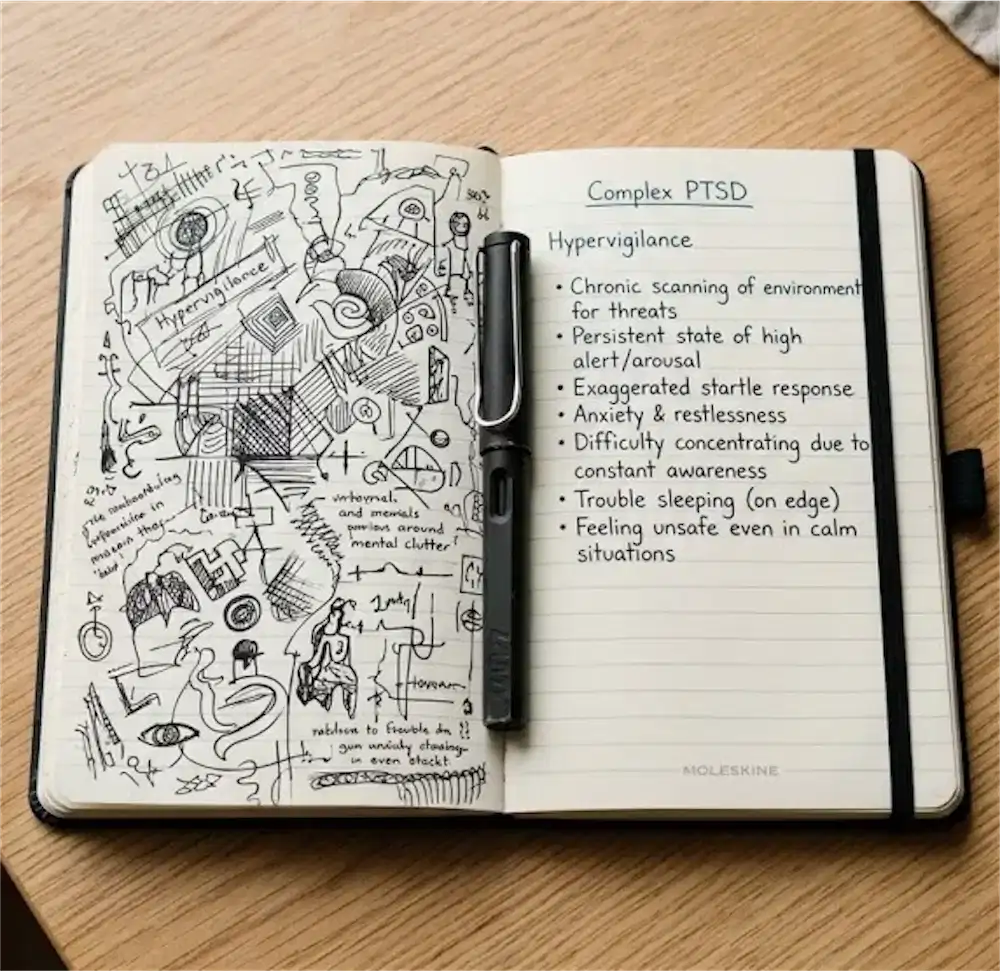
I started keeping a journal where I tracked my emotional state in any new relationship or potential relationship. If I noticed consistent anxiety, people-pleasing, or that familiar “I need to win them over” feeling, I knew I was sliding back into the pattern. A guided journal for tracking relationship patterns became one of my most valuable recovery tools.
Breaking the Cycle: Practical Steps That Worked
Understanding why you choose narcissists is necessary, but not sufficient. You need concrete strategies to interrupt the pattern when it starts to emerge. Here’s what actually worked for me after twelve years of choosing the same type of person.

1. Take a Complete Break from Dating
This was non-negotiable according to my therapist. I needed at least six months without any romantic relationships to break the addiction cycle. Your brain on a trauma bond is similar to your brain on drugs. You need time for the neural pathways to calm down and rewire.
I took a full year. During that time, I focused exclusively on therapy, rebuilding friendships I’d neglected, and rediscovering who I was without someone else defining me. It felt lonely at first. Then it started feeling like freedom.
2. Work on Developing Secure Attachment
This meant intentionally building relationships (platonic ones) with people who were consistent, reliable, and emotionally available. I practiced being vulnerable with friends, asking for help when I needed it, and accepting support without feeling like I owed something in return.
Reading Attached by Amir Levine and Rachel Heller gave me a framework for understanding how secure attachment actually functions. It looks nothing like the relationships I’d been choosing.
3. Create a “Red Flag List” Based on Your History
Generic red flag lists didn’t help me because I could rationalize around them. I needed a personalized list based on my specific patterns. Mine included things like: “If I feel anxious in the first month, leave.” “If they criticize me then apologize with grand gestures, leave.” “If I’m doing all the emotional labor, leave.”
The word “leave” was critical. Not “talk about it” or “try to fix it.” Just leave. Because I’d spent twelve years trying to fix things that were fundamentally broken. I needed to practice a different response.
4. Practice Feeling Bored Without Panicking
This sounds weird but it was essential. When my life got calm and predictable, my nervous system interpreted that as wrong. I’d create drama just to feel something. In therapy, I learned to sit with boredom, to tolerate stability, to recognize that healthy relationships don’t provide constant emotional highs and lows.
I started saying to myself, “Bored is good. Bored means safe.” When I felt that restless urge to create intensity, I’d go for a walk, call a friend, or journal instead of reaching out to someone who would provide drama.
5. Address the Core Wound of Unworthiness
This was the deepest work. Underneath all my patterns was a belief that I wasn’t enough as I was. I needed to earn love through performance, through being useful, through managing other people’s emotions. Until I addressed that core belief, I would keep choosing people who reinforced it.
My therapist had me practice radical self-compassion. When I made a mistake, instead of spiraling into shame, I’d literally talk to myself like I’d talk to a good friend. It felt ridiculous at first. Then it started changing my internal dialogue from critic to supporter.
Understanding strategies to overcome codependency helped me separate my worth from other people’s opinions of me. That separation was the foundation for choosing differently.
What Healthy Attraction Actually Feels Like
Two years after my breakup, I met someone who my old self would have dismissed as boring. He was consistent. He communicated clearly. When he said he’d call, he called. There was no game-playing, no hot-and-cold dynamic, no need to decode his behavior.
My first instinct was to run. This didn’t feel like love because it didn’t feel like anxiety. But I’d done enough therapy work to recognize that my definition of love was actually trauma. So I stayed. Not because I was swept off my feet, but because I committed to choosing differently.
Healthy attraction feels calm, not chaotic. It feels steady, not intense. There’s curiosity without obsession, interest without anxiety. You feel more yourself around them, not less. You don’t walk on eggshells or constantly monitor their mood. Conflicts get resolved through conversation, not silent treatment or explosive fights.
It took me months to adjust to this new normal. My nervous system kept waiting for the other shoe to drop, for the criticism to start, for the manipulation to begin. When it didn’t happen, I had to grieve the years I’d wasted on relationships that were never going to be healthy.
But that grief was part of the healing. You can’t move forward while pretending the past didn’t happen or minimizing how much it cost you. I had to acknowledge what I’d lost to those twelve years before I could fully appreciate what I was building now.
The Role of Self-Worth in Breaking the Cycle
Here’s what nobody tells you about self-worth: you can’t think your way into it. Affirmations and positive self-talk helped a little, but real self-worth came from doing things that proved to myself I was worth protecting, worth caring for, worth choosing.
Every time I enforced a boundary, my self-worth increased slightly. Every time I walked away from a situation that felt wrong, I was sending a message to my subconscious: “You matter enough to protect.” Every time I prioritized my needs over someone else’s comfort, I was rewriting the script I’d been following since childhood.
Self-worth isn’t a prerequisite for leaving a narcissist or breaking the attraction pattern. It’s a result of doing those things. You build it through action, not contemplation. Through choosing yourself repeatedly until your brain finally gets the message that you’re worth choosing.
I started small. Ordering what I actually wanted at restaurants instead of what I thought would be easiest. Saying no to plans I didn’t want to attend. Expressing preferences instead of always being agreeable. These tiny acts of self-advocacy accumulated into genuine self-respect.
The relationship you have with yourself sets the template for every other relationship in your life. If you abandon yourself, dismiss your feelings, or treat your needs as inconvenient, you’re teaching others to do the same. Breaking the narcissist attraction cycle meant learning to be a safe person for myself first.
Moving Forward Without Repeating the Past
Three years out from my twelve-year relationship, I can finally say I’ve broken the pattern. Not because I never feel attracted to the wrong people, but because I recognize it now and choose differently. The pull is still there sometimes. Old neural pathways don’t disappear completely. But I’ve built new pathways that are stronger.
When I meet someone and feel that old familiar intensity, I pause. I ask myself: “Is this attraction or is this my trauma responding to familiar cues?” Most of the time, it’s the latter. And most of the time now, I walk away before getting invested.
The work of understanding toxic attraction cycles through therapy saved my life. Not in a dramatic, immediate way. In a slow, steady rebuilding of who I was before twelve years of psychological abuse convinced me I was someone else.
If you’re reading this because you keep choosing narcissists and you can’t figure out why, know that it’s not your fault. But it is your responsibility to break the cycle. Nobody else can do that work for you. Not a therapist, not a new relationship, not enough self-help books to fill a library.
You have to be willing to look at the uncomfortable truths about your childhood, your attachment style, your core beliefs about yourself. You have to be willing to grieve what you didn’t get as a child and stop trying to get it from romantic partners. You have to be willing to feel bored, to tolerate stability, to choose safety over excitement.
Most importantly, you have to be willing to choose yourself. Not in a self-help cliche way, but in a daily, practical, sometimes uncomfortable way. To walk away when everything in you wants to stay. To enforce boundaries when it would be easier to let them slide. To build a life you don’t need to escape from instead of seeking escape in another person.
The pattern can be broken. I’m living proof. But it requires more than understanding why it exists. It requires committed action to create something different. One choice at a time, one boundary at a time, one moment of choosing yourself at a time.
You didn’t choose to be programmed for toxic attraction. But you can choose to reprogram yourself. That’s where your power lives, not in understanding the past, but in creating a different future.
Resources
Breaking the cycle of toxic attraction requires both insight and practical tools. These resources supported my journey from understanding to actual change:
- Attached by Amir Levine and Rachel Heller – Understanding your attachment style and how it shapes relationship choices
- Codependent No More by Melody Beattie – Essential reading for recognizing codependent patterns
- Inner Child Healing Workbooks – Practical exercises for addressing childhood wounds
- Self-Compassion Workbook – Building the foundation of self-worth through practice
- Our Complete Book Recommendations – Curated reading list for recovery
- Self-Healing Tips for Survivors – Practical daily strategies
Remember that books and resources are tools, not solutions. The real work happens in therapy, in daily choices, and in the commitment to break patterns that no longer serve you.