How to Manage Executive Dysfunction and Brain Fog at Work After a Trauma Bond
If you are trying to manage executive dysfunction and brain fog at work after a trauma bond, you probably feel like you are losing your mind. The simple acts of organizing your inbox, focusing on a spreadsheet, or answering a basic email can feel like climbing a mountain. When I escaped my 12-year toxic relationship with a partner who had both narcissistic and borderline traits, my brain was completely fried. I was deeply isolated, without any of my old hobbies, and convinced that my professional capability was gone forever.
During that dark period, I desperately searched for a practical brain fog solution for narcissistic stress to help me survive my daily nine-to-five. My therapist helped me understand that my nervous system was trapped in fight-or-flight, which directly shuts down the prefrontal cortex. Understanding this link between trauma bonds and cognitive decline is the first step toward reclaiming your career.
Have you found yourself reading the same sentence five times without absorbing a single word? It is not a permanent brain injury, even though it feels like one. Let us look at why this happens and how you can function at your job while your nervous system slowly heals.
Why Does a Trauma Bond Cause Executive Dysfunction at Work?
Executive dysfunction and brain fog after a trauma bond occur because chronic emotional abuse keeps the nervous system in a constant state of survival. This hyperarousal floods the brain with cortisol, temporarily shrinking the prefrontal cortex and impairing your memory, decision-making, and focus.

During my twelve years in that toxic loop, I lived on a constant diet of walking on eggshells. The endless cycle of love-bombing, criticism, and sudden silent treatments kept my body swimming in adrenaline. When you are constantly scanning your environment for threats at home, your brain does not have the biological energy to track project deadlines at work.
In a clinical sense, chronic trauma actually alters the physical structure of your brain. A study from Harvard Health notes that severe stress and anxiety are major risk factors for cognitive impairment and declining concentration. When your amygdala is hyperactive, it literally hijacks the energy needed for your executive functions like planning, working memory, and mental flexibility. You are not lazy, and you have not become incompetent. You are simply exhausted from surviving.
Recognizing the Signs of Trauma-Induced Brain Fog on the Job
To navigate your workday, you need to recognize how this mental exhaustion shows up in your daily routine. Recognizing these patterns helps strip away the shame associated with your drop in performance. Here are the most common challenges you might be facing right now:
- Severe short-term memory lapses: Forgetting what a colleague just asked you two minutes ago.
- Decision paralysis: Staring at a simple choice, like which task to start first, and feeling completely frozen.
- Time blindness: Losing hours to rumination and then wondering where the day went.
- Extreme sensory overload: Feeling completely overwhelmed by bright office lights, loud keyboards, or incoming Slack notifications.
In my own healing journey, I remember sitting at my desk feeling like a ghost. I had spent years defending my reality against gaslighting, which completely eroded my trust in my own perception. How could I make decisions for a company when I could barely trust my own memory? If you are stuck in this loop, learning how to exit survival mode trauma is the priority for your career and sanity.
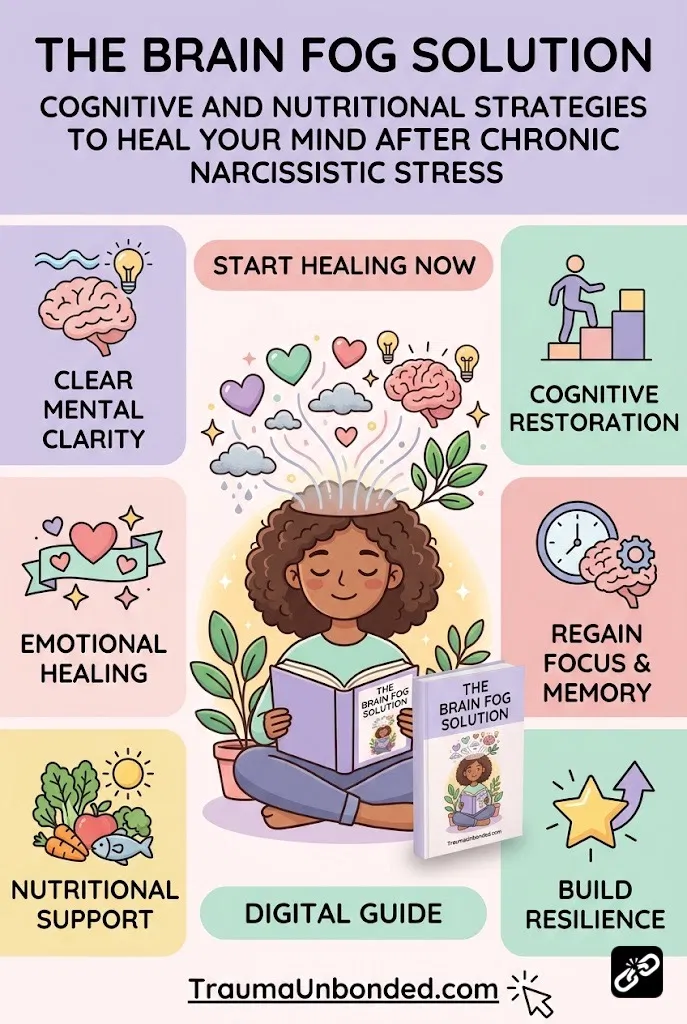
If you are tired of struggling through every single workday and want a structured, step-by-step roadmap to clear the mental clutter, we have created a guide designed specifically for this battle. It focuses on the physiological and cognitive realities of recovery so you can finally clear the haze and rebuild your professional confidence.
Practical Strategies to Reclaim Your Focus and Productivity

To survive the workday, you must stop relying on your short-term memory. Your brain is currently using all its resources to process trauma and emotional withdrawal. You need to externalize your thinking process using physical tools.
Here are a few highly practical steps that helped me rebuild my workflow when I was recovering from my toxic relationship:
- The Brain Dump Routine: Every morning, write down absolutely everything you need to do on a physical piece of paper. Do not organize it yet. Just get the tasks out of your head so your working memory does not have to carry them.
- Micro-Tasking: Break your projects down into ridiculously small steps. Instead of writing “Write monthly report,” write “Open document, type title, write introduction paragraph.” This lowers the entry barrier for your frozen brain.
- Visual Cues and Color-Coding: Use sticky notes and colored highlighters to map out your day. When your cognitive processing is low, visual indicators help you navigate your tasks without requiring heavy mental effort.
- The Five-Minute Rule: If you are completely paralyzed by a task, commit to working on it for exactly five minutes. Once you start, the friction reduces, and it becomes easier to continue.
During my recovery, I lived by sticky notes. My desk looked like a colorful mosaic, but it kept me from getting fired. If you are struggling with severe memory lapses, checking out specific methods for trauma brain fog relief can give you additional somatic tools to quiet your nervous system.
Managing Sensory Triggers and Professional Boundaries
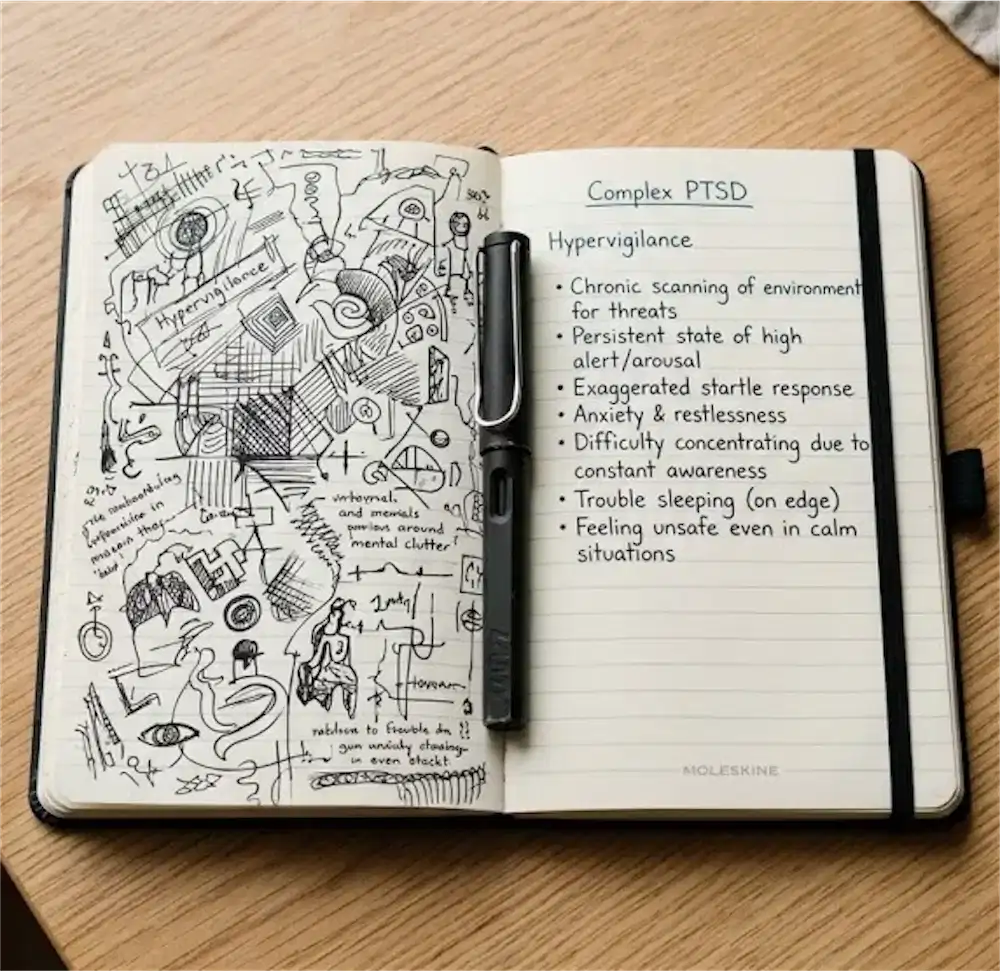
When you are healing from a trauma bond, your nervous system is in a state of hypervigilance. A sudden loud noise, a sharp tone from a manager, or an unexpected meeting request can send you straight into a panic response. To protect your energy, you must establish clear, non-negotiable boundaries at work.
If possible, wear noise-canceling headphones to block out office chatter. This simple physical boundary tells your brain that you are safe and protected in your immediate space. Use time-blocking on your calendar to create dedicated focus windows where colleagues cannot book meetings. This gives you predictable periods of quiet to work through your tasks without fear of interruption.
When my 12-year toxic relationship finally ended, I felt completely exposed to the world. Rebuilding my life required integrating essential recovery tools for narcissistic abuse, which included learning how to say no at work. You do not have to volunteer for extra projects or stay late to prove your worth when you are in active trauma recovery.
Your brain is not broken; it is merely resting after a long, exhausting war. Managing executive dysfunction is not about working harder or pushing through the pain. It is about treating yourself with immense compassion while your cognitive faculties slowly return. Over time, as your body realizes the danger has passed, your memory, quick wit, and cheerful optimism will naturally return. If you need a comprehensive, self-paced system to support your neurological healing, take a look at The Brain Fog Solution to start reclaiming your mental clarity today.

Meet Your Guide
Helen Brooks
After surviving a 12-year NPD/BPD relationship, I dedicated over a decade to studying trauma bonding and nervous system recovery. My mission is to help you break free from the fog and reclaim your authentic self.
Ready to break the trauma bond and reclaim your life?