Narcissistic Sibling: What to Do When the Golden Child Turns
Narcissistic sibling dynamics can feel like a heavy weight you never asked to carry. When the golden child turns and starts showing the same toxic traits as a narcissistic parent, the betrayal is deeply painful. If you are dealing with a brother or sister who manipulates, lies, or gaslights you, please know you are not alone in this confusion.
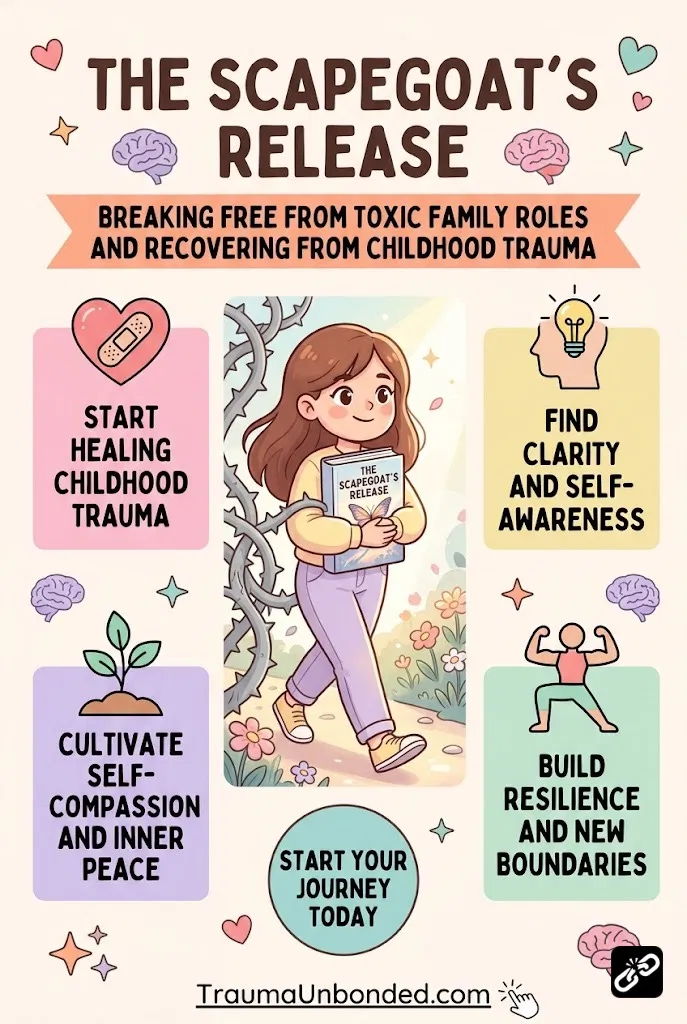
I understand this pain because I spent twelve years in a relationship with a partner who had both Narcissistic and Borderline traits. That decade plus of my life felt like a slow disappearing act where I lost my hobbies, my friends, and my spark. Learning to heal meant looking back at my family of origin and realizing that the same patterns existed there, especially with my sibling. If you are struggling to make sense of your family, checking out The Scapegoat’s Release can help you start untangling these messy connections.
Why does the golden child suddenly become the villain in your story? For years, they might have been the perfect child who could do no wrong in your parents’ eyes. But as you grow older, that role often shifts into something much darker. Have you noticed how they now use their status to belittle you or keep you in the scapegoat child position? This transition is not an accident; it is a survival mechanism they learned to keep the favor of a toxic parent.
Understanding Why the Golden Child Turns Narcissistic
The golden child is often just as much a victim of a toxic household as the scapegoat, though it looks different from the outside. They were chosen to reflect the parent’s ego. This means their entire identity is built on being “better” than others, especially you. When they realize that maintaining this status requires stepping on you, they do it without hesitation.
In my own recovery journey, I had to learn that my sibling’s behavior was a reflection of their own internal fear. They are terrified of losing their “special” status. This fear turns into the narcissistic sibling behavior we see today, including gaslighting and constant competition. Do you feel like every conversation with them is a hidden battle for dominance?
This behavior is often a part of the larger narcissistic family roles where everyone is assigned a specific job. The golden child’s job is to protect the parent and validate the parent’s worldview. If you start to speak the truth or set boundaries, the golden child will “turn” on you to protect the family secret. They become the primary enforcer of the toxic system.
The Shift from Protector to Aggressor
Sometimes, the golden child starts as your protector when you are kids. But as adult dynamics take over, they may realize that siding with you means losing their rewards from the parents. They choose the path of least resistance. This means they will mimic the narcissist’s tactics to stay in the inner circle, leaving you feeling abandoned and confused.
They might use triangulation, which is when they tell you something the parent said, or tell the parent something you said, just to create conflict. This keeps them at the center of attention while you and your parents are busy fighting. It is a cruel game that leaves you isolated. I remember feeling so alone when my sibling did this, wondering why my own flesh and blood would want to hurt me this way.
Red Flags of a Narcissistic Sibling Relationship
Identifying a toxic sibling relationship can be hard because we are told that “family is everything.” We are taught to forgive and forget, even when the behavior is abusive. But if you feel drained after every phone call, it is time to look at the signs. Does your sibling only call when they need something? Do they turn every conversation back to themselves?
One major red flag is the smear campaign. If your sibling is spreading lies about you to other family members, they are trying to ruin your reputation to keep their “golden” image intact. This is often a sign of narcissistic personality disorder traits surfacing in adulthood. They need you to be the “bad” one so they can remain the “good” one.
You might also notice intermittent reinforcement. This is when they are briefly nice to you, making you think the “old” sibling is back, only to cold-shoulder you the next day. This kept me stuck in my toxic relationship for twelve years, always hoping for the next “good” day. It creates a trauma bond that is incredibly hard to break without professional help and deep self-work.
Breaking free from these family patterns requires a specific plan to handle the guilt and the pressure from other relatives. If you are ready to stop being the target of their rage and finally find your own voice, the following resource was designed specifically for your situation.
How to Set Boundaries with a Toxic Sibling
Setting boundaries with a sibling is one of the hardest things you will ever do. You share a history, and you might still want a relationship with your parents. But your mental health must come first. If you don’t set limits, the narcissistic sibling will continue to use you as an emotional punching bag.
Start by limiting the information you share. This is often called the Gray Rock method. You become as boring as a gray rock so they have nothing to use against you. When they ask about your life, give short, one-word answers. Do not share your dreams or your struggles. They will only use that information to poke at your insecurities later.
You might also need to look into a family scapegoat healing blueprint to understand why you were chosen for this role. Understanding the “why” does not excuse their behavior, but it gives you the clarity to stop blaming yourself. I used to think I was the problem for so long. I thought if I was just a better sister, they would love me. Therapy taught me that their inability to love is a “them” problem, not a “me” problem.
Dealing with the Flying Monkeys
When you start setting boundaries, the golden child will likely recruit “flying monkeys.” These are other family members, like aunts or even your parents, who will pressure you to “just make peace.” They will tell you that “life is too short” to be angry. This is another form of gaslighting because it ignores the abuse you have suffered.
Stay firm in your truth. You do not have to set yourself on fire to keep others warm. If a family member cannot respect your boundaries regarding your sibling, you may need to limit contact with them too. This was the hardest part of my 12-year recovery journey, but it was necessary to find my original self again. I had to learn that being cheerful and optimistic was only possible once I stopped letting toxic people steal my energy.
Healing from the Scapegoat Role
Healing from childhood trauma caused by a sibling takes time. You are unlearning decades of lies about who you are. The golden child was taught they were superior, and you were taught you were “less than.” These are both lies. You are a person with inherent value, regardless of what your family says about you.
Focus on your own life. Rediscover the hobbies you lost. For me, it was getting back into reading and spending time in nature. These simple acts of self-care are an act of rebellion against a system that wanted you to stay small and miserable. Are there things you used to love before the narcissistic abuse took over your mind?
The trauma bond with a sibling is strong because it is rooted in our earliest memories. But you can break it. You can choose a new family, a “chosen family” of friends who see you for who you really are. This is how I moved from being devastated and isolated to being grounded and happy. It wasn’t easy, but it was worth it.
The most important step is to stop waiting for them to change. The golden child who has turned into a narcissist is unlikely to wake up one day and apologize. They are invested in their role. Your job is to invest in yourself. Take the steps to protect your peace, whether that means low contact or no contact. You deserve a life free from manipulation and constant criticism. If you need a structured way to walk away from these toxic roles, I highly recommend using The Scapegoat’s Release guide to navigate the complicated emotions of family estrangement and healing.

Meet Your Guide
Helen Brooks
After surviving a 12-year NPD/BPD relationship, I dedicated over a decade to studying trauma bonding and nervous system recovery. My mission is to help you break free from the fog and reclaim your authentic self.
Ready to break the trauma bond and reclaim your life?