9 Evening Routines That Heal Trauma Bond and Calm Anxiety After a Narcissistic Breakup
The evenings were the worst part for me. For 12 years, my nights revolved around someone else’s mood. Would he come home angry? Would there be another argument that somehow ended with me apologizing? When that relationship finally ended, the evenings didn’t suddenly feel free. They felt terrifying. Empty. The anxiety would peak right around sundown, and I had no idea what to do with myself.
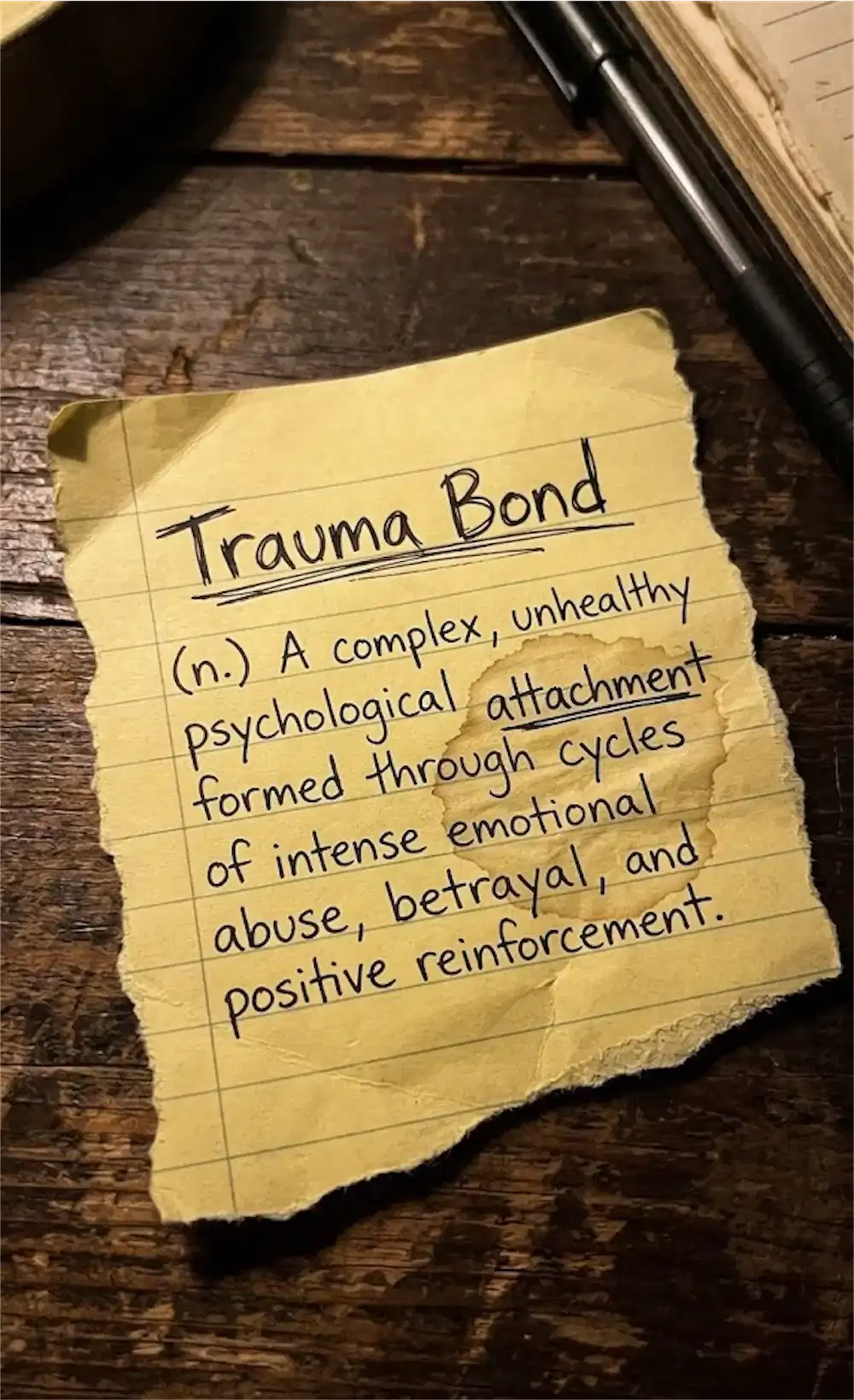
If that sounds familiar, you’re not broken. You’re living inside a trauma bond — a psychological attachment formed through cycles of abuse, reward, fear, and intermittent reinforcement. Your nervous system literally learned to brace for impact every evening. Now that the source of danger is gone, your body hasn’t gotten the memo yet.
This list isn’t about productivity hacks or “10-step morning routines.” These are the actual evening practices that helped me come back to myself — slowly, imperfectly, but for real. I’ve combined them with what the science says, because understanding why something works makes it easier to stick with.
Why Evenings Hit Harder When You’re Healing a Trauma Bond
There’s a reason bedtime feels like the hardest hour. During the day, you’re distracted — work, errands, phone calls. But as the sun goes down, the noise fades and your nervous system is left holding everything it suppressed all day.
Here’s what’s actually happening in your body: chronic low-level stress keeps the HPA axis activated, much like a motor that is idling too high for too long. After years in a toxic relationship, your stress response system was running constantly. Elevated evening cortisol levels are associated with impaired sleep and a racing mind that refuses to slow down — even when you desperately want it to.
Dr. Bessel van der Kolk, psychiatrist and Professor of Psychiatry at Boston University Medical School, spent decades proving that trauma lives physically in the body through altered nervous system patterns and muscle memory, requiring evidence-based therapeutic approaches like EMDR, somatic experiencing, and trauma-sensitive yoga to heal beyond traditional talk therapy alone. In other words, you can’t just think your way out of this. You need to work with your body, and evenings are the perfect time to start.
The 9 routines below are specifically designed to signal safety to your nervous system at the time of day when it’s most likely to spiral. None of them require perfection. You don’t have to do all nine. Start with one or two and build from there.
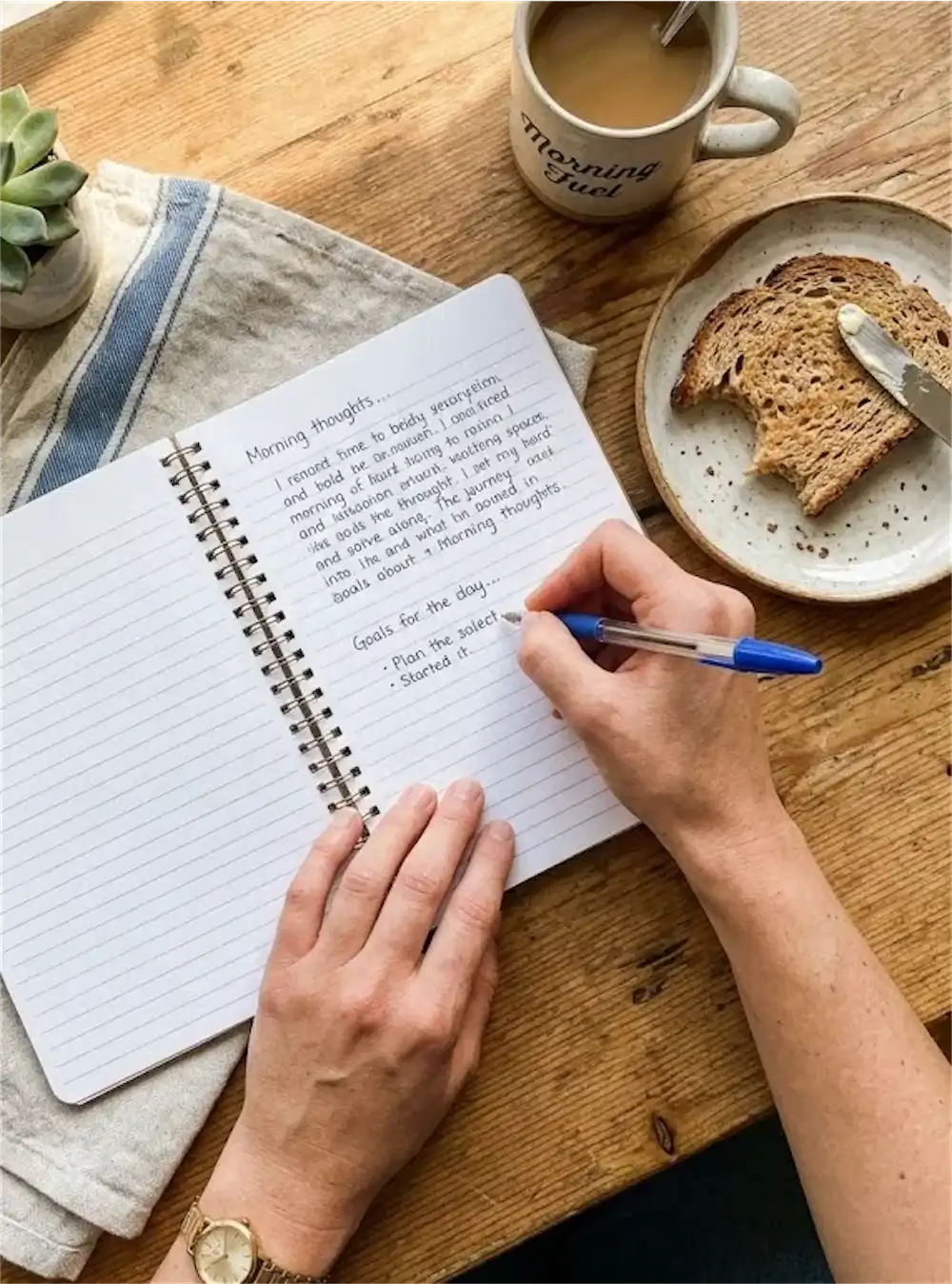
1. Journaling to Drain the Day’s Emotional Residue
Journaling saved me in ways I can’t fully quantify. Not pretty journaling with pastel pens. Messy, angry, ugly writing where I said every single thing I wasn’t allowed to say for 12 years.
The goal isn’t to write something profound. The goal is to get it out of your head and onto the page so your brain can stop looping. When you write about what happened and how you feel about it, you’re using your prefrontal cortex — the rational, language-based part of your brain — to process experiences that got stuck in the emotional, body-based parts.
Try this structure to start:
- 3 things that triggered anxiety today — write them down without judgment
- What you actually felt — not what you “should” feel, what you actually felt
- One thing you did today that your old self would be proud of
If you want a structured tool, I used a dedicated trauma recovery journal early in my healing. One that genuinely helped is the Trauma Recovery Journal for narcissistic abuse survivors on Amazon — it gives you prompts when you don’t know where to start, which is most of the time in early recovery.
2. A Hard Digital Cutoff: No Contact Extends to Night Scrolling
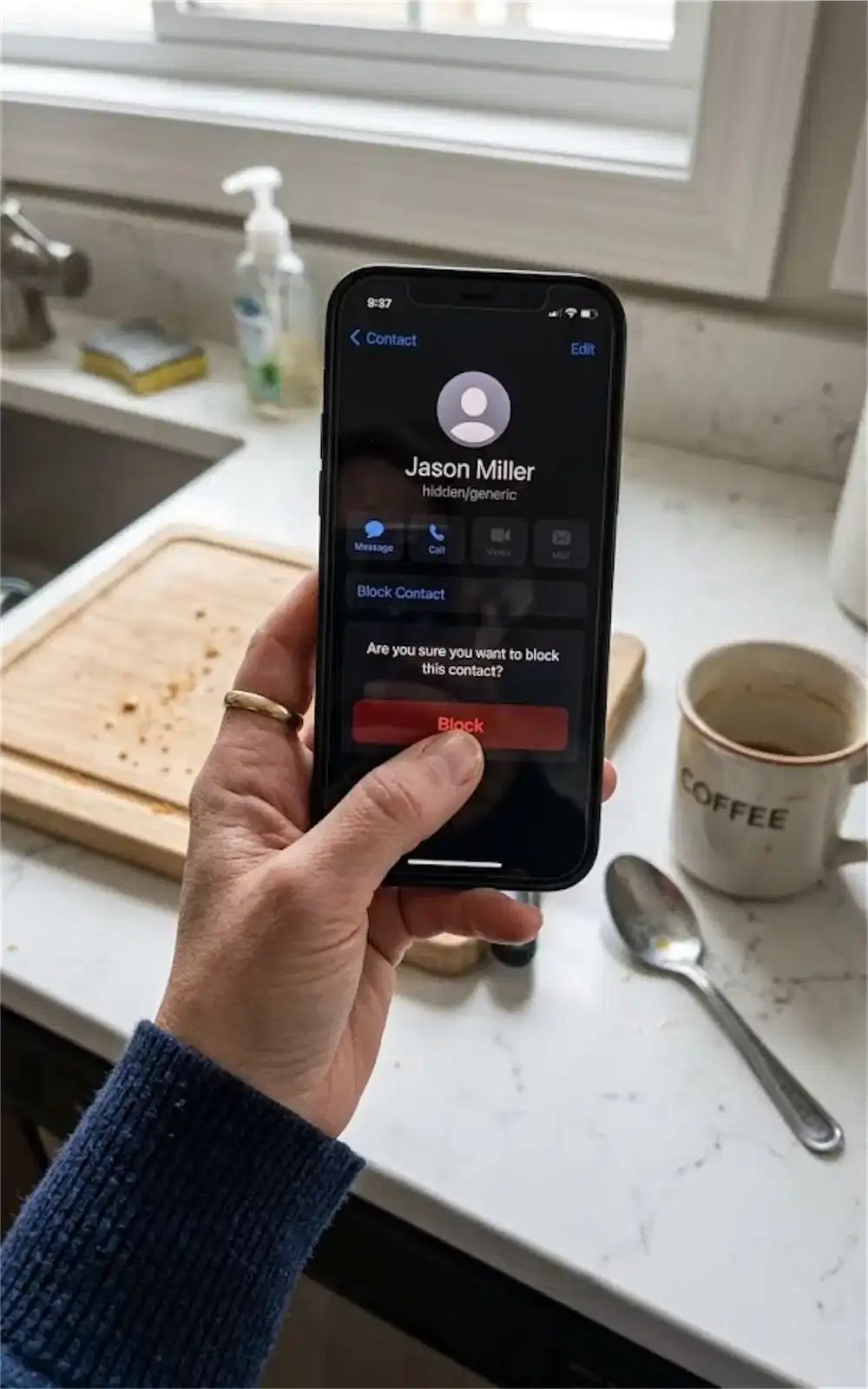
You already know about no contact. But there’s a version of contact nobody talks about — the kind where you’re lying in bed at 11 PM, scrolling through his Instagram, analyzing every photo for evidence that he’s miserable without you. Or happy. Or moved on. You’re not looking for closure. You’re feeding a trauma bond.
The phone becomes a tool for hoovering yourself back in, even when the narcissist hasn’t said a word. You do the work for them. That’s how trauma bonds operate — they wire your brain to seek the source of the pain for relief.
Set a firm digital cutoff at least 90 minutes before bed. That means:
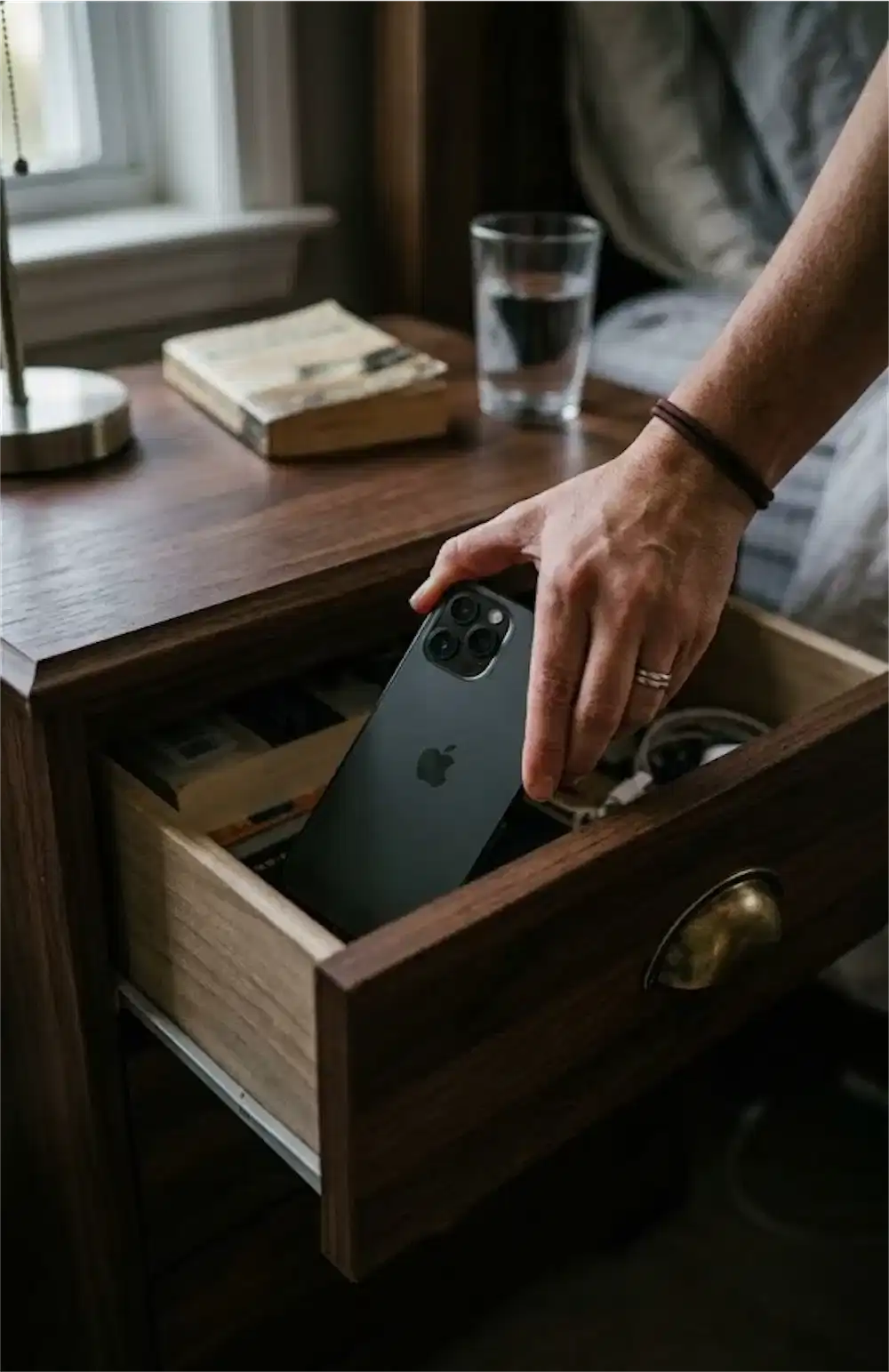
- Phone in another room or face-down in a drawer
- All social media apps temporarily removed or blocked after 9 PM
- No checking his profile, her Stories, or mutual friends’ pages
- No late-night texting with people who “update” you on his life
If you want to understand exactly why this boundary matters neurologically, read more at why no contact actually works after narcissistic abuse. The short version: every time you check up on him, you reset the withdrawal cycle and delay healing by days.
3. A Slow, Intentional Skincare or Body Care Ritual
This one sounds almost too simple to matter. I dismissed it for months. Then one evening I was standing at the sink, putting lotion on my arms, and I realized: this is the first time today I’ve touched my own body with kindness.
After years of narcissistic abuse, your body stops feeling like yours. It becomes something to manage — something that was criticized, used, ignored, or weaponized. A slow skincare ritual is a way of reclaiming it, one small gesture at a time.
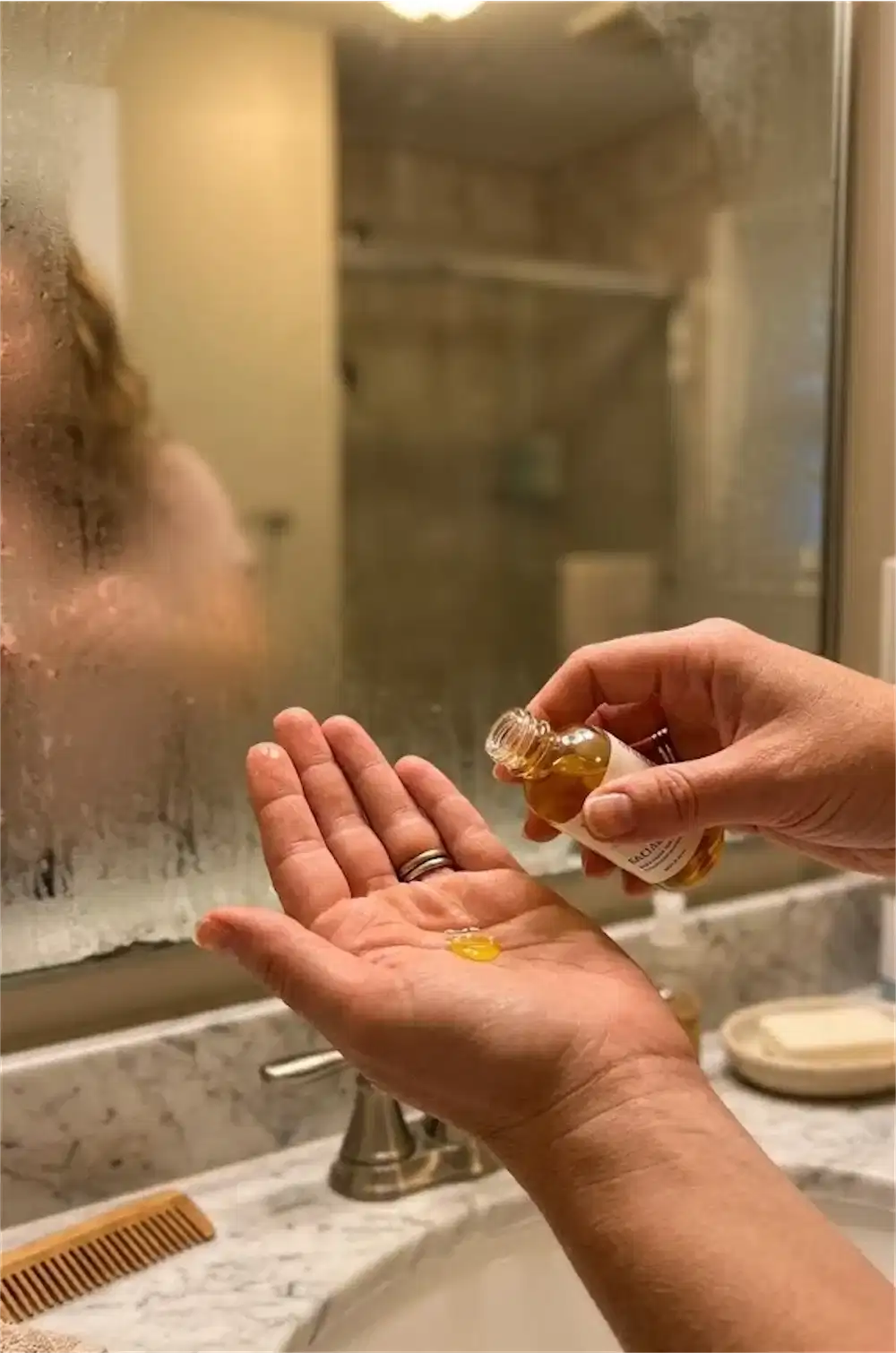
The act of slow, deliberate touch — washing your face, applying a serum, massaging your temples — activates the parasympathetic nervous system. The parasympathetic nervous system acts like a brake. It promotes the “rest and digest” response that calms the body down after the danger has passed. You’re literally telling your body it’s safe to rest.
You don’t need an expensive 12-step routine. A warm face wash, a good moisturizer, and a drop of lavender essential oil is enough to create a sensory ritual your brain starts associating with safety. A lavender essential oil for anxiety relief and sleep is worth having on the nightstand — it’s one of the few aromatherapy scents with solid research behind it for calming the nervous system.
4. Read Something That Actually Explains What Happened to You
One of the most disorienting parts of leaving a long-term toxic relationship is the cognitive chaos. You know something was wrong, but you can’t articulate it. You feel crazy. You feel like maybe it was your fault. You cycle through the whole relationship trying to find the moment it changed, but you can’t, because it never made sense to begin with.
Reading — specifically reading books about narcissistic abuse, trauma bonds, and codependency — was what began to give me language for my experience. And having language for something is the first step toward healing it.
The book I recommend first to anyone coming out of this kind of relationship is The Body Keeps the Score by Dr. Bessel van der Kolk. Drawing on more than thirty years at the forefront of research and clinical practice, Bessel van der Kolk shows that the terror and isolation at the core of trauma literally reshape both brain and body. Reading it made me understand that what happened to me wasn’t weakness — it was neurobiology.
You can grab it here: The Body Keeps the Score on Amazon. Read 15-20 pages a night before bed. It’s slow, grounding, and will leave you feeling less alone in what you went through.
For more book recommendations built around narcissistic abuse recovery specifically, visit the recommended books section of this site — everything listed there has personally been part of my recovery shelf.
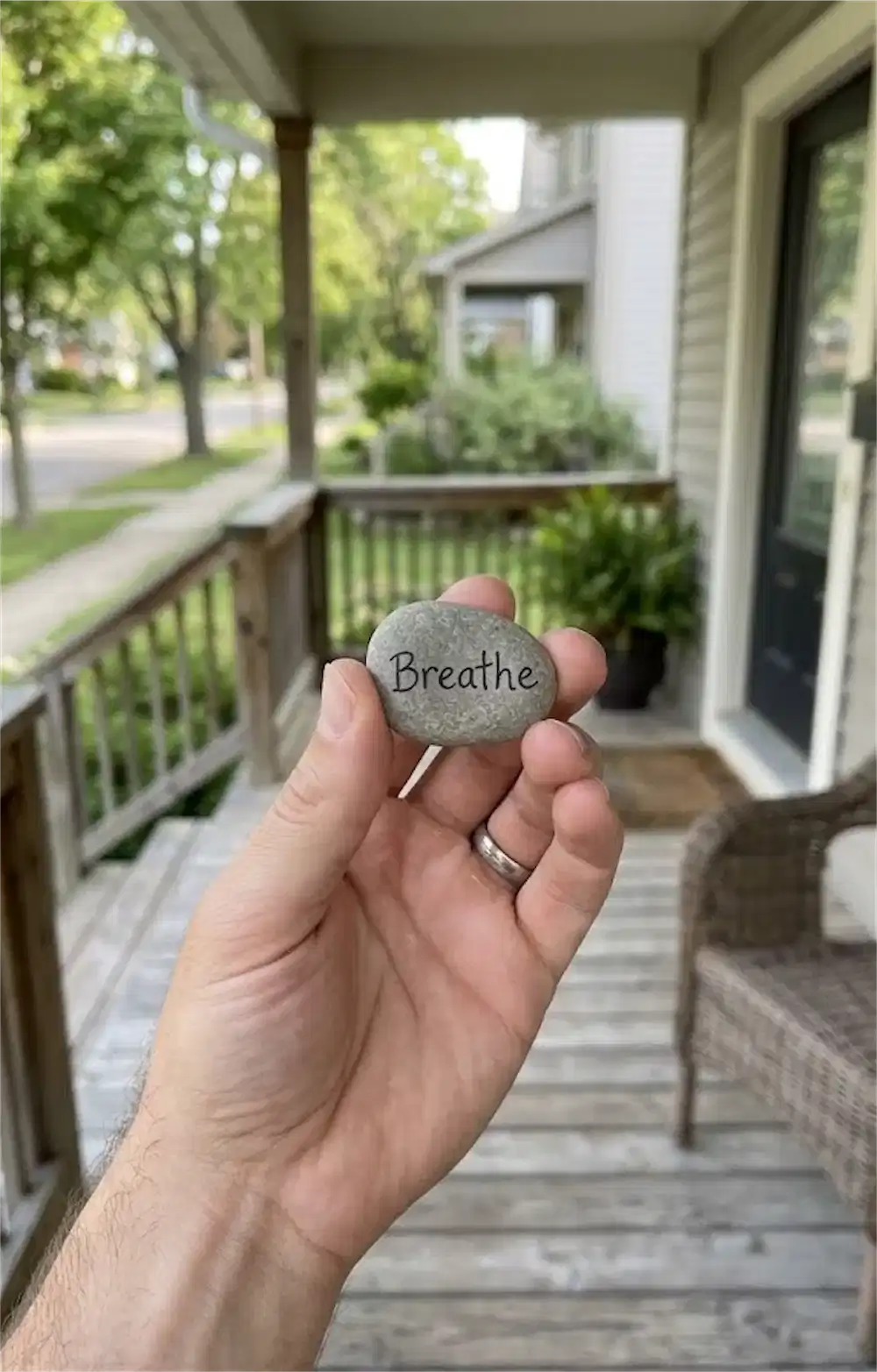
5. Box Breathing or the 4-7-8 Technique to Calm Anxiety Fast
Breathing exercises get dismissed as “too basic” by people who have never used them consistently. Those people also tend to be the ones still awake at 2 AM with a racing heart, running through arguments that ended two years ago.
Here’s why breathing works at a biological level: approaches like yoga, mindfulness, and somatic experiencing focus on helping the nervous system feel safe again, allowing the brain and body to relearn regulation and connection. Controlled breathing is the simplest, most accessible way to access that shift on your own, without a therapist present.
Box Breathing (used by military and first responders for acute stress):
- Inhale for 4 counts
- Hold for 4 counts
- Exhale for 4 counts
- Hold for 4 counts
- Repeat 4-6 cycles
The 4-7-8 Technique (for anxiety and sleep onset):
- Inhale for 4 counts
- Hold for 7 counts
- Exhale slowly for 8 counts
- Repeat 3-4 times
I used to do this in the car in the parking lot outside my apartment before I could even go inside. Some evenings it was the only thing that kept me from texting him. It works. The extended exhale is the key — it’s what activates the vagus nerve and triggers the parasympathetic brake.
6. Gentle Yoga or Stretching to Release Stored Tension From the Body
After years in a high-alert relationship, tension lives in your body in very specific places. Jaw. Shoulders. Chest. Hips. You probably don’t even notice it most of the time because it’s just become normal. But it’s there, and it won’t resolve on its own.
Somatic Experiencing, developed by Peter Levine, works with the body’s incomplete defensive responses. Remember how trauma can leave the body stuck in fight, flight, or freeze? This approach helps people safely complete those interrupted survival actions. Evening yoga and stretching is a simplified, accessible version of this principle — you’re helping your body physically finish processing what it started during the stress response.
You don’t need a gym or a class. Even 10-15 minutes of:
- Child’s pose
- Seated forward fold
- Hip-opening pigeon pose (hips store a tremendous amount of emotional tension)
- Legs up the wall (deeply restorative for the nervous system)
…can make a tangible difference in how quickly you fall asleep and how much anxiety you carry into the next morning. A good non-slip yoga mat for home practice is worth having nearby — keeping it rolled out in your bedroom means you’ll actually use it.
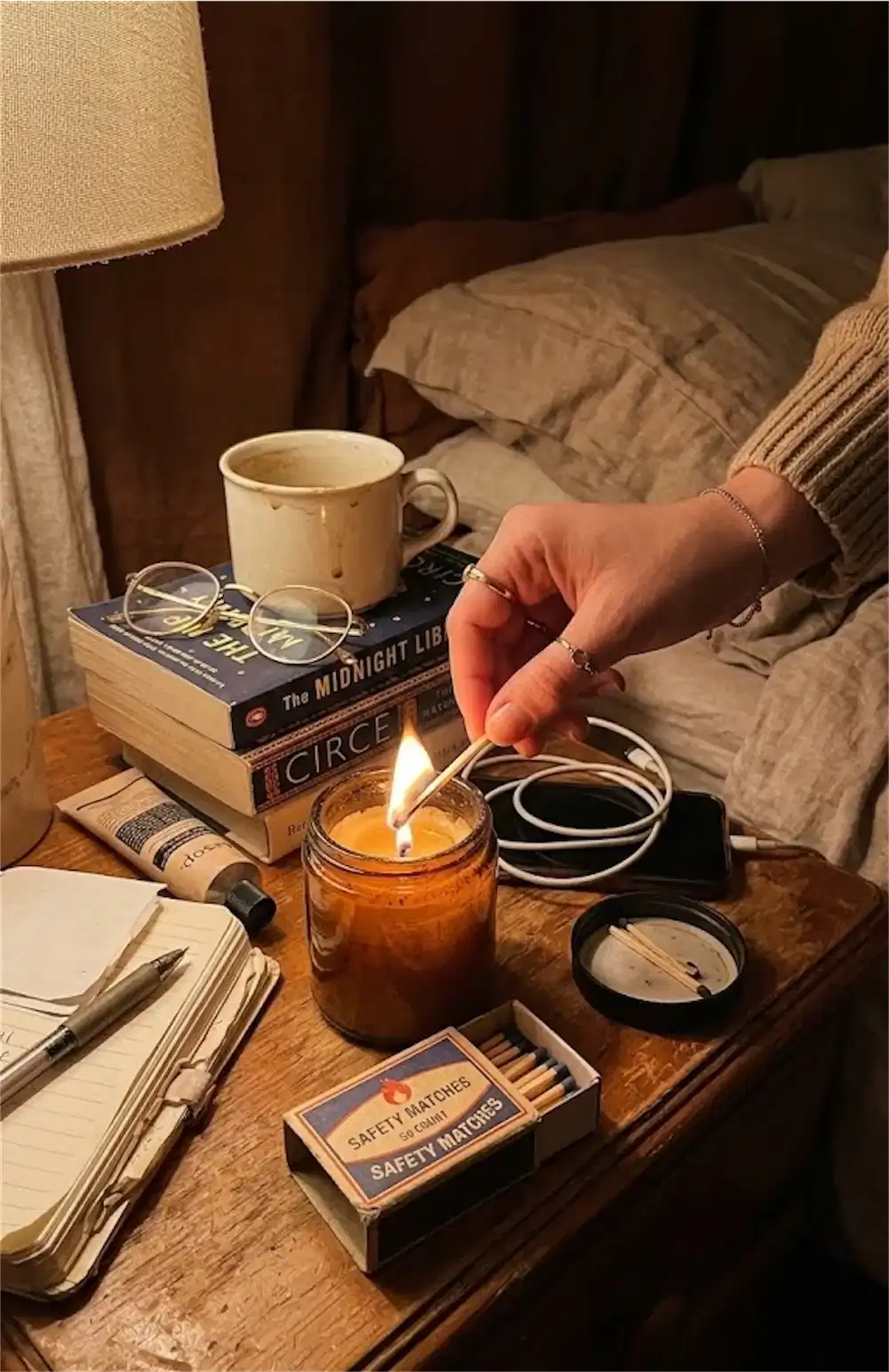
7. Light a Candle and Build a Sensory Safety Anchor
This might sound almost embarrassingly small. But here’s what it actually does: it creates a consistent sensory cue that tells your nervous system “we are safe right now.” Over time, your brain learns to associate the act of lighting that candle with calm. This is called an anchor, and it works by training your nervous system through repetition.
In a trauma bond relationship, your nervous system was constantly scanning for threat cues — his tone of voice, the way the door closed, whether he looked at you when he walked in. You were living at a baseline level of vigilance that was completely exhausting. A sensory anchor does the opposite — it becomes a reliable signal that you are in your space, you are safe, and tonight is yours.
Pair the candle with a specific scent (vanilla, sandalwood, eucalyptus), a specific playlist or ambient sound, or a specific tea. The combination of cues stacks the signal. Within a few weeks, your body starts to relax the moment you begin the ritual, before you’ve even done anything else. It sounds too simple. It actually works.
8. Listen to a Trauma Recovery Podcast or Audiobook Instead of Doom-Scrolling
In the first few months after leaving my relationship, I couldn’t read. I couldn’t focus. But I could listen. Podcasts about narcissistic abuse, trauma bonds, codependency recovery — they became my lifeline during the hours when I would have otherwise been on my phone, either checking his social media or catastrophizing into the dark.
There’s something specific about hearing another human voice talk calmly and knowledgeably about what you went through. It interrupts the shame spiral. It makes you feel less alone. And it replaces the mental chatter with something that’s actually moving you forward.
Some formats that work especially well in the evening:
- Audiobooks: Especially ones like Why Does He Do That? by Lundy Bancroft or Codependent No More by Melody Beattie — you can find Codependent No More in audiobook format on Amazon
- Narcissistic abuse recovery podcasts: Short 20-30 minute episodes work best at night — enough to feel grounded without overstimulating
- Sleep meditations: Specifically trauma-informed ones that work with the nervous system rather than just telling you to “clear your mind”
The key is to choose something that educates or soothes rather than escalates. True crime podcasts and news at 10 PM are not recovery tools.
9. Close the Night With Gratitude or Affirmations — And Mean It
I know. Affirmations feel fake when you’re in the middle of grief. Saying “I am worthy of love” when you’re crying into a pillow at midnight feels like a joke. But there’s a version of this that actually works, and it’s different from toxic positivity.
What works is micro-gratitude — not “I’m grateful for my amazing life,” but “I’m grateful that I made it through today.” Not “I love myself,” but “I chose not to text him tonight, and that was strong.” The bar is real and low. That’s the point.
Write three things at the end of each night:
- One small thing you did for yourself today
- One moment that felt even slightly okay
- One true thing about who you are that the relationship tried to take from you
Over time — and I mean months, not days — this practice rewires the internal monologue that narcissistic abuse installs. The voice that says “you’re too much” or “you deserved it” gets quieter. Your own voice gets louder. For more on what that shift actually looks like, read recognizing self-doubt as a sign of narcissistic abuse recovery — knowing where you are in the process makes it easier to trust that you’re moving.
How to Actually Build These Into a Routine Without Burning Out
The biggest mistake people make when they discover evening routines during recovery is trying to implement all of them at once. That’s not healing. That’s perfectionism wearing a wellness costume. And perfectionism is often a trauma response in itself — especially if you spent years in a relationship where nothing you did was ever good enough.
Here’s a realistic approach:
- Week 1: Pick one routine. Just one. Do it every night, even imperfectly.
- Week 2-3: Add a second. Combine them into a 20-minute block.
- Week 4+: Assess what’s actually helping. Drop what isn’t. Keep what is.
You’re not building a perfect evening routine. You’re building evidence — for your own nervous system — that nights are safe now. That takes time, repetition, and a lot of self-compassion.
For more on what daily recovery actually looks like (not the Instagram version), check out practical self-healing tips for narcissistic abuse survivors — it covers the messy middle ground that most resources skip over.
And if you’re also struggling with mornings — which is completely normal, since the beginning and end of each day tend to be the hardest — the morning routines for NPD breakup recovery article pairs directly with everything here.
The Real Takeaway
Your evenings are not a problem to solve. They’re a nervous system that learned to survive something genuinely hard. These routines aren’t about “fixing yourself” — because you’re not broken. They’re about consistently showing up for yourself at the time of day when, for years, you were bracing for someone else’s chaos.
Start tonight. One thing. Five minutes. And tomorrow night, do it again.
Recommended Resources
These are books, tools, and resources I personally used or recommend for healing from a trauma bond and rebuilding your evenings from the ground up:
- The Body Keeps the Score by Bessel van der Kolk — the foundational science of how trauma lives in the body and how to heal it. Find it on Amazon
- Codependent No More by Melody Beattie — a book I read and re-read in year one of recovery. It reframes the relationship with yourself in a way that changes everything. Find it on Amazon
- Trauma Recovery Journal — a structured journal with prompts specifically for survivors of emotional and narcissistic abuse. Find options on Amazon
- Why Does He Do That? by Lundy Bancroft — answers the questions you’ve been asking yourself for years with startling clarity. Find it on Amazon
- Magnesium Glycinate Supplement — one of the most evidence-backed supplements for sleep and anxiety, especially when the nervous system has been under chronic stress. Browse options on Amazon
Some links in this article are affiliate links. If you purchase through them, I may earn a small commission at no extra cost to you. I only recommend things I’ve genuinely used or believe in.

Meet Your Guide
Helen Brooks
After surviving a 12-year NPD/BPD relationship, I dedicated over a decade to studying trauma bonding and nervous system recovery. My mission is to help you break free from the fog and reclaim your authentic self.
Ready to break the trauma bond and reclaim your life?