How to Break No Contact When You Have Kids with a Narcissist: A Parallel Parenting Guide
Learning how to break no contact when you have kids with a narcissist is one of the most painful transitions you will ever face. When I finally walked away from my 12-year toxic relationship, I thought complete silence was my only path to sanity. I was isolated, drained of joy, and spent months trying to rebuild my life while recovering from severe codependency in therapy. But when children are involved, a permanent wall of silence is rarely a luxury we can keep.
You might feel terrified that opening the door even a crack will invite the old chaos back into your living room. How do you protect your mental health while coordinating school schedules and weekend handovers? The answer lies in shifting your mindset from standard cooperation to a structured Parallel Parenting Strategy that keeps your communication minimal and businesslike.
We are going to walk through the steps to manage this shift without falling back into old trauma loops. My goal is to help you move from a place of fear to a place of absolute structure, so you can raise your kids in peace.
Shifting from No Contact to Low Contact Without Losing Your Sanity
During my recovery, my therapist helped me realize that contact with an abusive ex does not have to mean a return to the old dynamic. You are not going back to the relationship; you are setting up a strict business relationship where the only commodity is your child’s well-being. This shift requires you to build a thick emotional wall that your ex cannot scale.
When you break no contact for the sake of your children, you must establish new rules immediately. The old days of picking up the phone to hear them yell or manipulate are over. Every interaction must be documented, low-frequency, and completely focused on schedules.
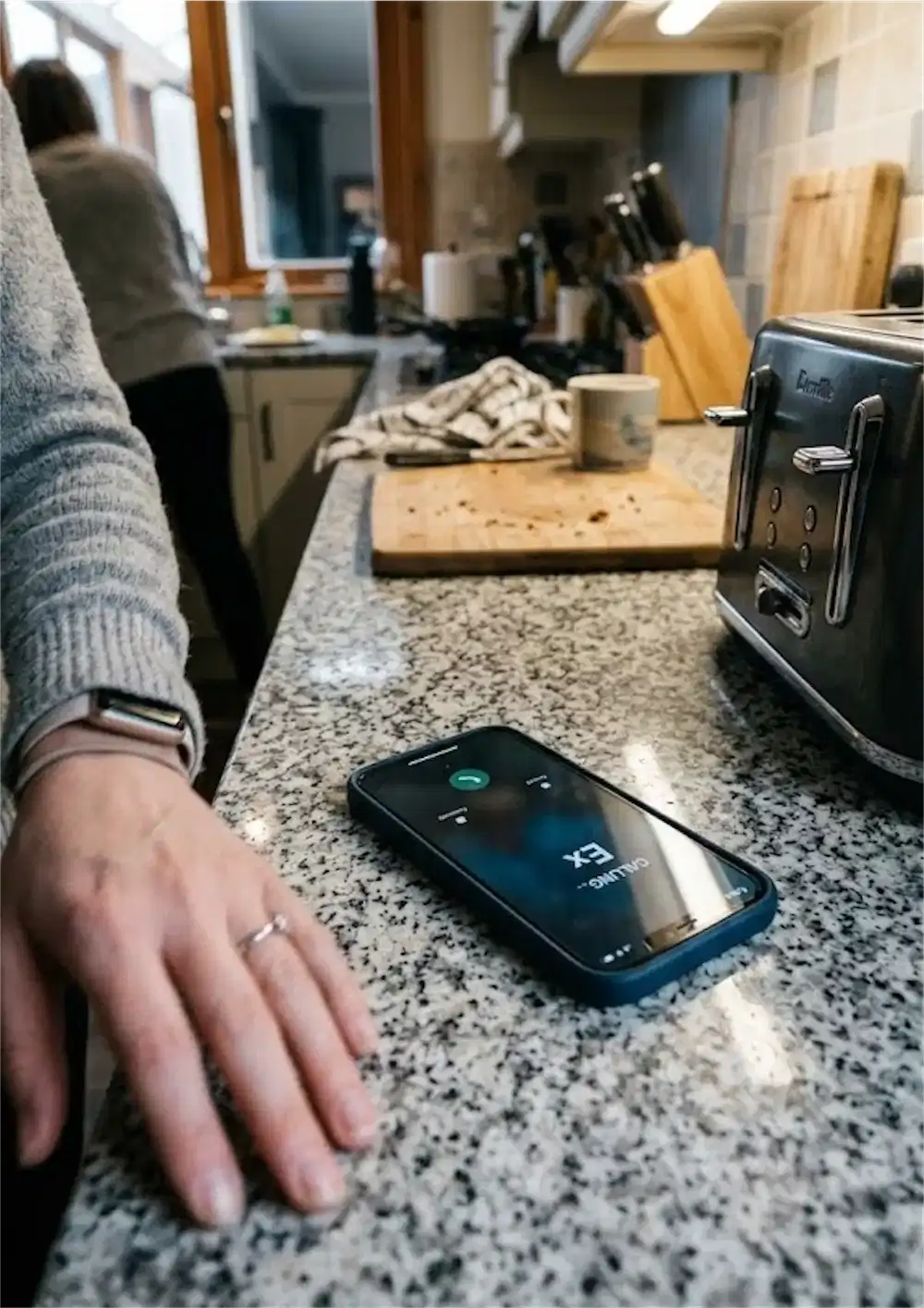
Do you find yourself shaking every time your phone buzzes with their name? That is your nervous system remembering the years of walking on eggshells. By transitioning to a structured approach, you teach your body that you are now in control of when and how you respond.
Transitioning to Parallel Parenting: The Only Method That Works
Traditional co-parenting requires teamwork, open communication, and mutual respect. Let’s be honest: those qualities do not exist when dealing with a high-conflict ex who has narcissistic or borderline traits. Trying to co-parent with someone who thrives on chaos will only keep you trapped in a cycle of endless arguments.
Instead, you need a grey rock parenting strategy that treats each household as a completely separate entity. Under a parallel parenting model, you do not consult each other on minor daily decisions. You do not discuss parenting styles, bedtimes, or diet choices.
You run your home your way, and they run theirs their way, as long as the children are safe. This method limits the opportunities for your ex to use your children as pawns to hurt you. It feels unnatural at first, especially if you are used to keeping the peace, but it is the single best way to protect your mental health.
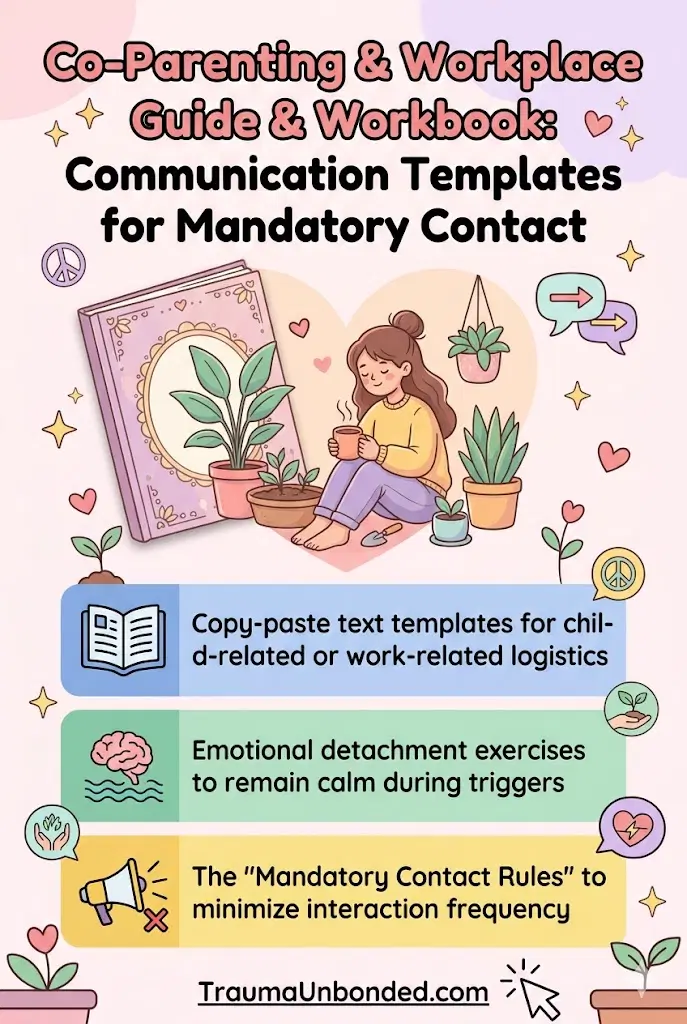
Transitioning from a toxic dynamic to a structured, businesslike system takes practical tools and exact communication scripts. To help you handle the daily logistical challenges of dealing with a high-conflict ex without losing your mind, I highly recommend using a step-by-step workbook designed for this exact transition.
Essential Rules of Engagement for Breaking No Contact
To keep yourself from falling back into old habits of defending yourself or explaining your choices, you must implement strict rules of engagement. When I first broke my silence after my 12-year relationship ended, I made the mistake of replying to essays of blame. I had to learn the hard way that every word you write can be used to keep you hooked.
1. Use a Dedicated Parenting App for All Communication
Remove your personal phone number and email from the equation. Insist on using a court-approved parenting app like OurFamilyWizard or TalkingParents. These platforms keep a chronological, unalterable record of all messages, which is useful if you end up surviving a custody battle in court.
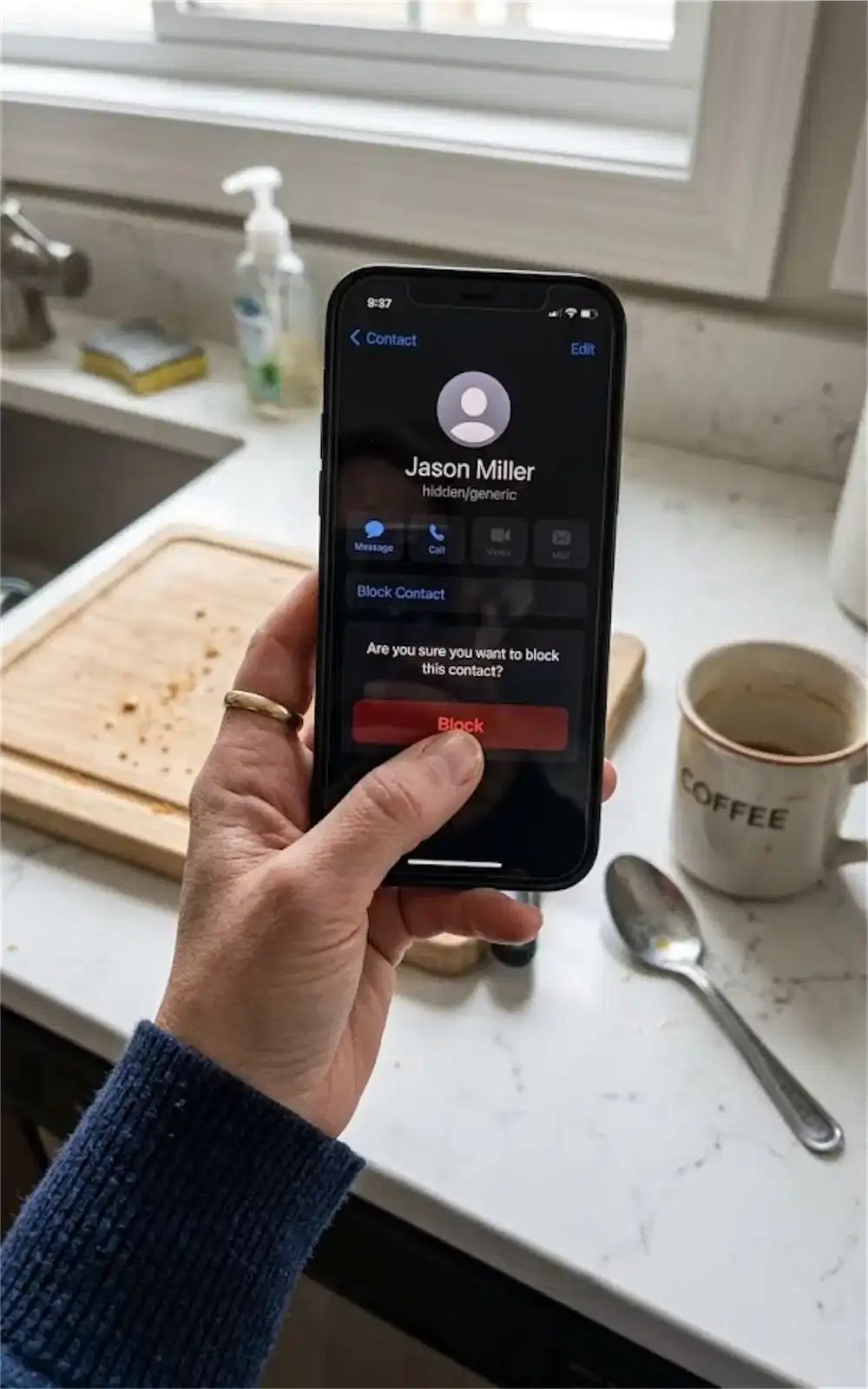
Knowing that a judge can read every single message often forces a high-conflict ex to tone down their aggression. If they try to text or call your personal phone, do not answer. Block their number on your phone and leave the parenting app as the only open channel.
2. Stick Strictly to Logistics and Timelines
When you write messages, think of yourself as a logistics manager at a shipping company. Keep your messages brief, factual, and completely free of emotion. Keep them focused solely on schedules and immediate necessities.
If they send you a long email detailing how you ruined their weekend or how bad of a parent you are, do not defend yourself. Simply extract the single question hidden in the noise. If they ask, “Can I pick up our child at 5 PM instead of 4 PM?” your reply should be: “Yes, 5 PM works.”
Protecting Your Peace and Managing Your Nervous System
When you break no contact, your body will likely react before your mind does. You might experience a racing heart, shallow breathing, or a pit in your stomach when you have to see them at drop-offs. This is a normal trauma response, especially after surviving years of emotional abuse.
To manage this physical anxiety, establish solid boundaries around exchanges. Choose public places for drop-offs, like a busy grocery store parking lot or a local library, where they are less likely to cause a scene. If possible, arrange for exchanges to happen directly through school or daycare, so you never have to stand face-to-face.
Your children do not need to see you arguing with your ex, and they do not need to carry the burden of your tension. By setting up these physical and digital boundaries, you create a safe container for your kids while maintaining your own mental health.
Handling the Fear of Re-Engaging With Their Traps
One of the biggest hurdles when you break no contact is the fear that they will try to pull you back in with fake kindness or emergency situations. High-conflict individuals are masters at creating artificial crises to force a response from you. They might suddenly claim they are sick, or ask for your advice on something unrelated to the kids.
Remember that you are only obligated to respond to immediate, genuine emergencies regarding your children’s health and safety. If they try to drag you into a discussion about your past relationship or their emotional state, ignore it. Silence is a valid response to any message that does not require logistical coordination.
It took me a long time to realize that I did not owe my ex an explanation for my silence. You have the right to ignore the bait and focus solely on your path forward. Your kids deserve a parent who is calm, grounded, and fully present, which is only possible when you protect your energy.
Re-establishing contact with a toxic ex for the sake of your children is incredibly tough, but you are more than capable of handling it. By using a parallel parenting model, keeping your communication strictly logistical, and protecting your nervous system with clear boundaries, you can give your kids a stable, peaceful childhood. If you need step-by-step help setting up these communications, grab your copy of the Co-Parenting & Workplace Guide & Workbook today to start taking your power back.

Meet Your Guide
Helen Brooks
After surviving a 12-year NPD/BPD relationship, I dedicated over a decade to studying trauma bonding and nervous system recovery. My mission is to help you break free from the fog and reclaim your authentic self.
Ready to break the trauma bond and reclaim your life?