Your Survival Kit for the First 30 Days of No Contact with a Toxic Partner
The first 30 days of no contact with a toxic partner can feel like trying to survive a severe physical addiction while navigating intense emotional heartbreak.
When I finally ended my 12-year relationship with a partner who showed both narcissistic and borderline traits, I was completely devastated and isolated. I had no hobbies left, few friends, and felt like my entire life was a miserable wreck.
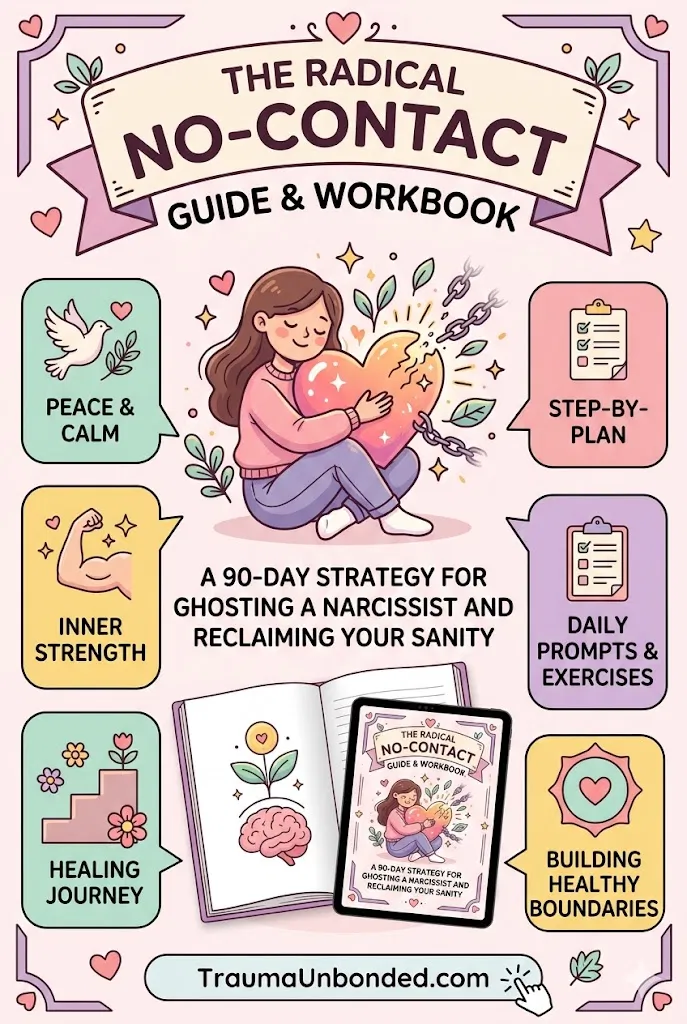
I only made it through those brutal first few weeks by relying on structured support, which is why I recommend using the Radical No-Contact Guide & Workbook to help keep your boundaries firmly in place.
Why the First 30 Days of No Contact with a Toxic Partner Are the Hardest
The first 30 days of no contact with a toxic partner are highly difficult because your brain is undergoing biochemically driven withdrawal from a trauma bond. To successfully break this cycle, you must cut off all avenues of communication to allow your nervous system to start recovering from chronic stress.
During my twelve years in that toxic cycle, I spent almost every single day walking on eggshells. My ex used gaslighting, which is a mind game where they twist reality to make you doubt your own memory, making you feel completely crazy.
They would also use hoovering, which is when they try to pull you back into their web with dramatic emergencies or sudden declarations of love. If you do not have a clear plan, you will likely fall for these tactics and break your silence.
When you initiate a toxic relationship breakup, your brain does not react like it would to a normal separation. Psychology Today explains how trauma bonds form around chaos and survival instead of safety, keeping your nervous system in a constant state of hyperarousal.
Does your phone feel like it weighs a hundred pounds, constantly pulling your hand toward it to check for a message? You are going to experience intense trauma bond withdrawal symptoms that feel identical to a drug detox.
If you are struggling to make sense of this pain, reading a structured toxic breakup survival guide can give you the concrete steps to protect your mind.
To help you stay on track and prevent the temptation to break your silence, I designed a daily structured system. This workbook provides the precise day-by-day actions, digital blocking strategies, and emotional scripts to protect your peace.
Your Day-by-Day Survival Tools for Staying Strong
1. Establish a Complete Digital Boundary
You cannot heal from a toxic connection while keeping a tiny window open to their lives. Blocking their phone number, email address, and social media accounts is the foundation of your recovery.
Do not check their online status or look at what they are posting. Every time you peek, you inject a fresh dose of cortisol into your system, which completely resets your recovery clock.
2. Implement the 24-Hour Delay Strategy
The urge to contact your ex will hit you in intense, sudden waves. When this happens, promise yourself that you will wait exactly 24 hours before making any moves.
Usually, the chemical panic peak will pass within a few hours. Once your rational mind recovers, you will look back and feel incredibly relieved that you stayed strong.
3. Use Physical Grounding Objects
When your mind starts spinning with obsessive questions about what they are doing, your body goes into panic mode. Use a physical object like a cold stone or a key ring to bring your awareness back to the present.
Focus entirely on the sensory details of the object in your hand. This simple exercise helps signal to your nervous system that you are safe in this exact moment.
Grieving the Fantasy and Finding Yourself Again
One of the hardest parts of surviving a toxic relationship breakup is realizing you are not just grieving a person. You are actually grieving the future you hoped you would build with them.
During my 12-year relationship, I spent years waiting for my partner to return to the loving person they were at the very beginning. I had to learn that the sweet, caring version of them was simply a mask designed to hook me.
When you stop waiting for them to change, the real healing can finally begin. This is a crucial step on your no-contact recovery roadmap as you reclaim your personal power.
How many times have you replayed past arguments in your head, wondering if you could have said something different to fix things? Letting go of that imaginary fix is where true peace is born.
Reconnecting with Your True Self
In my own healing journey, my therapist helped me see how codependency had caused me to abandon my own identity. I spent so much time managing my ex’s emotional volatility that I forgot what brought me joy.
During the first month of no contact, I forced myself to spend fifteen minutes a day doing something purely for myself. Whether it was playing a forgotten album, making a solo cup of coffee, or walking in nature, these tiny acts helped me slowly return to my original, cheerful self.
You might feel completely blank or empty right now, and that is a very normal response to trauma. Do not pressure yourself to find a new passion overnight; simply focus on tiny steps that make you feel slightly more grounded.
What to Expect in Your First 30 Days
Your healing journey will not be a straight line. Having a realistic view of what lies ahead will help you stay grounded when things get tough:
- Days 1 to 7 (The Panic Phase): You will likely feel physical anxiety, insomnia, and an intense urge to reach out. Focus on hour-by-hour survival.
- Days 8 to 15 (The Denial Phase): Your brain will try to romanticize the relationship, making you remember only the good times. Write down a list of their worst behaviors to read when you doubt yourself.
- Days 16 to 21 (The Anger Phase): As the fog lifts, you might feel a rush of rage about how you were treated. Use this anger as fuel to keep your boundaries locked down.
- Days 22 to 30 (The Calm Phase): You will begin to experience brief moments of genuine peace and clarity. This is proof that your nervous system is starting to regulate.
Remember that healing takes time, especially if you spent years adjusting your reality to keep a toxic partner happy. You are rebuilding your entire life from scratch, and that requires incredible self-compassion.
The first 30 days are purely about survival, but they set the stage for you to return to your cheerful, grounded, and optimistic self. By keeping your boundaries firm and taking it one day at a time, you are actively choosing your freedom. If you want a structured, daily companion to walk you through this journey, consider downloading the Radical No-Contact Guide & Workbook today.

Meet Your Guide
Helen Brooks
After surviving a 12-year NPD/BPD relationship, I dedicated over a decade to studying trauma bonding and nervous system recovery. My mission is to help you break free from the fog and reclaim your authentic self.
Ready to break the trauma bond and reclaim your life?