The Trauma Bond Breakdown: How to Deconstruct Your Attachment to a Toxic Person
A trauma bond breakdown is the painful yet necessary process of deconstructing your attachment to a toxic partner. When you find yourself unable to walk away from a relationship that is actively destroying you, you are not weak; you are trapped in a biological loop. Having lived through a twelve-year relationship with a partner who displayed severe narcissistic and borderline personality traits, I know exactly what it feels like to have your entire identity systematically erased.
During that decade-long storm, I was isolated, completely lost my hobbies, and felt deeply miserable. But through trauma-informed therapy, I learned that this painful attachment was not true love, but rather a structural addiction to emotional instability. To begin reclaiming your life, utilizing a structured tool like a trauma bond recovery guide and workbook can help you safely rebuild your boundaries and sense of self.
If you are struggling to break free from this painful loop, you must first understand the mechanics of what keeps you chained. Why do we crave the very person who hurts us? Let us dissect the survival mechanisms holding you hostage and lay out a clear path to freedom.
What is a Trauma Bond Breakdown?
A trauma bond breakdown occurs when a survivor consciously deconstructs their chemical and psychological attachment to an abusive partner, shifting from survival-driven denial to cognitive clarity.

During my twelve-year relationship, I spent years waiting for the kind, loving version of my ex to return. When they devalued me, ignored my presence, or subjected me to the silent treatment, it felt like physical withdrawal. That is because the brain reacts to toxic dynamics in the same way it reacts to substance abuse, building a powerful biochemical addiction that is incredibly hard to break.
According to clinical insights on Psychology Today, a trauma bond thrives on cycles of negative reinforcement interspersed with occasional bursts of affection. This emotional rollercoaster keeps your nervous system in a constant state of high alert, leaving you desperate for the next crumb of validation. How do we begin to untangle ourselves from such an intense physiological grip?
Deconstructing the Intermittent Reinforcement Cycle
The glue that binds you to a toxic person is unpredictable kindness. In psychological terms, this is known as the intermittent reinforcement cycle. When a partner alternates between cruelty and intense love bombing, your brain becomes flooded with dopamine during the reconciliation phases.
Have you ever noticed how the sweet moments feel incredibly intense after a massive, screaming argument? That is not deep passion; it is your survival biology seeking relief from extreme stress. In my own recovery, I had to realize that my ex did not change during those warm periods. They were simply resetting my tolerance for pain so the cycle could start all over again.
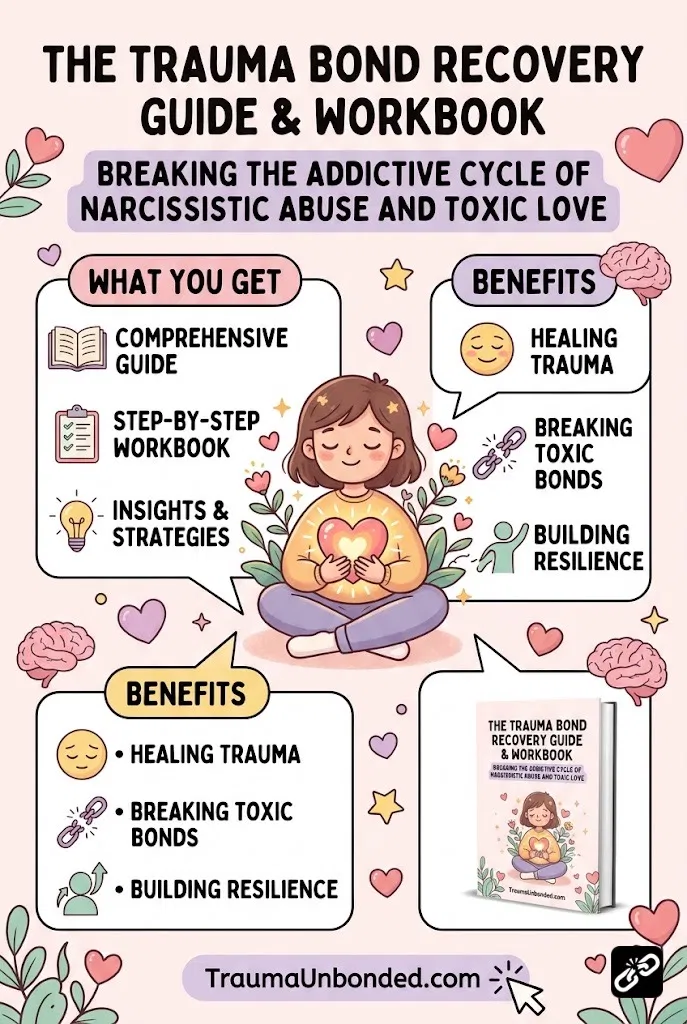
Breaking this biological addiction requires more than just willpower; you need a structured, step-by-step roadmap to guide your nervous system back to safety. If you are ready to dismantle the toxic patterns that hold you captive and rebuild your identity from the ground up, we highly recommend working through our specialized recovery program:
Practical Steps to Deconstruct the Trauma Bond

Deconstructing your attachment requires a shift from emotional reasoning to objective logic. When you are deep in the trauma bond, your mind will minimize the abuse and romanticize the good times. To counteract this, you must actively train your brain to see the reality of the relationship.
- Create a “Reality List”: Write down every single cruel thing, lie, and betrayal they committed. Read this list whenever you feel the urge to break contact or romanticize the past.
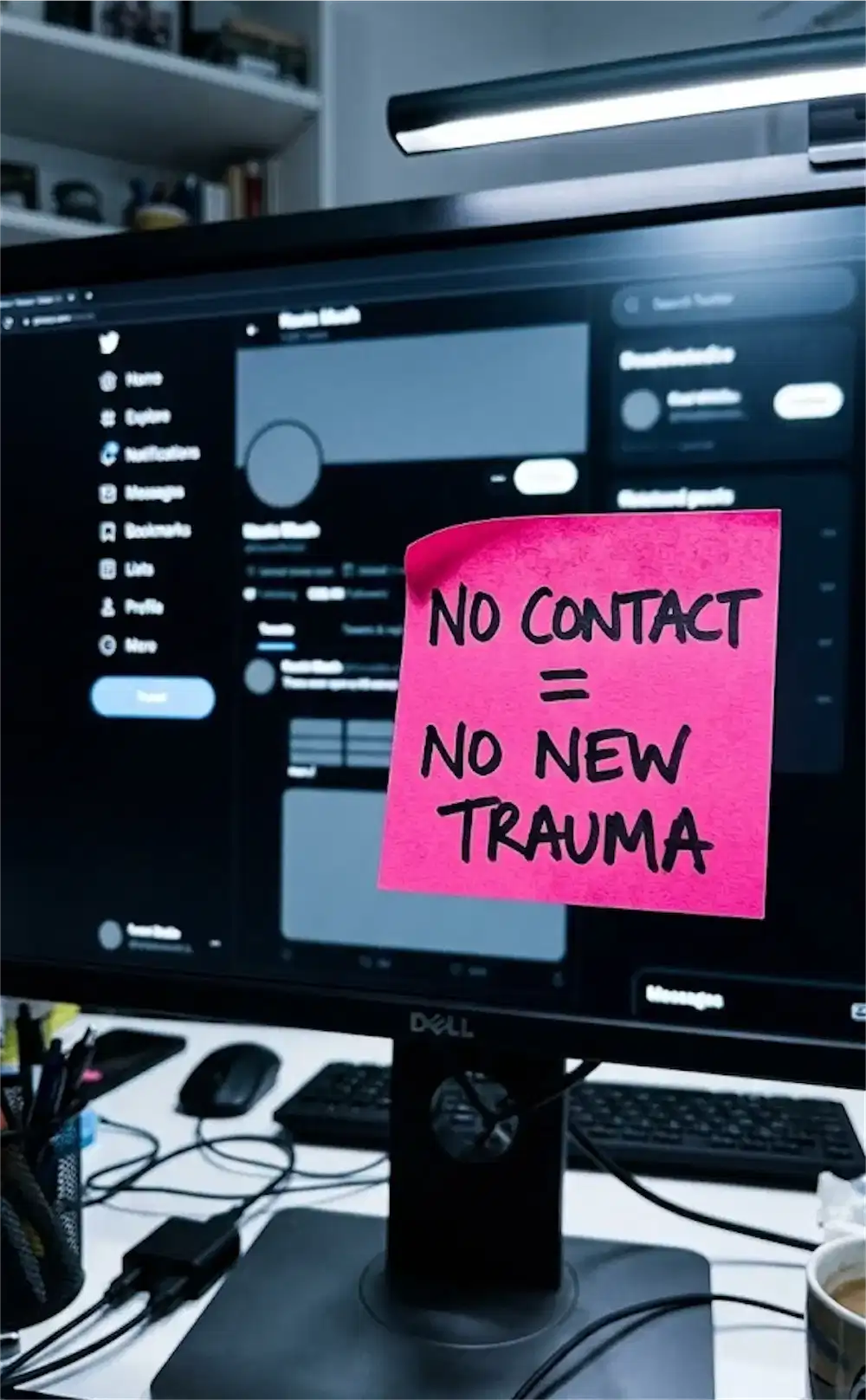
- Implement Radical No-Contact: Stop checking their social media, block their number, and avoid mutual friends who feed information to them. Reading a radical no-contact guide can give you the exact boundaries needed to maintain this distance.
- Grieve the Fantasy: Accept that the person they were in the beginning of the relationship was a mask. You are not grieving a real future, but an illusion they painted to hook you.
- Reclaim Your Nervous System: Focus on gentle physical activities, mindfulness, or professional therapy to calm the chronic fight-or-flight state induced by the relationship.
Rebuilding Your Identity After a Long-Term Toxic Bond
When my twelve-year relationship finally collapsed, I was a shell of a person. I had no idea what music I liked, my friendships had withered, and I spent my weekends staring at the wall in absolute silence. It is completely normal to feel a deep sense of void and emptiness when you first break a trauma bond.
This empty space is not a life sentence; it is a blank canvas. I began rebuilding my life by engaging in tiny, daily acts of self-care. I forced myself to walk in nature, rediscovered my love for reading, and slowly rebuilt my support network. Healing is not a linear climb, and there will be days when the longing feels heavy, but your brain will slowly rewire itself.
Recognizing and Resisting the Hoovering Trap
As you begin to build your strength, the toxic person will often sense your withdrawal and try to suck you back in. This is called hoovering, and it is a deliberate attempt to regain control over you. They might send a casual text message, show up at your workplace, or use mutual friends to deliver a sob story.
During my decade-long struggle, I fell for this trap more times than I care to admit. Every time I started to find my footing, my ex would appear with tears, apologies, and promises of change. I had to learn that these gestures were not driven by genuine remorse, but by a desperate need to reclaim their source of emotional validation.
When you encounter a hoovering attempt, remember that reacting, even with anger, gives them the confirmation that you are still hooked. Your silence is the ultimate boundary. By refusing to engage, you protect your healing process and keep your progress intact.
Why Self-Compassion is Your Ultimate Tool for Healing
One of the hardest parts of recovering from a toxic relationship is dealing with the intense self-blame. You might ask yourself how you could have stayed for so long, or why you tolerated such disrespectful behavior. I spent years beating myself up for losing a decade of my life to someone who only wanted to tear me down.
The truth is, your mind was doing exactly what it was designed to do to keep you safe under high stress. You adapted to survive a hostile environment, and that is proof of your resilience, not your weakness. Forgiving yourself is the final, essential step in deconstructing your attachment and reclaiming your original, cheerful self.
Reclaiming your peace and breaking the invisible chains of a toxic relationship takes time, patience, and massive amounts of grace. You are fully capable of rebuilding a life filled with joy, clarity, and genuine connection. Take the first step toward lasting healing today by exploring our comprehensive trauma bond recovery guide and workbook to begin dismantling the cycle of toxic love for good.

Meet Your Guide
Helen Brooks
After surviving a 12-year NPD/BPD relationship, I dedicated over a decade to studying trauma bonding and nervous system recovery. My mission is to help you break free from the fog and reclaim your authentic self.
Ready to break the trauma bond and reclaim your life?