
Grieving the Potential: How to Stop Mourning the Person They Could Have Been
If you are currently grieving the potential of a relationship that left you shattered, you are not alone. It is incredibly common to find yourself wondering how to stop mourning the person they could have been long after the final discard. When we escape a toxic partnership, the hardest part is rarely letting go of the reality of who they actually were; instead, it is the painful process of letting go of the beautiful future we had carefully planned with them.
For twelve years, I stayed in a relationship with a partner who displayed severe narcissistic and borderline personality traits. I spent over a decade convinced that if I just loved them enough, or if they finally got the right help, they would transform into the person they occasionally showed me during the good times. If you are struggling with these same obsessive loops, utilizing a structured approach like The Rumination Detox can help you break the cycle of constant mental negotiation.
After the final breakup, my life felt completely empty, isolated, and miserable. I had to learn how to separate my deep hope for their healing from the actual day-to-day damage they were doing to my sanity. Let’s look at why this specific type of grief is so painful and how you can begin to release the ghost of what might have been.
Why Do We Grieve the Potential of a Toxic Partner?
We grieve the potential of a toxic partner because our minds try to reconcile the loving “idealization” phase with the reality of their abusive behavior. This leaves us mourning the illusion of who they promised to be rather than accepting the painful truth of who they actually are.

When you love someone with NPD or BPD traits, you are constantly presented with two entirely different people. There is the warm, incredibly attentive partner from the beginning who makes you feel like the center of the universe. Then, there is the cold, critical, or emotionally volatile person who leaves you walking on eggshell paths. Why is it so hard to just walk away and stay away?
During my own twelve-year struggle, I kept waiting for the “real” person to stay. I truly believed the loving version of my partner was their true self, and the abusive version was just a temporary glitch caused by their deep childhood pain. This kept me stuck in a devastating loop of hoping, waiting, and resetting my boundaries until I had none left.
The Hook of Intermittent Reinforcement
To understand this pain, we have to look at how trauma bonds operate. In a highly volatile relationship, the good times are not just pleasant; they feel like absolute salvation. When your partner goes from ignoring you or screaming at you to suddenly holding you and apologizing, your brain receives a massive flood of dopamine.
This highly addictive cycle creates severe cognitive dissonance in narcissistic abuse recovery. You begin to crave those moments of relief, and your mind uses them to build an intricate fantasy of what the relationship could be if they could just stay stable. Have you found yourself holding onto a single kind word or gesture for weeks, using it to excuse months of emotional neglect?
When we are caught in this cycle, we stop evaluating the partner based on their actual behavior. Instead, we begin dating their potential. We think that if they only understood how much they are hurting us, they would stop. But the painful truth is that they often do understand, yet their personality structure prevents them from maintaining the consistency you need to feel safe.
How to Stop Mourning the Person They Could Have Been

Stopping this form of grief requires us to change how we view the loss itself. We are not just mourning a relationship that ended; we are mourning a future that never truly existed. It is a slow, active process of untangling your mind from the endless “what-ifs” that keep you awake at night.
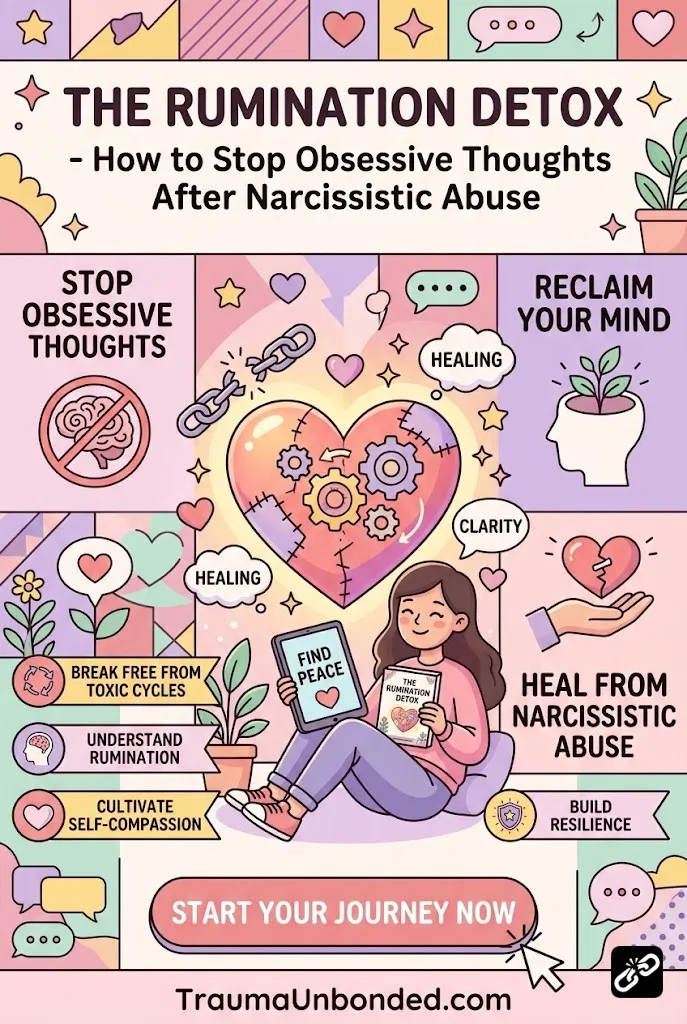
To help you navigate this transition and stop the endless mental replay of what could have been, I highly recommend a targeted recovery resource. This step-by-step workbook is specifically designed to help survivors quiet the constant noise, clear the mental fog, and stop obsessive thinking after toxic relationships.
Practice Radical Acceptance of the Present Reality
The first major step in releasing this pain is practicing radical acceptance. This means looking at your ex exactly as they are today, without adding your hopes, excuses, or wishes to the picture. When you find yourself thinking about how wonderful they were on that one vacation, you must force yourself to also remember the cold silent treatment that followed.
You can try using structured radical acceptance exercises for peace to ground yourself whenever your mind starts to drift back into the fantasy. Write down a list of facts about the relationship. Focus on concrete actions, not their words or promises. Seeing the stark reality written down helps your brain accept that the “potential” you are grieving was never a stable reality.
Deconstruct the Fantasy and Stop Idealizing
We often idealize our toxic partners because our brains are trying to protect us from the sheer horror of what we actually experienced. Rebuilding your life requires you to actively stop idealizing your toxic ex and see the relationship with clear eyes. This is not about being bitter; it is about being entirely honest with yourself.
Psychologists often refer to this confusing state of grieving someone who is still physically present but emotionally gone as ambiguous loss. According to research on ambiguous loss on Psychology Today, this type of grief is uniquely difficult because it lacks the clear finality of a physical death. Without traditional societal markers of closure, we remain stuck in a state of emotional limbo, holding out hope for a transformation that will never come.
How do you break this limbo? You begin by realizing that the person you are actually missing is a fictional character. They were a projection of your own capacity for deep love, empathy, and commitment. The beautiful traits you saw in them were actually reflections of your own beautiful heart.
Allow Yourself to Grieve the Dream
It is completely okay to feel incredibly sad. You have to allow yourself to mourn the loss of the future you wanted. It is completely normal to feel angry that you invested years of your life into a dream that turned out to be a mirage. During my own recovery, I had to weep for the family I thought we would build, the trips we would take, and the growing old together that I had anticipated.
But there is a major difference between grieving a lost dream and staying stuck in a loop of trying to revive it. Let the tears come, but let them wash away the illusion. Each time you cry for what could have been, remind yourself that you are freeing up space in your life for something that is actually real, stable, and safe.
Reclaiming your life after a decade-long toxic bond is not a fast process, but it is entirely possible. Today, I am back to my original, cheerful, and grounded self, but I only got here by finally choosing to stop waiting for a ghost to change. If you are ready to stop the constant mental loop and begin your own path toward clarity, consider working through The Rumination Detox to help you let go of the fantasy and rebuild your own reality. You deserve a love that exists in the present moment, not just in your hopes.

Meet Your Guide
Helen Brooks
After surviving a 12-year NPD/BPD relationship, I dedicated over a decade to studying trauma bonding and nervous system recovery. My mission is to help you break free from the fog and reclaim your authentic self.
Ready to break the trauma bond and reclaim your life?