Post-Trauma Night Terrors: How to Calm the Brain to Stop Nightmare Loops
If you are struggling with post-trauma night terrors, figuring out how to calm the brain to stop nightmare loops is likely your highest priority. During my 12-year toxic relationship with a partner who displayed severe narcissistic and borderline personality traits, my nights were a battlefield. To survive, I had to establish a practical daily toolkit for nervous system regulation to slowly quiet my mind before my head hit the pillow.
Chronic emotional abuse slowly rewires how your mind processes safety. When you spend a decade walking on eggshells, your threat-detection system never turns off, even when you sleep. Those vivid, repetitive dreams are not just random imagery; they are your brain desperately trying to process unresolved trauma while you are at your most vulnerable.
In those early recovery days, I felt isolated and completely drained. I had lost my hobbies, my friends, and my sense of self. It was only when I looked into how trauma alters sleep architecture that I began to find practical, non-clinical ways to soothe my amygdala and reclaim my sleep.
What Are Post-Trauma Night Terrors?
Post-trauma night terrors are intense, physiological panic episodes that occur during sleep, triggered by a **nervous system stuck in a chronic state of fight-or-flight** after surviving prolonged emotional or psychological abuse.
Unlike standard bad dreams, these episodes often cause you to wake up with physical symptoms like sweating, shaking, or a racing heart. You might not even remember the specific details of the dream, but the sense of immediate physical danger remains heavy in the room.
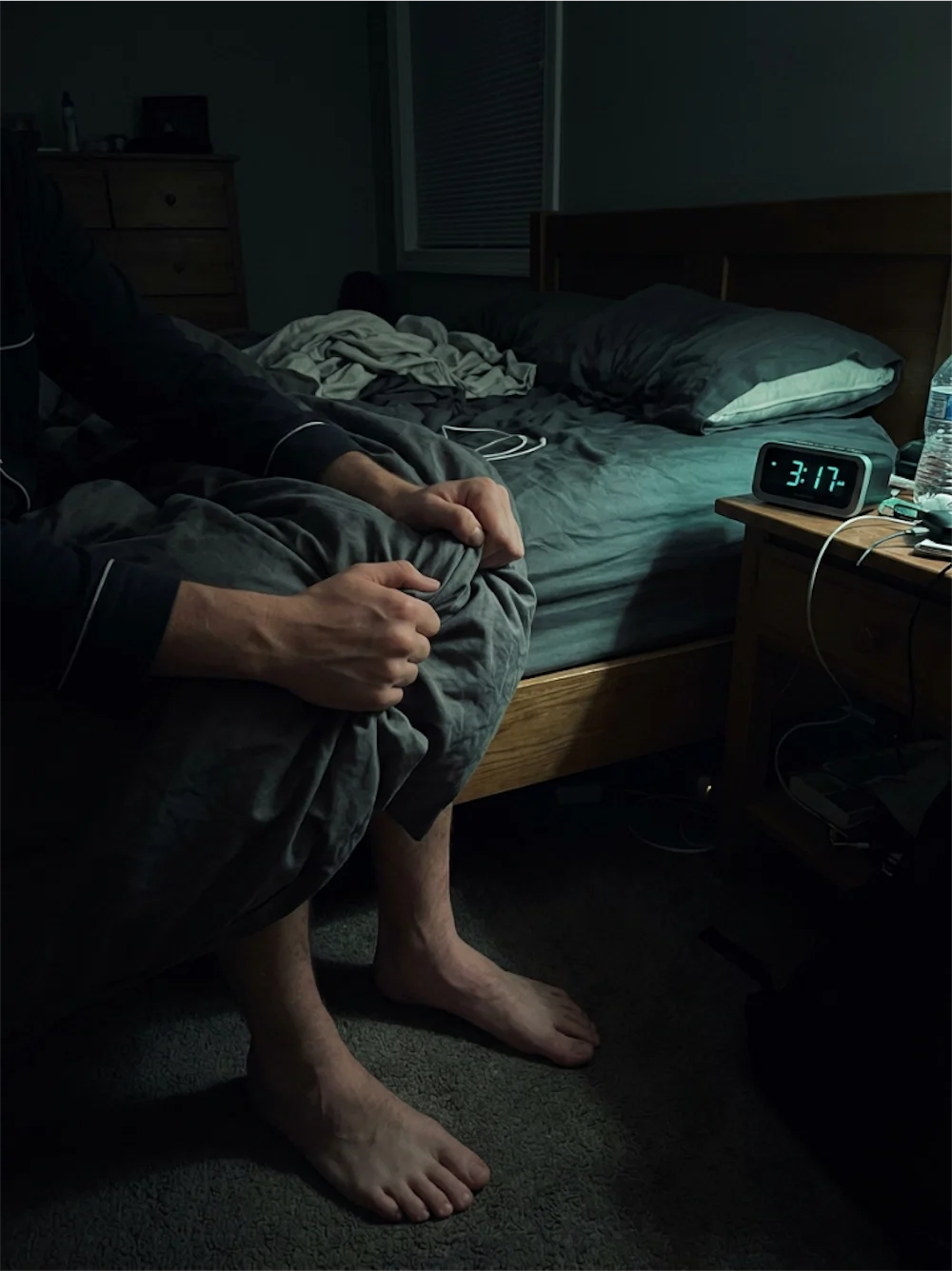
During my toxic relationship, my ex would often use the silent treatment or explosive rage right before bed. This left my mind spinning in a loop of panic as I fell asleep. My brain learned to associate sleep with vulnerability and danger, creating a cycle of fear that persisted long after the relationship ended.
Why Trauma Keeps the Brain Stuck in Nightmare Loops
To break this pattern, you must understand what is happening inside your head. When you go through chronic stress, the amygdala (the brain’s alarm bell) becomes enlarged and overactive. At the same time, the hippocampus, which helps file memories away into the past, gets overwhelmed by stress hormones like cortisol.
Because the hippocampus cannot properly file the traumatic memories, they remain active in your short-term processing loops. When you enter REM sleep, your brain tries to process these active, emotional files. Since they are still flagged as active threats, they play out as terrifying, highly realistic nightmare loops.
According to clinical reviews on sleep disturbances in post-traumatic stress disorder on PubMed, **trauma-exposed individuals** have significantly higher rates of nocturnal awakenings and REM sleep fragmentation. Your brain is essentially waking you up to protect you from what it perceives as an ongoing threat. To stop this, you have to establish structured nighttime habits to regulate your nervous system before you lie down.
Why does your mind keep replaying the same themes? These vivid dreams often reflect the exact emotional struggles of your past relationship. In my case, dreaming of being lost in a dark house mirrored the constant confusion and gaslighting I lived through daily.
This is why simply trying to force yourself to sleep through sheer willpower does not work. You cannot think your way out of a physiological response. Healing requires a body-first approach that signals actual physical safety to your subconscious mind before the dream state begins.
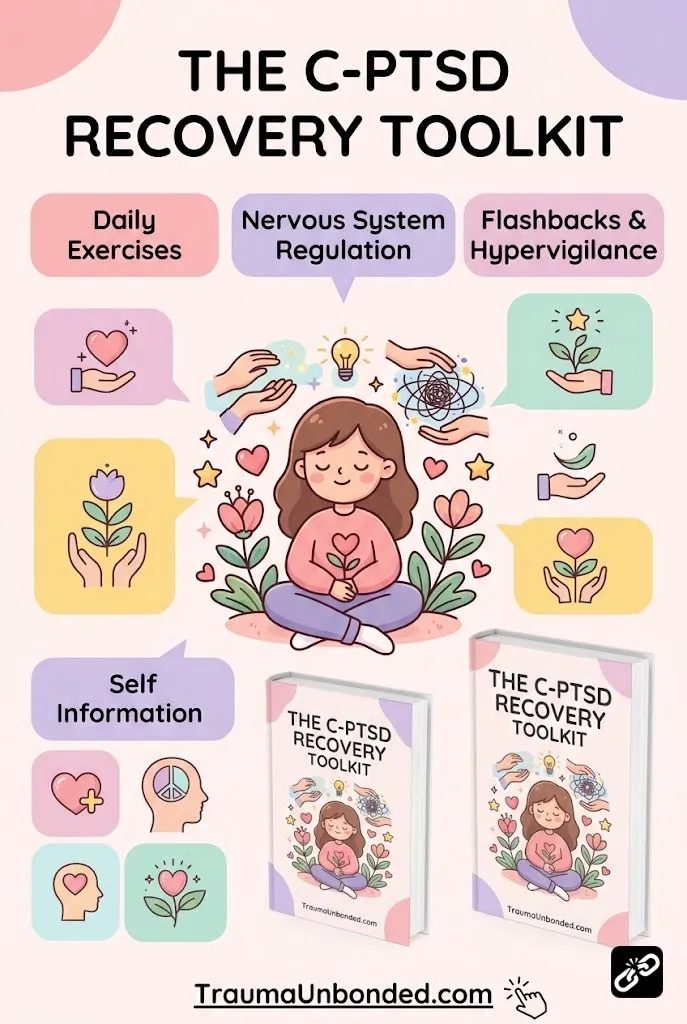
If you are ready to stop waking up in terror and want a structured, daily roadmap to calm your hyperactive nervous system, you can access the exact exercises that helped me rebuild my sense of safety. This toolkit provides immediate, step-by-step tools to stop the trauma loop from running your nights.
Somatic Techniques to Calm the Brain Before Bed
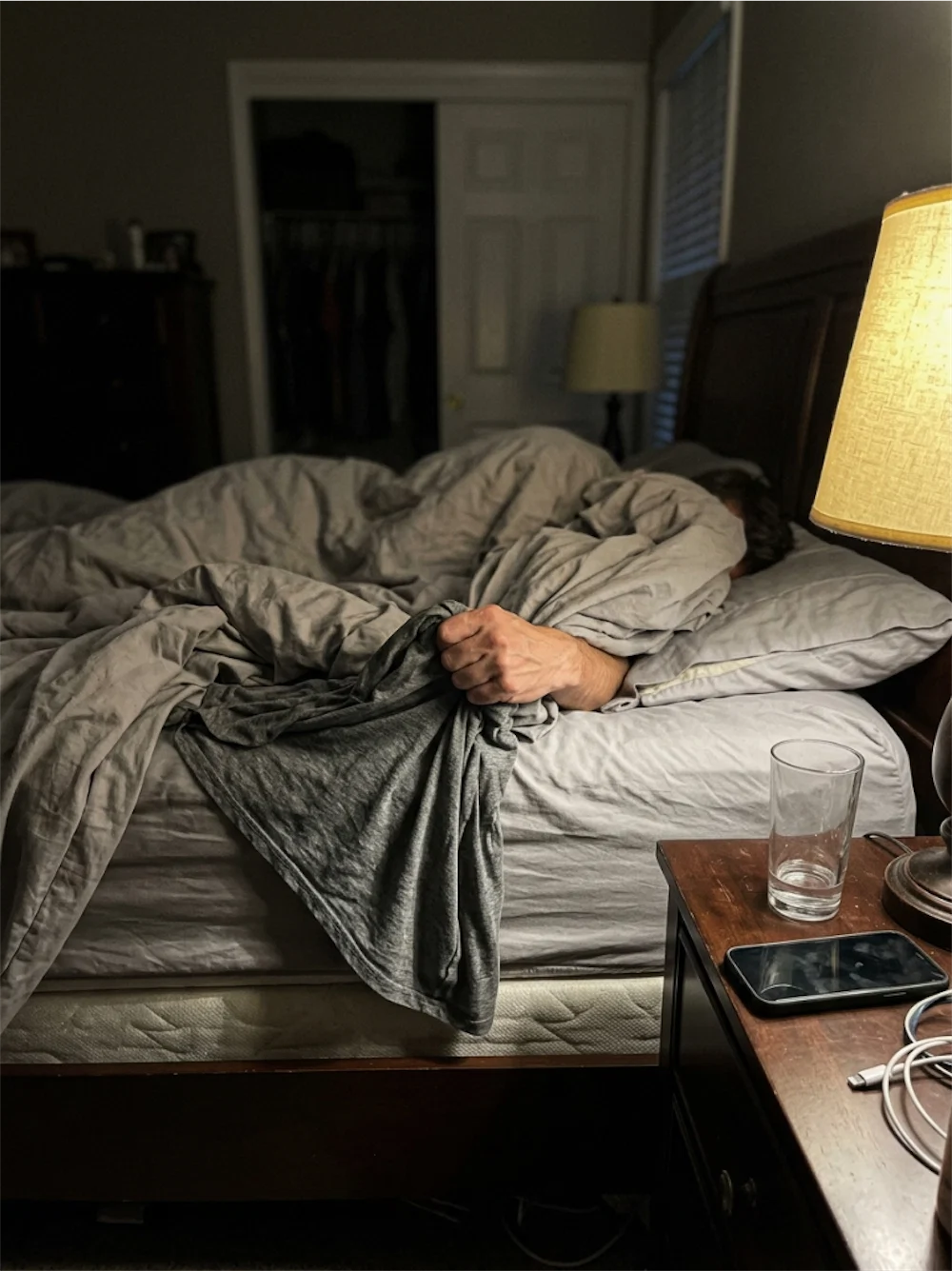
To successfully stop these loops, you must physically guide your body out of high-alert survival mode before climbing under the sheets. When I first left my abusive relationship, I realized my entire body was constantly rigid. Here are the practical somatic methods that worked for me:
- The Cold Water Face Dip: Immersing your face in a bowl of ice-cold water for ten seconds triggers the mammalian dive reflex. This physiological response instantly slows your heart rate and shifts your nervous system from sympathetic (fight-or-flight) to parasympathetic (rest-and-digest).
- Bilateral Stimulation: Before sleeping, listen to bilateral stimulation music with headphones on, or use alternating slow taps on your shoulders. This rhythmic, side-to-side stimulation helps the brain process lingering sensory stress, mimicking the natural processing that occurs during REM sleep.
- Physiological Sighing: Take two quick, deep inhales through your nose, followed by one long, slow sigh out through your mouth. Doing this five times in a row immediately deflates the carbon dioxide build-up in your lungs and signals safety to your brainstem.
Establishing a predictable evening routine to combat trauma insomnia is about creating consistency. Your brain needs to learn that when the sun goes down, you are actually safe. During my healing journey, this routine became my sanctuary, helping me slowly uncouple the act of sleeping from the feeling of terror.
How to Ground Yourself After Waking Up in a Panic
No matter how diligent you are with your bedtime routine, there will be nights when a nightmare loop still breaks through. When you wake up with your heart racing in the middle of the night, the immediate goal is to orient your brain to the present moment. Your brain is convinced that the trauma is happening right now in your bedroom.
First, do not stay in bed tossing and turning while trapped in that lingering dread. Instead, sit on the edge of the bed or stand up to feel the cool floor under your feet. Looking around the room to find three blue objects forces your prefrontal cortex back online, pulling focus away from the emotional panic of the amygdala.
You can also use physical grounding techniques to help your body recognize the boundary between past trauma and present safety. Learning how to navigate these moments with CPTSD grounding and flashback techniques ensures you do not get sucked back into a state of panic that keeps you awake for the rest of the night.
Remember to speak to yourself out loud in a calm, soft voice. Say your name, the current date, and remind yourself: “I am safe in my room, the relationship is over, and the person who hurt me cannot get to me here.” It may feel strange at first, but hearing your own calm voice acts as an external anchor of safety for your frightened inner child.
Developing Long-Term Brain Resilience Against Sleep Traps
Calming your sleeping mind is not a quick fix that happens in a single night. When you spend years under the influence of chronic narcissistic abuse, your nervous system develops deep groove-like neural pathways designed for survival. It takes time, patience, and repetitive daily practices to build new pathways of safety.
Be gentle with yourself if you experience setbacks. There were weeks in my recovery when I thought I was entirely past the nightmare loops, only for a subtle trigger during the day to bring them back at night. This is not a sign that you are failing or that your healing has stopped. It is simply your body processing another layer of the trauma armor it carried for so long.
You do not have to live in a state of constant nightly dread forever. By consistently using somatic practices to regulate your nervous system and learning how to ground yourself upon waking, you can gradually teach your brain that the danger is in the past. If you are looking for a complete, daily set of physical and emotional tools to break these survival patterns, you can utilize the C-PTSD Recovery Toolkit to guide your path to peaceful sleep.

Meet Your Guide
Helen Brooks
After surviving a 12-year NPD/BPD relationship, I dedicated over a decade to studying trauma bonding and nervous system recovery. My mission is to help you break free from the fog and reclaim your authentic self.
Ready to break the trauma bond and reclaim your life?