The Difference Between Healthy Guilt and Toxic Shame After a Narcissistic Relationship
If you are struggling to move forward, identifying the difference between healthy guilt and toxic shame after a narcissistic relationship is the first step toward reclaiming your peace of mind. Many survivors find themselves drowning in self-blame, constantly analyzing what they could have done differently to keep the peace. When you are healing from years of chronic manipulation, these heavy feelings can make you feel entirely isolated and broken.
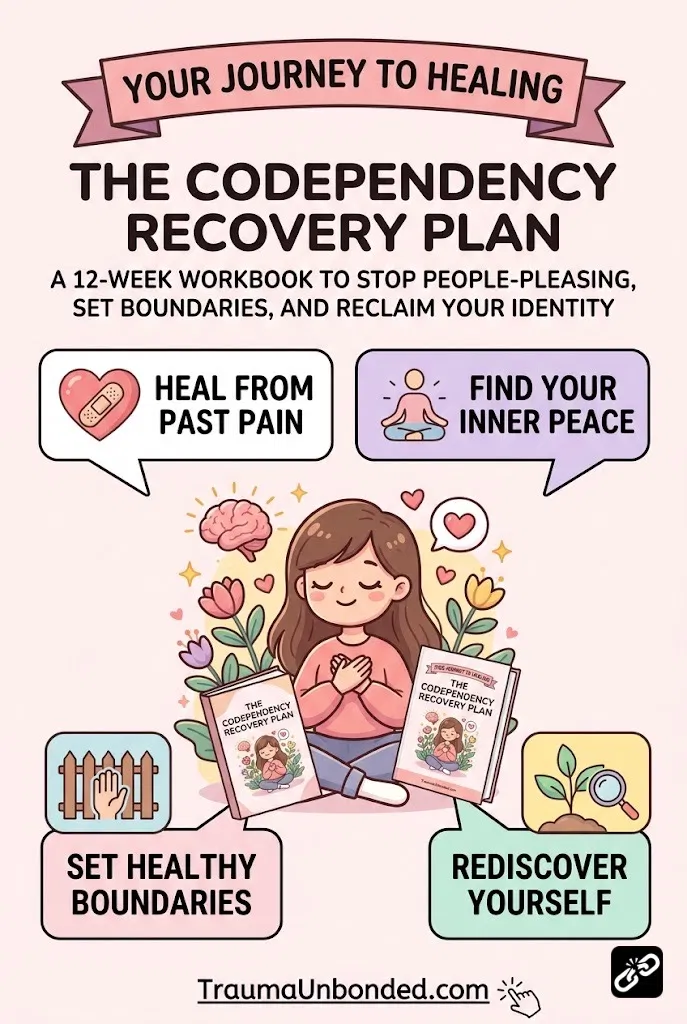
During my twelve-year relationship with a partner who displayed both narcissistic and borderline traits, I lived in a constant loop of self-correction. I lost my friends, abandoned my hobbies, and felt completely miserable. Healing through therapy and working with The Codependency Recovery Plan – A 12-Week Workbook to Stop People-Pleasing, Set Boundaries, and Reclaim Your Identity helped me untangle this heavy conditioning.
Why is it that even after leaving, we still carry the heavy burden of being the bad guy? The truth is, your ex worked incredibly hard to plant those doubts. Let us look closely at how these two distinct emotional states function, how they take root, and how you can finally release them to rebuild your authentic self.
Why You Feel Overwhelmed by Guilt and Shame After a Toxic Breakup
Healthy guilt is a constructive emotion centered on specific behaviors that allows us to make amends, whereas toxic shame is a destructive, identity-level belief that we are inherently flawed and unworthy of love.

When you escape a toxic home, your emotional thermostat is completely broken. You find yourself ruminating over minor details, wondering if you were actually the abusive one. Did you speak too harshly during that final argument? Did you trigger their silent treatment by expressing a basic boundary? These questions loop endlessly in your head, creating a heavy weight in your chest.
Healthy Guilt: “I Made a Mistake”
Healthy guilt is a targeted emotional response to a specific action. It acts as a moral compass, nudging us to correct behaviors when we cross our own internal boundaries. If you snapped at a friend because you were stressed, feeling guilty prompts you to apologize.
When processing guilt after leaving a narcissist, you might feel bad about setting firm boundaries. This is highly common. However, because healthy guilt is focused on specific actions, it is manageable and moves you toward resolution. It is a protective, prosocial mechanism that respects your underlying identity as a good person who simply made an error in judgment.
Toxic Shame: “I Am a Mistake”
Toxic shame does not care about what you did: it targets exactly who you are. It tells you that your entire being is fundamentally flawed, unlovable, and broken. According to clinical research published on Psychology Today, toxic shame creates a global assessment of inadequacy, leaving survivors feeling hopelessly defective.
In a toxic relationship, this is the exact emotional state your partner wanted you to live in. When they project their own insecurities onto you, they are trying to pass their shame over. If they screamed at you for hours and then blamed you for “making” them angry, your mind eventually absorbed that message as: I am bad. I am the reason this family is falling apart.
How Twelve Years of Manipulation Conditioned Your Brain
In my own experience of surviving a twelve-year relationship with a partner who had both NPD and BPD traits, the transition from healthy guilt to chronic shame was gradual. At first, I felt guilty when I could not make them happy or when I wanted to spend time with my old friends. Over a decade, that guilt solidified into a permanent state of shame. I stopped trying to see friends, let go of my hobbies, and lived in constant fear of the next emotional storm.
This prolonged conditioning rewrites your neural pathways, cementing a strong biochemical trauma bond that links your survival to their approval. Every time you tried to stand up for yourself, you were met with intense rage, blame shifting, or the freezing silent treatment. Your brain learned that asserting your needs was a dangerous act, resulting in absolute abandonment.
As a result, you began to police your own thoughts. You became your own critic, questioning your choices before they even had a chance to do it. When you finally walk away, this self-policing habit does not simply vanish. It lingers as a persistent voice telling you that you ruined their life, that you are selfish, and that you will never find real peace.
To break this painful cycle of chronic self-doubt and reclaim your original, cheerful self, you need a structured, step by step method that addresses the root of your people-pleasing habits. I highly recommend taking a look at this workbook, which is designed to guide you through setting firm boundaries and rebuilding your sense of self without feeling selfish.
Steps to Deconstruct Shame and Reclaim Your True Self

Shame cannot survive when it is brought into the light and looked at with calm, compassionate awareness. To move from the dark isolation of self-loathing back to your original, optimistic self, you must actively separate your actions from your core identity. Here is a practical blueprint to help you begin this shift:
- Externalize the critical voice: When you hear a thought saying you are unlovable or completely ruined, ask yourself whose voice that actually is. In most cases, it is a copy of your ex-partner’s criticisms that you internalized to survive. Realizing this voice is not your own is incredibly freeing.
- Utilize targeted journaling: Writing down your thoughts helps you sort out factual events from emotional projections. You can use structured self-forgiveness prompts to help process the guilt of staying in the relationship, which allows you to extend grace to the past version of yourself.
- Rebuild your daily independence: Shame thrives in isolation and inaction. Start small by picking up one old hobby you loved before the relationship began, whether that is cooking, gardening, or walking in nature. Reconnecting with these simple joys reminds your nervous system that you have an identity outside of being a caregiver.
Releasing the weight of a decade-long toxic relationship does not happen overnight. It is a slow, gentle process of teaching your nervous system that you are safe and that you do not need to earn your right to exist. By learning to distinguish between healthy guilt and toxic shame, you begin to return to your authentic self: the cheerful, optimistic, and grounded person who was buried under years of manipulation. If you are ready to take the next step in this healing process, working through The Codependency Recovery Plan – A 12-Week Workbook to Stop People-Pleasing, Set Boundaries, and Reclaim Your Identity can provide the practical, daily exercises you need to rebuild your boundaries and reclaim your life.

Meet Your Guide
Helen Brooks
After surviving a 12-year NPD/BPD relationship, I dedicated over a decade to studying trauma bonding and nervous system recovery. My mission is to help you break free from the fog and reclaim your authentic self.
Ready to break the trauma bond and reclaim your life?