Empathy Fatigue: How to Stop Absorbing Other People’s Toxic Family Drama
Empathy fatigue can quietly take over your life when you are constantly absorbing other people’s toxic family drama. If you find yourself wondering how to stop feeling exhausted by other people’s trauma, you are not alone in this heavy struggle. For twelve years, I stayed in a toxic relationship with a partner who displayed severe narcissistic and borderline personality traits. I lived as an emotional sponge, soaking up every ounce of their chaos until my own identity vanished completely. In those dark days, I felt utterly isolated from my friends, had abandoned my hobbies, and believed my life was doomed to remain miserable.
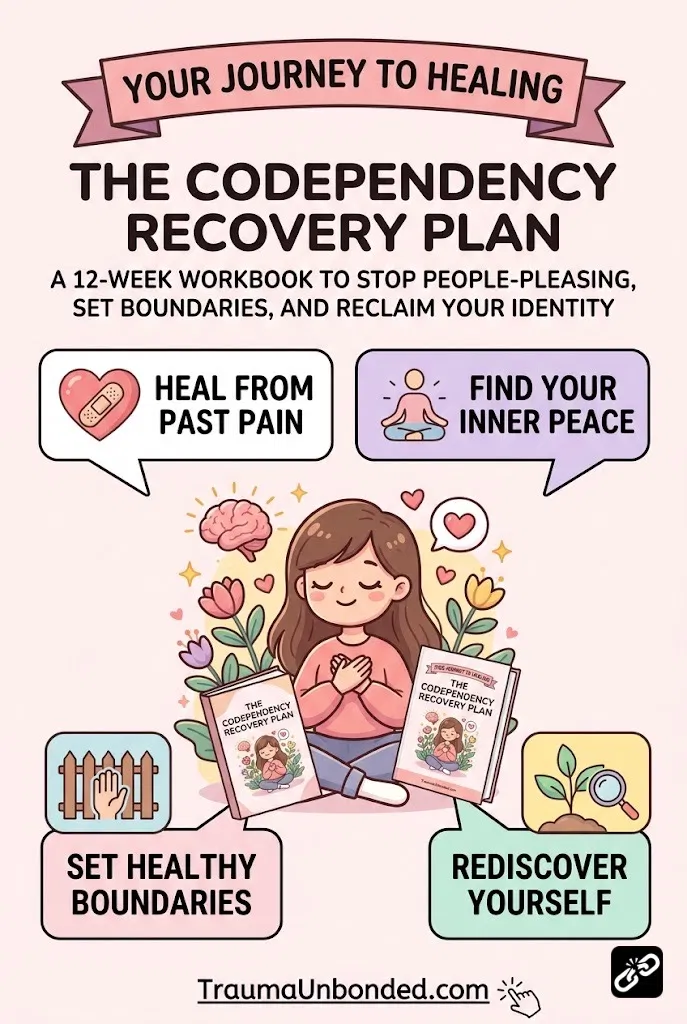
Through professional therapy, learning about codependency, and deconstructing trauma bonds, I slowly rebuilt my original self. Today, I am cheerful, optimistic, and grounded once again. That recovery journey taught me that you cannot heal your own nervous system while acting as a free dumping ground for everyone else’s emotional waste. To begin reclaiming your peace, you need a structured recovery roadmap like The Codependency Recovery Plan to stop people-pleasing and rebuild your boundaries.
Have you ever noticed how some people only call you when their world is on fire? They dump their problems on you, hang up, and leave you carrying a heavy knot of anxiety in your stomach. This pattern is incredibly common among survivors of chronic abuse because our emotional boundaries have been worn down to dust. We must examine how we got here so we can finally close the door on other people’s chaos.
What Is Empathy Fatigue and Why Do We Absorb Toxic Family Drama?
Empathy fatigue is the state of physical and emotional exhaustion that occurs when you consistently absorb the painful experiences and toxic dynamics of others. It happens when healthy emotional boundaries fail, causing you to take on the distress of friends or family members as if it were your own.

In my twelve-year toxic relationship, I became an expert at predicting moods. I knew the exact tone of a heavy sigh that meant an emotional storm was coming. This constant scanning of my environment meant my empathy was turned up to maximum volume all the time. When you live in survival mode for so long, you lose the ability to filter out external emotions.
Your friends might share their family struggles, and instead of just listening, you feel their panic in your own chest. Your shoulders tighten, your jaw clenches, and you lie awake at night trying to solve situations you did not create. Why do we do this? It often traces back to the way empaths attract narcissists and other highly demanding personalities who crave our emotional energy.
We become addicted to fixing things because we believe it is the only way to stay safe. If we can solve their crisis, maybe we can finally relax. But that relaxation never comes because there is always a new crisis waiting in the wings.
The Hidden Link Between Codependency and the Fawn Response
When we are exposed to prolonged emotional distress, our bodies develop survival habits. One of the most overlooked survival tools is fawning, which involves keeping others happy to avoid conflict. If you grew up around volatile people or spent years with a toxic partner, you likely learned that absorbing their anger was safer than standing up for yourself.
This deep-seated pattern is often rooted in the link between codependency and fawn response, which forces us to ignore our own needs. Do you find yourself agreeing to help others even when you are physically exhausted? That is not just kindness; it is a trauma response designed to protect you from rejection.
You absorb their family drama because saying ‘no’ feels like an active threat to your safety. Breaking this cycle requires us to look honestly at our habits. We have to realize that we cannot save people from their own choices, nor is it our job to carry their emotional weight.
If you are ready to break this draining cycle and reclaim your identity, you need a practical, structured framework. Taking back your life requires more than just wishing things were different; it takes active daily exercises to rebuild your sense of self. To guide you step-by-step through this transformation, I highly recommend checking out this structured workbook.
How to Stop Feeling Exhausted by Other People’s Trauma

To recover from empathy fatigue, you must learn to separate your emotions from the people around you. This starts with a simple reality check: you are not responsible for fixing other people’s lives. In my past relationship, I thought that if I could just explain things clearly enough, the constant drama would stop. It took me years to understand that toxic people actually thrive on the very chaos that is killing you.
When you absorb other people’s trauma, you are giving away the energy you need to heal your own life. Setting boundaries with toxic friends and family members is not selfish; it is a matter of emotional survival. You can begin by using specific strategies to overcome codependency, which help you detach with love.
In psychology, this constant emotional exposure is often compared to compassion fatigue as secondary trauma, where caretakers become overwhelmed by the suffering of those they help. When you are the default emotional therapist for everyone in your social circle, you experience those same debilitating symptoms. Detaching does not mean you stop caring; it simply means you stop trying to control outcomes that are completely out of your hands.
Practical Steps to Build Your Emotional Shield
How do you actually stop absorbing the negative energy of others in your daily life? It requires shifting your behavior from reactive fixing to proactive protection. Here are some highly practical steps you can implement today:
- Use the 24-Hour Rule: When someone dumps a crisis on you, do not respond immediately. Give yourself a full day to process before offering support, which helps prevent impulse fixing.
- Practice Energetic Detachment: Imagine a physical shield between you and the speaker. Let their words hit the shield and slide to the floor rather than soaking into your skin.
- Set Conversation Time Limits: When a friend starts venting about their toxic family, gently guide the talk. Say something like, ‘I have about fifteen minutes to talk about this, and then I need to change the subject to protect my mental space.’
These methods might feel incredibly uncomfortable at first. Your codependency will scream that you are being a bad friend or a cold family member. But remember, the alternative is slowly draining your own life force until you have nothing left to give to anyone, including yourself.
During my healing process, I had to learn how to tolerate the discomfort of other people being upset with me. It was terrifying, but it was the only way to find my way back to the cheerful, optimistic person I used to be. Reclaiming your peace is a slow process, but it begins with a single step.
Reclaiming Your Peace Starts Today
You do not have to be the keeper of everyone else’s storm. Your empathy is a beautiful gift, but it should never be used as a sponge for toxic waste. By learning to step back, you are not failing others; you are choosing to save yourself.
If you are ready to stop people-pleasing and rebuild your boundaries step-by-step, start your healing journey today with The Codependency Recovery Plan and watch how quickly your natural, cheerful energy returns.

Meet Your Guide
Helen Brooks
After surviving a 12-year NPD/BPD relationship, I dedicated over a decade to studying trauma bonding and nervous system recovery. My mission is to help you break free from the fog and reclaim your authentic self.
Ready to break the trauma bond and reclaim your life?