10 Psychology Facts on Why Narcissists Try to Re-Engage After No Contact
You finally did it. You went no contact. Maybe it took weeks of crying, therapy sessions, and sheer willpower. And then, out of nowhere, your phone lights up. A text. An email. A random “like” on an old photo. Your stomach drops.
I know that feeling like I know my own name. After 12 years in a relationship with a partner who had both narcissistic and borderline personality traits, I watched this pattern repeat more times than I can count. Every time I tried to create distance, they found a way back in. It felt personal, like they could sense the exact moment I was starting to breathe again.
The truth? It is not personal at all. And that, paradoxically, is one of the most liberating things you can understand about narcissistic re-engagement. This article breaks down the actual psychology behind why narcissists come back after no contact, backed by research, clinical insight, and hard-earned lived experience.
If you want the full picture on why no contact works, start with our deep-dive guide on why no contact works for narcissistic abuse survivors.
What Is Hoovering? (And Why the Name Fits Perfectly)
Before we get into the psychology facts, let’s define the term you’ll see everywhere in recovery spaces: hoovering. Narcissistic hoovering is a manipulative tactic used after a breakup or period of no contact to suck a previous partner back into the relationship — named after a vacuum cleaner, because the goal is to reassert control and ensure their narcissistic supply is restored.
Hoovering attempts can be subtle, like a seemingly innocent text, or extreme, such as feigning a crisis or promising they have changed. It is a calculated act, not a sincere attempt at reconciliation.
In my experience, the hoovering came in every form imaginable. A voicemail saying they were in the hospital. A message through a mutual friend. A late-night text that simply said “I miss you.” Each one was designed to test whether the door was still open. Understanding the mechanics behind it was the thing that finally helped me keep it shut.

10 Psychology Facts: Why Narcissists Try to Re-Engage After No Contact
1. You Were a Primary Source of Narcissistic Supply
Narcissistic supply is the attention, admiration, validation, or even conflict that a narcissist feeds on to regulate their sense of self. Think of it like fuel. When you go no contact, you cut off that fuel source entirely.
At its core, hoovering is driven by the narcissist’s insatiable need for attention, admiration, and control. When a source of narcissistic supply is lost, whether through a breakup or the victim’s decision to go no-contact, the narcissist often experiences a profound sense of emptiness and loss. This triggers their hoovering attempts as they desperately try to regain what they perceive as rightfully theirs.
After 12 years together, I was not just a partner to my ex. I was a deeply embedded supply source. They knew exactly how to pull my emotional strings. When I went no contact, that muscle memory kicked in and they reached for the same strings out of habit.
2. No Contact Threatens Their Fragile Self-Esteem
Narcissists are not actually the confident, untouchable people they project. Under the surface is an extremely fragile ego that depends on external validation to function. When you disappear, you are not just leaving — you are rejecting them. And that hits differently.
When you go no contact or start to rebuild a life separate from them, it challenges the narcissist’s fragile self-esteem. To regain a feeling of control, they’ll try to re-establish contact with you using emotional manipulation.
This is also why the re-engagement often starts exactly when you are visibly moving forward. They are not psychic. They monitor you through social media, mutual contacts, or digital footprints. Your healing triggers their instability.
3. They Cannot Tolerate the Loss of Control
For a narcissist, relationships are not emotional bonds — they are power structures. You leaving disrupts the hierarchy they built. Control is not just something they want. It is something their psychological architecture requires.
Narcissists who are motivated by power are game players, and hoovering is just another power-play. Hoovering is entirely predictable because to narcissists relationships are transactional. They lack empathy and the ability to see you as a separate human being. Rather than wanting a relationship for sentimental reasons, they are out for themselves, looking for access to resources such as sex, money, information, status, or love.
I used to wonder if my ex genuinely missed me. My therapist helped me understand the painful reality: they missed what I gave them. There is a big difference.
4. Their Current Supply Is Running Low
Narcissists rarely come back because they have been sitting alone reflecting on their behavior. They come back because something else stopped working.
It often starts when the narcissist feels lonely or threatened, or isn’t getting any narcissistic supply or attention from their usual sources. They usually hoover when they don’t have a narcissistic supply or are bored with their current supply.
Think about your own timeline. Did they come back right after a new relationship fizzled? After a professional failure? After a public embarrassment? Probably. You were not their first call. You were their backup plan. That is a hard truth, but it is a clarifying one.
5. They Exploit Your Trauma Bond
A trauma bond is an intense emotional attachment that forms in abusive relationships through cycles of pain followed by relief or affection. It is not love — it is conditioning. And it makes you neurologically vulnerable to re-engagement.
Your emotional bond was built through trauma bonding. Trauma bonds form when pain and reward are mixed over time. When the narcissist reappears with affection, your nervous system feels relief. Wanting to respond to someone abusive means you have been conditioned to seek comfort in the person who caused you pain.
This is exactly why hoovering works so well in long-term relationships. After a decade together, your body has been trained to associate them with both the wound and the bandage. Check out our article on lessons learned from 12 years with a narcissist for more on how that conditioning builds over time.
6. They Use Dopamine Against You
When your ex reaches out after a long silence, your brain does not process it as a warning. It processes it as a reward. That is the dopamine response kicking in — the same brain chemistry behind addiction.
When the narcissist suddenly reappears and is acting kind or apologetic, your brain releases dopamine, creating a powerful emotional pull. That chemical “high” can make you doubt yourself and question your decision to leave. It’s the same process that fuels addictive cycles.
This is not a character flaw. It is neuroscience. Your brain was shaped by the intermittent reinforcement of the relationship — random rewards after stretches of pain. The craving response is automatic. Recognizing it gives you a shot at overriding it.
7. They Bank on Your Empathy
One of the most targeted re-engagement tactics is the manufactured crisis. A sudden illness. A family emergency. A mental breakdown. Sound familiar?
In order to gain your sympathy, they might pretend to be in crisis. For example, they might tell you they were in an accident, their grandmother died, or they are ill. Usually, they tell these lies to make you feel guilty, coercing you into re-engaging with them.
Narcissists often target highly empathic people precisely because empathy is so easy to weaponize. The more you care, the harder it is to ignore someone who claims to be in pain. NPD is associated with neurophysiological deficits in emotional empathy, together with intact cognitive empathy — meaning they can identify and calculate how to trigger your empathy without genuinely feeling it themselves. That combination is dangerous.
8. They Use Flying Monkeys to Reach You
“Flying monkeys” is the recovery community term for third parties the narcissist recruits — sometimes knowingly, sometimes not — to deliver messages on their behalf.
The narcissist might use other people, such as close friends or family members, to contact you on their behalf or convey messages designed to draw you back into the relationship. They will tell them how sorry they are and how much they love you. Your friends might fall for their tricks and urge you to get in touch.
This tactic is especially effective in long-term relationships where the narcissist has built real social credibility in your circle. People who never saw the private abuse often only see the charming, remorseful version. Be careful about whose version of events you are hearing secondhand.
For a practical breakdown of how to handle this, our narcissist no contact guide covers how to protect your boundaries across social channels.
9. Even Negative Attention Is a Win for Them
Here is something that trips people up: you do not have to respond warmly for the hoover to “work.” Even anger gives them what they need.
When you respond to a hoover, the narcissist’s needs are automatically met — even if you respond with “leave me alone.” Narcissists crave attention — they don’t care if it’s good or bad. It’s a rush for them to know they are on your mind.
This was one of the hardest things for me to internalize. I thought sending an angry reply was a form of closure. It was not. It was confirmation that I was still reachable. The only response that truly breaks the cycle is no response at all.
10. They Do Not Believe You Will Stay Gone
After years of successful hoovering, a narcissist develops a certain confidence: they believe they can always bring you back. Your track record — not your words — is what they trust.
By timing these reappearances perfectly, the narcissist conditions their victim to not only expect them to come back but also to expect them to come back at a much later date — giving them more play time in the interim. All of this is part of the narcissist’s control/validate tactic, which in turn is part of the process of managing down expectations so that their partner expects less and they get away with more.
A narcissist may escalate hoovering, then lose interest after a while, only to reappear a year or more later when they’re in need. This is not devotion. It is opportunity management.
What No Contact Actually Does to a Narcissist
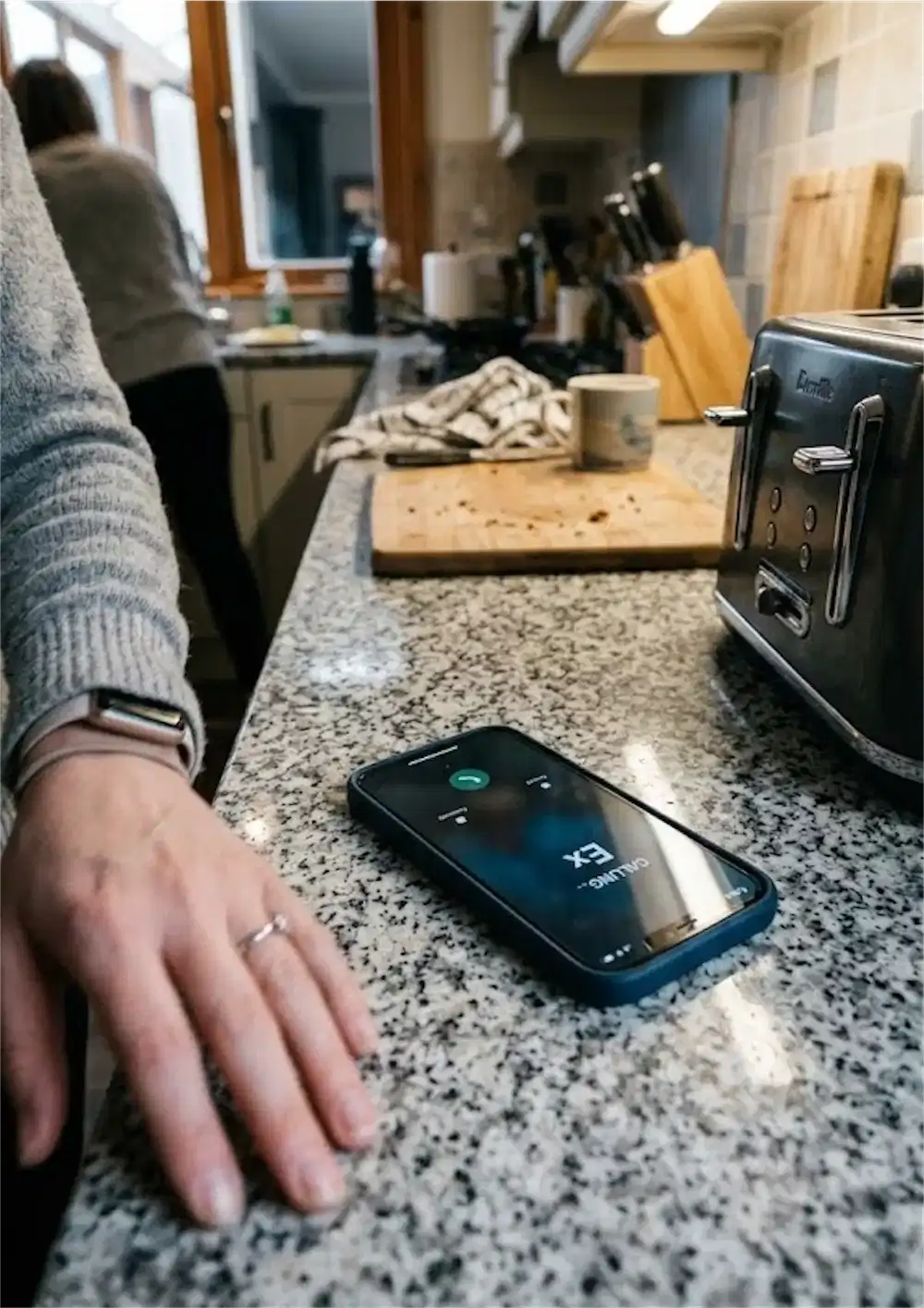
People often ask: does no contact hurt a narcissist? The honest answer is yes — but not the way it hurts an emotionally healthy person. It does not cause genuine grief or self-reflection. It causes supply loss, ego injury, and loss of control. Those things, for a narcissist, feel catastrophic.
Narcissists don’t experience empathy or emotional connection — that’s why we call it “supply.” They experience other people like a drug addiction. When you leave before they discard you, they collapse and react like a person in withdrawal. Because they are in withdrawal.
Understanding this does not mean you should feel sorry for them. It means you should understand the force you are dealing with. A person in the grip of withdrawal is not rational. They are desperate. That desperation fuels every re-engagement attempt.
Just when the victim-survivor has passed through the psychological distress of the discard phase and is on the road to recovery, the narcissistic person reaches out to begin the process of re-engagement. The timing is not a coincidence. They are watching for the window.
If you want to understand what they are actually experiencing on the other side of that no contact wall, our piece on why narcissists struggle after a breakup gives you a more complete picture.
Why You Are Still Vulnerable to Re-Engagement (Even When You Know Better)
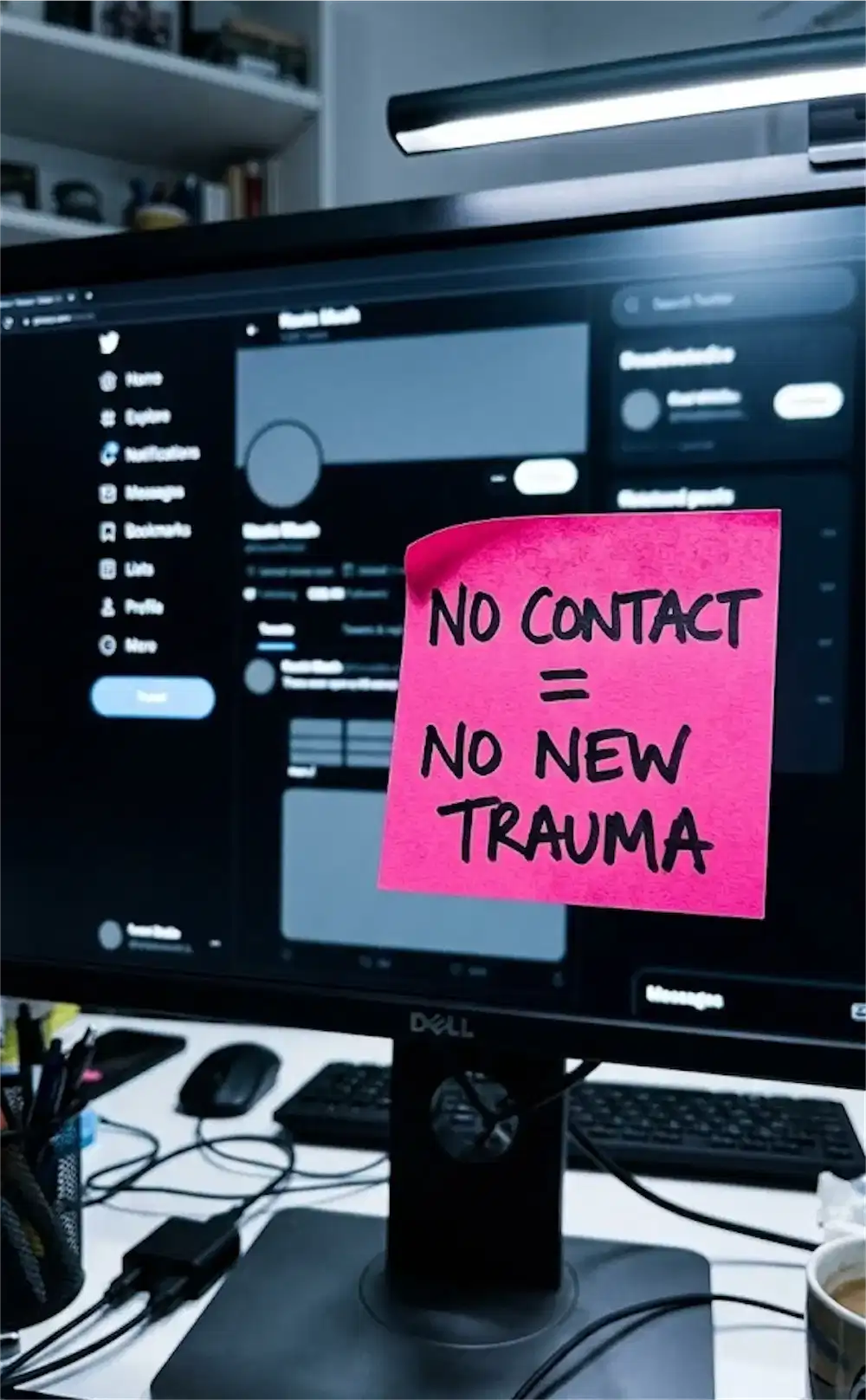
This is the part nobody likes to admit. You can read every article, attend every therapy session, and still feel your pulse spike when you see their name on your screen. That does not mean you are weak or stupid. It means you are human and you have a nervous system that was rewired by prolonged stress and intermittent reinforcement.
Because of the prior relationship dynamic, you may easily be persuaded by false promises, gestures, fear, or threats if you don’t comply, or you may succumb to shame and blame because you have been made to feel so unworthy and lucky to have your ex back in your life. Your vulnerability is enhanced through trauma-bonding, which makes it very hard to leave an abuser.
The research also points to a specific psychological trap: sometimes we get hooked on someone’s potential rather than who they really are in a relationship. After 12 years, I had invested so much hope in who I believed they could become. That hope was the hook. Every hoover attempt was a fresh delivery of that hope. Learning to grieve the fantasy rather than the person was a turning point in my recovery.
If codependency patterns are part of your story, our article on strategies to overcome codependency and toxic stress is worth reading alongside this one.

Common Hoovering Tactics to Watch For
Knowing the psychology is one thing. Recognizing the actual moves in real time is another. Someone who hoovers will engage in love bombing, gift-giving, gaslighting, or guilt-tripping, among other manipulative strategies. Here is what that looks like in practice:
- The Fake Apology: If the narcissist creates an apology, watch for qualifiers that show they still hold you responsible for their behavior. Phrases such as “I’m sorry I wasn’t more tolerant” or “I’m sorry I wasn’t patient enough with you” are about shifting blame to you. The narcissist still isn’t owning their behavior.
- Manufactured Crisis: A sudden emergency designed to activate your caretaker instincts and guilt.
- Triangulation: Mentioning a new relationship or exaggerated happiness to spark jealousy. The narcissist may post about their new relationship to reel you in.
- The Casual Text: Acting as if nothing happened. “Hey, how have you been?” No context, no acknowledgment of the damage.
- Social Media Breadcrumbs: Likes, story views, or subtle posts clearly aimed at getting your attention without direct contact.
- Flying Monkeys: Mutual friends or family members delivering sympathy messages on the narcissist’s behalf.
Each tactic is designed to trigger your empathy or curiosity. That is the common thread. Regardless of the method, the goal is always the same: get you to respond.
For a deeper look at some of the most common mistakes survivors make when facing these tactics, see our guide on mistakes to avoid when leaving a narcissist.
How to Protect Yourself When the Hoovering Starts
Knowing why they do it is important. But what you actually do when the message lands in your inbox is what determines your recovery trajectory.
- Do not respond — at all. If you respond to a hoover, you reward the narcissist’s behavior. If you reestablish contact with the narcissist, you will eventually be discarded by them again. The only truly silent message is silence.
- Block across all platforms. Block your former partner’s phone number, email address, and social media accounts. If you are co-parenting, use a structured app and keep communication factual only.
- Get grounded in reality, not the fantasy. Remind yourself how confusing the relationship felt, not how you hoped it could have been. Write it down if you need to. The romanticized version of your relationship is the bait.
- Tell your support system. Mental health professionals and emotionally healthy friends and family can help you process a narcissist’s hoovering and other manipulative messages. You do not have to carry the confusion alone.
- Know that closure is not coming from them. Know that you will most likely not get closure. Narcissists bank on the fact that they may be able to reach out to you at any time. You will most likely never get a truthful explanation for why they treated you poorly. Closure is something you build yourself.
If you are in the early months of no contact and finding it almost impossible to hold the line, our article on insights from the first 3 months of narcissist recovery will help you understand what you are moving through.
Books That Helped Me Understand and Resist Hoovering
When I was in the thick of it — phone in hand, debating whether to respond — the thing that helped me most was understanding. Not willpower. Understanding. These books shifted the way I saw the whole dynamic:
Why Does He Do That? by Lundy Bancroft was the first book that made me see the behavior for what it actually was — a pattern, not a personal failing. If you have never read it, it belongs in your hands before anything else. You can find it on Amazon: search for Why Does He Do That by Lundy Bancroft.
Should I Stay or Should I Go? by Dr. Ramani Durvasula is written specifically for people navigating relationships with narcissists. Dr. Ramani is one of the most respected voices in this space, and her work is grounded in clinical research while remaining completely accessible. Find it on Amazon here.
If you want to understand the trauma bond on a neurological level, The Body Keeps the Score by Bessel van der Kolk is essential reading. The book explains in plain terms why your body reacts to a hoover even when your mind knows better. Get it on Amazon.
Beyond books, having a dedicated journal for your recovery can be a game-changer. Writing out what you feel instead of texting your ex is a redirection strategy that actually works. A solid lined journal like the trauma recovery journals available on Amazon can give that process some structure.
The Takeaway
When a narcissist comes back after no contact, it has nothing to do with love, growth, or genuine remorse. Hoovering is only about the narcissist needing attention — they are trying to fill the narcissistic void they are experiencing. It has nothing to do with feelings for you or wanting to reconcile.
Understanding the psychology behind it does not make the sting disappear. But it does give you something more powerful than hope: clarity. And clarity is what breaks the cycle.
The day I stopped asking “do they really mean it this time?” and started asking “what is driving this behavior?” was the day I stopped going back. You can get to that same place. It takes time, support, and often professional help — but it is absolutely possible.
You might also find these related reads useful as you keep building your recovery foundation:
- Self-healing tips for narcissistic abuse survivors
- Long-term effects of narcissistic abuse and how to heal
Recommended Resources
These are tools and books I genuinely recommend for anyone navigating narcissistic re-engagement and no contact recovery:
- Psychopath Free by Jackson MacKenzie — A survivor-written guide to recognizing narcissistic patterns and reclaiming your identity after abuse.
- Codependent No More by Melody Beattie — The foundational text on breaking codependency patterns that keep you vulnerable to hoovering.
- Narcissistic Abuse Recovery Workbooks — Structured journaling workbooks designed specifically for survivors working through the stages of no contact and re-engagement resistance.
Authoritative Sources Referenced in This Article:
- Psychology Today: Hoovering — When Narcissists Try to Pull You Back In (December 2025)
- National Institutes of Health / PMC: Narcissistic Personality Disorder — Progress in Understanding and Treatment (peer-reviewed clinical review)

Meet Your Guide
Helen Brooks
After surviving a 12-year NPD/BPD relationship, I dedicated over a decade to studying trauma bonding and nervous system recovery. My mission is to help you break free from the fog and reclaim your authentic self.
Ready to break the trauma bond and reclaim your life?