10 Comprehensive Strategies for Maintaining No Contact with a Narcissist in 2026
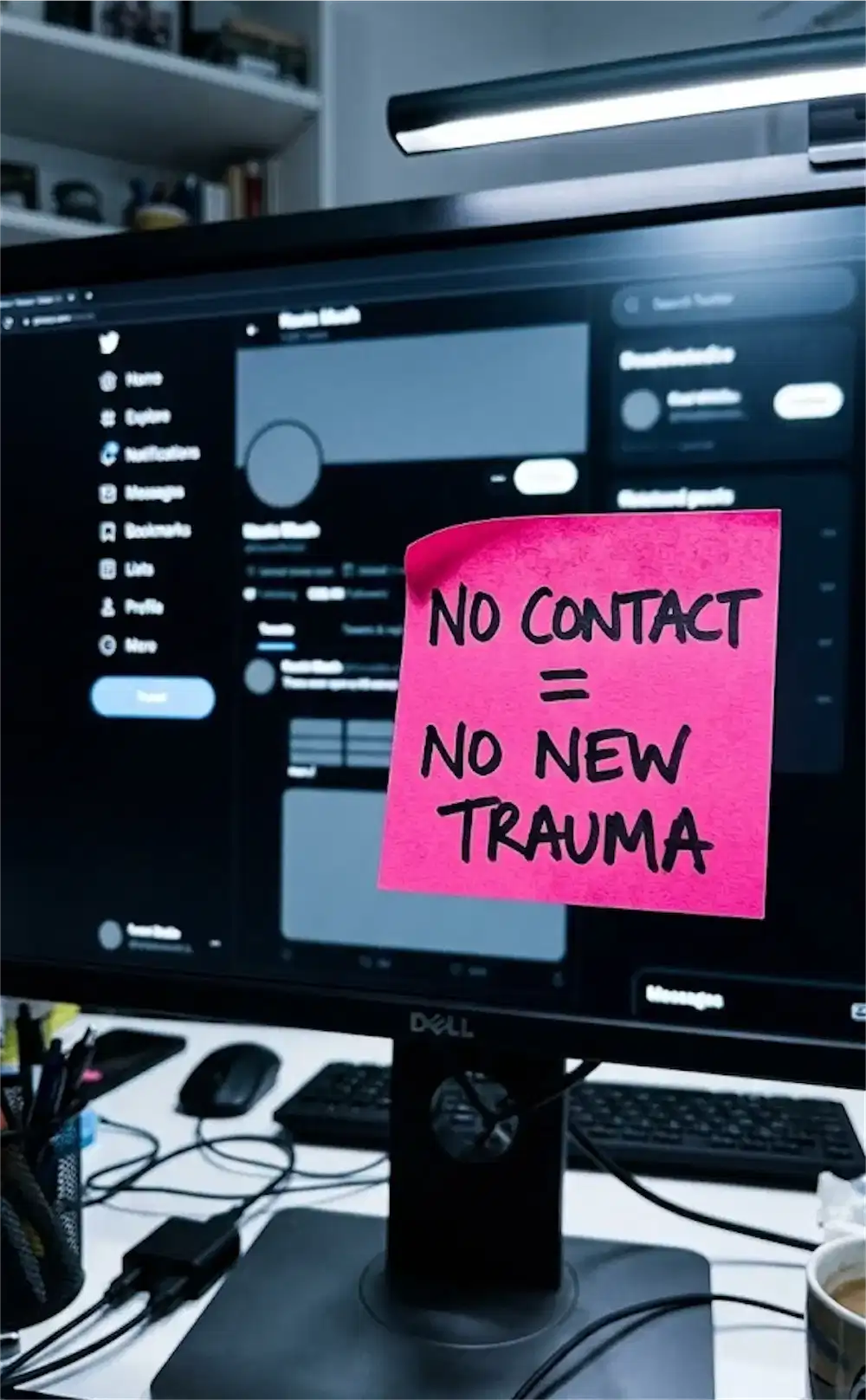
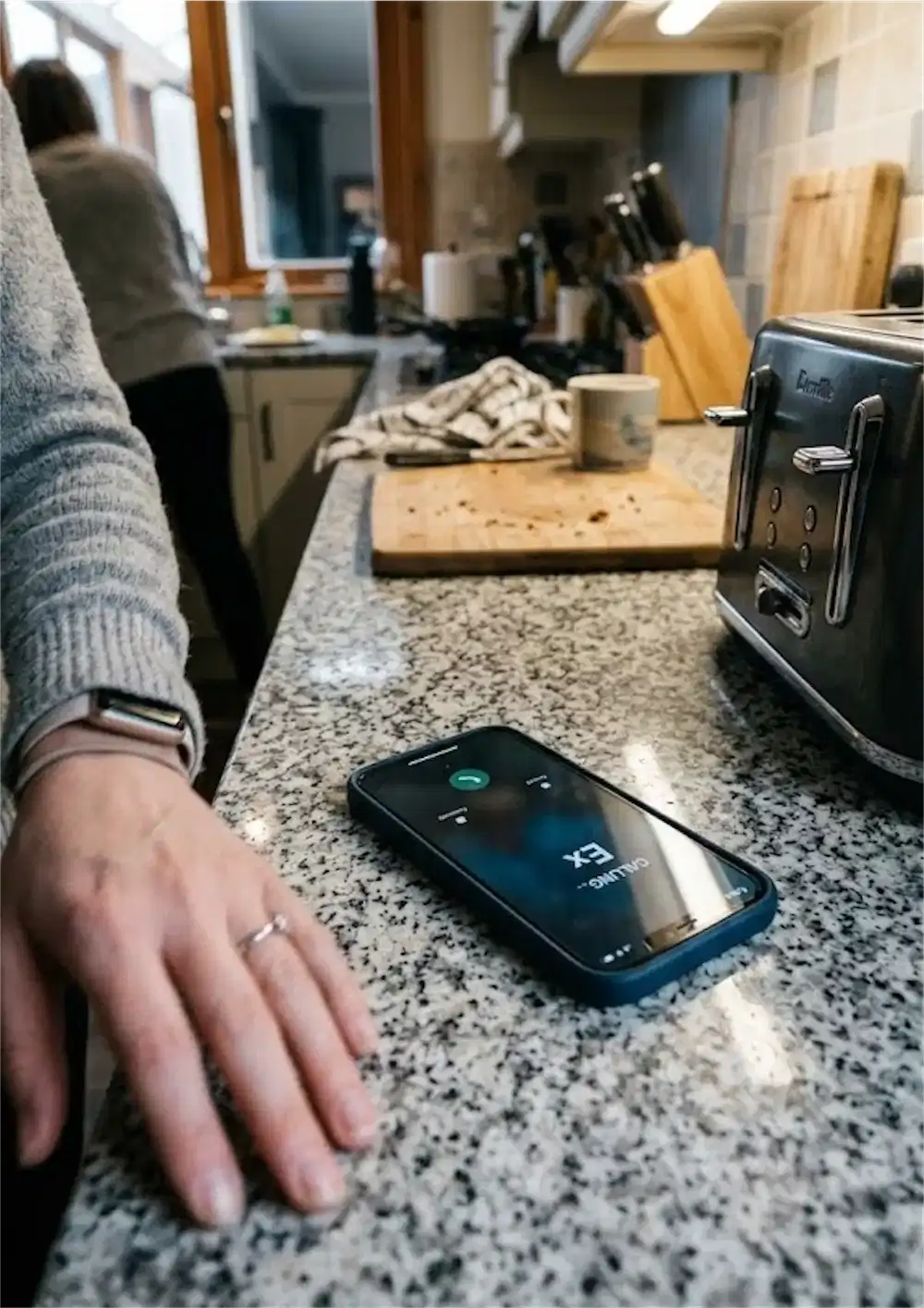
You made the decision. You said you were done. Maybe you even blocked their number. And then, three days later, you found yourself scrolling to their contact page at midnight, finger hovering over the call button, telling yourself you just need to say one more thing.
I have been there more times than I am proud of. After 12 years in a relationship with a partner who had both narcissistic and borderline personality traits, I went through so many failed no contact attempts that I genuinely started to believe I was incapable of leaving. Each time I broke it, I felt worse about myself, not better. And that shame kept me stuck even longer.
What finally worked was not just deciding to go no contact. It was building a system around it. Treating it like a structural challenge, not a willpower challenge. Because that is exactly what it is. Your nervous system has been conditioned over months or years to reach for this person as a source of relief, even though they are also the source of the wound. You cannot out-discipline a trauma response. You have to work around it.
This article covers 10 concrete strategies for not just starting no contact, but actually maintaining it when everything inside you is pulling in the opposite direction. These are grounded in both clinical research and the kind of hard experience that only comes from having failed at this many times before finally making it stick.
Why Maintaining No Contact with a Narcissist Is So Difficult
Before the strategies, it is worth being honest about why no contact is so hard to maintain in practice. Not because you are weak. Not because you still love them, though that may also be true. But because of how the relationship rewired your brain.
Narcissistic relationships, particularly long-term ones, operate through a pattern called intermittent reinforcement. This means that rewards, things like affection, connection, or calm periods, were given unpredictably and inconsistently throughout the relationship. That unpredictability creates a stronger psychological attachment than consistent positive treatment would. It is the same mechanism behind slot machines. The unpredictable reward is more addictive than the guaranteed one.
This is where the concept of a trauma bond comes in. A trauma bond is not a sign that the relationship was actually good or that you are confused about what happened. It is a physiological attachment pattern formed specifically through cycles of abuse and relief. When the relief never comes again, your nervous system goes into something that closely resembles withdrawal. The craving to reach out is real. It has a biological basis. And knowing that can genuinely help you stop hating yourself for feeling it.
Research published in peer-reviewed psychology literature consistently shows that the trauma bonding process activates the brain’s reward circuitry in ways that parallel substance dependence, which is why simply deciding to stop is rarely enough without a structured approach. For a deeper look at the specific science behind this, our article on why no contact works for narcissistic abuse survivors covers the neurological mechanisms in plain language.

10 Strategies for Maintaining No Contact with a Narcissist
1. Go Completely Dark Across Every Platform at Once
Partial no contact does not work. It never has. If you block their number but still follow them on Instagram, you are not in no contact. You are in modified contact, and your nervous system knows the difference.
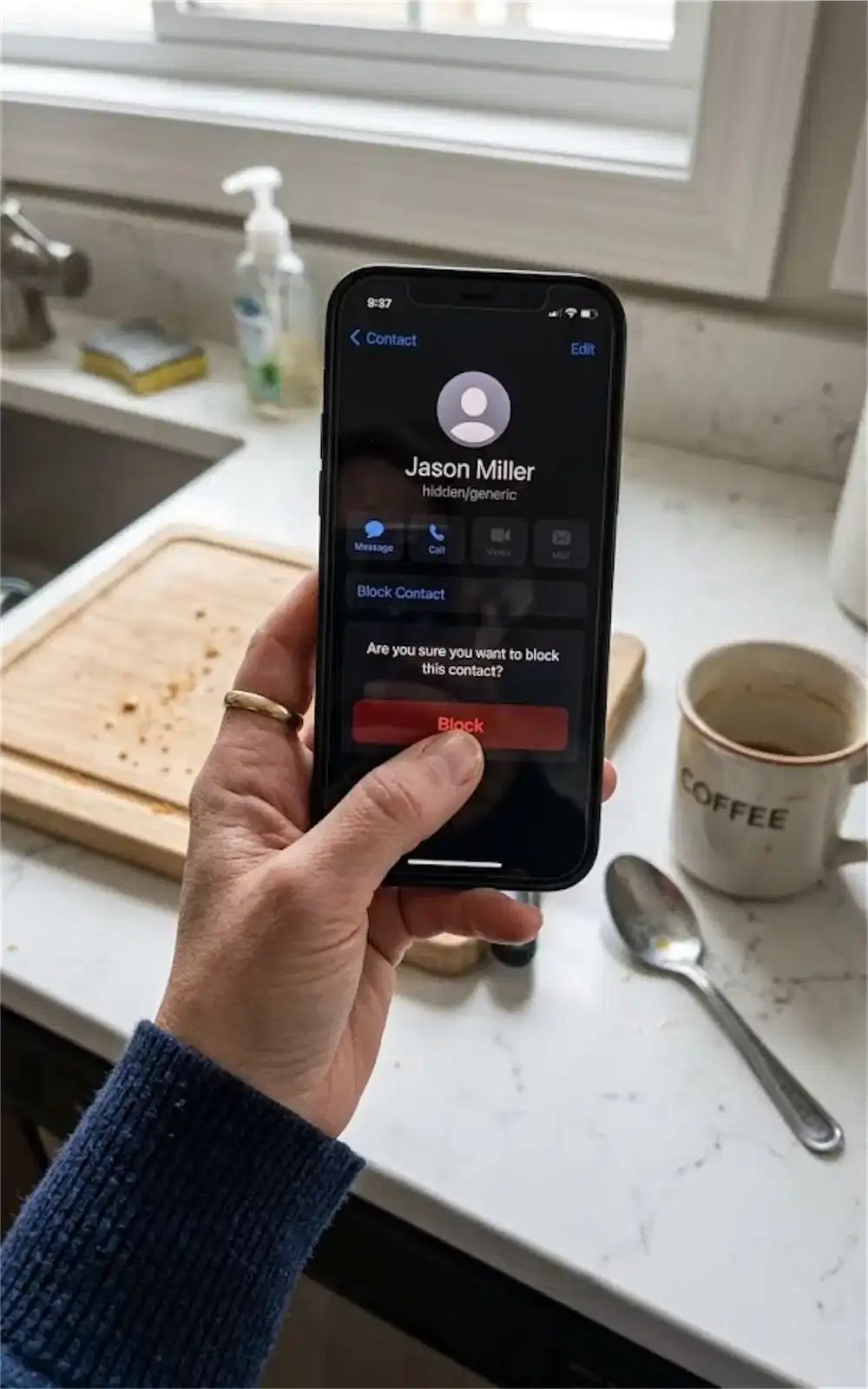
Going fully dark means blocking on every channel simultaneously: phone, email, all social media platforms, messaging apps, and any other digital touchpoints you shared. It also means unfollowing or muting mutual accounts that might surface their content in your feed without warning. If you share a physical space or work environment, that requires a separate strategy, but the digital layer should be fully sealed first.
One thing I learned the hard way: leaving one “just in case” channel open is almost always a choice made by the part of you that is still hoping for contact. The rationalization sounds logical. “I keep it open in case of an emergency.” But it functions as a door you are refusing to close. Shut everything at the same time, and do not negotiate with yourself about individual exceptions.
If you are co-parenting or have a shared legal situation, limit communication strictly to a dedicated app like TalkingParents or OurFamilyWizard, where messages are documented and the scope of communication is explicitly bounded. That is structure, not contact.
2. Build Your No Contact Plan Before You Need It
One of the most useful things I ever did in recovery was sitting down when I was feeling strong and writing out exactly what I would do when I felt weak. Not if. When. Because the craving to break no contact comes for everyone, and it is significantly easier to follow a plan you made at your best than to make good decisions at your worst.
Your plan should be specific. What will you do at 11 PM when the urge hits? Who will you text instead of them? What physical action will you take to interrupt the impulse? Write it down somewhere you can access it quickly. Some people screenshot it and pin it to their phone’s home screen. Some people put a sticky note on their nightstand. The format matters less than the specificity.
Think through the highest-risk scenarios in advance. After a triggering date, like their birthday or your anniversary. After a stressful day when you used to turn to them for comfort. After running into a mutual friend. Each of these scenarios has a predictable emotional arc. Building a response into your plan before you are in the middle of it changes everything.
A dedicated journal for tracking your no contact progress is genuinely useful here. Writing out your plan, your reasoning, and your progress creates an external record that is much harder to gaslight yourself out of than a mental note. You can find solid guided journals designed for this kind of recovery work on Amazon: browse narcissistic abuse recovery journals on Amazon.
3. Understand the Urge to Break Contact Without Acting On It
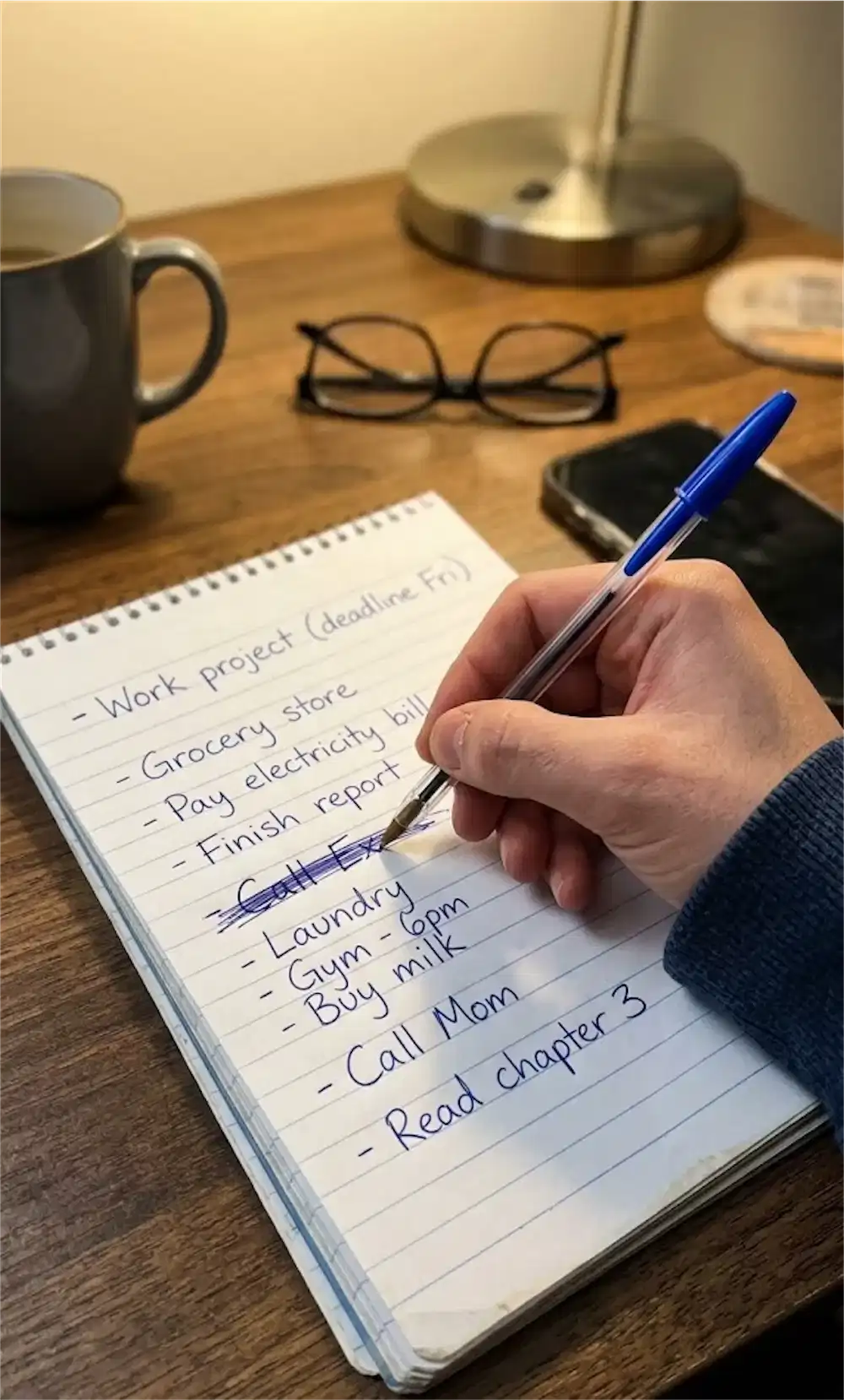
There is a specific kind of mental state that precedes most contact breaks. It starts with a thought that sounds reasonable. “I just want to check if they are okay.” Or “I need closure on one specific thing.” Or “I should return that one item.” These thoughts feel logical and proportionate in the moment. They are rarely either of those things.
What is actually happening in most of those moments is a trauma response looking for relief. Your nervous system is in distress and it has learned, through years of conditioning, that this specific person is the source of relief. The thought that justifies reaching out is constructed after the biological urge is already there. It is rationalization, not reasoning.
When you feel the urge, name it rather than immediately acting on it. “I am feeling the urge to reach out. This is my trauma bond activating. It is not information about what I should actually do.” Then move to your plan. Text your support person. Go for a walk. Do literally anything that occupies your hands and changes your physical environment for the next 20 minutes, because most urges lose their intensity significantly in that window if you do not feed them.
Our article on what the first 3 months of narcissist recovery actually look like walks through the specific wave patterns these urges follow in early no contact, which makes them significantly less frightening when they arrive.
4. Handle Hoovering Attempts With Zero Engagement
Hoovering is what happens when a narcissist tries to suck you back in after no contact. The term comes from the Hoover vacuum brand, and the metaphor is deliberate. The tactics range from apparently innocent texts to manufactured crises to messages delivered through mutual friends. All of them have the same goal: getting a response.
The critical thing to understand is that any response at all, including an angry one, resets the dynamic. You are confirming that you are still reachable. Even “please stop contacting me” is a confirmation that your number works and that you are paying attention. The only truly protective response is no response.
If they escalate to showing up at your home or workplace, that crosses into harassment territory and should be documented and reported. Keep screenshots of messages, note dates and times of any contact attempts, and consult with a legal professional if necessary. That is not overreacting. That is creating a paper trail that protects you.
For a thorough breakdown of the different hoovering tactics and how to recognize them in real time, the full narcissist no contact guide on this site covers each one specifically.
5. Block the Digital Breadcrumbs, Not Just the Person
Blocking their account is step one. Step two is removing every digital trace that keeps them in your environment without you consciously choosing it. This means going through your phone and cleaning up more thoroughly than you probably think is necessary.
Delete old texts. Not archive them. Delete them. When you archive them “just in case,” you are giving yourself permission to go back and read them during a weak moment, and you will. Delete photos from your camera roll or at minimum move them to a folder you cannot casually access. Remove their name from your contacts rather than just blocking the number, so their name does not surface in autofill or old emails.
The digital detox extends to stopping any passive surveillance of their online life. Checking a mutual friend’s story to see if your ex appears. Googling their name. Searching for their new partner. Every one of these behaviors extends the psychological connection and keeps your nervous system on alert. Our guide on how to stop checking your ex’s social media has practical, specific tools for breaking this habit.
Putting your phone in a drawer at night was one of the simplest practical changes I made. It sounds almost embarrassingly small, but it removed the 11 PM scroll that was quietly undoing days of progress. Small structural changes matter more than most people expect.
6. Manage Flying Monkeys Without Getting Pulled Back In
Flying monkeys is the recovery community term for the people a narcissist uses, sometimes knowingly, sometimes not, to maintain indirect contact with you. A mutual friend who “just wanted to check in” and happens to mention how much your ex is struggling. A family member who passes along a message. A colleague who brings them up casually in conversation.
These people are not necessarily malicious. Many of them genuinely believe they are helping. But their messages serve the narcissist’s goal regardless of intent, which is to keep you updated on the narcissist’s emotional state so that your empathy is activated and your resolve softens.
The appropriate response is the same regardless of who is delivering the message: a short, non-reactive statement that closes the conversation. “I am not in contact with them and I would prefer not to receive updates. I appreciate you thinking of me.” That is it. No explanation. No debate. No asking follow-up questions about how they are doing, even if you want to.
If a specific person repeatedly acts as a message courier, you may need to temporarily reduce or eliminate contact with them as well. That feels extreme until you recognize that every indirect update is a small breach of your no contact boundary, and those small breaches accumulate.
7. Build a Real Support System Around Your No Contact Commitment
No contact is not meant to be maintained alone. Trying to white-knuckle it in isolation is one of the most common reasons people break it. You need at least one or two people who understand what you are doing and why, who you can text at bad moments without having to explain the entire history of the relationship first.
This is harder than it sounds. Narcissistic relationships almost always involve social isolation to some degree. By the time you leave, your support network may be thin or strained. Rebuilding it is part of the recovery process, not just a nice addition to it.
Online communities specifically for narcissistic abuse survivors can fill the gap while you rebuild in-person connections. The quality varies, but the better communities provide real-time accountability and validation from people who genuinely understand the dynamics without needing a lengthy explanation. Therapy, particularly with someone who specializes in trauma bonding or complex PTSD, is the other layer of support that changes outcomes significantly.
After my breakup, I had almost no one. The first time I called a friend I had lost touch with and simply said “I left, and I am struggling, and I need company,” the conversation that followed was one of the most healing things that happened in my first year of recovery. People are more willing to show up than you expect, especially if you give them the chance.
8. Use Grounding Techniques When the Urge to Break Contact Peaks
Grounding is a simple term for a set of techniques that interrupt an activated nervous system by bringing your attention back to the present physical moment. When your mind is racing through memories, rehearsing conversations, or manufacturing reasons to reach out, your body is in a stress response. Grounding works by using physical sensation to shift the nervous system out of that state.
The 5-4-3-2-1 technique is one of the most accessible: name 5 things you can see, 4 you can physically touch, 3 you can hear, 2 you can smell, and 1 you can taste. It sounds almost too simple. It also works, and there is a body of clinical evidence behind why. It activates the parasympathetic nervous system, which is the calm, rest-and-digest system, and interrupts the sympathetic activation that is driving the urge.
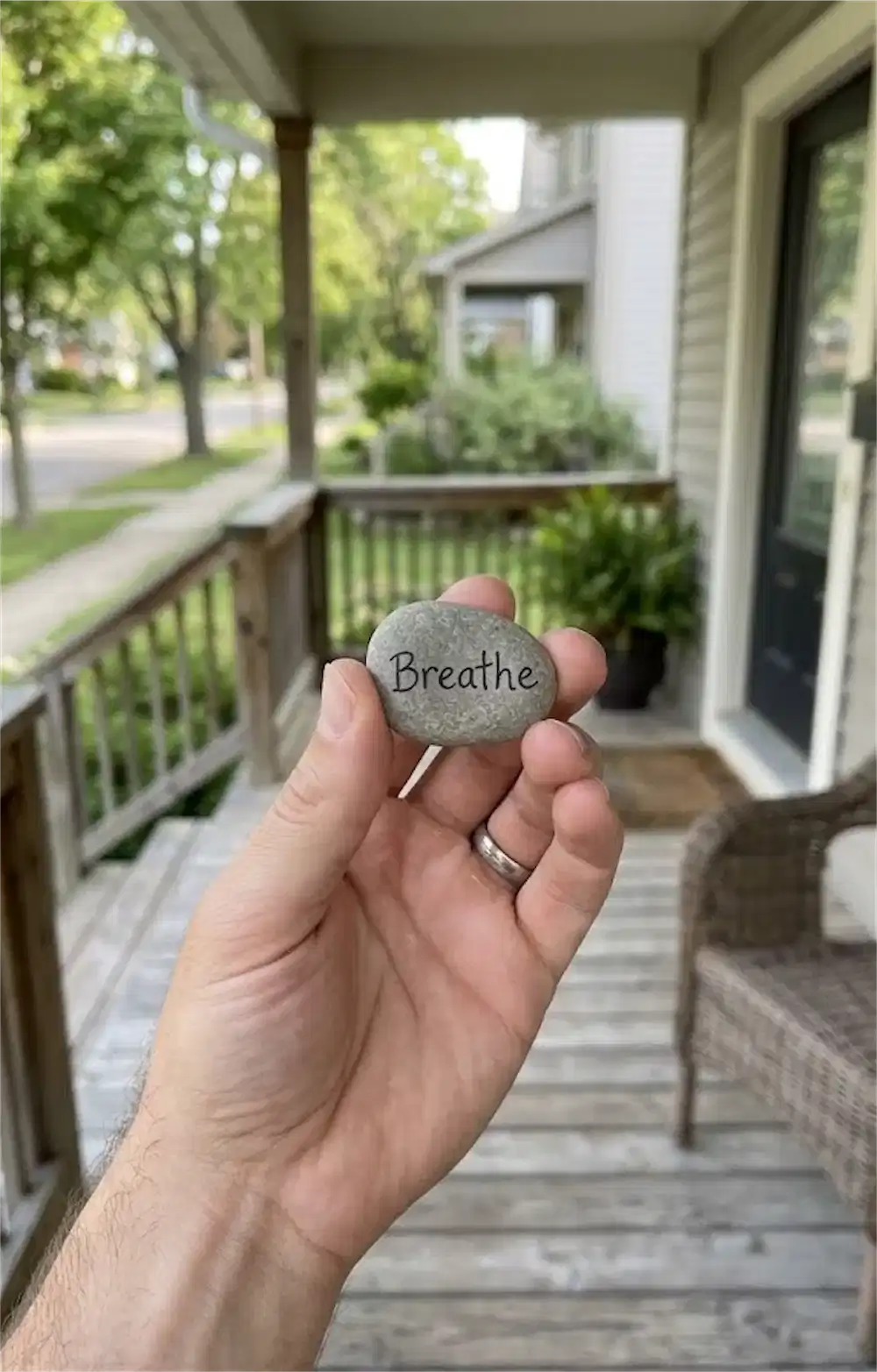
Other grounding approaches that helped me: cold water on my wrists, holding an ice cube, slow breath work with a longer exhale than inhale, or stepping outside barefoot onto grass. None of these are magical. They are all ways to tell your body “you are not in danger right now,” which is the message your nervous system needs to hear in those moments.
Our article on nighttime habits to regulate your nervous system after narcissistic abuse has more on building these practices into a daily routine rather than just using them in crisis moments.
9. Process Your Emotions Without Breaking Your Boundary
One of the biggest misconceptions about no contact is that it requires suppressing or ignoring your feelings. It does not. The goal is to process what you are feeling without using the narcissist as the outlet for that processing. Those are two very different things.
When you feel grief, anger, confusion, or longing, those feelings need somewhere to go. If you have not given them a legitimate outlet, they will build pressure until reaching out feels like the only available release valve. This is why therapy, journaling, physical exercise, and creative expression are not optional extras during no contact. They are structural supports that keep the emotional pressure from accumulating to a breaking point.
Journaling, in particular, serves a specific function that talking does not always replicate. Writing out what you want to say to them, every accusation, every question, every desperate thing you would say if you could, and then not sending it, completes the emotional circuit without opening the line. The feeling gets expressed. The boundary stays intact.
Our piece on journaling prompts specifically for post-narcissist breakup recovery gives you a starting framework if you find yourself staring at a blank page. And if morning pages specifically are something you want to explore, the article on how morning pages help heal a trauma bond explains exactly why that practice is particularly suited to this type of recovery.
10. Reframe What No Contact Actually Is
Most people in the early stages of no contact think of it as punishment. Either they are punishing the narcissist by withholding themselves, or they are punishing themselves by denying their urge to reach out. Either way, the narcissist remains the center of the frame.
No contact is not punishment. It is protection. It is the only environment in which your nervous system can actually begin to return to its baseline, because every point of contact, no matter how small, resets the conditioning cycle and extends recovery. The research supports this clearly: survivors who maintain consistent no contact show measurably faster recovery in terms of reduced anxiety, improved self-esteem, and restored executive function compared to those who maintain intermittent contact.
When you reframe it this way, the motivation shifts. You are not holding out to make a point. You are creating the conditions under which healing is actually physiologically possible. That shift in framing is subtle, but it changes how sustainable the practice feels over time. You are doing this for yourself, not against them.
Our article on the long-term effects of narcissistic abuse and how healing actually happens helps put this in broader context, particularly for survivors who are months or years out and wondering why things still feel harder than expected.
What Happens to Your Brain and Body During No Contact
Understanding what is actually happening on a neurological level during no contact makes the process significantly less frightening. The early weeks are genuinely hard, not because you made the wrong decision, but because your brain is going through a real withdrawal process.
When you end contact with a trauma bonded partner, your brain’s reward system, which had been activated by the intermittent reinforcement pattern of the relationship, stops receiving its irregular inputs. Dopamine and oxytocin levels drop. Your threat-detection system, the amygdala, remains hyperactivated because it was trained over time to anticipate unpredictable emotional danger. The result is a period of heightened anxiety, intrusive thoughts, sleep disruption, and strong physical cravings to re-establish contact. This is well-documented in clinical literature on relational trauma.
Dr. Patrick Carnes, a researcher whose work on trauma bonding has been foundational in this field, describes the attachment to an abusive partner as neurologically similar to other compulsive bonds, requiring the same kind of structured, consistent interruption of the pattern to allow the brain’s reward system to recalibrate. His research on betrayal bonds provides one of the most clinically grounded frameworks available for understanding why no contact is so biologically difficult, and why it is also so necessary.
The good news is that the brain does recalibrate. Not immediately, and not linearly, but measurably. Anxiety levels reduce. Sleep improves. The intrusive thoughts become less frequent and less intense. Appetite returns. Concentration comes back online. These changes happen on a timeline that varies by person and by the length and intensity of the relationship, but they do happen. The path runs through the discomfort, not around it.
If you are experiencing physical symptoms alongside the emotional ones, things like chronic fatigue, digestive issues, or persistent tension, our article on physical health symptoms of a toxic relationship explains why these are far more common than most people realize and what to do about them.
Common No Contact Mistakes That Extend the Pain
Even with the best intentions, there are several patterns that quietly undermine no contact progress. Recognizing them is more useful than judging yourself for them.
- The “one last conversation” trap: The idea that you can get closure from this specific person in this specific conversation. You will not. Closure is not something a narcissist can give you. It is something you build for yourself over time.
- Passive surveillance: Checking their social media through a friend’s account. Googling their name. Driving past their house or workplace. Each of these actions feels small and harmless. Each one reactivates the neural circuits you are trying to let go quiet.
- Keeping “soft” connections: Maintaining contact with people whose primary function in your life right now is as a pipeline of information about your ex. These connections need to be honestly evaluated.
- Treating a break as a failure: If you break no contact, what you do next matters more than the break itself. Returning to no contact quickly, without self-punishment, and learning specifically what triggered the break is a far more productive response than spiraling into shame that prolongs the whole cycle.
- Waiting to feel ready: There is almost never a moment that feels like the right time to start no contact. Ready is not a feeling. Ready is a decision followed by action, even when everything in your nervous system is screaming otherwise.
For a broader look at the patterns that keep people stuck after leaving, our piece on mistakes to avoid when leaving a narcissist covers the most common ones in detail.
Books and Tools That Actually Help During No Contact
These are not random recommendations. These are resources that made a real difference during the hardest stretches of no contact, and that I genuinely suggest to anyone navigating this process.
Boundaries by Dr. Henry Cloud and Dr. John Townsend is one of the most practical books ever written on establishing and maintaining personal limits. It is not written specifically for narcissistic abuse survivors, but its framework is directly applicable and has helped countless people in this specific situation understand why they struggle to maintain limits and how to change that. You can find it here: search for Boundaries by Cloud and Townsend on Amazon.
Betrayal Bond by Dr. Patrick Carnes is the most clinically detailed book available specifically on trauma bonding. If you have ever been unable to explain why you keep going back to someone who hurts you, this book provides the answer in a way that replaces self-blame with genuine understanding. It is a harder read than some, but it is worth it: find The Betrayal Bond by Dr. Patrick Carnes on Amazon.
On the practical tools side, a good pair of noise-canceling headphones can be genuinely useful during no contact. Listening to podcasts on narcissistic abuse recovery or trauma healing while walking or doing chores gives your mind something to engage with during the hours when idle mental space tends to drift toward thoughts of your ex. The better ones make a real quality-of-life difference: browse noise-canceling headphones on Amazon.
The Takeaway
Maintaining no contact with a narcissist is not a test of your love for them or your strength of character. It is a neurological and behavioral challenge that requires structure, support, and an honest understanding of what is actually happening inside you when you feel the urge to reach out.
Go completely dark across all platforms. Build your plan before you need it. Understand the urge without acting on it. Handle hoovering with zero engagement. Clean up the digital trail. Manage flying monkeys firmly. Build a real support system. Use grounding when the craving peaks. Process your emotions through legitimate channels. And reframe what no contact actually is: protection, not punishment.
None of these are easy. Some of them are genuinely painful in the short term. But on the other side of that discomfort is a version of yourself that has space to breathe again, to make decisions without fear, and to slowly remember who you were before the relationship got its hands on you. That version is still in there. No contact is how you get back to them.
If you are still in the early stages and need more support for what this process looks like day to day, our self-healing tips for narcissistic abuse survivors is a practical next step.
Authoritative Sources
- Fisher HE et al., “Reward, Addiction, and Emotion Regulation Systems Associated With Rejection in Love” – Journal of Neurophysiology, NIH/PMC (peer-reviewed) – foundational research on the neurological basis of attachment craving after relationship loss.
- Dr. Cheryl E. Dieter, “Trauma Bonding: Why Victims Stay” – Psychology Today – clinical breakdown of trauma bonding mechanisms and why no contact is the primary recommended intervention.
Recommended Resources
These are additional tools and books worth having during no contact recovery:
- Why Does He Do That? by Lundy Bancroft – one of the clearest, most grounded books available on understanding abusive relationship patterns. Widely recommended by therapists who work with abuse survivors.
- Weighted Blanket for Anxiety and Sleep – deep pressure stimulation has clinical support for reducing cortisol and supporting sleep in people experiencing anxiety and stress. A simple, low-barrier tool for the nights when the nervous system refuses to settle.
- EMDR-Based Trauma Recovery Workbooks – for survivors who want structured, evidence-based self-guided work between therapy sessions. Several strong options exist specifically designed for relational and complex trauma.

Meet Your Guide
Helen Brooks
After surviving a 12-year NPD/BPD relationship, I dedicated over a decade to studying trauma bonding and nervous system recovery. My mission is to help you break free from the fog and reclaim your authentic self.
Ready to break the trauma bond and reclaim your life?