BPD Emotional Volatility: Navigating the Recovery Detox Phase
BPD emotional volatility often leaves you feeling like you are trapped in a storm that never ends, especially during the recovery detox phase where the silence of the aftermath feels louder than the chaos. When you spend over a decade walking on eggshells, your body forgets how to exist without a crisis to manage. I remember sitting in my empty living room after my twelve-year relationship ended, feeling a strange, terrifying hollowness. I had no hobbies left and my friends had long ago drifted away because I was always too exhausted or too ashamed to show up. Have you ever felt like your entire personality was erased by someone else’s moods? If you are navigating the BPD relationship detox right now, you know that the “detox” part isn’t just a metaphor; it is a grueling physical and mental reorganization of your entire life.
Understanding BPD Emotional Volatility After the Breakup
In a toxic dynamic involving Borderline Personality Disorder traits, the emotional landscape is never flat. One moment you are the most amazing person in the world, and the next, you are the villain in a story you didn’t even know was being written. This is often called splitting. In my case, it meant that for twelve years, I was constantly bracing for the next shift. When the relationship finally ends, that volatility does not just vanish. It lives in your nervous system, making you feel jumpy, anxious, and deeply unsettled by the lack of drama.
The recovery detox phase is the period where your brain tries to find a new “normal” without the constant spikes of cortisol and adrenaline. You might find yourself checking your phone every few minutes, waiting for a nasty text or a sudden apology that you know deep down will only restart the cycle. This is a common part of bpd breakup recovery. Your mind is still looking for the extreme highs and lows because it has been trained to believe that intensity is the same thing as intimacy. How do you start to trust a quiet life when you have been conditioned to fear the calm before the storm?
Why the Recovery Detox Phase Feels Like Physical Withdrawal
Leaving a partner with BPD and NPD traits is not just a breakup; it is an extraction. You are dealing with a trauma bond brain chemistry that functions very much like a drug addiction. During those twelve years, the intermittent reinforcement—the way they would be incredibly loving right after a massive blowout—literally rewired my brain to crave the reconciliation. When you enter the detox phase, your brain goes into a state of shock because the “supply” of those intense emotions is gone. You might experience actual physical pain, insomnia, or a deep sense of mourning for a person who never really existed in the way you hoped they did.

During my own detox, I felt like a ghost in my own skin. I had spent so long managing my partner’s emotional volatility that I didn’t know what I liked to eat, what music I enjoyed, or what I wanted to do with my Saturdays. This void is where the urge to go back is strongest. The brain tells you that even the pain of the relationship is better than this cold, lonely silence. But it is vital to remember that this “detox” is the only way to get the toxins out of your system. It is the necessary bridge between the person you were forced to be and the “original self” you are destined to become again.
The hardest part is realizing that the person you are missing is the version of them they presented during the love-bombing phase. In a ten-year or twelve-year relationship, those moments become the carrot on a stick that keeps you moving forward through the abuse. You tell yourself, “If I just say the right thing, or if I am more patient, that sweet person will come back and stay.” The detox phase requires you to look at the reality of the volatility rather than the fantasy of the potential. It is about accepting that the person who hurt you cannot be the one to heal you.
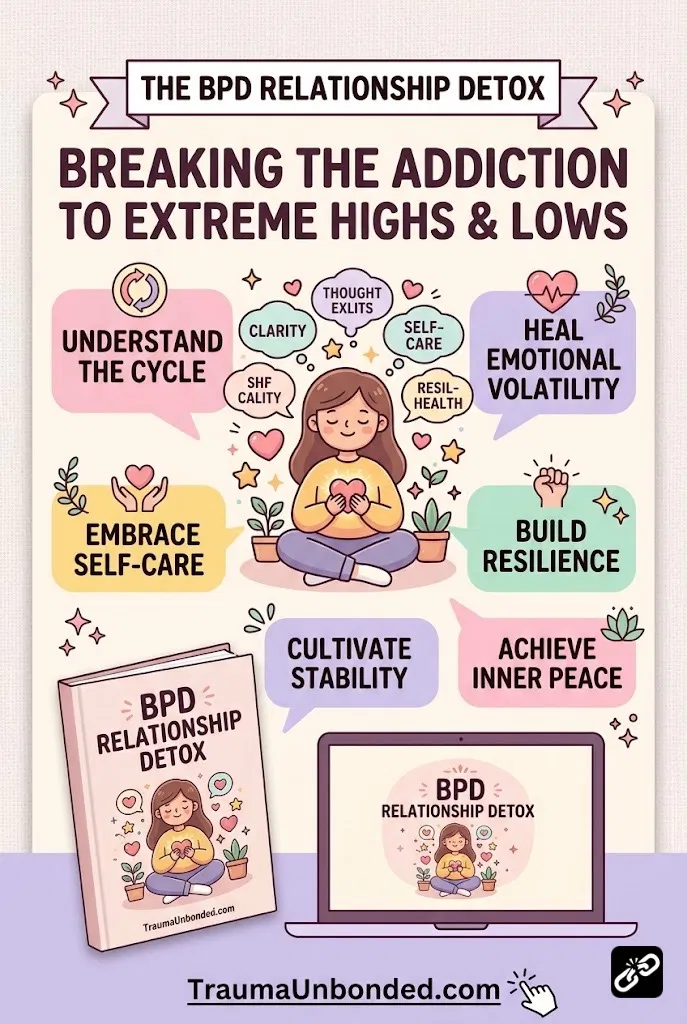
If you find yourself constantly checking their social media or re-reading old messages to find “clues” about what went wrong, you are staying stuck in the loop of emotional addiction. Breaking this habit is the most important step in reclaiming your sanity. You need a structured plan to manage the withdrawal symptoms so you don’t end up reaching out in a moment of weakness. To help you navigate the intense cravings for contact and the confusion of the aftermath, I have designed a specific resource to guide you through this process.
Stop letting the cycle of emotional volatility control your future. If you are struggling to stay away from the chaos and need a clear path to reclaim your peace, this guide was built for your specific situation.
Rebuilding Identity After BPD Relationship Trauma
Once the initial fog of the detox phase begins to lift, you are left with the task of rebuilding. For me, this was the most daunting part. I looked in the mirror and didn’t recognize the person looking back. Twelve years of being told what to think and how to feel had left me hollowed out. I started small. I bought a plant and promised myself I would keep it alive. I went for walks without checking my phone once. These small acts of autonomy are how you begin to heal from bpd emotional volatility. You are teaching your nervous system that it is safe to be alone and that you can provide your own stability.
Codependency often goes hand-in-hand with these relationships. You might have spent years being the “fixer” or the “caretaker,” thinking that your worth was tied to how well you could manage your partner’s moods. In the recovery phase, you have to turn that caretaking energy toward yourself. It feels selfish at first. It feels wrong to not be worrying about someone else’s crisis. But that discomfort is just the sound of your boundaries growing back. You are not responsible for the emotions of a grown adult who refuses to seek professional help.
Practical Grounding Tools for Emotional Stability
When the waves of grief or anger hit during the detox, you need more than just “positive thinking.” You need physical tools to bring you back to the present moment. I used a technique called “the five things.” I would stop and name five things I could see, four things I could touch, three things I could hear, two things I could smell, and one thing I could taste. This simple exercise forces your brain to leave the ruminating loop of the past and return to the safety of the now. Have you tried any grounding exercises that actually made you feel like you were back in control of your own body?
Therapy is also a non-negotiable part of this journey. You need a space where you can speak the truth without being gaslit. Gaslighting is when someone makes you doubt your own memory or sanity, and after a decade of it, you need a professional to help you untangle the lies from the truth. In my recovery, my therapist helped me see that the “miserable” person I thought I was was actually just a person under extreme, chronic stress. As the stress decreased, my “original self”—the cheerful, optimistic person I used to be—slowly started to re-emerge. It wasn’t an overnight change, but a slow, steady dawn.
The recovery detox phase eventually leads to a place of profound clarity. You start to see the patterns you couldn’t see while you were in the thick of it. You realize that the “intense love” was actually a lack of boundaries and that the “emotional depth” was actually just instability. This clarity is your superpower. It ensures that you will never allow yourself to be treated that way again. You are not just surviving; you are becoming someone who knows their worth and protects their peace at all costs.
You deserve a life that is predictable, safe, and filled with genuine joy rather than manufactured drama. The path through the detox is hard, but the version of you waiting on the other side is worth every difficult moment. If you are ready to take the next step and finally break the chains of this addictive cycle, I highly recommend starting with The BPD Relationship Detox to give yourself the structure and support you need to truly move on.

Meet Your Guide
Helen Brooks
After surviving a 12-year NPD/BPD relationship, I dedicated over a decade to studying trauma bonding and nervous system recovery. My mission is to help you break free from the fog and reclaim your authentic self.
Ready to break the trauma bond and reclaim your life?