Cognitive Behavioral Therapy (CBT) Techniques to Challenge the Narcissist’s Words in Your Head
Using Cognitive Behavioral Therapy (CBT) Techniques to Challenge the Narcissist’s Words in Your Head is one of the most practical steps you can take to reclaim your mental freedom. When you leave a toxic relationship, physical separation is only the first part of your battle. The silent struggle continues inside your mind as you replay their harsh critiques, insults, and mocking tones on repeat.
During my own journey after surviving a twelve-year toxic relationship with a partner showing both narcissistic and borderline personality traits, I felt completely drained and isolated. My old hobbies were gone, and my mind felt like a chaotic courtroom where my ex acted as the permanent judge. If you are currently struggling with this relentless mental chatter, exploring a structured strategy like The Rumination Detox can help you quiet the noise.
Through professional therapy, I discovered that these lingering criticisms are not a reflection of your actual identity. They are merely internalized scripts planted by a highly manipulative individual. By learning how to identify, dismantle, and rewrite these painful messages, you can slowly return to the cheerful, grounded person you used to be.
Why Do the Narcissist’s Cruel Words Stay Stuck in Your Mind?
The narcissist’s cruel words stay stuck in your mind because of trauma bonding and chronic gaslighting, which train your brain to internalize criticism as a survival mechanism. Over time, these external insults become your habitual inner voice, trapping you in a cycle of self-doubt.
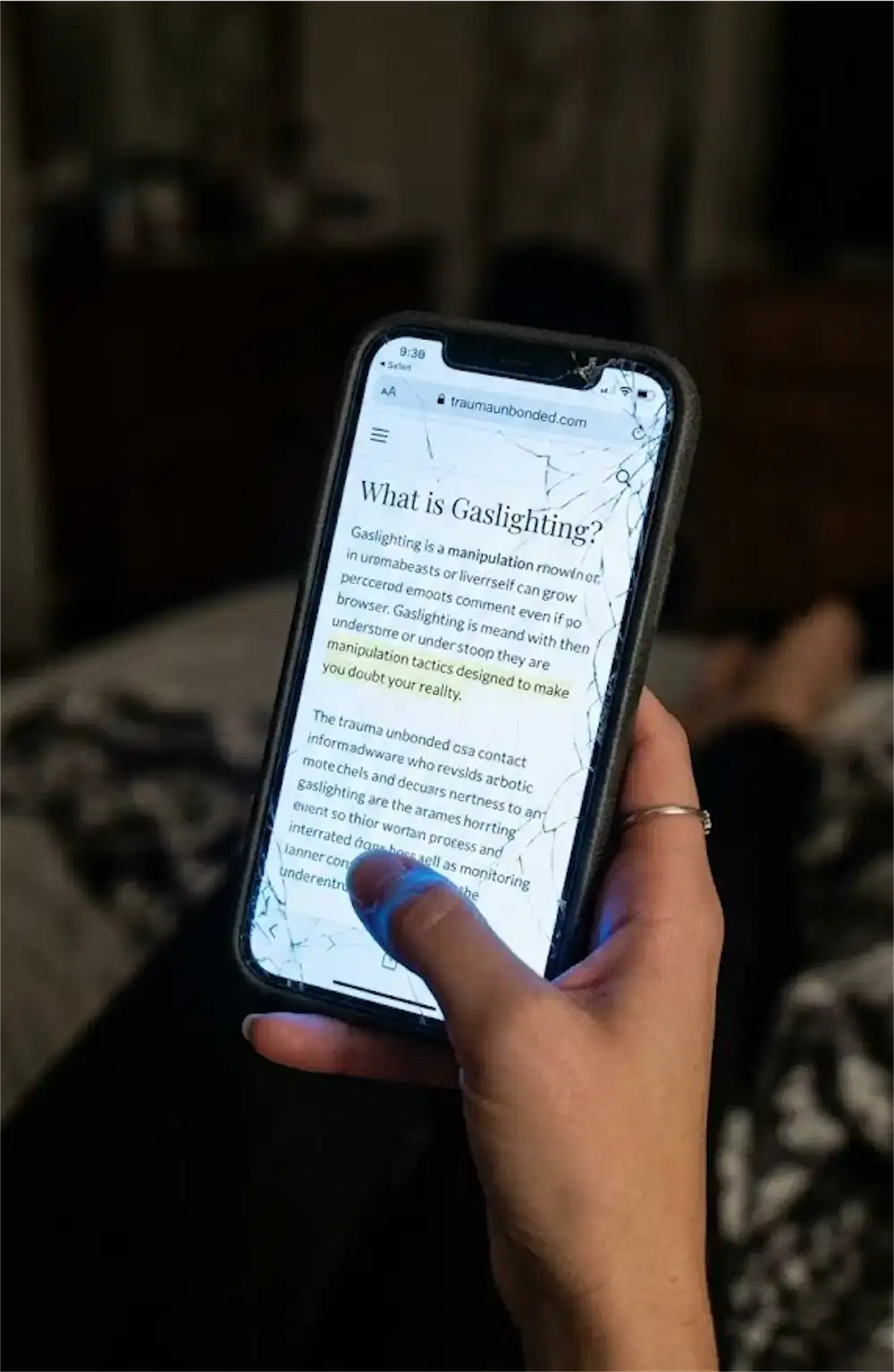
When you spend years walking on eggshells, your nervous system remains in a constant state of high alert. Every insult and passive-aggressive remark is recorded by your brain to help you predict and avoid future conflict. This painful dynamic leads to severe cognitive dissonance after narcissistic abuse, where your brain struggles to reconcile who you are with what you were told you are.
The toxic partner used emotional manipulation to make you doubt your own perception of reality. Over a decade of this treatment, their voice slowly replaced your own inner compass. You might find yourself cooking a meal and suddenly hearing their critical voice saying you are doing it wrong, or looking in the mirror and repeating their insults about your appearance.
This happens because human brains are naturally wired for survival rather than happiness. According to resources on cognitive restructuring on Psychology Today, our brains easily develop habitual ways of thinking based on our immediate environment. When your home environment is abusive, your mental habits naturally become defensive, self-critical, and highly anxious.
Identify and Label the Internalized Critic
Before you can dismantle the critical voice in your head, you must learn to recognize that it does not belong to you. It is a learned script, not your actual identity. When a negative thought pops up, ask yourself: Whose voice is that? Is it really yours, or is it an echo of someone who wanted to keep you weak?
In my experience, almost every harsh thought about my worth, capability, or intelligence could be traced directly back to things my ex said during our twelve years together. By labeling these thoughts, you create a healthy psychological distance between your true self and the abuse.
You can start this process by practicing a simple labeling technique. Whenever you catch yourself thinking “I can never do anything right” or “I am too weak,” immediately pause. Say to yourself quietly: “That is my ex’s opinion, not my reality.” This simple act helps break the automatic nature of the toxic thoughts.
Put the Thought on Trial: The Classic CBT Technique

The core of CBT involves examining your automatic thoughts under a metaphorical microscope. In an abusive relationship, you are conditioned to accept their word as absolute truth. Now, you must act as an objective judge.
Grab a journal and write down the exact negative thought you are experiencing. For example, you might write: “I am completely unlovable and I will end up completely alone.” Putting the words on paper strips them of their abstract, overwhelming power and makes them something you can analyze.
Examine the Evidence For and Against
Draw two columns beneath your written thought. In the first column, list the objective evidence that supports the thought. In the second column, list the evidence that disproves it.
Here is the catch: feelings are not facts, and your ex’s insults are not evidence. You must look for real, concrete facts from your past and present.
- Evidence For: “My ex told me no one else would ever want me.” (Notice how this is just an opinion, not an objective fact).
- Evidence Against: “I have friends who care about me, I have shown kindness to others, and I was able to build a life before this relationship.”
Develop a Balanced, Realistic Thought
Once you look at the columns, you will see that the critical voice is based on toxic distortions rather than reality. Your job now is to draft a realistic alternative.
A balanced thought is not about toxic positivity; it is about objective truth. Instead of “I am completely unlovable,” a realistic alternative is: “My ex was unable to love me because of their own issues, but I am worthy of connection and have people who value me today.”
If you find yourself constantly replaying these toxic conversations and need a structured, step-by-step roadmap to break the obsessive loops, we have designed a workbook to help you quiet your mind and heal.

Challenge the Toxic Rules with Behavioral Experiments
Toxic partners establish silent rules to keep you small, dependent, and quiet. They might tell you that you cannot manage money, that you are terrible at socializing, or that you are too fragile to survive on your own. Behavioral experiments are a CBT tool where you actively test these negative beliefs in real life.
When I left my relationship, my ex’s voice constantly told me that I was incapable of handling basic household chores, bills, or home repairs. I felt completely paralyzed by this belief and lived in a cluttered state of panic. To challenge it, I started with small, manageable tasks.
I set up a small budget spreadsheet and managed my bills for one month. When the month ended and my finances were intact, I had concrete proof that the toxic rule was false. Start small, gather your evidence, and watch their fabricated rules fall apart.
Interrupt the Mental Loop in Real Time
When you find your mind spinning with past arguments, you need immediate grounding tools to halt the cycle. The critical voice thrives when you sit in silence and let the thoughts grow. You can learn to stop ruminating on past arguments by using physical and cognitive anchors.
One useful tool is thought stopping paired with sensory grounding. The moment you realize you are replaying an old insult, say “Stop” out loud or picture a red stop sign in your mind. Immediately shift your attention to your physical environment by naming five things you can see, four things you can touch, and three things you can hear.
This shifts your brain out of the emotional survival center and back into the logical prefrontal cortex. It is a simple but reliable way to heal from gaslighting and rebuild trust in reality. With practice, the pathways that kept those old words alive will begin to weaken.
Reclaiming Your Inner Voice
The critical words echoing in your head do not belong to you, and they never did. They were simply tools used to control you. It takes time, patience, and consistency to wash away a decade of conditioning, but it is entirely possible to quiet the noise.
Be gentle with yourself as you navigate this process. If you want a structured, daily roadmap to help you quiet these obsessive loops and rebuild your self-esteem, consider exploring The Rumination Detox. You deserve to live a life free from their critical scripts, with an inner voice that is entirely your own.

Meet Your Guide
Helen Brooks
After surviving a 12-year NPD/BPD relationship, I dedicated over a decade to studying trauma bonding and nervous system recovery. My mission is to help you break free from the fog and reclaim your authentic self.
Ready to break the trauma bond and reclaim your life?