The Gut-Brain Axis and Emotional Abuse: Healing Your Digestion to Heal Your Mind
The gut-brain axis and emotional abuse are connected in ways that most survivors never realize until their body starts screaming louder than their thoughts. If you have been searching for why your stomach hurts after narcissistic abuse, why you are bloated all the time since the breakup, or why your digestion completely fell apart after leaving a toxic relationship, you are not imagining things. Your gut is literally processing the trauma your mind has not finished with yet. After twelve years in a relationship with someone who had both NPD and BPD traits, I did not just lose my sense of self. I lost the ability to eat a normal meal without pain, nausea, or spending half the day in the bathroom. Nobody warned me that emotional abuse could destroy my digestion. But it did. And understanding the somatic connection between stored trauma and your nervous system was a turning point I wish I had found sooner.
What Is the Gut-Brain Axis and Why Does Emotional Abuse Disrupt It?
The gut-brain axis is the bidirectional communication network between your central nervous system and your enteric nervous system (the nervous system in your gut). Chronic emotional abuse disrupts this connection by keeping the body locked in a prolonged stress response, which directly alters gut motility, microbiome balance, and intestinal permeability.
Think of your gut as a second brain. It contains over 500 million neurons and produces roughly 95 percent of your body’s serotonin. When you are living with someone who gaslights you, meaning they twist reality so often that you stop trusting your own perception, your nervous system stays in a permanent state of fight or flight. That is not a metaphor. That is cortisol flooding your system day after day, month after month, year after year.
During my twelve years, I remember waking up every morning with a knot in my stomach before my eyes even opened. I thought it was just anxiety. It was. But the anxiety was not just “in my head.” It was physically reshaping my gut lining, killing off beneficial bacteria, and slowing down my entire digestive process. Research published on PubMed confirms that chronic psychological stress significantly alters gut microbiota composition and intestinal barrier function, which is exactly what happens when you live under the constant threat of someone’s emotional volatility.

Have you ever noticed that your worst digestive flare ups happened after arguments, silent treatments, or those terrifying calm-before-the-storm moments? That is the gut-brain axis at work. Your brain senses danger. Your gut responds. And when that danger lasts for years, the damage compounds.
How Narcissistic Abuse Physically Changes Your Gut
Let me be specific about what actually happens inside your body when you are trapped in a toxic relationship. This is not theory. This is what I lived, and what my therapist and gastroenterologist eventually helped me connect.
When your partner rages, then love bombs you, then gives you the silent treatment for three days, your stress hormones spike, crash, spike again. This pattern of intermittent reinforcement, where affection and cruelty alternate unpredictably, keeps your autonomic nervous system completely dysregulated. Your vagus nerve, which is the main communication highway between your gut and brain, becomes chronically impaired.
Here is what that dysregulation does to your digestive system:
- Increased intestinal permeability (sometimes called “leaky gut”), where the tight junctions in your gut lining loosen, letting toxins and undigested food particles into your bloodstream
- Microbiome disruption, a reduction in beneficial bacteria like Lactobacillus and Bifidobacterium, and an overgrowth of inflammatory species
- Slowed or erratic motility, meaning food moves too fast (diarrhea) or too slow (constipation), often alternating between both
- Chronic low-grade inflammation throughout the gut, which can trigger IBS symptoms, bloating, acid reflux, and food sensitivities that did not exist before the relationship
- Reduced serotonin production, which worsens depression and anxiety, creating a feedback loop between your gut problems and your emotional state
I developed food intolerances in year eight of my relationship that I never had before. Dairy. Gluten. Certain raw vegetables. My doctor ran tests. Everything came back “normal.” But I was not normal. I was surviving on adrenaline and barely eating, and when I did eat, my body treated food like a threat because it treated everything like a threat.
The Vagus Nerve: Your Hidden Key to Gut-Brain Recovery
If you take one thing from this article, let it be this: healing your vagus nerve is not optional in abuse recovery. It is foundational. The vagus nerve controls your parasympathetic nervous system, which is the “rest and digest” state your body needs to properly break down food, absorb nutrients, and repair gut tissue.
After years of walking on eggshells, a phrase that describes the hypervigilance of constantly monitoring your partner’s mood to avoid an explosion, your vagus nerve tone drops. Low vagal tone means your body stays stuck in survival mode. Digestion becomes a luxury your nervous system cannot afford.
I did not know any of this when I finally left. I just knew I felt physically terrible and doctors kept telling me it was “stress.” They were right, but that word does not begin to capture what twelve years of emotional abuse does to your biology. What I needed was not just stress management. I needed targeted vagus nerve exercises to bring my body out of the constant alarm state it had been locked in for over a decade.
Simple vagal toning practices that helped me:
- Cold water face immersion for 15 to 30 seconds, which activates the dive reflex and immediately stimulates the vagus nerve
- Humming and extended exhale breathing, where you breathe in for 4 counts and out for 8, which shifts your nervous system toward parasympathetic dominance
- Gargling vigorously with water each morning, which activates the vagal pathways in the throat
- Gentle yoga and somatic stretching, especially hip openers, because the body stores trauma in the fascia and deep muscle tissue
These are not wellness trends. These are physiological interventions that directly address what chronic narcissistic stress did to your autonomic nervous system and, by extension, your gut.
Healing Your Digestion After a Toxic Relationship: Practical Steps

Recovery from abuse-related digestive problems is not just about what you eat, though nutrition matters enormously. It is about retraining your nervous system to feel safe enough to digest. Here is what worked for me, and what my therapist confirmed aligns with trauma-informed gut healing.
Step 1: Stabilize your nervous system first. Before overhauling your diet, focus on nervous system regulation. No supplement will work if your body is still running cortisol at emergency levels. Grounding exercises, breathwork, and even a somatic trauma release practice can create the foundation your gut needs to start healing.
Step 2: Eat to reduce inflammation, not to punish yourself. After emotional abuse, many survivors have a complicated relationship with food. Some restrict. Some binge. Some forget to eat entirely. Start simple. Bone broth, cooked vegetables, fermented foods like sauerkraut or kefir, and omega-3 rich foods like salmon. Avoid highly processed foods and excess sugar, which feed inflammatory gut bacteria.
Step 3: Introduce a quality probiotic. Look for strains like Lactobacillus rhamnosus and Bifidobacterium longum, which research links to reduced anxiety and improved gut barrier function. This is not a magic pill. It is one piece of a larger healing process.
Step 4: Address the trauma bond directly. Your gut will not fully heal while your brain is still attached to the person who harmed you. The biochemical addiction to a narcissistic or BPD partner, what we call a trauma bond, keeps your stress hormones cycling. Breaking that bond is not just emotional work. It is physical liberation.
If you are in the thick of this right now, trying to understand why your body feels like it is falling apart even though you “should” feel better after leaving, I want you to know something: this is the most common thing survivors experience, and the least talked about. You are not broken. Your body adapted to an impossible situation, and now it needs help adapting back.
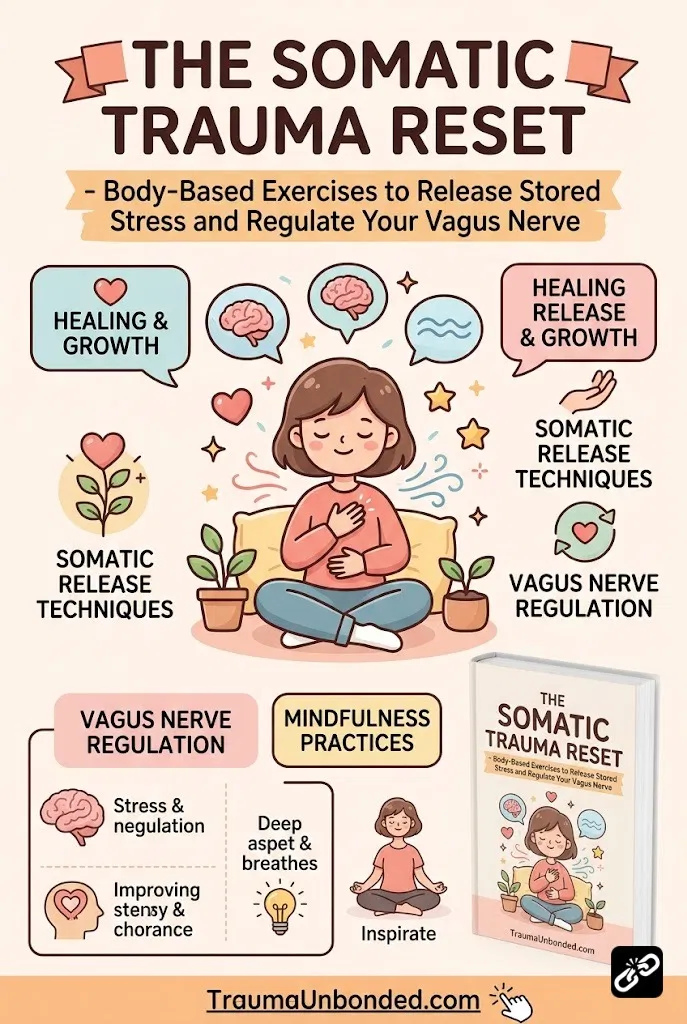
For those ready to go deeper into the body-based side of recovery, I put together a guide that walks you through the exact somatic and nervous system exercises that helped me reconnect my gut and brain after years of damage.
Why “Just Eat Healthy” Is Not Enough After Emotional Abuse
Well-meaning people told me to “just eat better” and “reduce stress.” If you have heard this advice and wanted to scream, I understand. When your body has been marinating in high cortisol for years, when your nervous system does not know the difference between your ex’s text notification and an actual threat, eating a salad is not going to fix it.
The gut-brain axis requires a top-down and bottom-up approach. Top-down means working on your psychological healing, your trauma processing, your therapy work, your understanding of codependency patterns and why you stayed. Bottom-up means working directly with your body through somatic practices, nutrition, nervous system regulation, and movement.
Neither alone is enough. I tried therapy without addressing my body. My mind understood what happened but my stomach still cramped every time my phone buzzed. Then I tried supplements and diet changes without therapy. My digestion improved slightly, but I was still ruminating about my ex at 3 AM and my cortisol was still through the roof.
The real healing happened when I combined both. Therapy gave me the cognitive framework. Somatic work and gut-focused nutrition gave my body permission to stand down from its twelve-year war footing.
Your Body Kept the Score, and Your Gut Is the Receipt
If you are experiencing digestive problems after narcissistic abuse, bloating that came out of nowhere, IBS symptoms that started during or after your toxic relationship, food sensitivities you never had before, or that constant knot in your stomach that no antacid can touch, please hear this: your body is not betraying you. It is telling you the truth your mind was trained to deny.
The gut-brain axis is not a weakness. It is a roadmap. Follow what your body is telling you, pair nervous system work with nutritional repair, get professional support from a trauma-informed therapist, and give yourself the same patience you would give anyone recovering from a long illness. Because that is what this is.
You did not cause this damage. But you can lead your own recovery. And if you want a structured, step-by-step framework for releasing stored trauma from your body and restoring your vagus nerve function, the Somatic Trauma Reset guide was built for exactly where you are right now. Your gut has been waiting for your nervous system to feel safe again. That work starts today.

Meet Your Guide
Helen Brooks
After surviving a 12-year NPD/BPD relationship, I dedicated over a decade to studying trauma bonding and nervous system recovery. My mission is to help you break free from the fog and reclaim your authentic self.
Ready to break the trauma bond and reclaim your life?