
Somatic Breathwork Exercises to Break Your Addiction to Drama
Somatic breathwork exercises are a powerful way to break your addiction to drama after escaping a toxic relationship. If you spent over a decade walking on eggshells like I did, your body is probably wired for disaster. During my 12-year relationship with a partner who had both NPD and BPD traits, my nervous system was constantly screaming. I didn’t realize that my brain had become chemically dependent on the high-intensity cycles of fighting and making up. This trauma bond biochemical addiction makes normal, peaceful life feel boring or even dangerous. Do you find yourself picking fights when things get too quiet?
When I finally got out, I was a shell of a person. I had no hobbies, no friends left, and a baseline level of anxiety that felt like a buzzing wire under my skin. I had to learn that The Somatic Trauma Reset was the only way to tell my body the war was actually over. My mind knew he was gone, but my lungs and heart were still waiting for the next door to slam. Recovery isn’t just about understanding what happened; it is about teaching your cells how to be still again.
The addiction to chaos is real, and it is physical. When you are in a relationship defined by intermittent reinforcement, your brain gets flooded with dopamine during the “good” times and cortisol during the “bad” times. This creates a loop similar to drug use. If you want to stop ruminating on the past and start living in the present, you have to address the physical tension stored in your tissues. Have you noticed how your chest tightens the moment your phone pings?
Why Your Body Craves the Chaos of Toxic Relationships

For twelve years, I was addicted to chaos relationship patterns without even knowing it. My partner would use gaslighting to make me question my own memory of events. One minute we were planning a future, and the next, he was “splitting” and telling me I was the worst thing that ever happened to him. This constant flipping keeps your nervous system in a state of hyperarousal. You become a master at reading micro-expressions and tone shifts because your survival depends on it.
When the relationship ends, the drama withdrawal begins. You might feel a strange urge to check their social media or even send a text just to get a reaction. That isn’t love; it is a biochemical craving for the stress hormones you’ve lived on for years. If you don’t break this cycle, you will likely find another toxic person who provides that same “spark” of familiar chaos. Breathwork helps you tolerate the silence of a healthy life until it starts to feel like peace instead of boredom.
I remember sitting in my new, quiet apartment feeling like I was going to explode. There were no more arguments, no more hoovering, and no more blame-shifting. Yet, my heart was racing. I was experiencing trauma bond withdrawal symptoms. My body was literally looking for a fight to justify the amount of adrenaline in my blood. Somatic exercises are the bridge that moves that energy out of your body so you can finally relax your shoulders.
Somatic Breathwork Exercises to Regulate Your Nervous System
To break the addiction to drama, you need tools that work faster than your thoughts. When a trauma trigger hits, your prefrontal cortex shuts down. You can’t “think” your way out of a panic attack. You have to breathe your way out of it. These exercises help with vagus nerve regulation, which is the key to moving from “fight or flight” into “rest and digest.”
The first exercise I learned was the Physiological Sigh. It is a biological hack to offload carbon dioxide and lower your heart rate almost instantly. You take a deep breath in through your nose, followed by a second short “sip” of air at the very top to fully expand the lungs. Then, you let out a very long, slow exhale through your mouth. I did this in the bathroom at work, in my car, and before bed for months. It was the first time in a decade I felt like I could actually catch my breath.
Another essential tool is Box Breathing. This is what Navy SEALs use to stay calm in combat, and let’s be honest, surviving a narcissistic discard feels like a war zone. You breathe in for four seconds, hold for four, exhale for four, and hold empty for four. This rhythmic pattern forces your brain to focus on something other than the intrusive thoughts of your ex. It creates a container for your emotions so they don’t spill over and ruin your day.
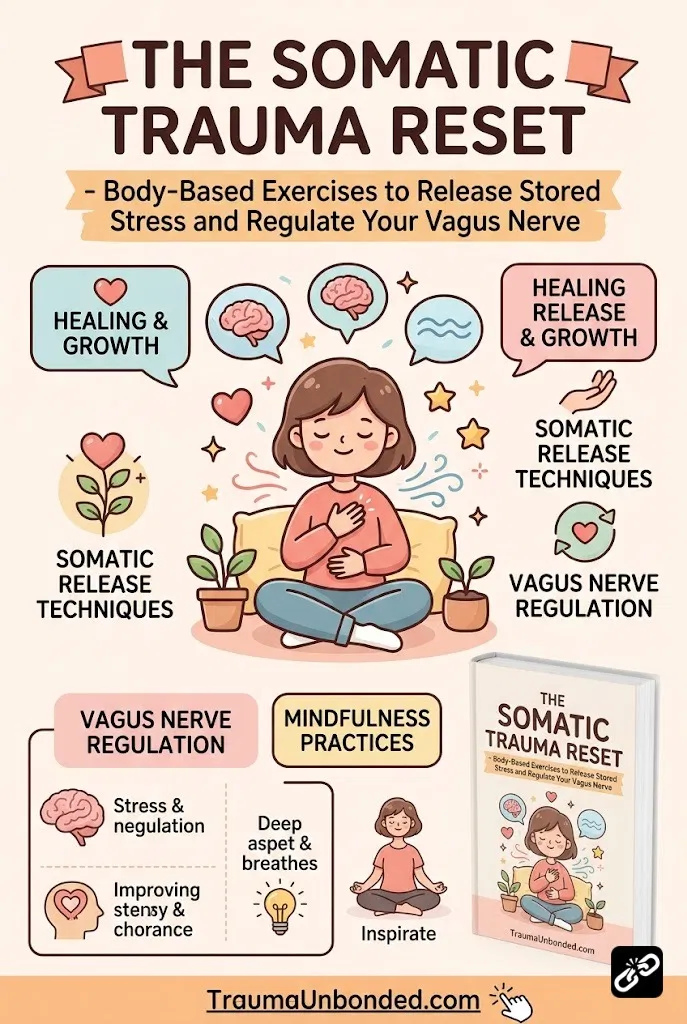
If you are feeling stuck in your recovery and can’t seem to shake the physical anxiety, you might need a more structured approach to rewiring your body’s stress response. I’ve found that having a daily ritual is what truly moved the needle for me when I was transitioning from a victim to a survivor.
If you want to stop feeling like a prisoner to your past and finally calm that internal buzzing, this specific guide was the turning point in my own healing journey.
Reclaiming Your Peace After the Discard
Healing is not a linear process. There were days when I felt great, and days when the betrayal trauma felt as fresh as if it happened yesterday. During those 12 years, I lost my sense of self. I didn’t know what I liked to eat, what movies I enjoyed, or who I was without the caregiving role. Breaking the addiction to drama meant I had to face the emptiness that was left behind. That is the hardest part of BPD relationship trauma recovery.
When you stop the chaos, you have to sit with yourself. For many of us, that is terrifying. We used the drama as a distraction from our own childhood wounds or codependency. Somatic breathwork allows you to stay in your body even when it feels uncomfortable. Instead of reaching for your phone to check their status, you reach for your breath. You learn that you are a safe place to be. Is it possible that the “boredom” you feel is actually just safety?
I started incorporating “Voo” breathing, which involves making a low, guttural sound on the exhale. It vibrates the chest and stimulates the vagus nerve. It sounds strange, but it works wonders for clearing trauma blocks. After a decade of being silenced and told my reality was wrong, making noise was incredibly healing. It was like I was physically pushing the 12 years of held-back tears out of my system. You have to find your voice again, literally and figuratively.
Moving Forward and Exiting Survival Mode
Today, I am no longer that isolated, miserable woman. I have my hobbies back – I paint, I hike, and I laugh with friends who actually care about me. But I didn’t get here by accident. I got here by making a commitment to my nervous system health every single day. You have to be more committed to your peace than you were to their chaos. Are you ready to stop being the supporting character in their tragedy and start being the lead in your own life?
If you find yourself ruminating on arguments or replayng the gaslighting in your head, stop and breathe. Recognize that your brain is just looking for a hit of stress. Don’t give it what it wants. Give it oxygen instead. The more you practice these somatic exercises, the more your “original self” will start to peek through the clouds. You aren’t broken; you are just over-stimulated and under-regulated. It takes time to exit survival mode, but the view from the other side is beautiful.
Remember that you deserve a life that is stable and grounded. You don’t need the highs and lows to feel alive. Real life is found in the quiet moments, the slow mornings, and the deep, easy breaths. If you want to dive deeper into these body-based techniques, I highly recommend checking out The Somatic Trauma Reset to help you fully release the grip that toxic relationship still has on your physical body. You’ve survived the fire; now it’s time to enjoy the cool air.

Meet Your Guide
Helen Brooks
After surviving a 12-year NPD/BPD relationship, I dedicated over a decade to studying trauma bonding and nervous system recovery. My mission is to help you break free from the fog and reclaim your authentic self.
Ready to break the trauma bond and reclaim your life?