10 Red Flags of Love Bombing and Why to Avoid Them for Good
The first three weeks with my ex felt like a fairytale. He texted me constantly, called me his soulmate after five days, and talked about our future together before we’d even had a real argument. I thought I’d finally found someone who truly saw me, who loved me the way I deserved.
I was wrong. What I experienced wasn’t love. It was love bombing, a manipulation tactic used by narcissists and people with borderline personality disorder to hook you fast and hard before revealing their true nature. By the time I realized what was happening, I was already trauma bonded, isolated from friends, and convinced that if I just loved him enough, he’d go back to being that perfect person from the beginning.
He never did. That person never existed.
Love bombing isn’t flattery. It’s not someone being really into you. It’s a calculated strategy to bypass your boundaries, overwhelm your judgment, and create an artificial intimacy that makes you dependent before you’ve had time to think clearly. Research from the American Psychological Association confirms that love bombing is a common feature of narcissistic abuse cycles, designed to create rapid attachment that’s difficult to break.
I spent 12 years chasing the ghost of those first three weeks. This article will show you the 10 red flags I missed, why they’re so dangerous, and how to protect yourself from making the same mistake I did.
What Love Bombing Actually Feels Like (And Why I Didn’t See It Coming)
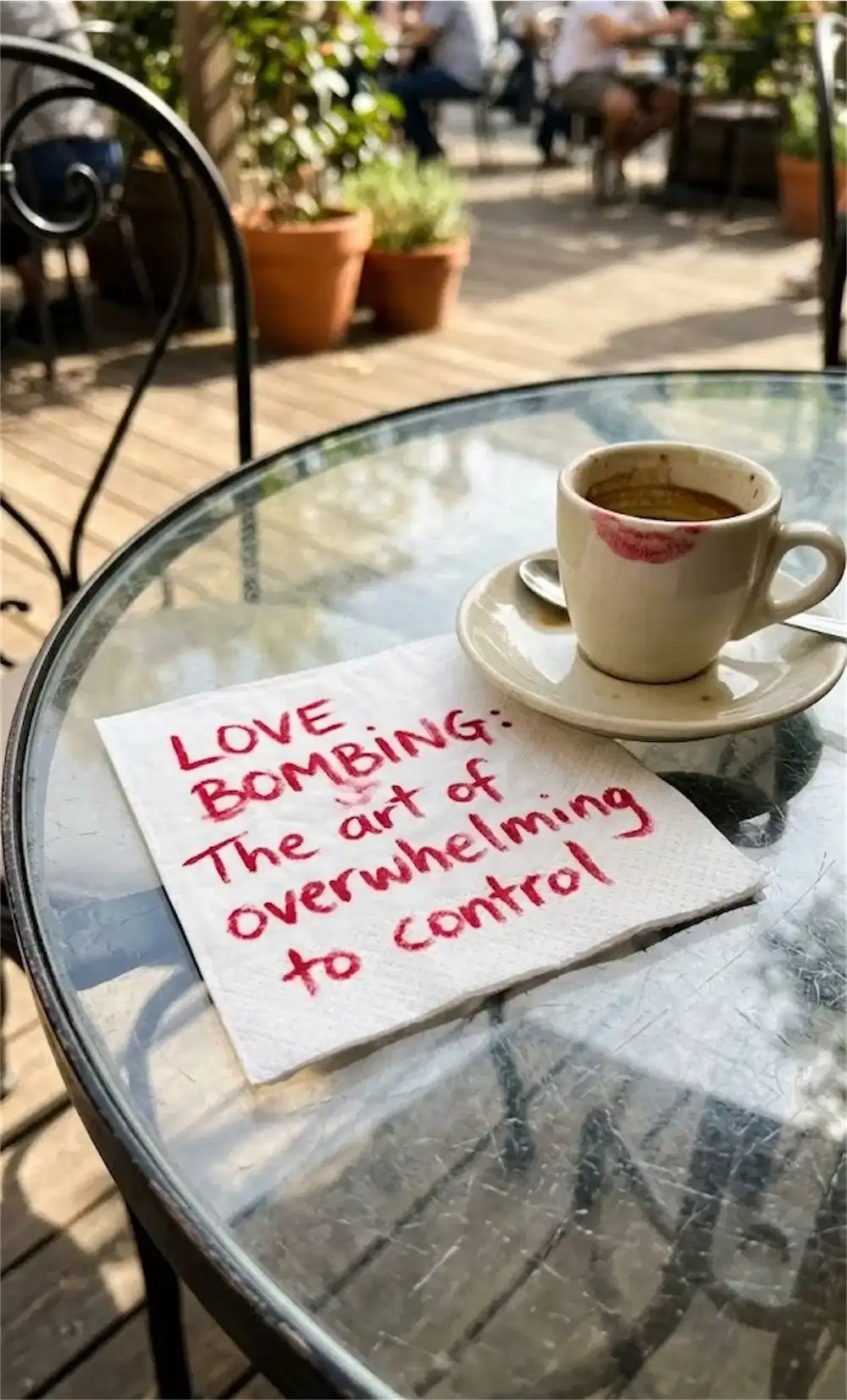
Love bombing is excessive attention, affection, and promises in the early stages of a relationship. It feels amazing at first. You feel seen, valued, and special in a way you’ve never experienced before. That’s the point.
My ex made me feel like I was the only woman in the world. He showed up at my work with flowers. He wrote me long letters about how I’d changed his life. He introduced me to his family after two weeks. When I hesitated, he said, “When you know, you know.” I ignored the voice in my head saying this was too much, too soon.
Here’s what makes love bombing different from genuine interest:
- Intensity vs. consistency: Love bombers go from 0 to 100 immediately. Healthy relationships build gradually.
- Idealization vs. curiosity: They put you on a pedestal without really knowing you. Healthy partners ask questions and learn about you over time.
- Future faking vs. present focus: They talk about marriage, kids, and forever before you’ve even had a disagreement. Healthy partners stay in the present.
- Overwhelming vs. respectful: They ignore your pace and boundaries. Healthy partners respect when you need space.
The problem is that love bombing feels incredible when you’re in it. Your brain floods with dopamine, oxytocin, and other feel-good chemicals. You’re literally getting high on the attention. That’s why it’s so hard to walk away, even when the red flags are obvious to everyone else.
If you’re trying to understand why you stayed despite the warning signs, this article on childhood dynamics that attract narcissists explains the deeper patterns at play.
Red Flag #1: They Move Insanely Fast
My ex told me he loved me on our fourth date. He wanted me to meet his parents after one week. He talked about moving in together after three weeks. When I said I wanted to slow down, he looked hurt and said, “I thought you felt the same way I do.”
That guilt trip worked. I didn’t want to seem cold or uncommitted, so I went along with his pace even though every instinct told me this was wrong.
Healthy relationships have natural milestones that unfold over months, not days. Love bombers rush these milestones to create a false sense of intimacy before you’ve had time to assess compatibility, red flags, or whether this person respects your boundaries.
Why this matters: When things move too fast, you don’t get to see how this person handles conflict, stress, disappointment, or everyday life. You only see the performance.
Red Flag #2: Constant Communication That Feels Suffocating
In the beginning, my ex texted me every hour. Good morning texts, midday check-ins, goodnight paragraphs. If I didn’t respond within 20 minutes, he’d send follow-ups asking if I was okay.
At first, I thought it was sweet. He was thinking about me. He cared. But within a few weeks, it felt like surveillance. I couldn’t have lunch with a friend without my phone buzzing nonstop. I couldn’t focus at work without feeling guilty for not responding immediately.
Love bombers use constant communication to:
- Monitor your activities and whereabouts
- Prevent you from having time alone to think clearly
- Create dependency on their attention
- Test your compliance and availability
When the love bombing phase ended and he withdrew that constant contact, I felt abandoned. I’d become addicted to the attention. That’s exactly what he wanted.
Red Flag #3: Over-the-Top Gifts and Gestures
Expensive dinners. Surprise weekend trips. Jewelry I never asked for. My ex showered me with gifts that felt disproportionate to how long we’d been dating. When I told him it was too much, he said, “I just want to spoil you. Don’t you deserve to be treated well?”
Of course I did. But these gifts weren’t about me. They were about creating debt, obligation, and guilt. Later, when I tried to leave, he reminded me of everything he’d done for me. “After all I’ve given you, this is how you treat me?”
Gifts from a love bomber come with invisible strings. They’re investments in your compliance, not expressions of genuine affection. A healthy partner gives thoughtful gifts that match the stage of the relationship and never uses them as leverage.
Red Flag #4: Mirroring Everything You Say and Do

My ex loved all the same music I did. He had the same political views. He wanted the same kind of future. We were “so compatible,” it felt like fate.
Except none of it was real. He was mirroring my interests, values, and dreams to create a false sense of soulmate connection. Narcissists are skilled at becoming exactly what you want them to be, at least in the beginning.
Dr. Ramani Durvasula, a clinical psychologist specializing in narcissistic abuse, explains that mirroring is a manipulation tactic used to fast-track intimacy and make you feel uniquely understood.
Here’s the test: Do they have their own hobbies, opinions, and interests that differ from yours? Or do they shape-shift to match everything you say? Healthy partners have their own identity. Love bombers become your reflection.
Red Flag #5: Isolating You From Friends and Family
It started subtly. My ex would pout when I made plans with friends. He’d say things like, “I barely get to see you,” even though we’d spent the last four days together. He’d create drama right before I was supposed to meet someone, so I’d cancel to deal with his emotional crisis.
Within six months, I’d stopped seeing most of my friends. He never explicitly told me I couldn’t see them. He just made it so exhausting and guilt-inducing that it was easier to stay home with him.
Love bombers isolate you because:
- Friends and family can see the red flags you can’t
- Isolation makes you dependent on the love bomber for all emotional support
- Without outside perspectives, you’re easier to control and gaslight
- They want to be your entire world
If someone’s intense affection comes with subtle (or obvious) pressure to distance yourself from your support system, run. For more on this pattern, check out common mistakes people make when leaving a narcissist.
Red Flag #6: Future Faking Without Follow-Through
He talked about our wedding. He described the house we’d buy. He planned vacations we’d take in five years. He painted such a vivid picture of our future that I started living in it, even though our present was chaotic and unstable.
Future faking is when someone makes elaborate promises about the future to keep you hooked in the present. They have no intention of following through. It’s a dangling carrot that keeps you hoping, waiting, and investing in a fantasy.
Here’s how to spot it:
- Big promises with no concrete steps or timeline
- Plans that conveniently never materialize
- Talking about the future to avoid addressing current problems
- Using future plans to manipulate your behavior (“If you really want to marry me, you’ll…”)
My ex talked about our future for 12 years. We never got there. The future was always just around the corner, just out of reach, just conditional on me being more patient, more understanding, more perfect.
Red Flag #7: Love Bombing After Every Fight or Breakup Attempt
The first time I tried to leave, he showed up with flowers, tears, and promises to change. He love bombed me all over again. The intensity, the affection, the attention I’d been craving came flooding back.
I took him back. And the cycle repeated dozens of times over the next decade.
This is called hoovering (named after the vacuum cleaner) and it’s the narcissist’s strategy for sucking you back in. They recreate the love bombing phase just long enough to secure your attachment, then the abuse starts again.
If someone only treats you well when you’re about to leave, that’s not love. That’s control. A trauma bond recovery journal can help you track these patterns and see the cycle clearly.
Understanding why no contact is the only way to break free was what finally gave me the strength to stay gone.
Red Flag #8: They Make You Feel Guilty for Having Boundaries
When I asked for space, he called me cold. When I said I needed a night alone, he accused me of not loving him. When I expressed discomfort with how fast things were moving, he said I was sabotaging the relationship.
Love bombers don’t respect boundaries because boundaries interfere with their control. They want total access to your time, attention, emotions, and life. Any attempt to create healthy distance is framed as rejection, betrayal, or proof that you don’t care.
Healthy partners hear your boundaries and adjust. They don’t punish you, guilt-trip you, or make you feel bad for having needs that differ from theirs.
If setting a simple boundary triggers an emotional meltdown, accusation, or silent treatment, you’re dealing with someone who sees your autonomy as a threat.
Red Flag #9: They Put You on a Pedestal (Then Knock You Off)

In the love bombing phase, I was perfect. I was the most beautiful, intelligent, interesting woman he’d ever met. I could do no wrong.
Then something shifted. Suddenly, I was too sensitive, too needy, too much. The same qualities he’d praised became flaws. The pedestal I’d been placed on crumbled, and I spent years trying to climb back up.
This is called idealization and devaluation, and it’s a core pattern in narcissistic relationships. Love bombers idealize you to hook you, then devalue you to control you. You become so desperate to return to the idealization phase that you’ll tolerate almost anything.
No one is perfect. If someone treats you like you are, they’re not seeing the real you. They’re seeing a fantasy they’ve created, and when you inevitably fail to live up to that fantasy, you’ll be punished for it.
Learn more about the long-term effects of this cycle and how to heal from it.
Red Flag #10: Your Gut Keeps Telling You Something Is Off
This is the red flag I ignored most. Deep down, I knew something wasn’t right. The intensity felt forced. The attention felt performative. The promises felt hollow. But I talked myself out of my own intuition.
I told myself I was being paranoid, commitment-phobic, or self-sabotaging. I told myself I should be grateful that someone loved me this much. I told myself my friends were just jealous.
Your gut knows. Your nervous system picks up on incongruence, manipulation, and danger even when your conscious mind can’t articulate it. If something feels off, it is.
Trust that feeling. Don’t rationalize it away. Don’t let someone convince you that your instincts are the problem. They’re not. They’re trying to protect you.
A guided journal for rebuilding self-trust can help you reconnect with your intuition after it’s been damaged by love bombing and gaslighting.
Why Love Bombing Works (Even on Smart, Strong People)
I used to wonder how I fell for it. I’m not naive. I’m educated. I’d read about narcissism before I met my ex. But love bombing bypasses logic. It targets your emotional vulnerabilities and unmet needs.
It worked on me because:
- I’d never been pursued with that kind of intensity before
- I had low self-worth and craved external validation
- I was lonely and wanted to believe someone could love me that much
- I mistook intensity for passion and possessiveness for devotion
- My childhood taught me that love required sacrifice and endurance
Love bombing exploits your desire to be seen, valued, and chosen. It offers the illusion of unconditional love without the work of building a real relationship. And once you’re hooked, the love bomber has all the power.
Understanding why you’re attracted to toxic people is part of breaking the pattern for good.
How to Protect Yourself From Love Bombing
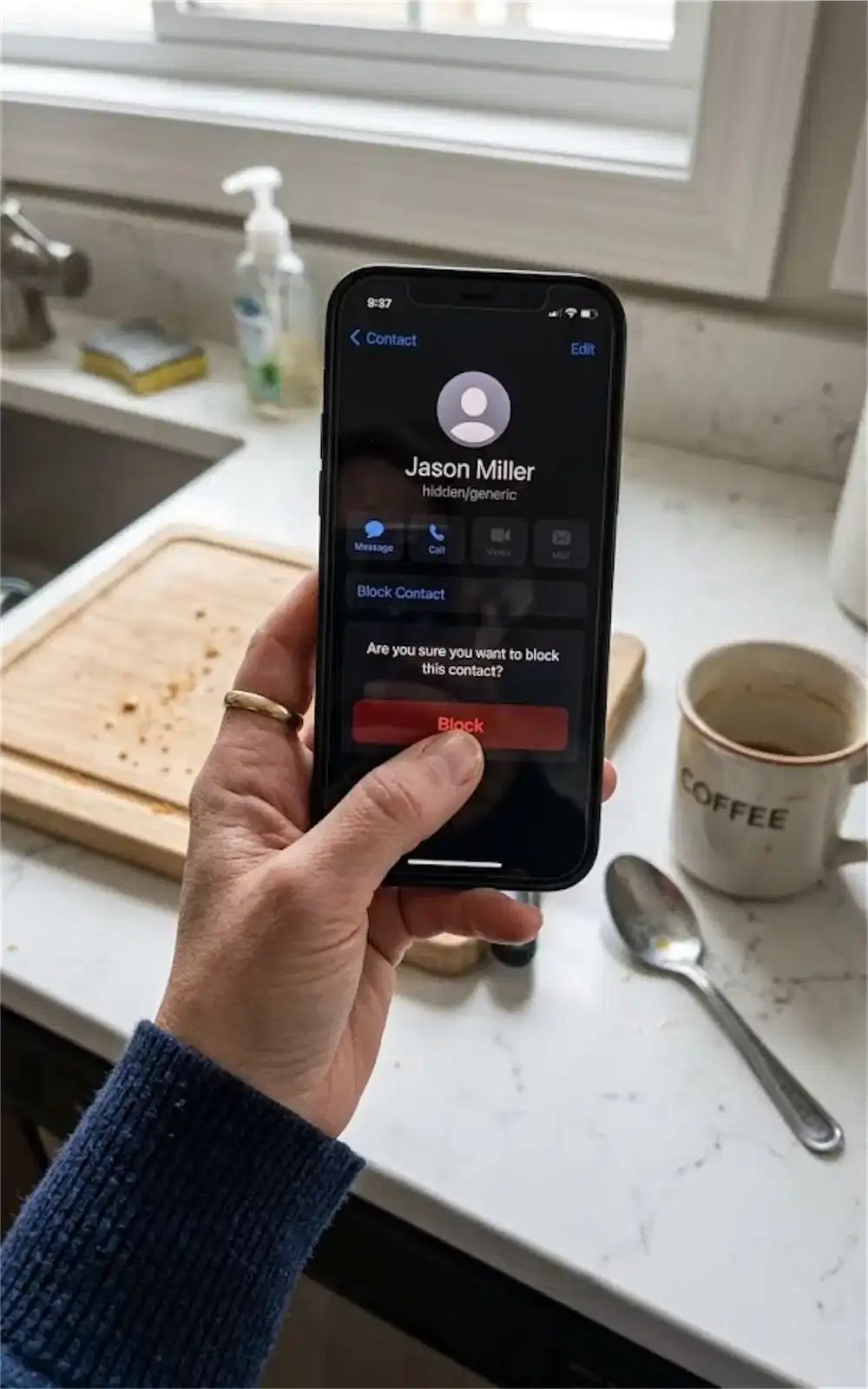
If you’re currently being love bombed or want to avoid it in the future, here’s what I wish I’d done differently:
1. Slow Down, No Matter How Good It Feels
Set your own pace. If someone pressures you to move faster than you’re comfortable with, that’s your answer. Healthy people respect your timeline.
2. Watch How They Handle “No”
Say no to something small early on. Decline a date. Ask for space. Set a minor boundary. Their reaction will tell you everything. Do they respect it? Or do they guilt-trip, push back, or make you feel bad?
3. Keep Your Support System Close
Don’t cancel plans with friends to accommodate a new relationship. Don’t disappear into the love bubble. Your friends and family can see things you can’t when you’re flooded with feel-good chemicals.
4. Look for Consistency Over Time
Anyone can be charming for a few weeks. Watch what happens when the novelty wears off. Do they stay kind, respectful, and interested? Or does the mask start to slip?
5. Trust Your Gut Over Their Words
If your body tenses when they text, if you feel anxious instead of excited, if something feels performative rather than authentic, pay attention. Your nervous system is smarter than your rationalizations.
For daily practices that help, try these morning routines for recovery to ground yourself in reality instead of fantasy.
What to Do If You’re Already Love Bombed and Trauma Bonded
If you’re reading this and recognizing yourself in my story, you’re probably already in deep. Maybe you’ve been with this person for months or years. Maybe you’ve tried to leave and been hoovered back. Maybe you know it’s unhealthy but can’t imagine life without them.
I get it. I stayed for 12 years.
Here’s what helped me finally break free:
- No contact, no exceptions: Every time I broke no contact, I reset my healing. This guide walks you through how to implement it properly.
- Therapy with a trauma-informed specialist: Not all therapists understand narcissistic abuse. Find one who does.
- Education about the cycle: The more I learned about love bombing, hoovering, and trauma bonds, the less power they had over me.
- Rebuilding my identity: I’d lost myself completely. I had to remember who I was before him.
- Time and patience: Recovery isn’t linear. Some days I missed him so much I could barely breathe. I had to ride those waves without giving in.
Books like Psychopath Free by Jackson MacKenzie helped me see the patterns clearly. Reading other survivors’ stories reminded me I wasn’t crazy, weak, or alone.
Check out my breakdown of the most important lessons from that book for practical recovery steps.
The Difference Between Love Bombing and Genuine Interest
After I healed, I dated again. And I had to learn the difference between someone who was genuinely interested and someone who was love bombing me.
Here’s what healthy early-stage relationships actually look like:
- They’re excited to see you but respect your need for space
- They ask questions and remember your answers
- They have their own life, hobbies, and friends
- They’re interested in who you are, not just the idea of you
- They’re consistent but not suffocating
- They respect your boundaries without making you feel guilty
- They’re comfortable with a natural pace
- They don’t make huge promises they can’t keep
It felt boring at first. I was so used to intensity that healthy felt flat. But I learned that boring is actually safe. Stable. Real.
The butterflies and fireworks I associated with love were actually anxiety and hypervigilance. Real love is calmer. It doesn’t require you to lose yourself.
Your Next Steps: Breaking Free From the Love Bombing Trap

Love bombing isn’t flattery. It’s not proof that you’ve finally found your soulmate. It’s a manipulation tactic designed to hook you before you can see who this person really is.
Those 10 red flags I ignored cost me 12 years of my life. I can’t get that time back. But I can help you avoid the same mistake.
If you’re currently being love bombed, slow down. Talk to people who care about you. Trust your gut when it says something is off. Don’t let intensity override your judgment.
If you’re already trauma bonded and trying to leave, know that it’s possible. It’s hard, painful, and takes longer than you think it should. But you can break free. You can heal. You can learn to recognize real love, the kind that doesn’t require you to lose yourself.
You deserve a relationship that feels safe, not just exciting. You deserve someone who respects your boundaries, not someone who overwhelms them. You deserve love that’s consistent, not conditional.
The first step is recognizing the red flags. You’ve done that. Now trust yourself enough to act on what you know.
Recommended Resources
Breaking free from love bombing and narcissistic abuse requires education, support, and the right tools. These resources made a real difference in my recovery:
- Becoming the Narcissist’s Nightmare by Shahida Arabi – A practical guide to breaking free from narcissistic abuse and reclaiming your power.
- The Gaslight Effect by Dr. Robin Stern – Helps you recognize gaslighting patterns that often accompany love bombing.
- Narcissistic Abuse Recovery Workbook – Practical exercises for processing trauma and rebuilding your sense of self.
Remember, recognizing love bombing is the first step. Acting on that knowledge is what sets you free.

Meet Your Guide
Helen Brooks
After surviving a 12-year NPD/BPD relationship, I dedicated over a decade to studying trauma bonding and nervous system recovery. My mission is to help you break free from the fog and reclaim your authentic self.
Ready to break the trauma bond and reclaim your life?