The Power of “No”: A Beginner’s Guide to Asserting Boundaries After Abuse
Learning how to say no and establishing boundaries after abuse is one of the hardest steps you will ever take in your recovery. When you spend years accommodating a partner with narcissistic or borderline personality traits, your voice gets smaller and smaller until it disappears. If you are currently struggling with asserting boundaries after abuse, please know that your inability to say no is not a personal failure; it is a survival response.
For twelve years, I lived in a toxic relationship where saying no was treated like a declaration of war. My ex, who displayed severe traits of both Narcissistic Personality Disorder and Borderline Personality Disorder, viewed any boundary of mine as direct rejection or control. By the time I left, I was isolated, had abandoned every hobby, and felt completely miserable. It was through intensive therapy and exploring recovery tools like The Boundary Blueprint that I began to understand how codependency kept me locked in that cycle.
Have you ever felt your heart race just thinking about telling someone you cannot do a favor? That physical reaction is your nervous system reacting to the past, remembering when a boundary meant a three-day silent treatment or an explosive argument. Healing means teaching your body that you are finally safe to say no.
What Does Saying No Look Like After Narcissistic and BPD Abuse?
Asserting boundaries after abuse means recognizing that you have a right to your own time, energy, and emotions without needing to justify, excuse, or apologize for your choices. It is the daily practice of protecting your personal peace from manipulation and emotional drain.
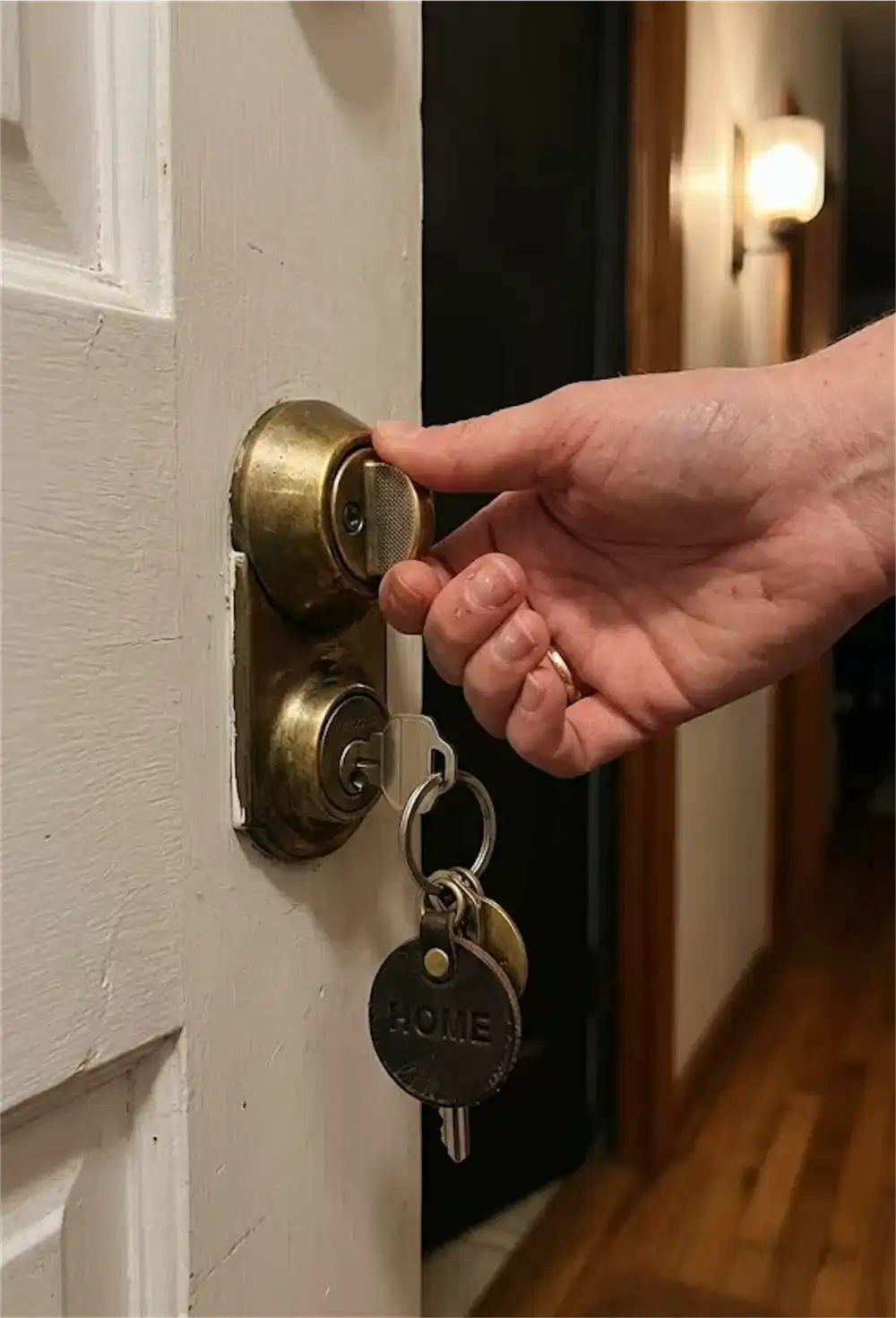
In a healthy dynamic, when you say, “I can’t help with that this weekend,” the other person typically says, “No worries, thanks anyway!” In a toxic dynamic, that same sentence is treated as a betrayal. During my twelve years in the fog, gaslighting made me believe that my personal limits were selfish. I was conditioned to believe that keeping my partner stable was my only job.
When you are dealing with a partner who shows traits of both Narcissistic Personality Disorder and Borderline Personality Disorder, boundaries are viewed as a threat. A partner with NPD sees your limit as a challenge to their control, while a partner with BPD traits might view it as absolute abandonment. This creates a volatile home environment where your boundaries are constantly dismantled.
When you start to rebuild your life, saying no is not just a word; it is an act of reclaiming your lost identity. You might feel a heavy wave of guilt the first time you decline an invitation or refuse to answer a late-night text. This guilt is normal, but it is also a sign that you are breaking a pattern of codependent caretaking.
Why Saying No Feels Terrifying (The Trauma-Bond Connection)
Why do we feel so physically sick when we try to hold a basic boundary? The answer lies in how our brains are wired during chronic emotional distress. When you survive a chaotic relationship, you often develop a strong fawn response traits guide style, which tells your brain that safety only exists when everyone around you is happy.
This physical fear is closely linked to the trauma bond. The brain becomes accustomed to a cycle of intense highs and painful lows, which keeps your nervous system in a state of constant survival mode. When you try to break this cycle by setting a boundary, your body reacts with intense panic, almost like a physical withdrawal symptom.
A trusted resource on trauma recovery published in Psychology Today explains that chronic relational stress keeps the amygdala on high alert. This means that even after the relationship ends, your body behaves as though the threat is still active. Recognizing this physical response allows you to treat yourself with patience and kindness as you heal.
If you are tired of walking on eggshells and feel ready to reclaim your personal power without the crushing weight of guilt, I highly recommend using a structured approach. I created a dedicated resource to help you navigate this transition step by step, allowing you to establish firm limits and rebuild your self-worth safely.
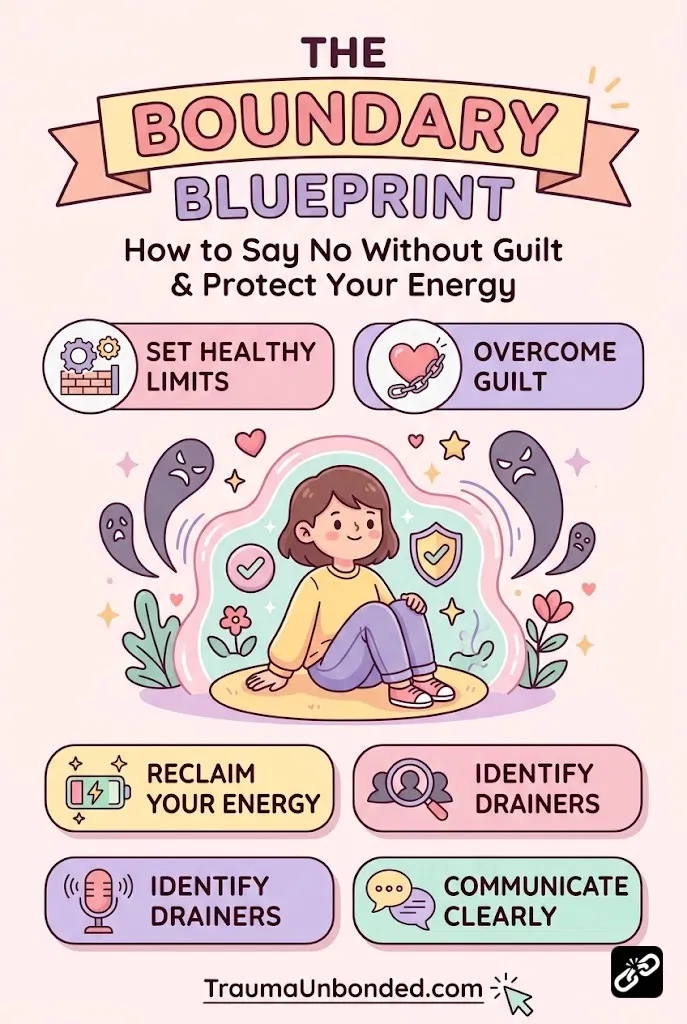
Step-by-Step Guide to Asserting Boundaries After Abuse
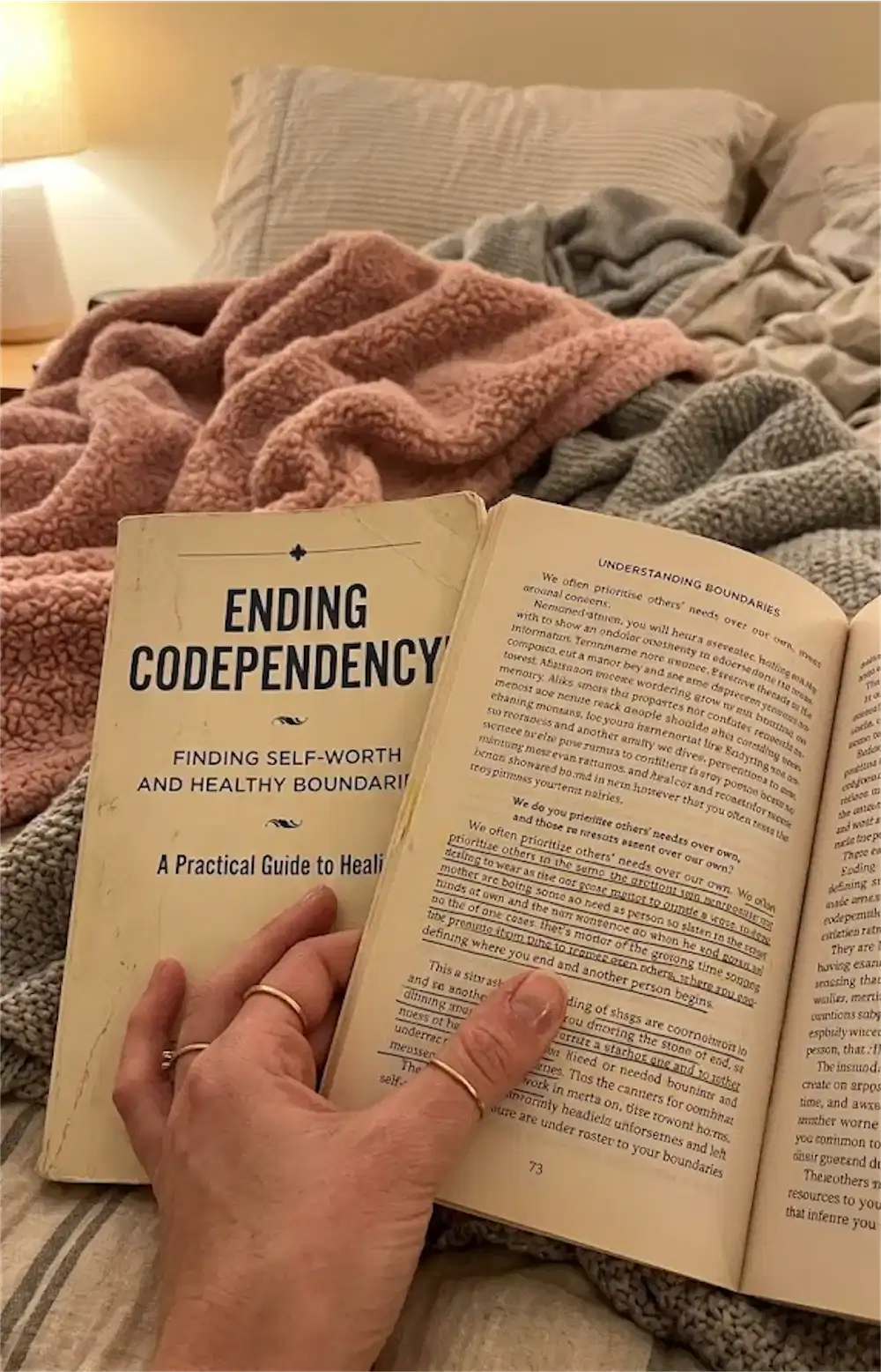
Rebuilding your boundaries does not happen overnight. It is like physical therapy for a muscle that has completely atrophied. Here are some gentle, practical steps you can take to begin speaking up for yourself today:
- Start with low-stakes interactions. Do not start by confronting your toxic ex or a difficult family member. Practice saying no to a salesperson, or politely decline a small invite from a supportive friend who will not judge you.
- Drop the long explanations. When you set boundaries, your natural instinct is to over-explain. Try to set boundaries and stop apologizing because a boundary is a statement of fact, not a negotiation.
- Create physical distance. Sometimes you need to establish a physical barrier before you can find your emotional voice. Adopting a radical no-contact guide strategy is often the only way to get the mental clarity required to heal.
- Acknowledge the discomfort. When you say no, expect to feel uncomfortable. Remind yourself that discomfort is simply the feeling of growth, not a sign that you did something wrong.
Do you find yourself wanting to explain every decision you make? When I first started setting limits, I would write long paragraphs defending my choices. My therapist helped me realize that “No, I can’t do that” is a complete sentence. You do not owe anyone a list of reasons why your personal limit exists.
Reclaiming Your Original Self and Finding Peace
After my toxic relationship ended, I was a shell of a person. I had no idea what I liked to do, who my friends were, or how to trust my own judgment. I was completely isolated and drowning in constant self-doubt. It felt like my true self had been entirely erased by a decade of psychological pressure.
But healing is real. Through slow, daily practices of choosing my own comfort over the demands of others, my original, cheerful personality began to return. I reconnected with old friends, picked up my long-lost hobbies, and finally felt grounded in my own home. That is the reward of saying no: you make room to welcome back the person you were always meant to be.
The journey is hard, but you do not have to walk it alone. Remember that every time you say no to something that drains your energy, you are saying a profound yes to your own recovery. If you are looking for a clear, compassionate roadmap to protect your energy and walk away from emotional exhaustion, please take a look at the workbook The Boundary Blueprint today.

Meet Your Guide
Helen Brooks
After surviving a 12-year NPD/BPD relationship, I dedicated over a decade to studying trauma bonding and nervous system recovery. My mission is to help you break free from the fog and reclaim your authentic self.
Ready to break the trauma bond and reclaim your life?