What to Do on Day 1 of No Contact with a Narcissist: Your Survival Guide
The morning I finally walked away, I sat on the bathroom floor for two hours. I did not cry. I just stared at the tile grout and tried to remember who I was before twelve years of this. If you are reading this on Day 1 of no contact, I want you to know: that stunned, hollow feeling is not weakness. It is your nervous system finally exhaling. And the best No Contact Survival Guide you can have right now is a clear, honest plan for the next 24 hours.
Day 1 is not about healing. It is about surviving until Day 2. That distinction saved me, and it will save you too.
Before we get into the practical steps, understand one thing: breaking contact with a narcissist is not like a normal breakup. The withdrawal is real and physical. Your brain has been running on a chemical loop of cortisol and dopamine spikes for so long that suddenly removing that person feels like quitting a substance cold turkey. You are not being dramatic. You are chemically addicted to the chaos, and Day 1 is the hardest detox day of your life.
The First Hour: Do Not Touch Your Phone
This sounds impossibly simple and it is one of the hardest things you will do today. In the first hour after going no contact, every instinct will scream at you to send a message. To explain yourself. To check whether they have seen your last text. To peek at their social media to see if they look devastated.
They probably do not look devastated. And seeing that will wreck you.
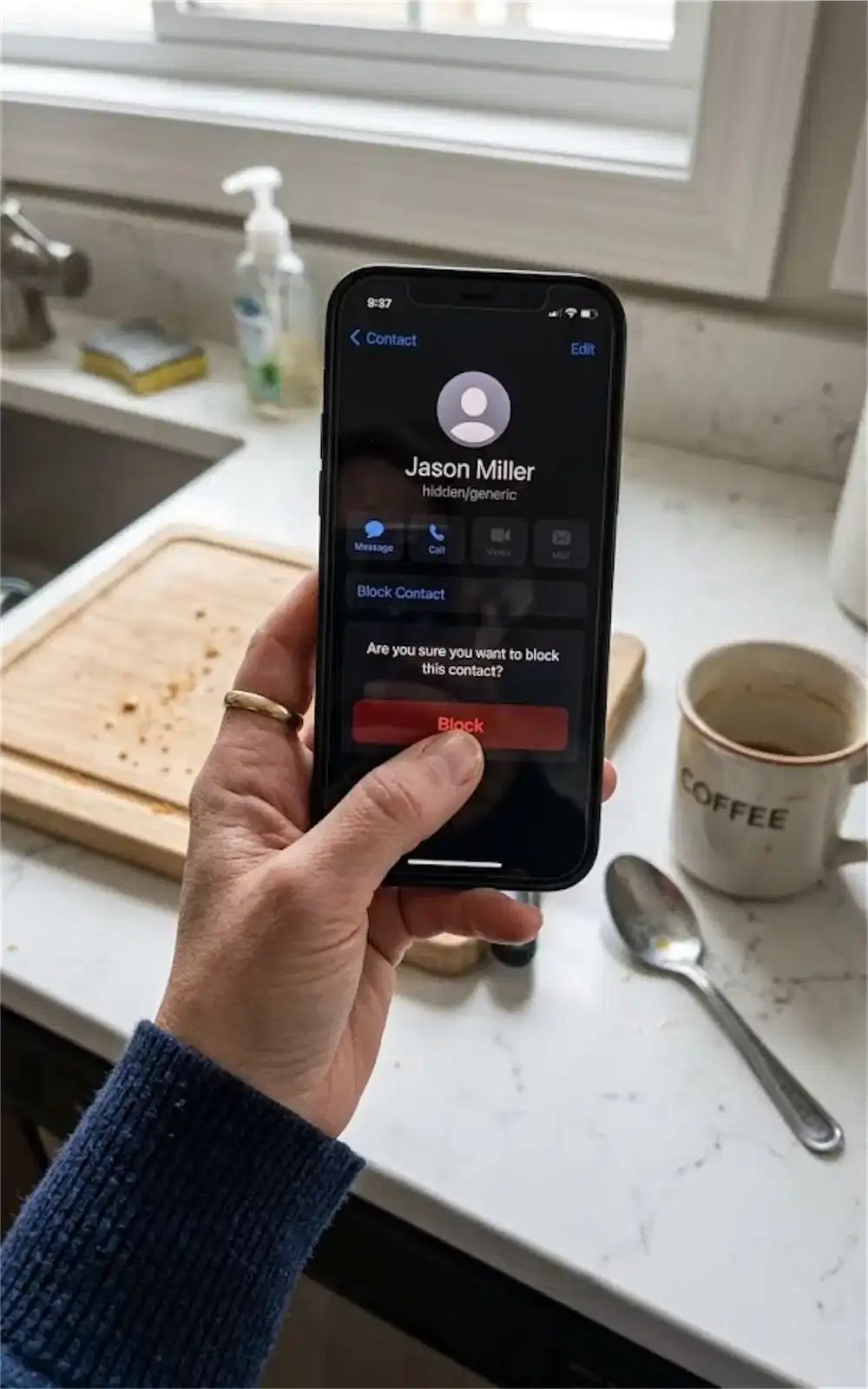
Put your phone in a drawer. Not on silent. Not face-down on the table. In a drawer, in another room. Set a timer for 60 minutes and do not retrieve it until that timer goes off. This is not a punishment. It is protection. The urge to break no contact peaks in that first window and it drops significantly if you can ride it out.
Block first, grieve later. If you have not already blocked them on every platform, do it now before you lose nerve. Phone, email, Instagram, WhatsApp, LinkedIn, Snapchat. Mutual platforms you share, like group chats or shared accounts. All of it. Blocking is not cruelty – it is the boundary your nervous system requires to begin healing.
Expect the Panic to Come in Waves
Around hour two or three, most people hit their first real wave. It usually feels like dread mixed with guilt mixed with something almost like grief. You might start bargaining with yourself. Was it really that bad? Maybe I overreacted. Maybe if I just explain one more time…
This is not clarity. This is trauma bond withdrawal. The part of your brain wired for attachment is in full alarm mode, trying to restore the relationship that kept it regulated for years – even though that relationship was destroying you. The neurological pull is real, and it will pass if you do not act on it.
Write down three specific things they did that made you leave. Not a list of all their flaws. Just three concrete, real moments. Keep that paper somewhere visible. When the wave hits, read those three things out loud. It pulls you back out of the fantasy and into the truth.
Your Body Needs Physical Intervention Right Now
After a long relationship with someone who has narcissistic traits, your nervous system has been locked in a chronic stress response. On Day 1, your cortisol levels are likely spiking hard. You might feel shaky, nauseous, unable to eat, or exhausted but unable to sleep. This is not anxiety in the way most people think of anxiety. It is your body in literal fight-or-flight withdrawal.
Do not try to push through it mentally. Move your body instead.
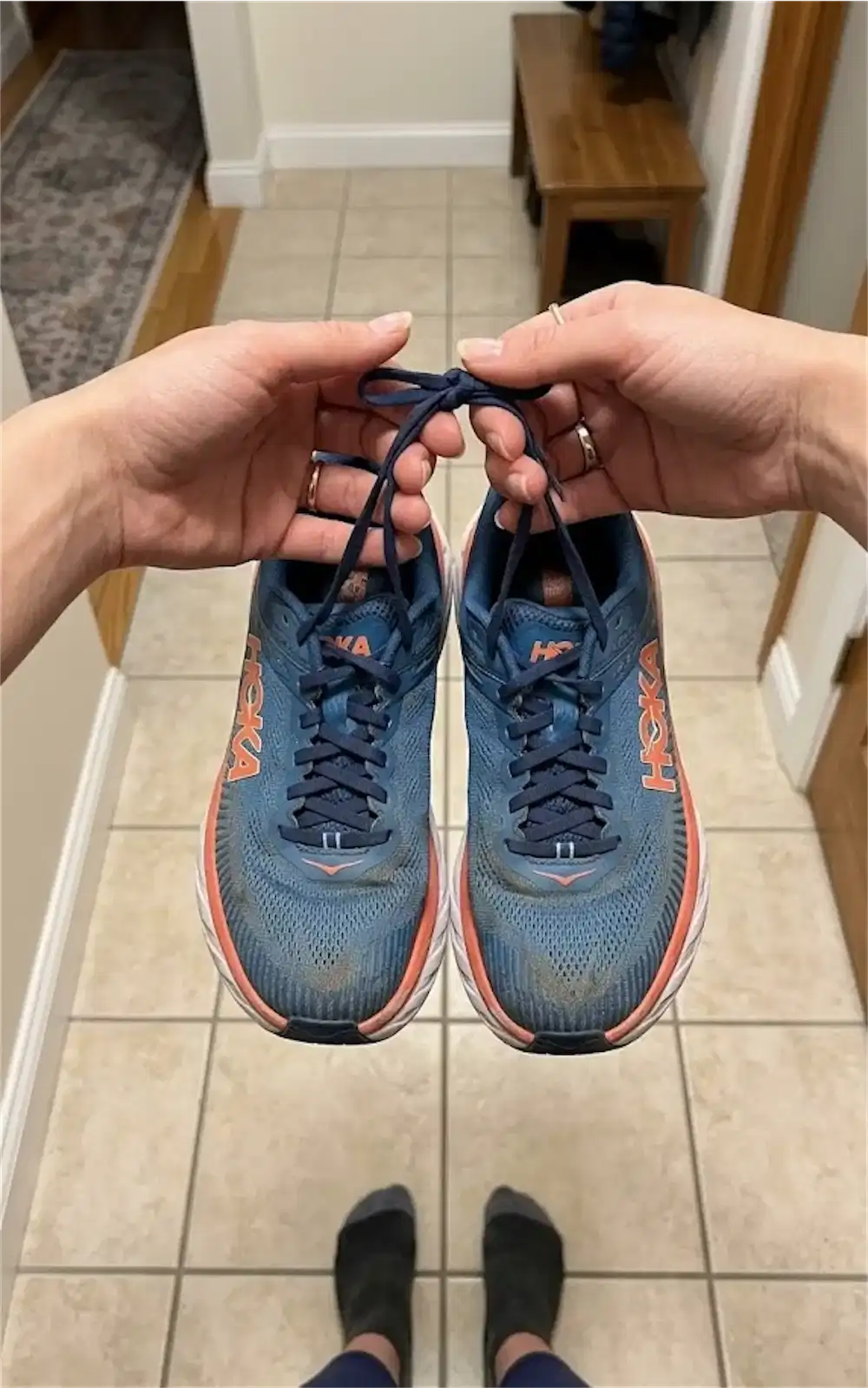
Even a 20-minute walk outside can reduce cortisol enough to bring you back from the edge of a panic spiral. If you can run, run. If you cannot run, walk. If you cannot walk, stand in the shower with cold water on your wrists for 60 seconds. Physical intervention interrupts the thought loop in a way that thinking your way out simply cannot.
Eat something even if you have no appetite. Simple carbohydrates first – toast, crackers, a banana. Your blood sugar is probably crashed and that makes the emotional pain feel three times more intense than it already is.
Do Not Be Alone With Your Thoughts All Day
One of the most painful things about leaving a long-term narcissistic relationship is the silence. For years, that person filled all the emotional space – even when it was terrifying or chaotic, it was loud. Day 1 quiet feels crushing.
You do not have to talk to anyone about what happened. You do not owe anyone an explanation today. But you need a human voice nearby. Call a friend and ask them to just stay on the phone while you do something mundane together. Or put on a podcast or audiobook – something with a real human narrator whose voice creates just enough noise to interrupt the spiral.
If you are isolating because you feel ashamed, I need to say this directly: the shame is not yours. After twelve years of being told I was the problem, the difficult one, the one who never appreciated what I had, I spent the first week of no contact convinced I had ruined my own life. That shame was installed by someone who needed me to feel small. It was not truth.
What to Actually Do With the Hours
Structure is your best friend today. An unstructured Day 1 becomes a day of rumination, impulsive texts, and self-doubt that sets back your recovery by weeks. Here is a rough framework that actually works:
Morning: Block all contact channels. Eat something small. Write your three reasons. Take a walk or shower.
Afternoon: Do one concrete, practical task. Clean one drawer. Wash dishes. Something with your hands that produces a visible result. Your sense of agency has been battered – small wins rebuild it faster than you think.
Evening: Avoid alcohol. I know. But alcohol lowers the impulse control threshold exactly when you cannot afford to lower it. Drink tea, watch something light and easy on TV, and get to bed earlier than usual. Sleep is neurological repair. Every hour of it matters.
If you find yourself hoovering – which means being pulled back in by your ex who suddenly reappears with love bombs, apologies, or manufactured crises – recognize it for what it is. Narcissist hoovering tactics are designed specifically for this vulnerable window. Do not mistake renewed contact for changed behavior. It is almost never that.
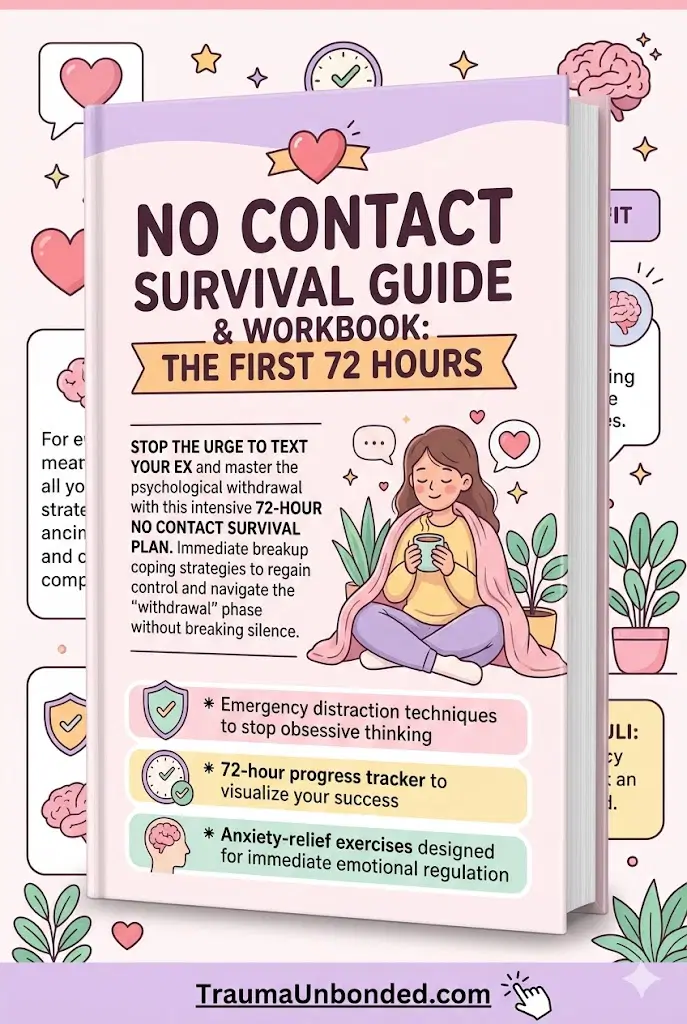
If you are serious about getting through the earliest and hardest phase of no contact without breaking down and running back, you need a proper structure to lean on – not just willpower. The guide below was built specifically for people who are in that raw, chaotic first window.
The Urge to “Just Check” Is a Trap
Somewhere between hour six and ten, most people hit a specific pull: the urge to just check their ex’s social media. Not to contact them. Just to see. Just to know if they have already moved on. Just to feel like they still have some window into what was their entire life.
Do not do this. What you find will either confirm something painful or give your brain false hope, and both outcomes are destructive on Day 1. Checking their profiles restarts your withdrawal clock from zero. Every psychologist who works in trauma recovery says the same thing: any form of contact – even passive digital surveillance – reactivates the same neurological pathways as direct contact.
Delete the apps from your phone if you need to. Temporarily deactivate your accounts if that makes it easier. This is not permanent. This is 24 hours. You are just trying to get to Day 2.
Let Yourself Feel It Without Drowning In It
Here is the hardest truth of Day 1: you are going to feel terrible. Not because you made the wrong decision. Because you made a decision that required enormous courage after years of being conditioned to doubt your own judgment.
Grief is not evidence that you should go back. Pain is not evidence that you made a mistake. Feeling like you cannot breathe without them is not love – it is the trauma bond doing exactly what it was built to do.
Cry if you need to cry. Lie on the floor if that is where you land. Let the feeling move through you without making any decisions based on it. Feelings are not facts on Day 1 of no contact. They are just withdrawal.
You survived twelve years inside something that should have broken you completely. You survived today. That is what matters right now – nothing more, nothing less. When you are ready to go deeper into the recovery work, the No Contact Survival Guide will walk you through everything that comes after the first 72 hours, step by step, with the structure your healing actually needs.

Meet Your Guide
Helen Brooks
After surviving a 12-year NPD/BPD relationship, I dedicated over a decade to studying trauma bonding and nervous system recovery. My mission is to help you break free from the fog and reclaim your authentic self.
Ready to break the trauma bond and reclaim your life?