Shadow Work for Codependency: Breaking Emotional Cycles Deeply
Shadow work for codependency is the missing piece for many of us trying to break emotional cycles after leaving a toxic relationship. For twelve long years, I lived in a house that felt like a minefield, constantly walking on eggshells around a partner who swung between narcissistic coldness and BPD intensity. I lost my hobbies, my friends, and my very spark until I started using the Codependency Recovery Plan to find my way back to the cheerful person I used to be. Do you ever feel like you are still carrying your ex’s voice in your head, even months after the breakup? That is exactly what we are going to look at today.
When you are in a decade-long relationship with someone who has NPD and BPD traits, your brain adapts to survive. You become an expert at reading their moods before they even speak a word. This survival mechanism is what we often call codependency, but it is really a deep-seated trauma bond that keeps us tethered to our own suffering. By digging into our shadow, we can finally stop the cycle of picking partners who drain us dry.
What is Shadow Work for Codependency?
Shadow work is a way to look at the parts of ourselves we have hidden away or denied because they felt “wrong” or “unsafe.” In my case, my shadow held a lot of anger that I was never allowed to express during those twelve years of narcissistic abuse. I had to be the “nice” one, the “fixer,” and the one who never had needs of my own. Does that sound familiar to you?
Codependency thrives in the dark because it is based on the belief that we are only valuable if we are being useful to someone else. When we do shadow work, we shine a light on those beliefs. We start to ask why we felt the need to save someone who was actively hurting us. This process is not about blaming yourself; it is about taking your power back from the toxic relationship patterns that kept you small for so long.
The Role of the Inner Child
Most of our codependent habits started long before we met our toxic ex. They often go back to our childhood where we learned that love was something we had to earn through perfect behavior. When I looked at my own past, I realized I was repeating a shadow work codependency guide in my mind without even knowing it. My shadow was convinced that if I just did enough, I would finally be safe.
Healing these wounds requires us to meet that younger version of ourselves. It means acknowledging the pain of being ignored or criticized. Instead of looking for a partner to fill that hole, we learn to fill it ourselves. Have you noticed how you tend to attract the same type of person over and over? That is your shadow trying to resolve an old wound by recreating it.
How to Break Emotional Cycles After Abuse
Breaking these cycles is rarely a straight line. It starts with awareness, usually when the pain of staying the same becomes greater than the fear of changing. After my breakup, I was isolated and felt like a shell of a person. I had no idea what I liked to eat, what movies I enjoyed, or how to spend a Friday night without managing someone else’s crisis. I was stuck in a trauma bond biochemical addiction that made me feel physically ill whenever I tried to step away.
To stop the cycle, you must first recognize the “hook.” For me, it was the intermittent reinforcement. My partner would be cruel for weeks, then suddenly give me a tiny bit of affection. That crumb of love felt like a feast because I was starving. In shadow work, we look at that hunger. We ask why we settled for crumbs when we deserved a full seat at the table. Why did we think we were only worth the bare minimum?
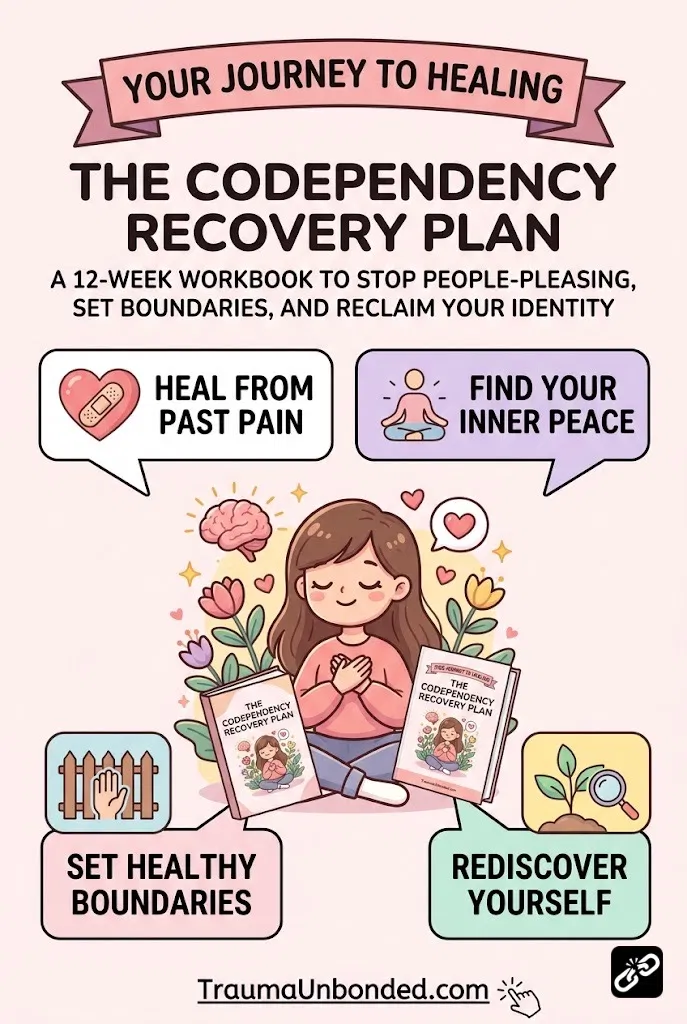
If you are ready to stop people-pleasing and finally put yourself first, you need a structured plan. This is not something you can just “think” your way out of. You need to take active steps every single day to rewire your brain and protect your energy from people who only want to take from you.
I highly recommend using a dedicated workbook to guide you through these difficult realizations. It provides the framework you need when your mind is still foggy from years of gaslighting and emotional manipulation. You can start reclaiming your identity today with this comprehensive 12-week plan.
Identifying Your Shadow Traits After Abuse
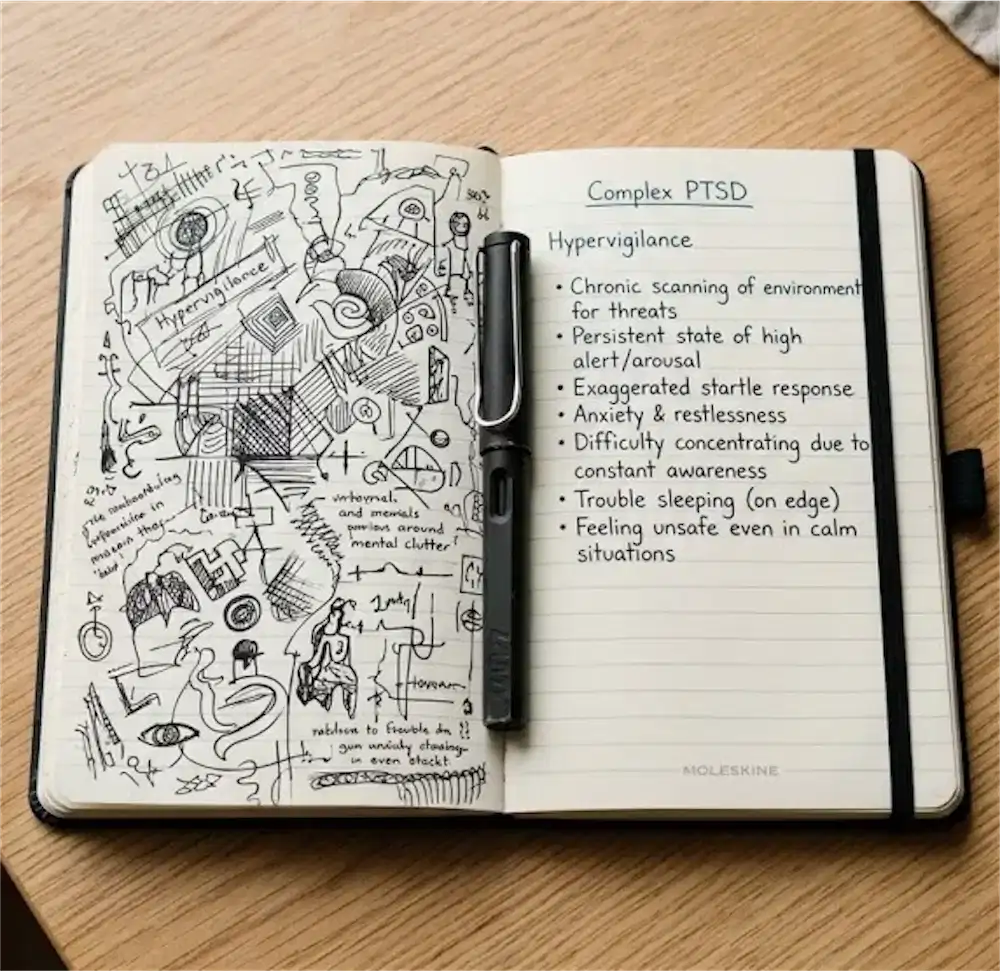
One of the hardest parts of trauma-informed healing is admitting that we have a “fixer” shadow. For a long time, I wore my codependency like a badge of honor. I thought I was just “too nice” or “too loyal.” In reality, my shadow was using caretaking as a way to control my environment. If I could just make my partner happy, I thought, then I would be safe from their rage. This is a common fawn response that many survivors develop.
To identify your shadow traits, look at your biggest triggers. What makes you feel incredibly guilty? For me, it was saying “no.” If I turned down a request, I felt like a terrible person. My shadow believed that my only right to exist was tied to my self-sacrifice. By using an inner child reparenting guide, I learned to tell that guilty part of myself that it was okay to have boundaries.
Shadow traits often include things like a secret need for validation, a fear of being alone, or even a hidden resentment toward the person you are helping. Have you ever felt a wave of anger while doing something “kind” for your toxic ex? That was your shadow trying to tell you that your boundaries were being violated. Listening to that anger is a vital part of breaking emotional cycles deeply.
Practical Shadow Work Journaling for Recovery
Journaling was my lifeline when I was recovering from BPD abuse. My ex used to twist my words so often that I started to doubt my own reality. Writing things down helped me ground myself in what was actually happening. When you start shadow work, you are essentially becoming an investigator of your own mind. You are looking for the patterns that keep you stuck in the “waiting room” of a toxic person’s life.
Start by asking yourself hard questions. What am I getting out of this relationship that I am not giving to myself? Why do I feel responsible for an adult’s emotions? When was the first time I felt I had to be perfect to be loved? These questions might make you uncomfortable, and that is a good sign. It means you are touching the shadow. The goal is not to judge these parts but to bring them into the light so they no longer run your life from the background.
I remember sitting on my floor, crying because I realized I had spent twelve years trying to “earn” love from someone who was incapable of giving it. It was a brutal realization, but it was also the moment I became free. I stopped waiting for them to change and started changing myself. This is the heart of codependency recovery. You stop being the supporting character in someone else’s drama and start being the lead in your own life.
Healing is a journey that requires patience and the right tools. If you are struggling with the urge to reach out to a toxic ex or find yourself stuck in a loop of self-doubt, know that you are not alone. You can find the strength to stay away and rebuild your self-worth through the Codependency Recovery Plan. The person you were before the abuse is still in there, waiting for you to bring them home.

Meet Your Guide
Helen Brooks
After surviving a 12-year NPD/BPD relationship, I dedicated over a decade to studying trauma bonding and nervous system recovery. My mission is to help you break free from the fog and reclaim your authentic self.
Ready to break the trauma bond and reclaim your life?