Narcissist Playing the Victim: Why They Blame You for the Breakup
A narcissist playing the victim is a calculated tactic used to avoid any accountability for their actions. If you find your ex is blaming you for the breakup and telling everyone how you were the toxic one, you are likely dealing with a classic reversal of roles. This is exactly what I faced after a 12-year relationship that left me isolated and wondering how my life became so miserable. I spent a decade trying to be the perfect partner, only to be cast as the villain the moment I stopped complying with their demands. It is a heavy burden to carry, especially when you are already dealing with the weight of a shattered sense of reality.
During my recovery, I learned that this behavior is not about the truth. It is about control. When a relationship with a high-conflict personality ends, they cannot allow themselves to be the “bad guy.” Their ego is too fragile to handle the shame of their own behavior. Instead, they rewrite the history of the relationship to make you the aggressor. Have you noticed how their story changes depending on who they are talking to? This is a survival mechanism for them, but for you, it feels like a secondary trauma. To truly heal, you need to understand the mechanics of this blame shifting so you can stop taking their accusations to heart.
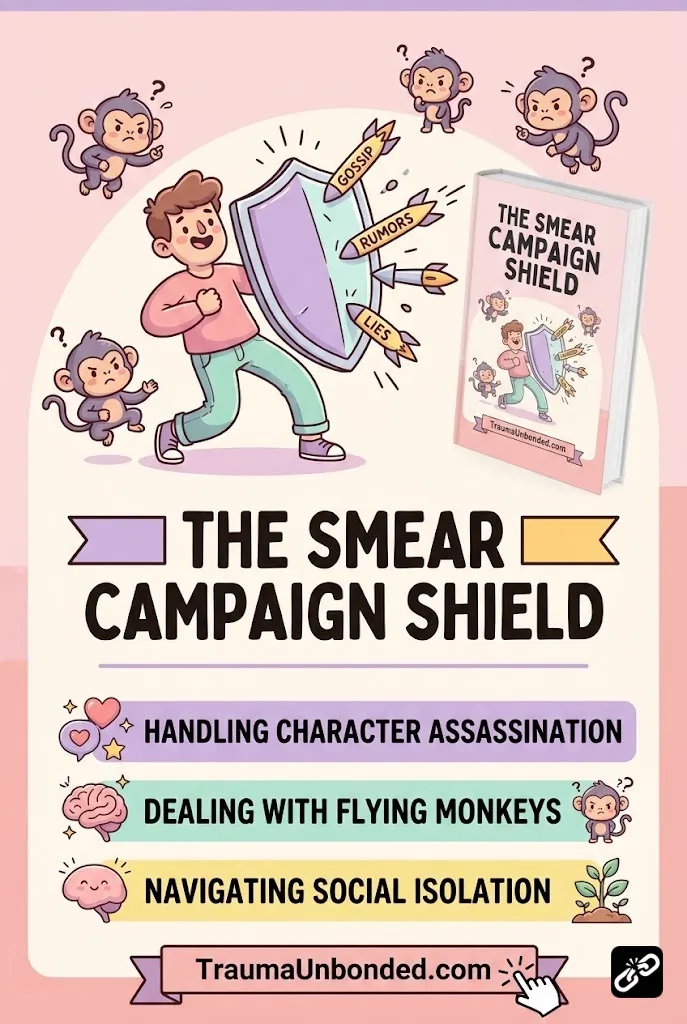
If you are currently feeling the sting of these false accusations, you might be looking for a way to clear your name. I remember the desperate urge to show everyone the “real” them. I wanted to prove that I wasn’t the one who had been difficult or unstable. However, trying to defend yourself against someone who is committed to a lie is like trying to catch the wind. You will only end up exhausted and more confused. Learning how to navigate the blame after a toxic breakup is the first step toward regaining your peace. If you want a structured way to handle the fallout of their lies, The Smear Campaign Shield can help you protect your reputation without losing your mind.
Blame Shifting and Projection After a 12-Year Toxic Relationship
In a long-term relationship with someone who has NPD or BPD traits, projection becomes a daily occurrence. Projection is when they take their own negative traits, like lying or being unfaithful, and accuse you of doing those exact things. In my 12 years with my ex, I was constantly accused of being “controlling” because I asked for basic respect. When the breakup finally happened, that projection went into overdrive. They didn’t just say I was controlling. They told our mutual friends that I had “trapped” them and made their life a living hell. It was a complete reversal of the truth, yet they believed it with absolute conviction.
This blame shifting is a way for them to maintain their “good person” image. If they can convince the world that you were the problem, they don’t have to look at their own failures. It felt like I was being gaslit on a global scale. I started to wonder if I really was as bad as they said. This is what a decade of emotional abuse does to your brain. You lose your ability to trust your own memories because the person you loved is telling a story that sounds nothing like the life you actually lived together. Do you find yourself replaying old arguments, trying to figure out where you went wrong?
It took professional therapy for me to realize that I was a codependent caretaker who had been trained to accept blame for things I didn’t do. I had become the emotional sponge for their instability. When I finally walked away, the sponge was full, and they were angry that I was no longer there to soak up their mess. The narcissist plays the victim because it is the only way they can justify the discard. If they are the victim, then their cruelty is just “self-defense” in their twisted logic.
The Role of Splitting in BPD and Narcissistic Breakups
When dealing with Borderline Personality Disorder traits, the blame often stems from a psychological process called splitting. This is when they see people as either “all good” or “all bad.” There is no middle ground. During the relationship, you might have been the “all good” hero who saved them. But once the breakup is triggered, you are instantly flipped into the “all bad” category. This shift is sudden and terrifying. One day you are the love of their life, and the next, you are a monster who never cared about them.
I experienced this many times over twelve years, but the final split was different. It was permanent. They weren’t just angry. They were disgusted by me. They used gaslighting to convince others that I had always been this way. They would take a single moment where I lost my temper after hours of being poked and use it as “proof” of my instability. This is often called reactive abuse. They push you until you snap, then they point at your reaction and say, “See? I told you they were the problem.” It is a heartless way to treat someone you once claimed to love.
To heal from this, you have to stop looking at the relationship through a logical lens. You are trying to apply normal breakup rules to a pathological situation. In a healthy breakup, both people eventually take some responsibility. In this situation, the narcissist victim syndrome prevents that from ever happening. They will carry their version of the story to the grave. Accepting that they will never give you the apology or the “truth” you deserve is one of the hardest parts of the recovery journey.
If you are struggling with the fallout of a smear campaign and people are looking at you differently because of your ex’s lies, you need a plan to protect your sanity. It is not enough to just wait for it to blow over. You need to learn how to manage the social isolation and the flying monkeys who are doing the narcissist’s dirty work. Having the right tools can make the difference between a total breakdown and a steady recovery.
Protect your reputation and your peace of mind with our specialized strategy for handling character assassination and social isolation.
How They Use a Smear Campaign to Win the Breakup

The narcissist smear campaign is the practical application of their victimhood. They don’t just feel like a victim. They want the world to agree. They will go to your friends, your family, and even your coworkers to share “concerns” about your mental health or your behavior. Usually, they do this under the guise of being “worried” about you. This makes them look like the compassionate partner while they are actually dismantling your support system. When I lost my 12-year relationship, I also lost several friends who believed the lies. It was a secondary grief that I wasn’t prepared for.
They use flying monkeys, who are people they have manipulated into believing their version of events. These people might reach out to you to “shame” you or tell you how much you are hurting the narcissist. It feels like everyone has turned against you. But remember, these people are only seeing the mask. They aren’t seeing the person who kept you up until 3 a.m. screaming at you for a perceived slight. They aren’t seeing the person who isolated you from your hobbies and your passions for a decade. Understanding this helps you see that their opinion is based on a fiction. Have you found yourself wanting to send screenshots and evidence to these people to prove your innocence?
The best way to handle a smear campaign is to realize that the people who truly know you will not be swayed by a narcissist playing the victim. If they are easily manipulated by someone who is clearly unstable, they weren’t your real friends to begin with. This is a painful realization, but it is necessary for your long-term growth. I had to let go of a lot of people to find my way back to my original self. It felt lonely at first, but that silence eventually became the space where I finally started to breathe again. You can read more about dealing with toxic social circles to help navigate this phase.
The Mental Toll of Being Blamed for Everything
Being the target of a narcissist’s blame takes a massive toll on your nervous system. After my breakup, I was in a state of constant hypervigilance. I was always waiting for the next accusation or the next person to tell me what my ex was saying about me. I stopped eating, I stopped sleeping, and I felt like a shell of a person. This is what a trauma bond looks like in the aftermath. You are still emotionally connected to the person who is actively trying to destroy you. You are addicted to their validation, even though they are currently using you as a scapegoat.
The blame makes you question your own sanity. You start to wonder if you really were the toxic one. Maybe if you had been more patient, or more understanding, things wouldn’t have ended this way. This is the cognitive dissonance talking. It is the conflict between the person you thought they were and the person they are showing you now. In my healing journey, therapy was essential to break this cycle. I had to learn that no amount of “patience” can fix a personality disorder. You cannot love someone into being a decent person, especially when they are committed to seeing you as the enemy.
Reclaiming your identity means taking the weight of their blame off your shoulders. It doesn’t belong to you. Their inability to handle life is not your fault. Their decision to lie about the relationship is a reflection of their character, not yours. When I stopped trying to defend myself and started focusing on my own self-care, the power they had over me began to fade. I started returning to my hobbies. I started laughing again. I realized that my life wasn’t miserable because of me. It was miserable because I was tethered to someone who thrived on chaos.
Why You Should Stop Explaining Your Side of the Story
One of the hardest lessons I learned was that silence is a superpower. When a narcissist is playing the victim and blaming you for the breakup, they are looking for a reaction. They want you to get angry. They want you to defend yourself. Every time you try to explain your side, you are giving them more “fuel” to use against you. They will twist your words and use your defensive posture as more “evidence” that you are unstable. I spent months writing long emails and texts, trying to get them to see the truth. All it did was keep me trapped in their drama.
When you stop explaining, you take back your power. You are essentially saying, “I don’t care what you believe, and I don’t care what you tell others.” This is the ultimate insult to a narcissist because it shows they no longer control your emotions. This is often called Grey Rocking, where you become as boring and unresponsive as a grey rock. It is a vital tool during the initial stages of a split. If you have no choice but to communicate, keep it brief, factual, and devoid of emotion. Don’t let them see that their lies are hurting you.
Your “truth” doesn’t need their approval to be real. You lived the relationship. You know what happened behind closed doors. You know the sacrifices you made and the pain you endured. That is enough. You don’t need a jury of flying monkeys to find you “not guilty.” Once I stopped seeking external validation for my experience, I was finally able to start rebuilding my self-worth. I realized that the only person who needed to believe me was me.
Finding Your Way Back to Your Original Self
Recovery after a 12-year toxic relationship is not a straight line. There are days when the blame still hurts and days when the smear campaign feels overwhelming. But I promise you, it gets better. Today, I am grounded and optimistic. I am no longer that isolated, devastated person who felt like life was over. I found my way back to the cheerful version of myself that existed before I ever met them. You can do this too. It starts with radical no contact and a commitment to your own healing process.
Focus on the things that bring you joy. Reconnect with the friends who stayed by your side. Invest in therapy to work through the codependency patterns that kept you in the relationship for so long. The more you heal, the less the narcissist’s version of history matters. Their lies will eventually become noise in the background of a life you actually enjoy living. The best revenge is a life lived well, free from the shadow of someone who could only feel big by making you feel small.
You have been through the fire, and you are still standing. That strength is something no narcissist can ever take from you. If you are ready to stop the cycle of character assassination and move forward with your head held high, take the time to learn the strategies in The Smear Campaign Shield and reclaim your story today.

Meet Your Guide
Helen Brooks
After surviving a 12-year NPD/BPD relationship, I dedicated over a decade to studying trauma bonding and nervous system recovery. My mission is to help you break free from the fog and reclaim your authentic self.
Ready to break the trauma bond and reclaim your life?